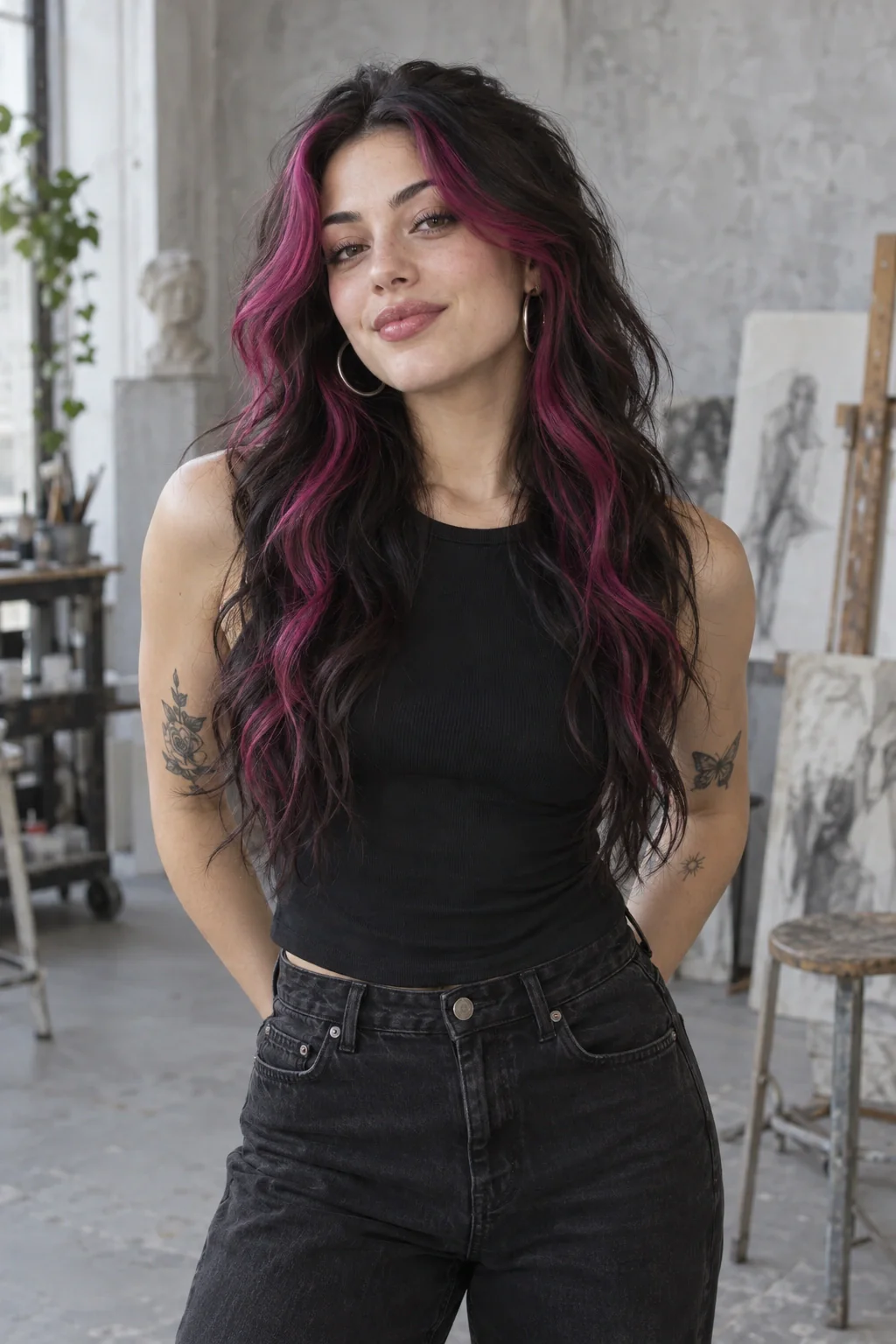
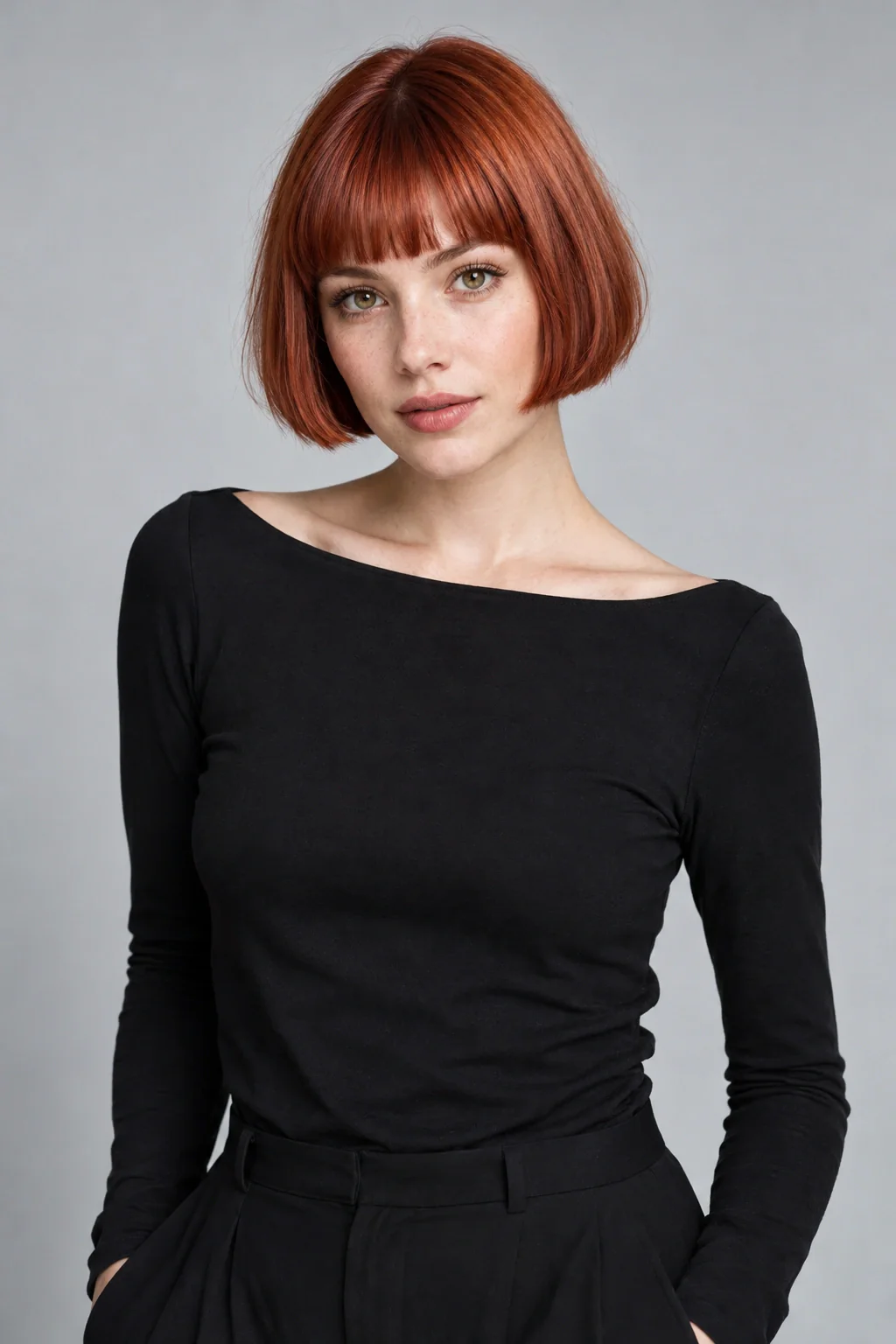
Describe the feeling before the haircut name. Graphic, light, warm or relaxed can guide a useful experiment without narrowing you to a single trend. Match the word to a visible detail: outline, movement, tone or the space around your face.
02
Try it in real life
Separate inspiration from permission. A reference is an idea you can borrow from, not a rule about what someone of a certain age or appearance should wear. Keep the details that interest you and adapt the rest to your own preferences.
03
Keep a little flexibility
Save a small set of distinct options. One familiar look, one subtle change and one more expressive direction can reveal what you actually enjoy. Add a note to each before looking for more images.
Choose the edge first, then the texture inside it. A blunt bob can retain waves, and a rounded crop can have a precise fringe. If you like both moods, decide which feature should be crisp and which should remain flexible before discussing the cut.
Choose one reversible change at a time: part for a different front, gathering for a different outline, or an accessory for a stronger accent. If you keep wanting a shorter silhouette afterward, take that specific preference into a preview and a haircut consultation.
Sort inspiration into shape, front and color, then label why each image earned a place. Keep two contrasting directions instead of many near-duplicates. When a specific decision emerges, move to a two-option comparison; prepare the appointment brief after that.
Pair the mood with a shape and a practical requirement: “soft movement, a clear bottom edge, and enough front length to tuck.” Use ordinary words you understand. If an image shows only the color or fringe you want, label that explicitly.
Keep your three most-worn tops in the comparison and change only one color variable at a time. If both warm and cool shades appeal, choose the depth first. Your wardrobe can clarify taste; it does not assign a compulsory hair-color category.
If you like your current depth, compare tone and placement before considering an overall lighter result. Ask for a visible difference in a named area, such as the front or lower lengths, and confirm the process and upkeep before booking.
Start with a dark base you want to preserve, then choose one area for contrast. If the lighter pieces become the first thing you notice, reduce their prominence in the brief. Ask the colorist how the placement works with your usual part and upkeep.
Choose the lightness first, then compare warmer and cooler versions near that depth. If both appeal, describe which features you prefer in each. A neutral-looking result is also a valid brief; the colorist can assess what it means for your starting hair.
Use two familiar lighting settings and repeat the same camera position when comparing before and after. If only one photograph looks strange, inspect the surrounding scene before deciding the hair changed. Bring consistent examples to a colorist when a concern remains.
Choose the change that addresses your main frustration, then write what would justify a second change. A bob does not automatically need a new color, and a color refresh does not require a fringe. Let the professional determine the treatment order.
For a short fringe, change spacing and the corners first. For longer bangs, compare a small center opening with a side sweep. If the ends cannot reach the clip comfortably, move the anchor closer or keep that section on the forehead.
Start with a ponytail or bun you can already secure, then add the scarf as decoration. For short hair, compare a narrow band with a wider wrap. If the scarf slips, change the fold or position before pulling the knot tighter.
Choose three repeatable changes around the front, fastening and accessory. Keep the everyday version simplest. If the polished version needs a completely different texture or unfamiliar tools, scale it back to a clearer part or anchor you can make comfortably.
Decide whether you want to display, soften or professionally change the contrast between roots and colored lengths. Test a different part and gathering first. If you want a service, bring your color history and maintenance limits; styling alone does not change pigment.
Sometimes the occasion is simply wanting to see yourself differently. That is enough to begin, and it does not oblige you to make a permanent change. Choose the feature that interests you, explore it at a comfortable scale and notice what you learn. A useful experiment can end with a new favorite look, a smaller adaptation or a clearer understanding of what you already enjoy.
01 / THE DETAILS
Ask one visual question at a time.
Start with a specific curiosity: how would a more open forehead feel, what happens when the outline becomes compact, or do I enjoy warmer color beside my clothes? A broad wish to look different can send you toward references that change every feature at once. Narrowing the question helps you understand your reaction. You can still choose a dramatic result later, but first learn which part of the change actually attracts you.
Collect a few references that answer the same question in different ways. If you are exploring openness, compare a tucked side, a swept front and a gathered style rather than three unrelated haircuts. Add a note naming the detail you want to borrow. This makes your board a record of preferences rather than a collection of people whose entire appearance you admire. You are allowed to enjoy an image while deciding that only one small part belongs in your own experiment.
Match the experiment to the decision you want to make.
A new part, temporary gathering or accessory can answer questions about placement immediately. A possible haircut or color service needs another stage of consideration. You can explore the visual direction through references or an AI preview, then discuss feasibility and upkeep with a professional who can assess your real hair. Keep those stages connected without confusing them.
Try the idea with a familiar outfit and in an ordinary setting before deciding it must become your new signature. A strong look may feel different beside your everyday coat than beside the carefully styled clothes in a reference. Notice whether that contrast excites you, feels too demanding or simply needs a smaller version. None of these responses is a failure. They help you choose the amount of change you actually want to wear, rather than the amount that first caught your attention on a screen.
03 / THE DETAILS
Keep the discovery even when you put the style away.
After the experiment, separate the feature you liked from the parts you did not. You may enjoy asymmetry but dislike the particular clip, or love a short outline while preferring your existing color. Write those distinctions before looking for more inspiration. They give the next experiment a direction and prevent you from repeatedly testing the same unresolved idea under different hairstyle names. A decision to keep only one part can be as clear as choosing the whole look.
Give yourself permission to have several versions of personal style. A playful arrangement for an afternoon, a quiet everyday cut and a stronger evening direction can all feel authentic. You do not have to explain the experiment through a milestone or a permanent identity label. Save what you want to revisit, remove what no longer interests you and make the next step proportionate to your curiosity. The aim is a relationship with hair choices that feels expressive and manageable in your actual life.
Do I need to know my personal style before experimenting?+
No. Small experiments can help you discover what you enjoy. Start with one visible feature and observe your response in familiar clothes and settings. The result can be a specific preference, such as liking a clearer front, without requiring a complete aesthetic label.
What if I love a bold preview but want a quieter real change?+
Identify the feature that gives the preview its appeal, then ask how to keep a smaller version of it. You may prefer the direction of the front, the contrast of a color family or the compact outline. The image can guide a conversation without becoming a demand to reproduce every detail.