
A reference for the shape
Choose a picture where the perimeter is visible and the crop does not hide the part you want to change.
Learn how to try on hairstyles with your photo in Hair Muse.
Find a direction, compare a haircut or hair color, and keep your favorite idea.
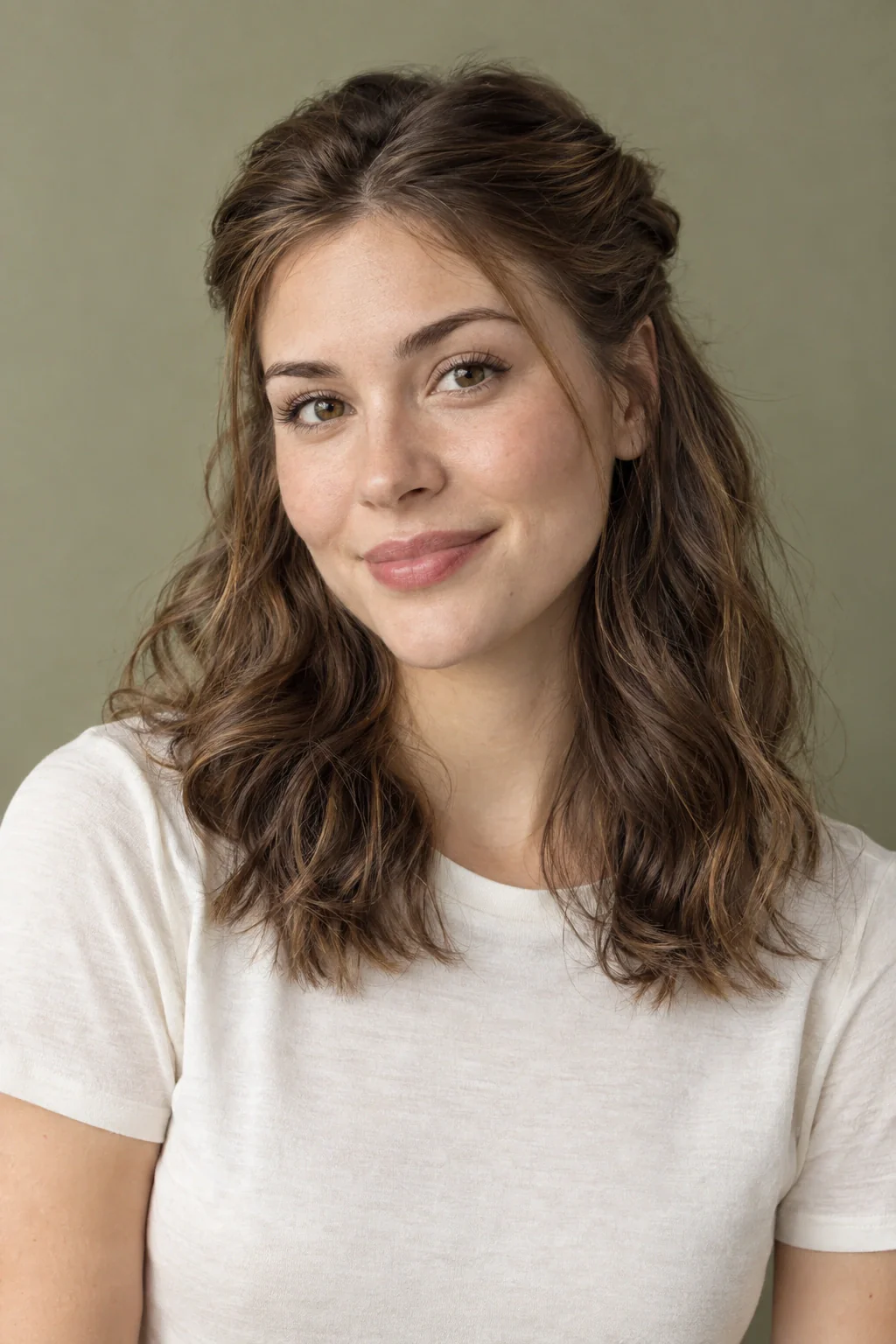
The aim is not to collect the most inspiration. It is to finish with a clearer idea than you started with. Each step below leaves you with something small and useful: a preference, a comparison, a question or a practical note. You can stop as soon as the decision feels clear enough for the next conversation.
Before searching for haircut names, think about how you want your hair to feel within your day. Perhaps you want a quieter shape with work clothes, a more expressive outline for evenings or a softer relationship with a structured jacket. Those intentions are often easier to recognize than a technical description of a cut.
Choose one of the six moods as a starting point, then make it concrete. If you choose polished, say whether that means a clear perimeter, a deliberate part or an arrangement that keeps your face open. If you choose playful, decide whether you want a new accessory or an unfamiliar silhouette. A mood becomes useful when it points to a visible detail.
Before making a lasting change, test whatever part of the idea is already available to you. Move the part, gather the hair lower, expose one ear or try the accessory with the actual outfit. You are not recreating a haircut with clips. You are checking whether you enjoy the relationship that attracted you.
Wear the approximation while doing something ordinary. Sit against a chair, put on a jacket and look down at your phone. Notice which pieces you keep adjusting. That observation can be more useful than the first mirror impression because it tells you where the eventual plan needs flexibility.
Some ideas cannot be tested physically without a real change. A very short silhouette or a different color is where a personal visual preview may add something. Keep the practical test and the visual experiment separate in your mind: one shows how an arrangement feels now, while the other explores an imagined appearance.
The HairSparks finder uses your selected length, texture and mood to sort the editorial look collection. It is a simple tool for finding a starting point. It does not scan your face, infer personal characteristics or calculate the best haircut for you. The results explain how the available references relate to your choices.
If there is no exact combination, use the nearest ideas for a specific feature rather than treating them as a complete recommendation. A reference may match the length and mood but show another texture. You can still learn from its outline while keeping your own texture in the eventual consultation.
Move to Hair Muse when you want to imagine a hairstyle or color around your own face. The app is separate from this website and available through its official App Store listing for compatible iPhone and iPad devices.
Use a clear, familiar portrait and choose one change to explore. Keeping an unchanged original beside the results makes the comparison easier to read. First look at the outline and face framing, then consider color or finish.
Write down what the comparison clarified and leave the unanswered practical questions open.
“I like the clear neckline in the first look and the softer front in the second. I want to keep a comfortable ear tuck. My usual routine is simple, so I would like to understand what this shape needs on an ordinary morning.”
This example combines a preference, a requirement and an honest description of daily life. You can write the same kind of note in your HairSparks board. Give each reference a purpose in the note so you can explain the relationship between them later.
Keep the board small enough to use in a real conversation. If a saved image no longer represents your direction, remove it from the working set. Download the brief when you want a separate copy. The website stores the board in this browser; it does not synchronize with another device or with the Hair Muse app.
Show the brief and ask which parts are realistic with your current texture, density, length and condition. Explain your hair history where it matters, particularly for a color conversation. The professional may suggest changing a proportion or a technique while keeping the feature you enjoyed in the reference.
Make space for a practical disagreement. If the exact image would require a routine you do not want, ask for the nearest version that fits your priorities. A successful consultation does not have to end with a literal copy. It should leave you understanding what is planned, what will remain different and how to manage the result.
Before the service starts, confirm the details that matter most to you in plain language. For a cut, that might be the shortest front piece or the amount of neck left open. For color, it might be the degree of warmth or the location of visible contrast. Ask about upkeep in the terms of your actual routine.
After trying a styling idea or making a change, notice what works during normal life. You may enjoy the open neckline more than expected or find that a particular accessory belongs in a different position. Keep those observations in your next brief while they are specific.
A moodboard can evolve with you. Archive your thinking by downloading a copy before starting a new direction, or simply update the local note. The point is to carry useful knowledge into the next decision rather than starting from a completely blank collection every time you feel like a change.
No. If a reference and a small styling test answer your question, you may not need an AI preview or a salon visit. Use the steps that help with the decision in front of you. The process is a guide, not a requirement.
Describe the quality you want to borrow and ask how it could be adapted. Keep a picture of your ordinary texture available too. The reference is there to communicate an idea, not to make you reproduce another person’s hair.
A small set of distinct references with a clear note about what you like and what must remain practical. Include your original portrait if you are using AI previews, and explain your normal styling routine honestly.
Try three arrangements around the same base: a relaxed part for an ordinary day, a small upper gathering with a higher neckline, and a one-sided tuck when you want an earring to show. Put on the actual top before moving the hair. Keep the version that clears the detail you want to reveal, then note the fastening or front adjustment that makes the difference. Your saved cut can remain the starting point while its daily styling changes with the occasion.