
Choose one reversible change at a time: part for a different front, gathering for a different outline, or an accessory for a stronger accent. If you keep wanting a shorter silhouette afterward, take that specific preference into a preview and a haircut consultation.
Four experiments that change more than the accessory
Look at your current hair and name the part you want to feel different. Perhaps the front feels too familiar, the length hides a neckline you like, or the whole silhouette feels too symmetrical. That observation tells you which experiment to try. There is no need to change the part, texture, and decoration on the same day.
Use these options as separate trials. Take a photo from a similar position and wear each version through ordinary movement before judging it. The question is whether you enjoy the change after it becomes familiar. Keep the fastening comfortable; a reversible experiment should not depend on pulling harder to imitate a shape your current length cannot reach.
Move the part and observe the silhouette
A change in part or front direction can alter the arrangement around your face without changing the haircut. Try a small shift first, working with the way your hair naturally sits. You may like the result of a subtle adjustment more than an extreme side placement. Look from the front and side, because a new arrangement can feel dramatic in the mirror while showing quite differently in a photograph.
Give yourself a little time to decide. Unfamiliarity can read as dislike when you first see a different outline. Wear the arrangement at home while doing ordinary tasks, then check whether you are enjoying it or constantly correcting it. If the hair repeatedly returns to its usual position, take that as practical information. You can keep the experiment for occasional styling or discuss a more suitable way to create the same visual effect.
Use gathering to change the proportions
Gathering all or part of your hair changes how its volume is distributed. A low arrangement can expose the sides and neckline; a partial gather can leave the length visible while changing the top shape. Experiment with where the visual weight sits rather than trying to copy an elaborate finished updo. The question is whether you like seeing more of one area and less of another.
Use a comfortable hold and stop if an arrangement pulls or hurts. The American Academy of Dermatology warns that tension from tightly pulled styles can contribute to damage. For the style experiment itself, inspect the shape from several angles and note how it works with your glasses, earrings, and collar. A successful variation should offer a different impression without demanding that you remain perfectly still or spend the evening checking that it has not shifted.
Let an accessory carry the statement
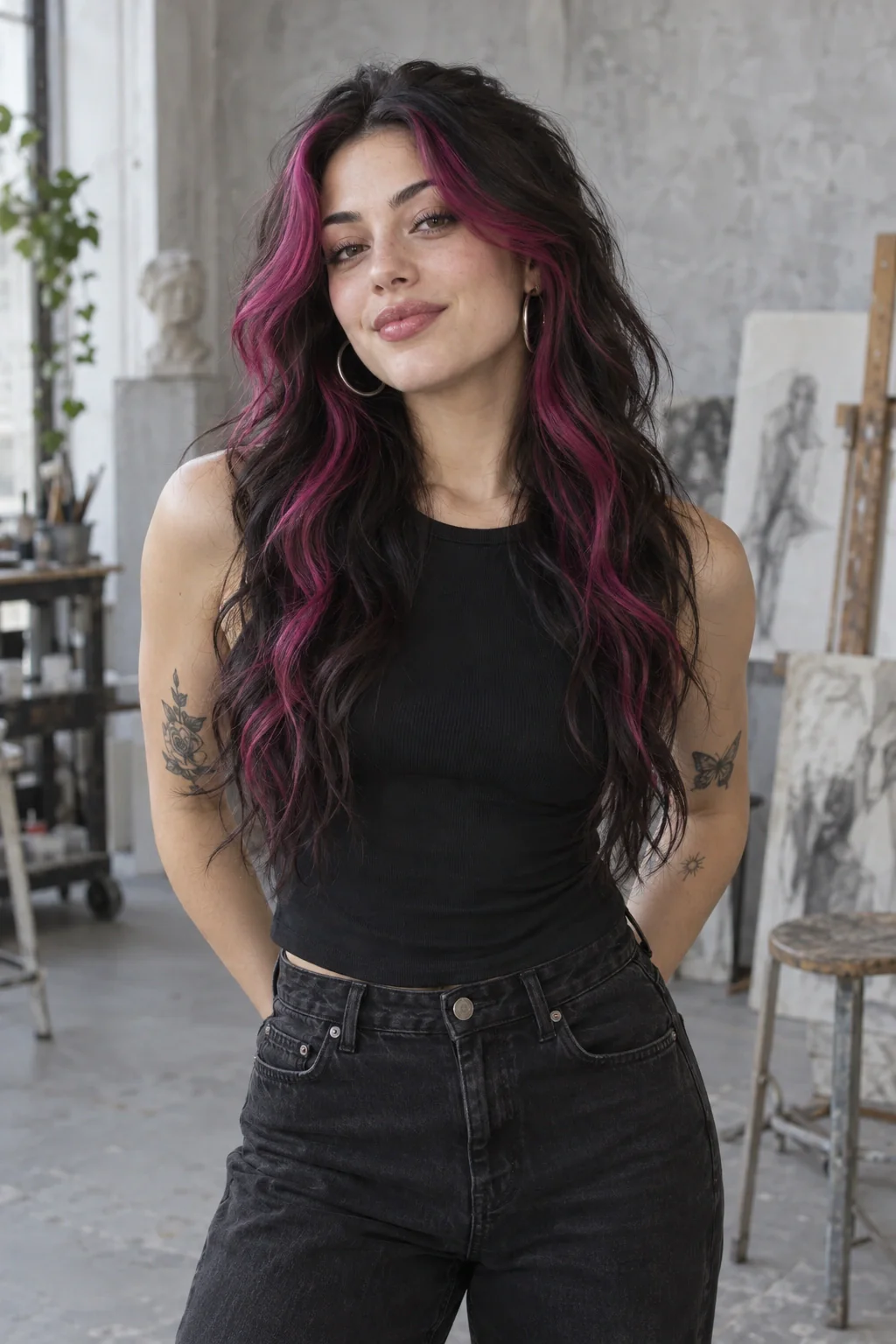
An accessory is useful when you want a clear change without learning a complicated new technique. Choose its role before its style. A wide headband can create a visible boundary; a barrette can emphasize a side placement; a scarf can introduce color near the face. Start with a single item and a familiar hairstyle so you can judge the accessory rather than several simultaneous changes.
Try it with an outfit you already wear confidently. You do not need to build an entirely new wardrobe around one hair detail. If the result feels too coordinated, reduce repetition elsewhere. If it feels disconnected, echo a color or material you already like. Check comfort and removal as well as appearance. An item that catches, slips, or distracts you may be the wrong tool for the idea even if its shape is appealing.
Preview a shorter outline without treating it as a promise
You may be able to loosely tuck or arrange your length to explore how a shorter silhouette feels around your clothes and face. Keep this experiment approximate. Folded hair has a different shape and distribution from an actual haircut, so it cannot demonstrate how the cut would behave. Its value is in helping you notice whether you enjoy the exposed neckline, new proportions, or reduced length in front.
An AI hairstyle image can serve a similar planning purpose. Keep your current photo beside it and identify the specific difference you find appealing. Bring the broad idea to a stylist and ask what an achievable version would involve for your own texture and routine.
Run three trials that answer different questions
For the first trial, change only the front: part, sweep, or tuck. Ask whether you like the amount of visible forehead and ear. Keep the clothing and texture close to your normal routine, so the front is the main change you are evaluating. Record whether it stayed comfortable when you looked down or turned.
For the second trial, change where the length sits. Compare hair behind the shoulders with a low gathering or a half-up shape. Ask whether you enjoy the open neckline, the visible length, or both. A folded-under style can suggest a shorter outline, but its bulk and behavior differ from a haircut; use it only to explore the proportions.
For the third trial, keep your favorite base and add an accessory. Ask whether the expressive element is really the clip’s color or shape. You might discover that a barrette supplies all the change you wanted. Or you may keep returning to the exposed neck from the second trial, which is a clearer reason to discuss a cut. Finish with one repeatable style and one unanswered haircut question. That is enough information to guide the next step without another afternoon of unrelated experiments.
Decide what the experiments taught you
After wearing the variations, separate three outcomes: a style you want to keep using, a feature to discuss at your next appointment, and an idea you enjoyed only temporarily. All three are useful. Discovering that you do not want a fringe after arranging the front differently is progress. So is realizing that a plain clip gives you enough variation that a dramatic cut no longer feels urgent.
If you still want a haircut, your brief will be clearer. You can say that you like an exposed neckline but need the front out of your eyes, or that you want a stronger outline without losing the option to gather. Those observations are much easier to work with than “I need a change.” Bring the experiment photos as supporting material, and let a stylist explain which elements can be translated into a cut and which should remain styling choices.
Create an experiment with a clear beginning and end
Choose one evening or low-pressure day for a temporary hair experiment and give it a single aim: more graphic, more playful or more open around the face. Decide in advance what you will change and what will remain familiar. A side arrangement with your usual texture is one experiment; changing the part, adding several accessories and altering the finish at once is several. Keeping the scope small makes the result easier to understand and reduces the temptation to interpret an unfamiliar first impression as a permanent verdict.
Photograph the starting point and the experiment with the same outfit, then wear the new version long enough to stop studying it constantly. Record one detail you enjoyed and one you would adjust. Return to your usual style afterward without treating that return as failure. The purpose is to gather information about your preferences. A temporary change can be successful even when it shows that you prefer the original outline, because you now understand the specific feature that felt less comfortable or less personal.
Build an expression menu from different kinds of change
Divide possible experiments into placement, gathering and decoration. Under placement, list options your current length allows, such as a different part or moving the lengths to one side. Under gathering, list a small half-up section or a change in anchor height. Under decoration, list accessories you already own and know how to secure. Choose one item from one category for each trial. This gives you variety without requiring a haircut, a new purchase or a complicated combination of unfamiliar techniques.
After a few trials, mark the changes you wanted to repeat. Notice whether they share a feature, such as an open neck or a stronger side-to-side contrast. That pattern can guide future styling and, if you later want a cut, a more focused consultation. You might discover that the feeling you sought comes from placement rather than length. Keep the menu as a set of choices, not a challenge to become steadily more dramatic with every new experiment.
Your questions, considered.
Can I make long hair feel bold without adding color?
Yes. Try a clearer part, a deliberate gathered shape, an exposed side, or one visible accessory. Pick the kind of expression you want first so the experiment has a purpose beyond simply looking different.
Does a tucked-under style show exactly how a bob would look?
No. It can suggest a shorter outline, but folded length behaves differently from cut hair. Use it to notice your preference for proportions, then ask a stylist about the actual shape and maintenance.
What if none of the experiments feels right?
Record what bothered you about each one. You may want a change in the cut, or you may prefer your existing arrangement. Either result gives you a clearer starting point than repeatedly trying unrelated trends.
Sources & what they support
The notes below explain the scope of each source. Hairstyle selections, outfit combinations and comparison exercises are HairSparks’s editorial suggestions; the links do not imply endorsement.
- American Academy of Dermatology: hair styling without damage ↗Hair-care background on heat and handling. The outfit choices, styling sequences and visual comparisons here are editorial suggestions, not findings from a clinical test.
- L’Oréal Professionnel: preparing for a hair consultation ↗Consultation context: bringing pictures, explaining styling habits and discussing maintenance with a professional. It supports the consultation advice, not our aesthetic judgments about individual looks.
HairSparks and Hair Muse share the same publisher. App mentions are promotional. Read our editorial policy.