
Compact bob
Focus on the ends beside the jaw and the length in front of the ears. Ask where the nape will finish and whether the front can tuck.
See what you would look like with short hair.
Explore bob and pixie cut try-on ideas on your photo with Hair Muse.
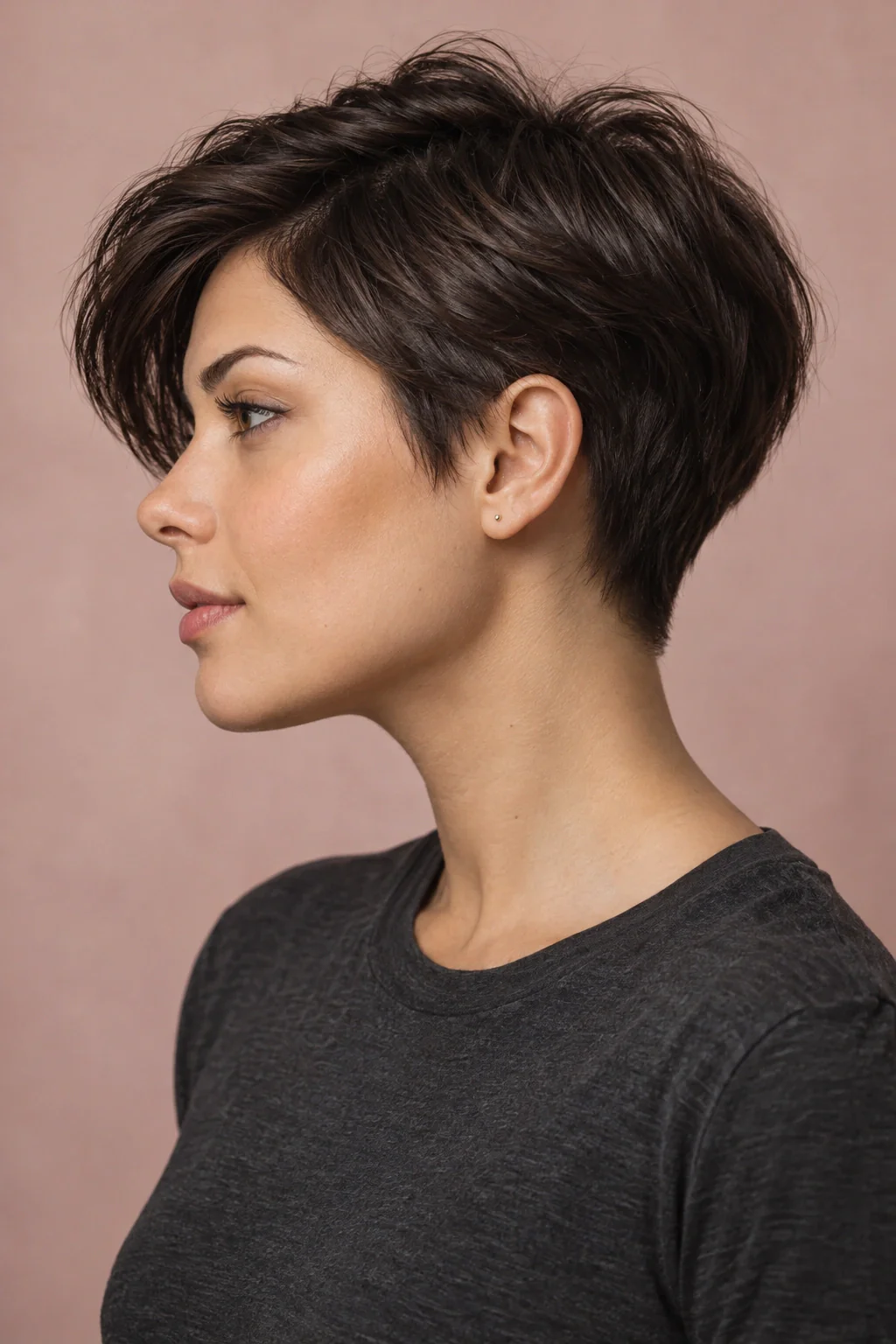
For a short hair filter comparison, choose the shape before the finish. A chin-length bob keeps hair beside your face; a pixie opens more of the ears and nape; a longer bob leaves more coverage near the shoulders. Explore these short hair try-on directions in Hair Muse, keeping the color familiar while you compare the new outline.
Shorter hair does not automatically mean less effort, and longer hair does not automatically mean more. Your routine depends on the shape, texture and the way you like to wear it. Describe the actions you want to keep and those you would be happy to change. That is more useful than asking for a haircut that is simply “easy.”
Consider the habits that disappear when the length changes. If a quick ponytail is your reliable reset, what would take its place? You might be comfortable redirecting the front, wearing a small accessory or leaving the texture alone. Think through that alternative before relying on the shortness itself to solve the routine.
A small change and a more noticeable one can show whether you want a refresh or a new silhouette. Keep the finish familiar so the comparison stays about length.
Write down what the preview leaves unseen: the back shape, the profile, the position of the ears and the way the front moves. These become consultation questions rather than assumptions.
Show your hair in the texture and finish you normally wear. It gives the stylist context that an idealized reference cannot provide and keeps the plan grounded in your actual routine.
Ask how the outline could change as it grows and which parts may need attention to preserve the mood. You do not need an exact calendar from a photograph. You do need to understand whether the detail you love depends on keeping the nape compact, the front at a particular length or the sides away from the ears.
If you are unsure about a large change, discuss possible intermediate versions. The point is not to force a slow process or a dramatic one; it is to choose deliberately. A preview can reveal that you are drawn to an open neck while a consultation helps decide the shape that creates it.
Use the same portrait in Hair Muse and keep the color familiar. A bob try-on helps you compare the lower edge beside the jaw; a pixie cut try-on draws more attention to the front, ears and nape. Name which area you prefer open or covered before choosing your favorite direction.
That depends on your hair and the finish you want. Ask what the proposed shape would require in your normal routine, including how you would reset it on busy days. Shortness alone does not establish the effort involved.
Softness can come from direction, texture, the front or the perimeter. Identify which quality you enjoy in the reference and ask how it could be preserved. A short haircut does not have to follow one mood.