
0
Download on the App Store
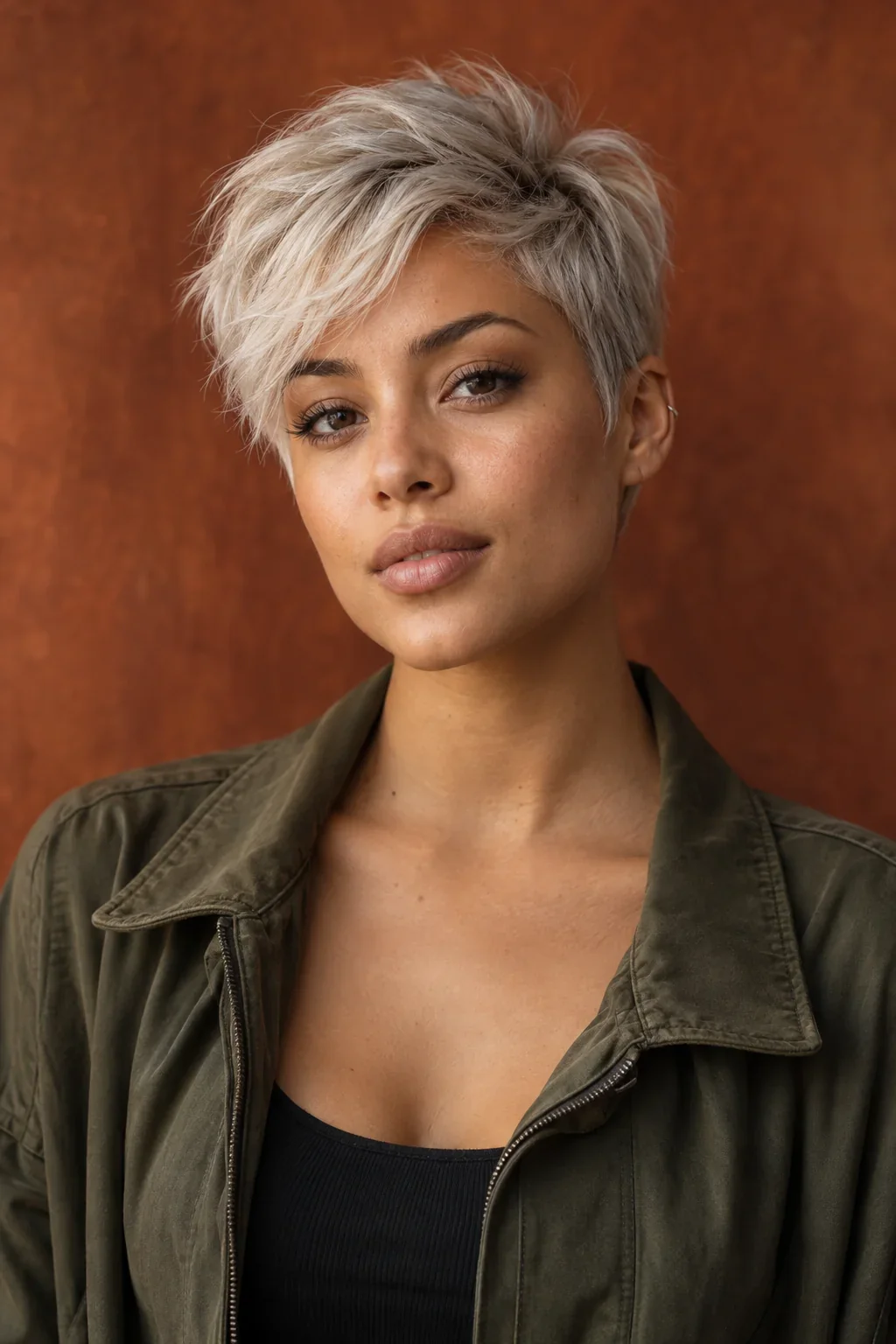
A young adult woman with a platinum-silver pixie and a swept front, wearing an olive jacket against a rust background.
THE LOOK NOTES

The silver sweep

A silver pixie cut can make the swept front the focal point while keeping the nape and sides more open.

Silver color creates a visible contrast with the jacket and background, but the central styling idea is the direction of the hair. You can borrow that even if your color is different.

Length
Short
Texture reference
Straight / Wavy
Worth considering
Shape-focused
Open your moodboard

Notice the two lengths

Shorter sides make the front feel more expressive. When considering this idea, ask where you want the contrast to begin and how much hair you need to move across the top. A reference from the front alone does not show the whole cut, so discuss the side and back outline separately.

Keep the front flexible

The swept front is the part you can change from day to day. Try a softer direction, a little more separation or a neater finish while keeping the compact sides. Tell your stylist how much freedom you want at the front, and which details you prefer to reset quickly when the hair moves.

Treat platinum-silver as a separate conversation

The cool platinum-silver tone is a deliberate color direction in this reference. A picture cannot tell you which process would create it from your starting shade. Ask a colorist about feasibility, condition and upkeep before committing. You can also borrow the swept silhouette while keeping your current color.

Try the silhouette with accessories

A short outline opens space for earrings, collars and eyewear. Put on the pieces you wear most often when considering the cut. The longer front should sit comfortably near glasses and remain easy to move away from your eyes. A shape can feel bold while still being practical.

Read the finer details.

Mood & identity8 min read

Soft vs Sharp Hairstyles

Choose the edge first, then the texture inside it. A blunt bob can retain waves, and a rounded crop can have a precise fringe. If you like both moods, decide which feature should be crisp and which should remain flexible before discussing the cut.

Read the story
Style details9 min read

Hair Accessories for Short Hair

Use a lightweight clip only where enough hair supports it. If the crop is too short for a secure fastening, choose a comfortable headband or earrings. A clear haircut shape with one well-placed accessory is a complete evening look.

Read the story
MAKE THE LOOK YOUR OWN

A little length in the right place.

The swept front creates movement within a compact silhouette. Platinum-silver makes that movement especially visible in the editorial image, but the shape can be considered independently of the color. Decide which of the two changes interests you.

01 / THE DETAILS

Try the longer front in three directions.

The platinum color is striking, but the shape’s main feature is the contrast between a longer front and compact sides. Picture that haircut in your own color first. Then decide whether the swept section is the change you want to wear daily.

  • Across the forehead: guide the longer section to one side and look at how much of the brow it covers. Check whether you enjoy that movement near glasses and whether it stays comfortably clear of your eyes.
  • Away from the face: compare a more open forehead with the same short sides. This may require a different length or styling approach; ask your stylist what your hair’s growth direction allows.
  • Softly forward: let the front sit with less lift and more separation. Keep this relaxed version in the discussion if you want the haircut to feel familiar on days without deliberate styling.

Use a side or back picture to explain the nape and ear coverage. Treat platinum-silver as a separate color appointment question, with your current shade, past services and maintenance preferences included.

02 / THE DETAILS

Make platinum its own question.

The silver tone here is a deliberate fashion color. It is not the reason the shape has to work, and it does not tell you how to create the same tone from your starting hair. Compare the silhouette in a familiar color before deciding whether you want both changes.

If the light tone is the main attraction, discuss that with a colorist. Explain the degree of contrast you enjoy and your comfort with upkeep. The route and feasibility depend on information a reference cannot supply, including the history and condition of your actual hair.

03 / THE DETAILS

Picture the softer version too.

A short outline can look more graphic when freshly arranged and softer when it moves. Decide whether you enjoy both versions. If your favorite detail depends on a very specific placement, ask how much attention it would require and whether a more forgiving variation could keep the same mood.

Write one sentence about what you want to preserve as the shape changes: the open ear, the movable front or the compactness at the nape. That helps you discuss the next appointment without assuming that every area needs to remain identical to the first photograph.

A LITTLE CLARITY

Your questions, considered.

Do I need platinum hair for this silhouette?

No. The shape and color are separate ideas. You can borrow the compact outline and swept front in your current color, then decide whether a color conversation is also relevant.

What detail should I point out to a stylist?

Explain how you want the front to move and how much openness you enjoy around the ears and neck. Ask which real proportions would preserve that balance with your hair.