0
Download on the App Store
THE MINIMAL MOOD

Your style, with room to breathe.

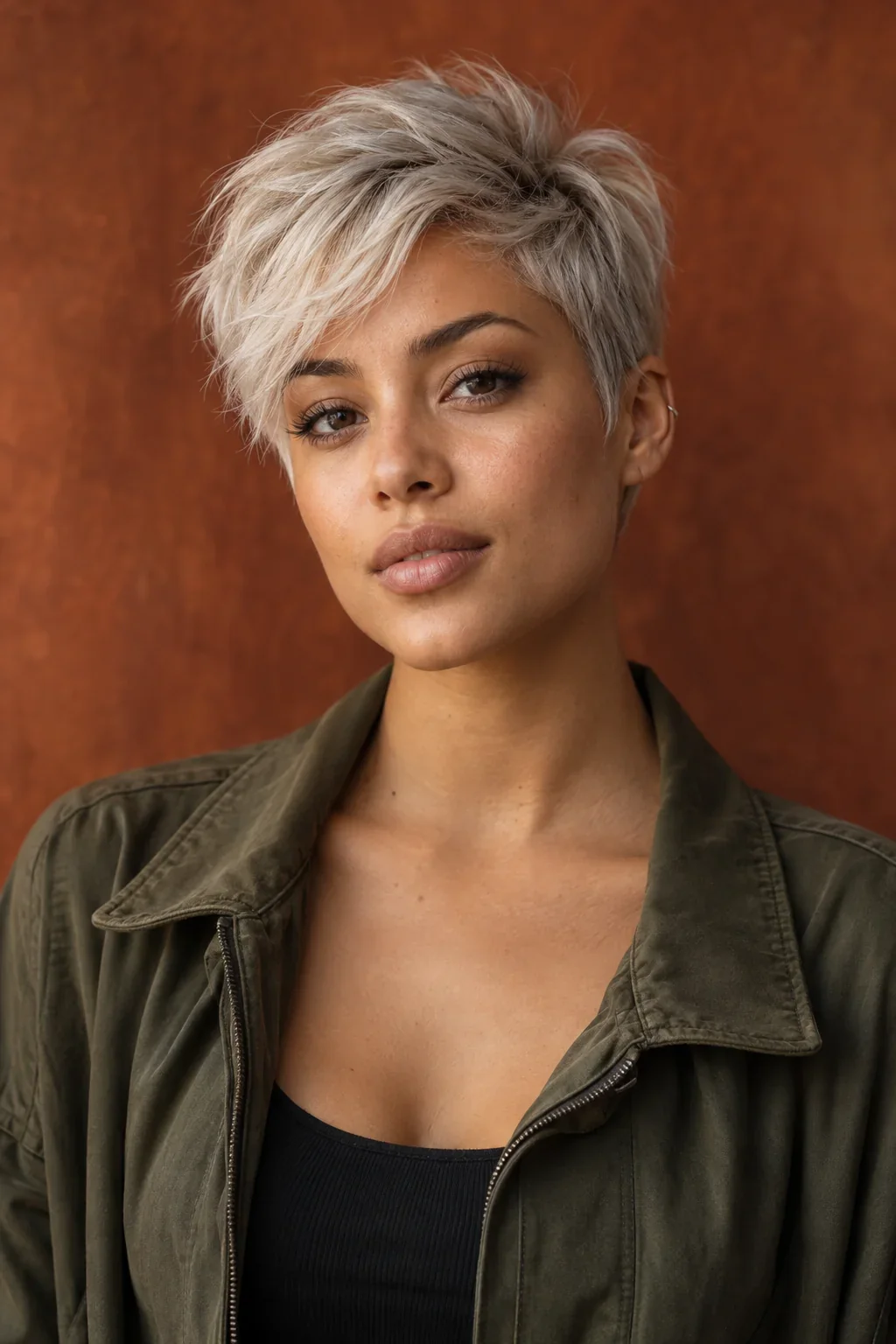
Minimalist hairstyles can center on a chin-length bob, a low ponytail, a rounded crop or long hair with a clear part.

A readable silhouette and a thoughtful relationship to your clothes can do more than an elaborate finish.

Explore the looks
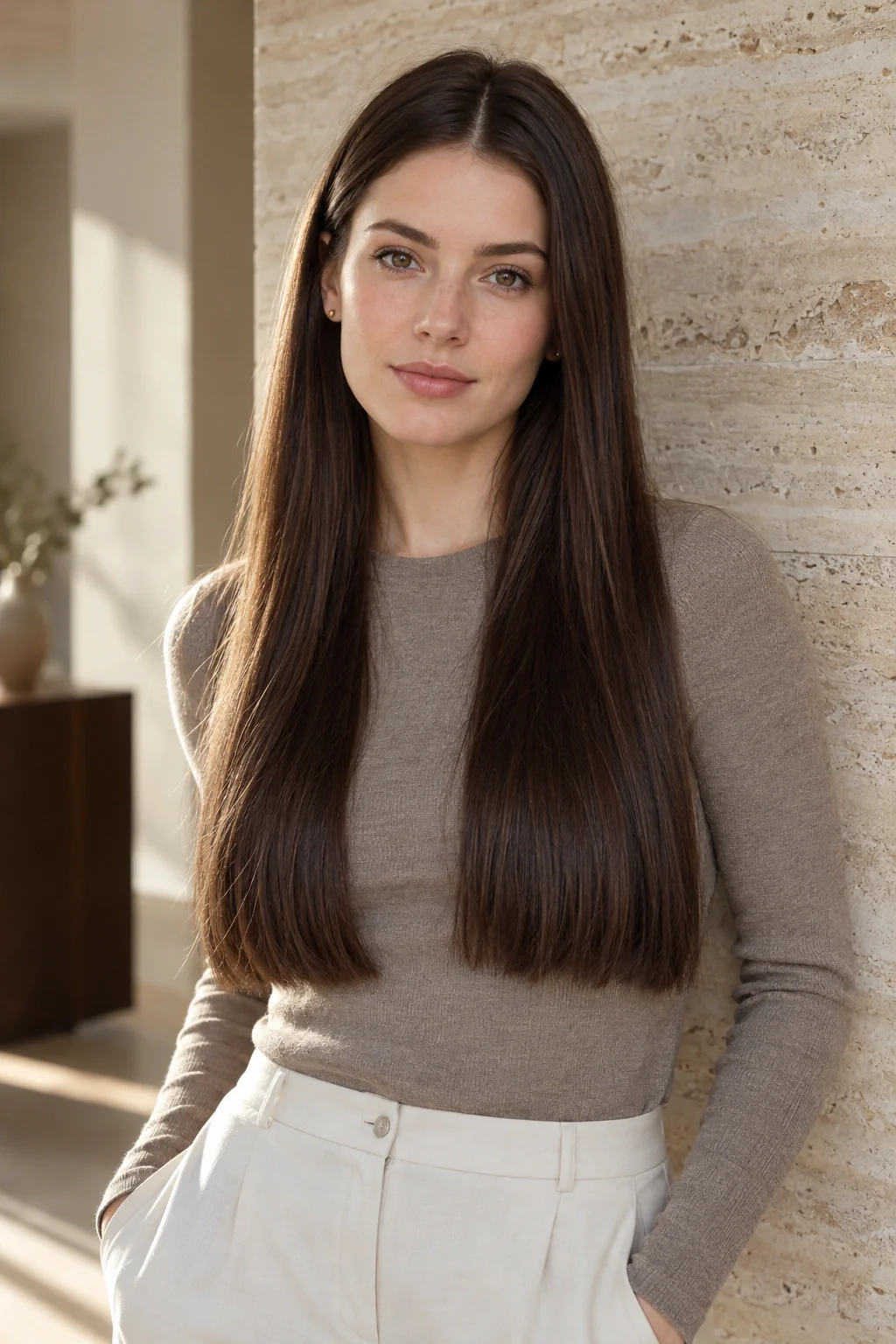
A young woman with long center-parted straight dark-brown hair in a taupe knit top beside a warm stone wall.
01

Keep one clear line

Look at the perimeter, part or gathering point. Which of those gives the style its identity? Let that line be readable and allow the other details to stay quiet. Minimal hair can have plenty of natural texture; the simplicity comes from the arrangement rather than the removal of every irregularity.
02

Consider negative space

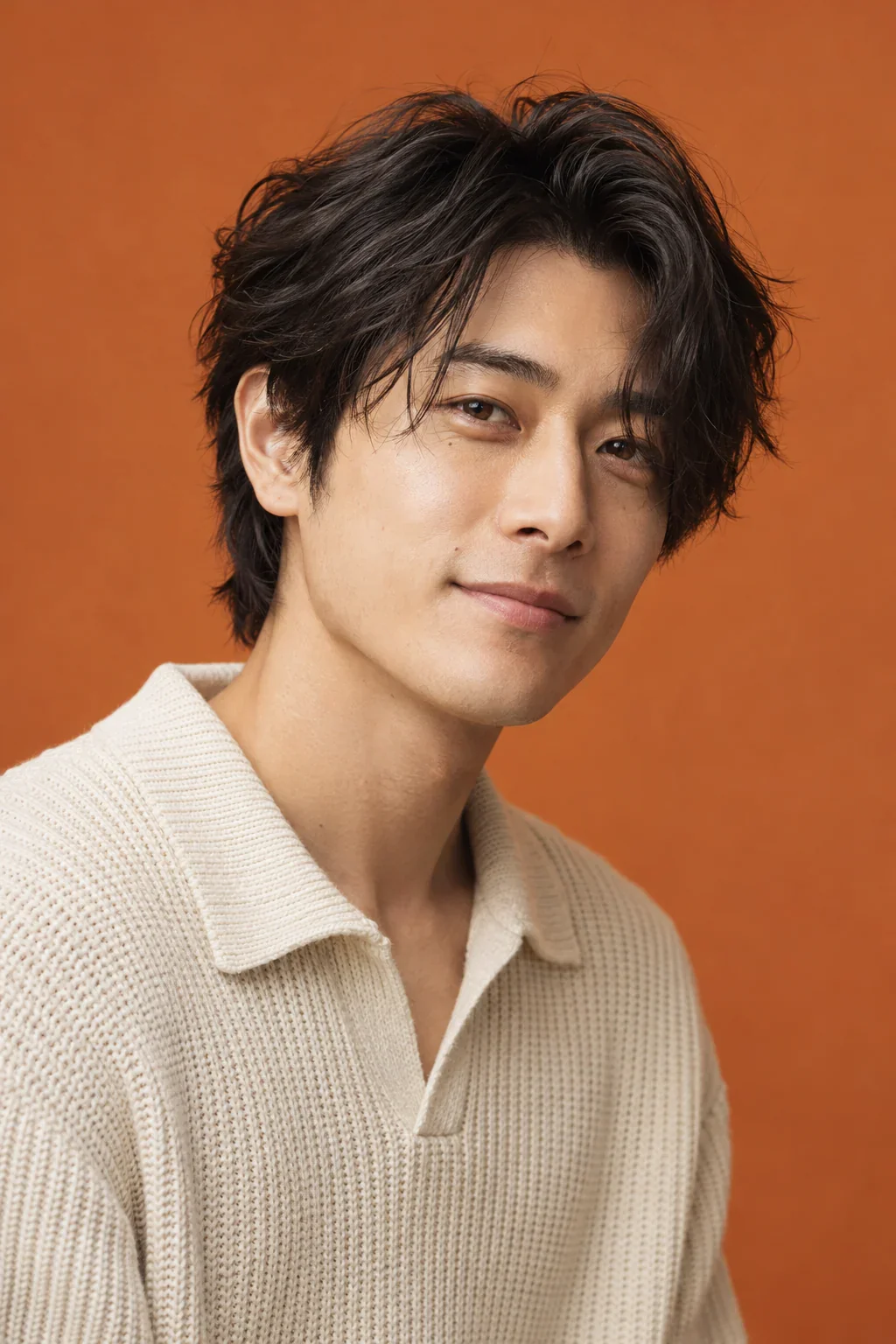
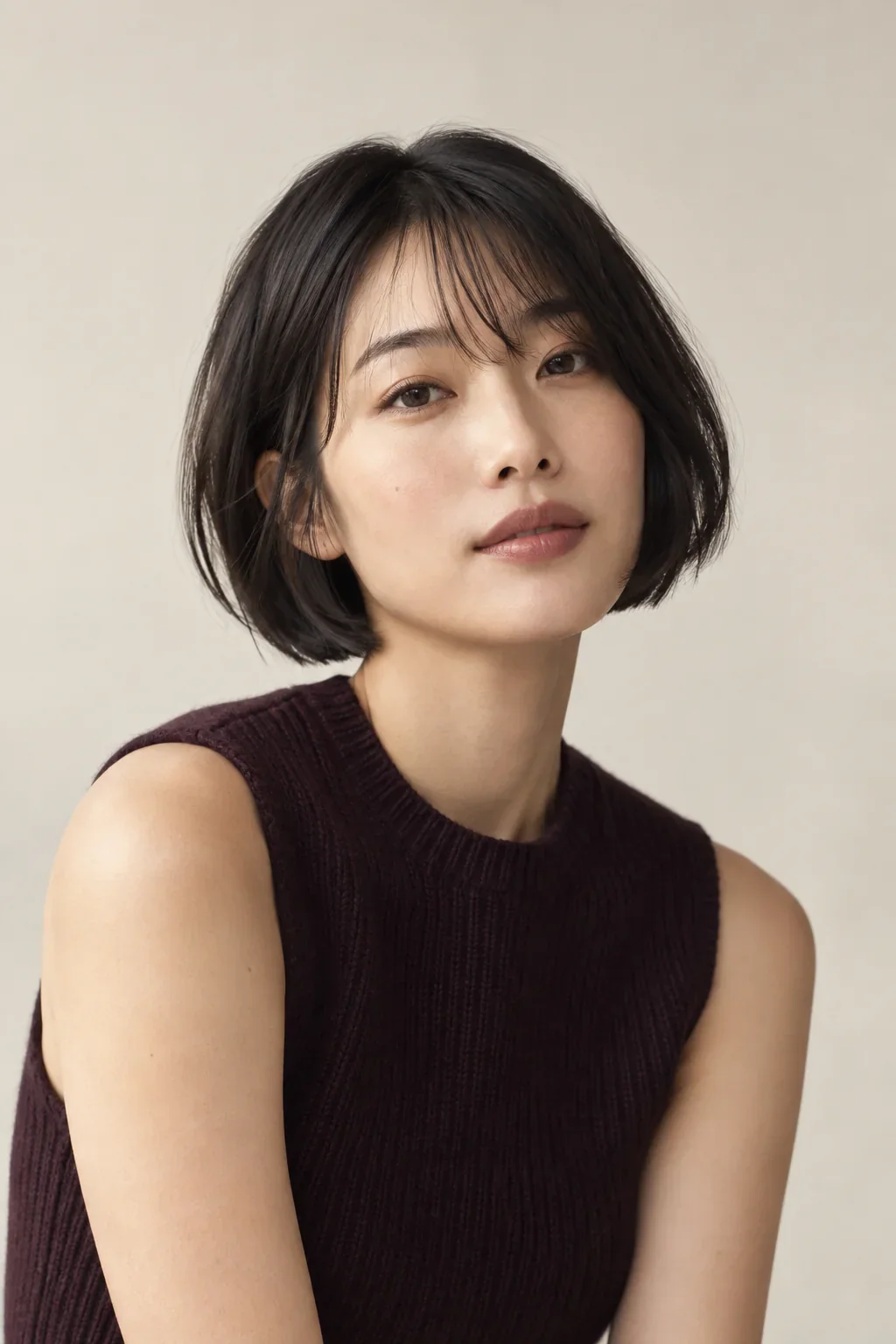
An exposed ear, a clear neckline or a gap between your collar and the ends of your hair can change the whole composition. Try the look from the side and from a little farther away. Close-up photographs often hide the reason a simple hairstyle works with an outfit.

03

Make simplicity practical

A spare look may reveal its outline more obviously as it grows or moves. Decide whether you enjoy maintaining that clarity. A slightly longer front or a softer part may give you an easier everyday version without losing the mood. Save the detail you want to preserve rather than demanding identical styling every morning.

The mood, in looks.

A little more inspiration.

Occasions9 min read

Hairstyles for High Neck Dresses

For a thick turtleneck, start with a twist positioned above the collar; for a delicate high neckline, try a half-up style that exposes its front. Keep hair loose when you enjoy the combined volume, and move only the sections that catch.

Read the story
Occasions9 min read

Travel Hair Styling Kit

Pack your care essentials, one familiar styling tool if needed, and fasteners for two planned styles. Remove duplicate styling jobs before shrinking essential quantities. Check the exact products and devices with the relevant airport authority and airline; “travel size” is not a permission category.

Read the story
Occasions9 min read

Hairstyles for Video Calls

Check framing and headset fit before restyling. If only the front gets in the way, secure that section and leave the length loose. If the band clashes with a high gathering, move the fastening below it or choose a flatter style.

Read the story
Mood & identity8 min read

Minimalist Hairstyle Ideas

Choose whether minimal means fewer visible details or fewer daily steps. If time is the priority, build around your normal finish and a repeatable gathering. If a precise edge matters more, ask what styling and appointment routine that edge requires before committing.

Read the story
Mood & identity8 min read

How to Describe your Hair Aesthetic

Pair the mood with a shape and a practical requirement: “soft movement, a clear bottom edge, and enough front length to tuck.” Use ordinary words you understand. If an image shows only the color or fringe you want, label that explicitly.

Read the story
Try-on notes7 min read

Best Photo for Hairstyle Try-on

Choose an evenly lit photo with a visible hairline and uncropped ends. If one side disappears into shadow, move yourself or the camera before editing the image. A readable starting photo improves the comparison.

Read the story
A LITTLE LESS, WITH INTENTION

Make the important line easy to read.

Minimal hair is about selecting a clear idea and letting the rest stay quiet. That idea can live in the perimeter, the part or the space around the neck. It does not depend on a particular texture or on removing every natural irregularity.

01 / THE DETAILS

Keep one clear line: the part, the ends or the neck.

Minimal hair can be a bob with a visible lower edge, a low gathering that clears the neck or natural curls with one side opened. The common feature is a shape you can read easily. Decide which line or space you want the outfit to emphasize.

  • Bob with a quiet front: keep the ends visible and choose a familiar part. Tuck one side if it helps the collar or earrings read clearly. You do not need to change the texture to simplify the composition.
  • Low ponytail or bun: set the fastening at a comfortable point and keep decoration restrained. Check that the shape clears the neckline and does not press into the chair you expect to use.
  • Curls with an open temple: pin a small section beside one ear while leaving the rest full. The clear space creates the simple detail; the individual curls can retain their own movement and irregularity.

View the whole outfit from a little distance before adjusting more hair. If you can already see the shape you wanted, leave the smaller details alone. Minimal styling should reduce the number of things you feel obliged to manage.

02 / THE DETAILS

Use open space as part of the look.

An exposed ear, a clear neckline or the gap between the ends and a collar can create the impression of simplicity. Try a tuck or a gathering to explore that space before deciding on a haircut. Sometimes the styling change provides the exact clarity you wanted.

Put on one familiar accessory and check the relationship. A minimal hairstyle can make an earring or frame more visible, so choose whether that object belongs in the focal area. Leaving something out may make the overall idea easier to read.

03 / THE DETAILS

Let the quiet version be comfortable.

A restrained style still needs movement. Test the front when you look down, the back against a chair and the ends against your usual clothes. Simplicity becomes practical when the arrangement does not need constant protection.

Keep your natural texture in the plan. A curly outline with a clear perimeter can feel as minimal as a straight bob. Describe the organizing idea instead of asking for a texture transformation simply because one reference happens to be smooth.

A LITTLE CLARITY

Your questions, considered.

Does minimal hair have to be sleek?

No. The mood can come from a clear outline or a limited set of styling details. Natural waves, curls and coils can remain visible within that structure.

Why does a simple reference sometimes feel hard to recreate?

Its effect may depend on a precise perimeter, a specific placement or a carefully prepared finish. Identify that dependency and ask whether a softer version could preserve the idea with a routine you prefer.