
Pack your care essentials, one familiar styling tool if needed, and fasteners for two planned styles. Remove duplicate styling jobs before shrinking essential quantities. Check the exact products and devices with the relevant airport authority and airline; “travel size” is not a permission category.
Build the kit from two hairstyles and your care routine
Choose a daytime style and an evening version before opening the toiletry bag. For example, your daytime plan might be loose curls with the front clipped back, and dinner might use the same curls in a half-up style. The kit then needs the products and tools you normally use for that finish, plus fasteners that fit both sections.
Keep care needs separate from optional styling. A product your regular cleansing or conditioning routine depends on is not interchangeable with a decorative finishing spray. Make room for the essentials first, then consider the extras below. The goal is a kit that works in the bathroom you will have, not the smallest possible collection.
Give every product a specific role
Lay out the products you use regularly and identify the job each performs. Cleansing, conditioning and styling are different needs, and not every product is interchangeable. Keep the familiar essentials that make your normal routine workable. Remove optional duplicates that create the same effect unless you have a clear reason to bring them. A compact kit should simplify your routine without forcing you to abandon the products your hair depends on.
Avoid buying an unfamiliar miniature only because its packaging is convenient. If you plan to use a smaller container, make sure it is suitable for the product, can close securely and is clearly labeled. Follow the product’s storage instructions. Estimate the amount from your own usage rather than a generic trip-length rule. Different hair lengths, routines and products require different quantities, so a little observation at home can prevent both overpacking and running out.
Select tools by the styles they enable
Choose the brush or comb that suits your actual routine. A compact replacement is useful only if it performs the job you need. If you regularly detangle with a particular tool, do not assume any small brush will substitute. For a trip centered on natural texture or gathered styles, you may not need a heated tool at all. Let the planned hairstyles make that decision instead of packing equipment automatically.
If you bring an electrical tool, check its own instructions, power compatibility and the accommodation setup before relying on it. A plug adapter alone does not establish that a device is suitable for the local supply. Corded, battery-powered and fuel-powered tools can also have different baggage requirements. Read the exact category for your item and consult the relevant authorities or airline. A kit is only useful if its tools can be transported and used appropriately on the route.
Build a small fastening set
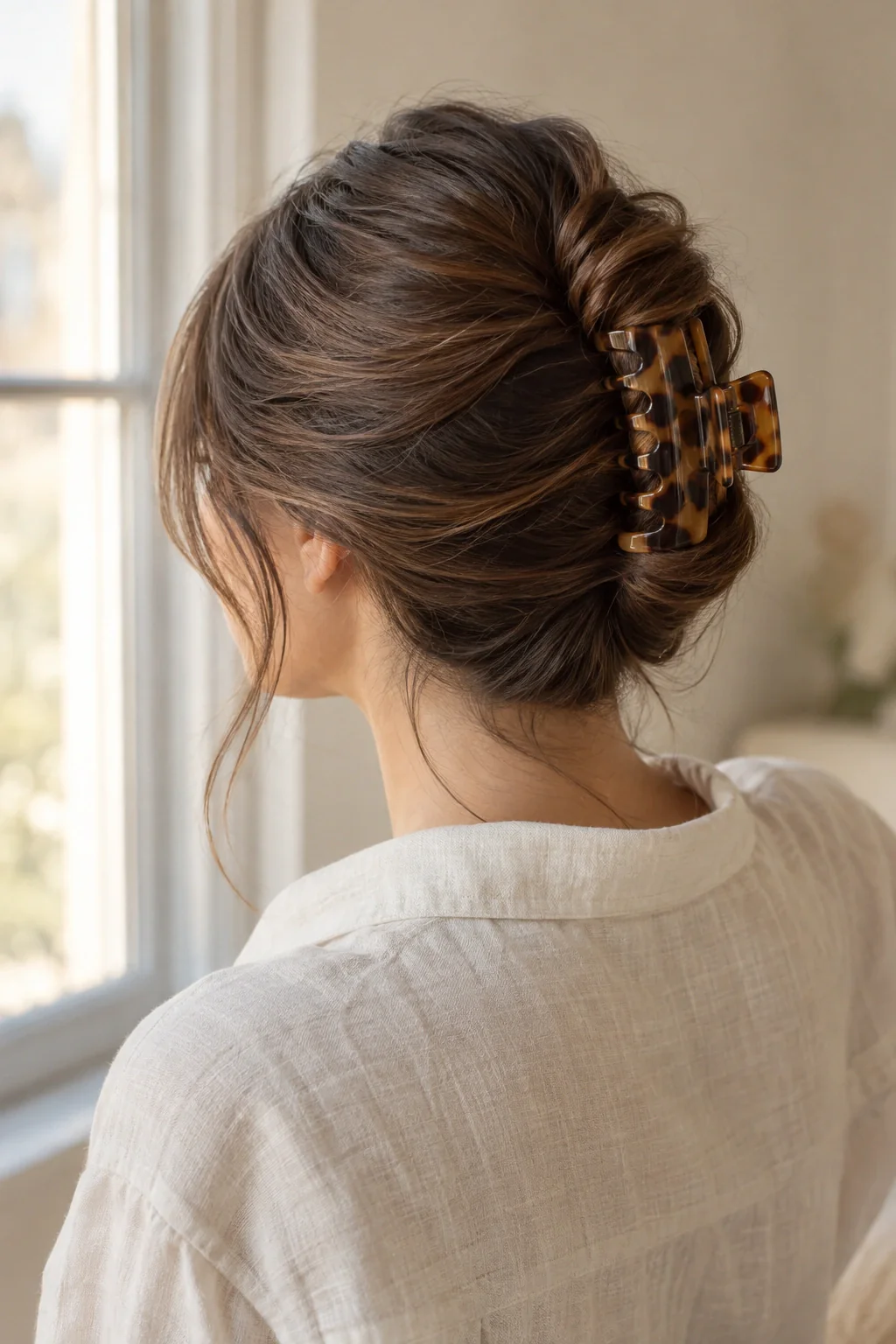
Choose fasteners that cover distinct jobs: one for gathering a useful amount of hair, one for securing the front and perhaps one decorative piece for an event. Some items can perform more than one role. Test each with the hairstyle you intend to wear. A beautiful clip that cannot hold your chosen section does not become more useful because it fits neatly into the pouch.
Include a sensible spare for the fastening your plan depends on. Keep pins and small clips in a container that closes reliably, rather than loose among toiletries. If the decorative accessory is delicate, protect it from heavier objects. You can place one practical fastener in your day bag and keep the others in the main kit. This division helps when you need a quick adjustment during travel without opening the entire toiletry bag in a crowded place.
Check baggage rules for the exact route
Before flying, consult the official airport security guidance and your airline for the products and devices you intend to carry. Requirements can differ by location and by item type. The TSA’s US item lookup, for example, separates hair liquids, aerosols and different kinds of styling tools. Use the relevant authority for your journey rather than treating a packing list from one country as a worldwide rule.
Check the return journey and any connections too. Look at container size, product category, batteries or fuel components as applicable, and follow the current instructions. Do not rely on a bottle being called travel size or on a device being small. If an item is unclear, resolve that before departure or choose a simpler alternative you already know works. The goal is to remove uncertainty from the kit, not to memorize a universal allowance that may not apply.
Rehearse using only the packed kit
A few days before the trip, do one normal styling session using only the items you plan to bring. Keep the rest of your tools out of reach. This reveals missing essentials and unnecessary extras quickly. You may discover that a small clip cannot hold your hair while you arrange the front, or that the evening version needs a fastening you forgot to list. Add the specific missing item rather than enlarging the kit indiscriminately.
Also test the containers and pouch in an ordinary upright and packed position, without exposing products to unsuitable conditions. Check that caps are secure and labels remain readable. Keep wet items separate until they are appropriately dry. The rehearsal is not a guarantee against leaks or damage, but it helps you notice obvious weaknesses before the trip. A kit that is easy to unpack and repack will be more useful across several accommodation changes.
Do a packing rehearsal that reveals missing items
Put the proposed kit in its pouch, then use only that kit for a normal styling session. Keep the rest of your products and tools out of reach. Complete the daytime style and switch to the evening version. If you reach for something absent, write down its job before adding it. A missing sectioning clip is a clearer finding than a vague feeling that you need more styling products.
Notice unused pieces too. If two accessories create essentially the same look, keep the one you can fasten and remove more comfortably. Retain a spare when it supports an essential structure; remove speculative extras that do not belong to either planned style. Check that the fasteners fit after your normal finish, not only when the hair is freshly washed.
Now review transport separately. Read the current official guidance for each liquid, aerosol, electrical device, battery, or fuel-powered item as applicable to your route. A successful home rehearsal establishes function, not baggage permission. Label permitted containers clearly and check their closures. Keep the daytime fastener in your small bag and the care kit together in your luggage. You should be able to find the item needed for arrival without unpacking the whole routine in transit.
Pack for a missing item as well as the ideal kit
Lay out the smallest kit that supports your planned hairstyles, then temporarily remove one item you might misplace during the trip. Try making an ordinary daytime arrangement without it. If the whole plan stops working when a single decorative clip is unavailable, consider adding a small reliable fastening you already own or choosing a second style that uses the remaining items. This exercise is about resilience in your routine, rather than packing duplicates of everything and losing the space you intended to save.
Repeat the test with the least familiar tool in the kit. Can you use it confidently in a different mirror, and does it earn the space it occupies? An item that supports only an unpracticed aspirational look may be less valuable than a modest accessory used every day. Write each item's job beside it before packing. If the explanation is only that you might need it somehow, decide whether the possibility is specific enough to justify bringing it on this trip.
Create a bathroom-counter rehearsal
Put everything outside the proposed kit away and arrange the packed items on a small area of your counter. Make the hairstyle you expect to wear most often, then perform the planned evening adjustment. Notice what you reach for automatically and whether it is actually included. Also notice whether several products are doing the same job in your routine. You can simplify the kit by keeping the option you know best, provided it still supports the styles you chose for the trip.
Finish by putting the items back into their travel container in the order you would use them. Keep frequently needed fasteners easy to find and separate decorative pieces that could become tangled together. Record any practical change to the list while it is fresh. This rehearsal does not replace checking the current baggage rules for your route, but it makes the personal styling part of the packing decision clearer. You will know what the kit enables before discovering its limitations in an unfamiliar bathroom.
Your questions, considered.
How many styling products should I pack?
There is no fixed number. Start with the products your familiar routine needs, then add only those required for a planned hairstyle. Remove duplicate jobs where practical. A compact kit should remain functional for your hair, so do not sacrifice an essential simply to meet an arbitrary minimalist target.
Can I assume a travel-size hair product is allowed in carry-on baggage?
No. Check the current official requirements for your route and the product category, including its container. Marketing labels do not determine baggage permission. Look at the outbound, return and connecting journeys, and use the relevant airport authority and airline guidance for anything unclear.
Should I bring a heated tool just in case?
Bring it when a hairstyle you genuinely plan to wear depends on it and you have checked transport and usage requirements. Otherwise, a familiar arrangement using your natural texture may make the trip simpler. Practice that alternative before leaving so the decision is based on a workable plan, not optimism.
Sources & what they support
The notes below explain the scope of each source. Hairstyle selections, outfit combinations and comparison exercises are HairSparks’s editorial suggestions; the links do not imply endorsement.
- TSA: current guidance for items in baggage ↗Official US item lookup for baggage questions, including styling tools and hair products. Check the rules for your route and airline; the packing list in this guide is not a transport allowance.
- American Academy of Dermatology: hair styling without damage ↗Hair-care background on heat and handling. The outfit choices, styling sequences and visual comparisons here are editorial suggestions, not findings from a clinical test.
HairSparks and Hair Muse share the same publisher. App mentions are promotional. Read our editorial policy.