
Choose one loose style, one contained style, and an evening accessory that works with either. Base all three on your normal no-heat texture. If drying time is the difficult part, adjust the wash plan before adding more styling techniques to the trip.
Heatless vacation hairstyles: build three repeatable options
Wear your hair without the heated step you usually rely on and let it reach your normal dry starting point. Keep the familiar care routine appropriate to your hair. Notice which sections you like loose and which you prefer to secure. You are choosing where the hair sits, not trying to recreate a blowout without the tool that produced it.
Build the trip around the three shapes below. Use your existing length and skills, then repeat the trial using only the items you will pack. A style that works in your home mirror but needs five tools you plan to leave behind has not yet passed the travel test.
Choose a small rotation of shapes
Plan three versions rather than seven unrelated hairstyles: a loose or lightly arranged day, a more contained day and a dressed version of one of those bases. The same texture can support all three. A half-up section, a comfortable twist, a small clip or a changed front direction can create enough variety without requiring a new technique every morning. Use the lengths and skills you already have.
For short hair, the rotation may be even simpler: your natural finish, a more deliberate front and an accessory when you want a change. For curls and coils, choose arrangements that preserve the pattern you enjoy instead of repeatedly brushing it into a different shape. For straight hair, a clean loose outline can be a valid no-heat result. You do not have to manufacture waves to make the holiday style feel relaxed or interesting.
Put drying time into the day’s schedule
Consider when you normally wash and how long your hair takes to reach the state in which you like to arrange it. A no-heat plan can fail simply because the itinerary leaves no time for that process. Choose a washing time that fits your actual needs and the trip’s rhythm. Avoid treating a fixed holiday wash schedule as a requirement; different hair and activities call for different routines.
Check the practical facilities when possible: a place to dry a towel, room for products and time in the bathroom. If mornings are rushed, plan an arrangement that works with the hair you expect to have then, rather than assuming you can complete an unfamiliar routine before breakfast. The aim is to place hair care sensibly within the day. It should not make you miss the activity you traveled to enjoy or encourage a routine that feels uncomfortable.
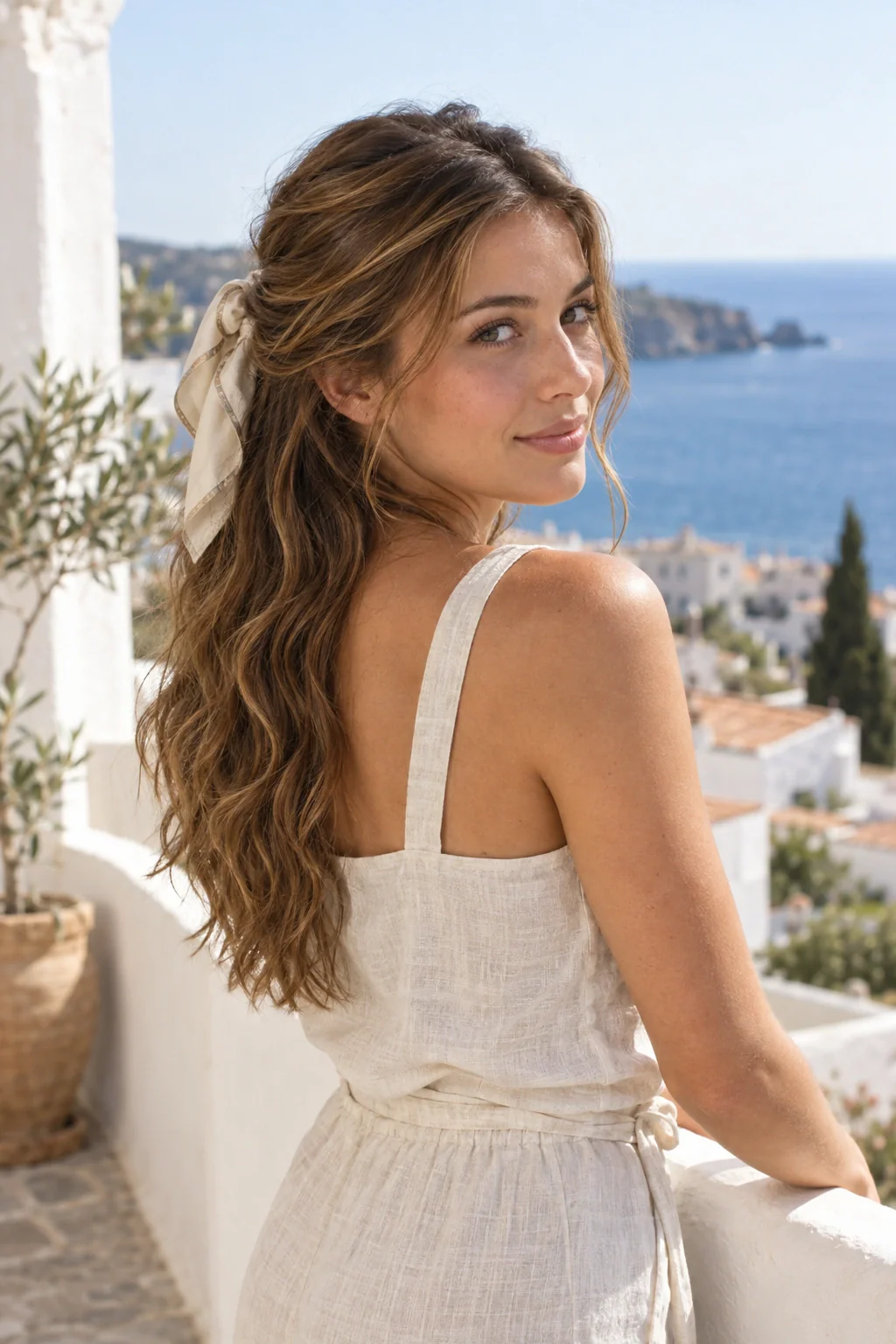
Use placement to change the mood
Without heated tools, you still have several visual choices. Move the front away from the face, place the lengths over one shoulder, open an ear or gather the upper section. These changes alter the silhouette even when the texture remains the same. Try them with the clothes you packed. A simple linen outfit, a patterned top and an evening neckline may each suggest a different placement.
Choose a detail you can reproduce without an elaborate mirror setup. If a hairstyle only works when every pin sits in an exact hidden position, it may not be the best everyday vacation option. You can reserve more complex styling for an event if you want. For the rest of the trip, a clear and repeatable arrangement will give you more freedom. The style can still look thoughtful because its relationship with the outfit is deliberate.
Pack accessories that earn more than one use
A suitable tie, a practical clip and one decorative piece can cover several versions of the same base. Test them before the trip so you know what each can hold. A scarf can add color to an already secure arrangement, but should not be expected to carry the structure unless it reliably does so on your hair. Keep the fastening comfortable and let the decoration perform its own role.
Choose items that fit the activities. A bulky clip may be awkward on a long journey; a delicate accessory may be less useful for a day with frequent clothing changes. Keep one simple spare accessible. You do not need a separate accessory for every destination photograph. Repeating a piece can make the packing easier and give your travel outfits a consistent detail, while changing its position can keep the hairstyle from feeling identical every day.
Plan around water and outdoor activities separately
Swimming, exercise and long outdoor days can change what your hair needs afterward. Keep the care routine appropriate to the activity rather than expecting the no-heat hairstyle to remove those needs. A practical vacation plan includes time for whatever cleansing, conditioning and drying you normally require. If an activity changes the hair substantially, choose the next arrangement from the state it is actually in, not from the style planned on a calendar.
Avoid treating a bun, braid or scarf as a guarantee of protection from sun, pool water or other exposure. Use the relevant guidance and products for your circumstances. In styling terms, a gathered option can be convenient because it keeps lengths manageable, but its role should remain clear. When the activity ends, reassess comfort and condition before arranging the hair again. The no-heat goal is a preference about tools, not a reason to ignore ordinary care.
Match the rotation to the hair you have that morning
Begin the day by deciding whether you need to wash, whether the hair is ready to arrange, and which activity comes first. Keep the care routine appropriate to your hair and the day’s plans. A no-heat itinerary should leave time for drying where you need it; it should not turn every breakfast into a race against wet hair.
On a day when the loose finish is already comfortable, use the lightest version: arrange the front and leave the length alone. If the front will be in the way during sightseeing, make the half-up style from the start. If a gathered style feels more convenient, use the low ponytail or braid you practiced. These are choices within the same rotation, so you do not need a separate product routine for each.
After swimming or exercise, complete the care steps appropriate to that activity before choosing the next style. The braid or bun is a way to manage length, not a guarantee against exposure. For dinner, add the planned barrette or change the front once the hair is in a comfortable state to arrange. Keep that transition repeatable with the packed kit; the holiday version can be simpler than your most elaborate evening finish at home.
Give a slower morning and a rushed morning equal status
Plan two versions of the same vacation mood. On a slower morning, you might let your usual texture settle and arrange the front after getting dressed. On a rushed morning, you may need a gathered option that does not depend on waiting for a particular finish. Both should be styles you would choose to wear, rather than treating the second as a failed version of the first. Name the shared detail, such as an open face frame or a visible patterned accessory.
Rehearse both versions at home using only the items you will pack. Keep track of which steps require a mirror and which you can perform comfortably by touch. If the slower version repeatedly turns into an effort to reproduce a salon photograph, revise the reference toward your existing texture. A no-heat vacation plan becomes more useful when it contains enjoyable options for different amounts of time, instead of a single ideal arrangement that depends on the whole morning unfolding exactly as expected.
Make an end-of-day transition without starting over
After wearing the daytime style, look for something worth retaining: a wave group, a clear part, a comfortable front anchor or a shape created by the gathering. Build the evening arrangement around that feature. For example, release the lower section while leaving the front supported, or gather the lengths while keeping a soft outline around the face. The exercise is to identify what the day has already given you, rather than assuming that evening styling must begin from a completely reset base.
Photograph the transition with your dinner outfit so you can see how much difference the clothing and accessories contribute. If the result needs only one small hair adjustment, allow that to be enough. Pack the relevant fastening where you can find it and leave out extra tools that do not support this sequence. After a trial day, note what you would repeat and what you would simplify. Those observations will make the vacation routine more dependable than a large collection of unrelated no-heat inspiration images.
Your questions, considered.
Does no-heat styling mean I have to wear my hair up?
No. Start with the loose texture you naturally get and decide whether any section needs arranging. You can wear it down, partly gathered or fully contained. The useful distinction is whether the style works without the heated step, not whether it belongs to a particular hairstyle category.
What if my hair looks very different without a blowout?
Practice before the trip and identify the specific differences that matter to you. You may prefer a changed front, an accessory or a gathered version rather than trying to reproduce the blowout exactly. A workable alternative can have its own shape and still feel like your personal style.
Do I need to learn overnight curls for a no-heat vacation?
No. Heatless curl techniques are one optional approach, and an unfamiliar method may add effort rather than remove it. You can build the entire trip around your existing texture and simple arrangements. Choose techniques you can comfortably repeat with the time and facilities available.
Sources & what they support
The notes below explain the scope of each source. Hairstyle selections, outfit combinations and comparison exercises are HairSparks’s editorial suggestions; the links do not imply endorsement.
- American Academy of Dermatology: hair styling without damage ↗Hair-care background on heat and handling. The outfit choices, styling sequences and visual comparisons here are editorial suggestions, not findings from a clinical test.
- Wella Professionals: styling with hair accessories ↗Examples of styling with accessories. Used for the distinction between a decorative finishing piece and the fastening that supports a style.
HairSparks and Hair Muse share the same publisher. App mentions are promotional. Read our editorial policy.