
With tailored linen, start with soft loose texture; with a flowing linen dress, try a low bun or one clipped side for definition. Keep your usual finish and change the placement before adding a scarf, bow, or extra styling steps.
Four linen outfits, four starting styles
Linen’s texture is only half the story. A waistcoat has a precise neckline, an oversized shirt has a movable collar, and a gathered dress creates more fabric near the shoulders. Match the hairstyle to that construction. You can repeat your natural hair finish across all three and still make each outfit feel different through placement.
Look for the contact point first. Long front sections may drop into an open shirt when you lean forward, while a low bun can sit comfortably above a collarless dress. With a short crop or bob, opening an ear often supplies enough contrast. Add an accessory only after deciding where the hair should sit.
Choose the neckline relationship
With an open linen shirt, consider whether you want the hair to fall into the neckline or sit behind it. Both can work, but long front sections may move into the opening every time you lean forward. With a high or gathered neck, a partial lift can keep the fabric visible. Put the garment on before making this decision; a hairstyle judged in a plain vest may feel different beside a collar or tie detail.
For a sleeveless shape, loose hair over one shoulder can create asymmetry without adding accessories. A collarbone-length style may naturally frame the upper edge of the garment. Curly or coily volume can provide a rich contrast to a simple linen surface. Work with those existing relationships first. If a particular section keeps interfering with the neckline, secure that section rather than assuming the entire hairstyle needs to be pulled back.
Let your natural finish set the starting point
A relaxed outfit is an opportunity to build around the way your hair usually settles. If your waves separate softly, choose a placement that lets that movement show. If your curls form a rounded outline, decide whether to leave it full or open a small area around one ear. If your hair falls straight, a quiet, continuous line can look just as considered as a textured finish beside the fabric.
Avoid manufacturing a complicated version of effortless. An arrangement that requires repeated curling, separating and resetting may not suit the day you have planned. Choose a finish you already know how to achieve, then add one detail that connects it to the outfit. This could be a visible fastening, a changed front direction or a small half-up section. The garment does not require you to imitate a beach texture that your hair does not naturally make.
Choose accessories by material and function
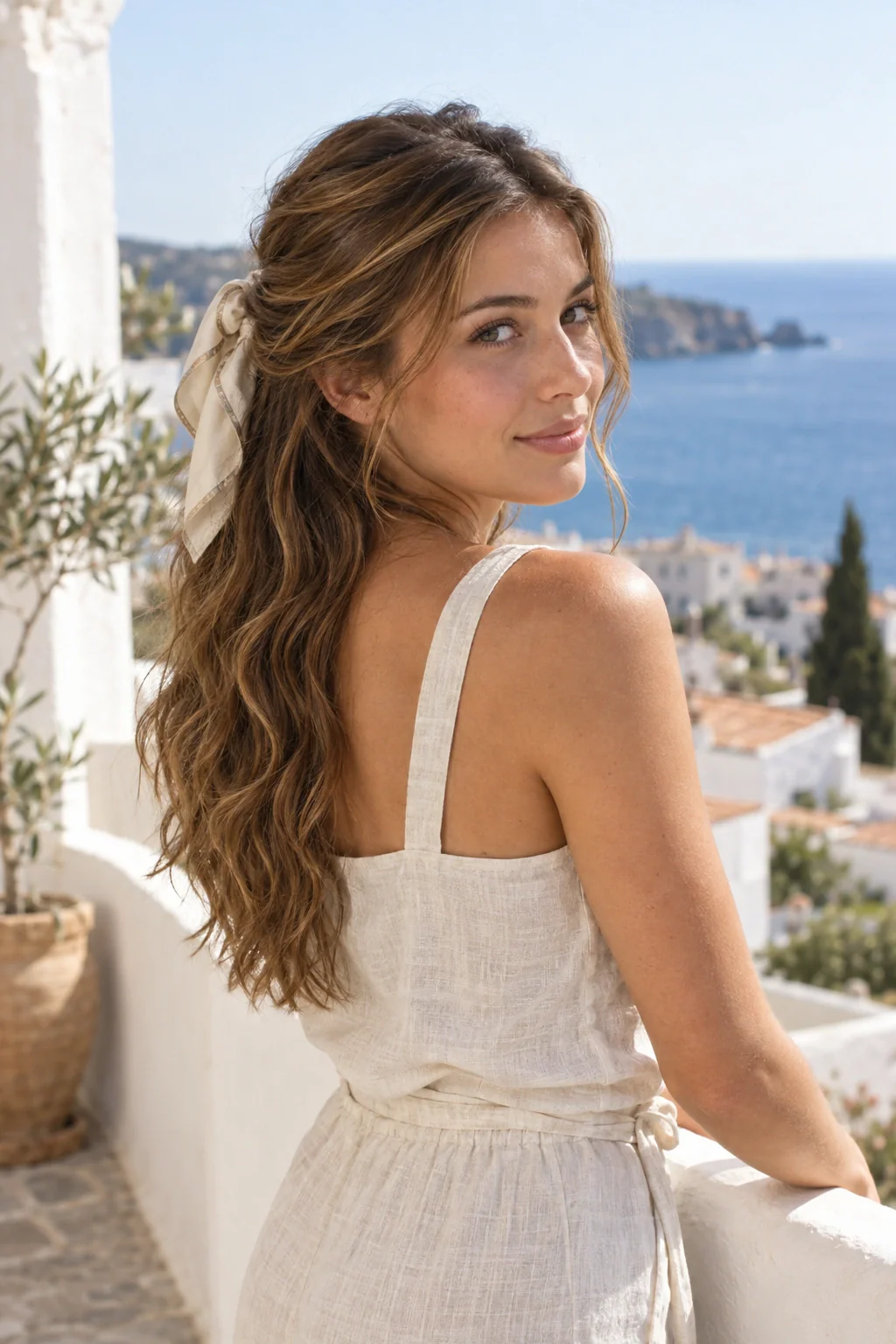
An accessory can echo the outfit without matching it exactly. A plain fabric tie, a smooth clip or a small metal barrette each adds a different note. Try the accessory against the linen color and your hair before buying anything new. A piece you already own may create the contrast you need. The scale matters as much as the material: a large bow can lead the outfit, while a narrow tie can remain a quiet detail.
Keep decoration separate from the fastening job when necessary. A scarf may look appealing around a gathered section but may not hold that section on its own. Build a comfortable arrangement first and add the decorative layer afterward. Check that tails, knots or clip edges do not interfere with the collar or bag strap. The best accessory for a relaxed day is one that stays useful when you stop looking at it in the mirror.
Plan for the actual setting
A linen outfit worn to an indoor lunch has different practical demands from one worn on a long coastal walk. Think about wind, shade, transport and how often you expect to put on a hat. Choose a hairstyle that can accommodate those actions without being rebuilt. A low-profile arrangement may be easier under a hat, while a partly gathered style can keep the front clear without enclosing all the lengths.
Do not promise yourself an unchanged finish all day. Decide which changes you are happy to accept. A little movement may suit the outfit; hair repeatedly crossing your eyes may not. Carry a simple fastening that addresses the second problem. If you will be outdoors, follow appropriate sun protection guidance for your circumstances rather than treating a hairstyle as protection. The visual plan should make the day easier, not become another task to manage.
Create an evening adjustment from the same base
For dinner after a day out, preserve the parts of the hairstyle that still work. You might gather the upper section more deliberately, move the lengths to one side or add a small accessory near the ear. A linen outfit can feel dressed without forcing the hair into a formal updo. Look at the new lighting and jewelry before deciding that the whole finish needs replacement.
If you plan an evening change, practice it with the same length and texture you expect to have at that point in the day. Hair after several hours outdoors may not behave like freshly styled hair. Choose an adjustment that accepts the existing movement. For example, arranging the front neatly while leaving the lower texture loose can look purposeful. Pack the exact clip or tie needed, along with a mirror if the setting will not provide one.
Turn daytime linen hair into a dinner look
A side braid can stay in place for dinner. Remove a casual scarf if it dominates the outfit, or replace it with a narrower ribbon tied over the existing fastener. Leave the braid’s loosened surface alone unless it has become uncomfortable; the change in accessory and earrings can provide the evening distinction.
For loose hair, move both temple sections back into a small half-up style. Keep the gathering narrow enough that the lower texture still falls freely. A slim barrette makes the back look finished, while the open front reveals a shirt collar or necklace. With dense hair, use a fastener that closes around the chosen section without forcing it; a decorative clasp need not carry the entire upper half.
For a bob, expose one ear and check the nape after changing into an evening jacket. For a low bun, change its placement only if the new neckline conflicts with it. Rebuilding a comfortable base adds work without necessarily improving the outfit. Set out the evening accessory with the linen garment before the trip or day out. That small preparation lets you check color, scale, and fastening once, then use the same combination when the light and setting change later.
Give a relaxed outfit one intentional anchor
Think of a loose linen shirt, wide trousers and sandals on a day that includes lunch and an evening gallery visit. The fabric already brings a relaxed surface, so your hair does not need to imitate every crease. Choose one organizing detail: a clear part, a compact twist or a visible ear. Leave the rest of the arrangement close to its everyday texture. The result can feel considered because the detail is specific, without requiring the entire look to become smooth or formal.
Try the same clothes with the shirt buttoned differently before changing the hair again. An open collar gives loose lengths a different place to sit than a closed neckline. If that adjustment already produces the openness you wanted, stop there. This is a useful reminder that the hairstyle is part of an outfit system. Sometimes a small clothing decision creates the space you were trying to achieve through pins, a new part or a much more elaborate arrangement.
Build a linen outfit card for travel
Choose one linen combination you actually plan to pack and create a small card in your notes. Include the neckline, the intended activity, the hairstyle you can make with your travel kit and a later adjustment. An example could be an open-neck shirt with a low gathering for sightseeing, then the same base with the front released and an earring visible for dinner. Keep the description about operations you can perform, rather than a mood word with no clear styling action.
Rehearse the card using the mirror and accessories you expect to have. If the evening adjustment requires a different appliance, several products or help from another person, simplify it until the plan matches the trip. Then wear the outfit long enough to see how the hair meets the fabric after sitting. Save a photograph at that point. It will be a more honest reference than a perfectly arranged first image, and more useful when you recreate the combination away from home.
Your questions, considered.
Do linen outfits only work with messy hair?
No. A precise crop, defined curls or a smooth gathering can create an appealing contrast with linen. Decide whether you want the hair to echo the fabric’s softness or add structure. Relaxed clothing does not require an untidy finish, and polished hair does not make the outfit automatically formal.
What is an easy option when my hair is too short to tie back?
Try arranging the front deliberately and opening one side with a small clip if your length allows. You can also keep your usual short style and let an earring or neckline provide the change. The aim is a coherent outfit, not recreating a long-haired reference with sections that cannot reach.
Should a hair scarf match the linen exactly?
It does not need to. A related color can make the scarf feel integrated, while a contrasting print can become the focal point. Try it with the full outfit and check the fastening. If the scarf is decorative, use a suitable underlying tie or clip rather than relying on the fabric knot alone.
Sources & what they support
The notes below explain the scope of each source. Hairstyle selections, outfit combinations and comparison exercises are HairSparks’s editorial suggestions; the links do not imply endorsement.
- Wella Professionals: wedding hair and the complete outfit ↗Professional background on choosing wedding hair alongside the dress, accessories and setting. The specific outfit pairings in this guide are our suggestions.
- Wella Professionals: styling with hair accessories ↗Examples of styling with accessories. Used for the distinction between a decorative finishing piece and the fastening that supports a style.
HairSparks and Hair Muse share the same publisher. App mentions are promotional. Read our editorial policy.