
Use a low ponytail or braid for a long walking day, and keep a half-up clip available if you prefer loose hair. For dinner, change the front or accessory. Practice both versions with the same small kit before deciding what to pack.
Choose a base for your busiest sightseeing day
Plan for the day when you leave after breakfast and return after dinner. It may include a train seat, a crossbody bag, frequent sunglasses changes, and no full mirror between activities. A travel hairstyle earns its place when you can adjust it with the fasteners already in your day bag.
Try the options below using the coat or light jacket you expect to wear. If your hair is too short for a gathering, the base can simply be your familiar finish with one side secured. The important distinction is between a style you can restore easily and one that needs several hidden pins or an unfamiliar tool to rebuild.
Create a base you can arrange without a full mirror
Practice a simple base that you can reproduce with limited space. That could be your natural loose texture with the front secured, a comfortable gathered arrangement or a short style with a deliberate direction. Use the tools you expect to pack, not the full set available at home. If the style depends on seeing the back from several angles, consider whether that is realistic in your accommodation.
Try doing it while standing in a smaller area and using a hand mirror if that is how you will travel. Notice which steps are essential and which are decorative. Keep the essential structure easy to understand. A style you can adjust by touch is particularly useful during a long day out. You can still add an expressive detail later, but the foundation should not require ideal lighting, a large countertop or a complex sequence of products.
Keep the face clear for the things you will do
A city day involves looking up, reading, walking and turning frequently. Test the front of the hairstyle while doing those motions. If the same section keeps falling forward, secure it in a way you can repeat. You can leave the rest of the hair loose and preserve the texture you enjoy. The aim is to reduce small interruptions, not to make the hairstyle as contained as possible.
Include sunglasses or everyday glasses in the trial. Moving them on and off can disturb a tuck or catch in a clip. If you plan to wear a hat, choose an arrangement that gives it room and remains comfortable beneath it. Avoid relying on a decorative headpiece as your only practical headwear. The hairstyle should accommodate the items you need for the day. A good travel look is compatible with your routine rather than competing with it.
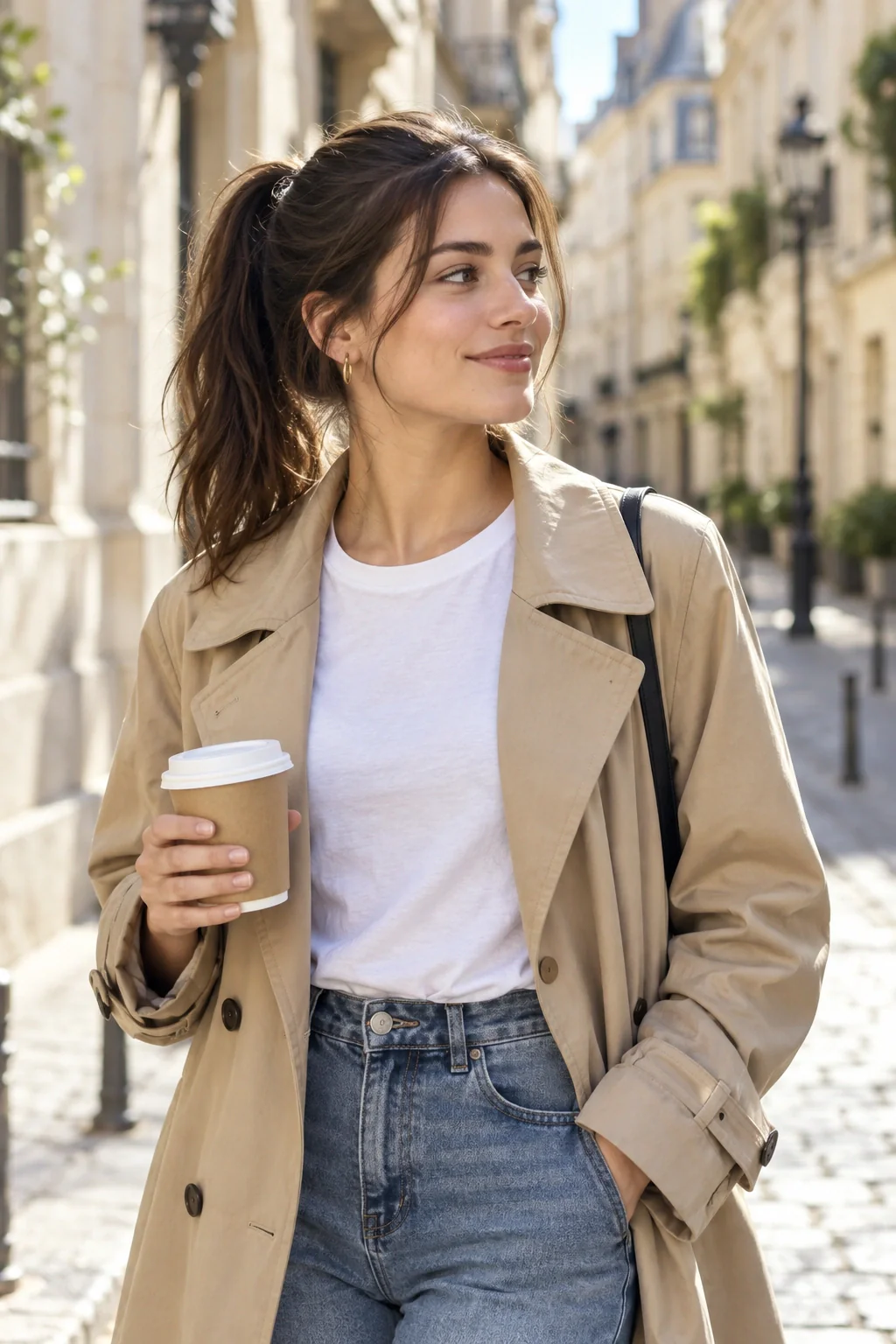
Choose an evening change that uses the same structure
Pick one detail that can shift the mood after sightseeing: a small metallic clip, a cleaner front, an exposed ear or a different position for the loose lengths. Try it with the evening outfit or its neckline. You may find that jewelry and clothing already create enough of a change. The hair does not have to undergo a complete transformation to feel ready for dinner.
Practice the adjustment after wearing the daytime base for several hours. This gives you a realistic sense of what will be possible without returning to a shower or styling station. If the evening version needs freshly washed hair, a heated tool and several new products, it is effectively a separate routine. Choose that only if you want to reserve the time. Otherwise, keep the change focused on arrangement and one accessory that earns its place in your bag.
Pack by hairstyle function
Lay out the items required for the base and the two adjustments. You may need one suitable brush or comb, your familiar essential products and a small selection of fasteners. Remove duplicates that perform the same job unless one is a sensible spare. A decorative clip is useful when it has a planned outfit or styling role. Three additional clips chosen only because they might be useful can make the kit larger without making the plan better.
Keep the day’s fastener in the bag you carry, while leaving the rest organized at your accommodation. Store small pieces where you can find them without emptying the bag on a pavement or station bench. If you are flying, check current baggage requirements for the route and the exact products or tools. Packing should support the hairstyles you know you can wear, not encourage you to bring an unfamiliar routine simply because it looks travel-sized.
Let each day begin with a small reassessment
In the morning, look at the weather and the itinerary, then choose which version of the base fits. You may want more of the front secured on a windy day or a flatter arrangement for a long train journey. These are placement decisions, not reasons to restart the entire hairstyle. Keep your usual cleansing and care needs in mind rather than forcing a rigid holiday schedule that does not suit your hair.
Allow the trip to change. An unplanned gallery visit or longer walk should not make the hairstyle feel like a mistake. Carry one comfortable option for gathering the sections that might become inconvenient. If the texture changes during the day, decide whether the visual idea still works before trying to correct it. A travel style can look intentional with movement and variation, especially when the front, fastening and outfit remain clearly chosen.
A three-stop example: train, museum, dinner
Start the train journey with a low, flat fastening. If a claw clip presses against the seat, save it for after arrival and use a tie or smaller barrette for travel. Keep the front in a direction you can restore with your fingers. The travel version does not need to be the one used in every photograph.
For the museum or long walk, secure whichever temple section falls forward while you look down. A narrow half-up section can do this without enclosing the length. If you carry a backpack, check the hair before sliding on the second strap; a braid or ponytail can still become trapped underneath. Move it clear once, then let the style settle.
For dinner, expose an ear, move loose length over one shoulder, or replace the daytime clip with a small metallic barrette. Make that transition during the at-home trial after several hours of wear. If it needs a fresh wash and a styling station, it belongs on a day when you plan to return to the room. Pack the small evening piece in a closed pouch, and keep the essential tie accessible. Those two positions matter more than carrying a decorative option for every outfit.
Create a route-based hairstyle plan
Take one real day from your itinerary and divide it into transitions: hotel to breakfast, several hours walking, a museum visit, then dinner. Note where you will wear a hat, remove a coat or carry a bag across your shoulder. Those details tell you more than a general idea of travel hair. Choose a base that works through the longest stretch without a private mirror, then decide whether dinner needs a small visible change or simply the same arrangement with the outer layers removed.
For example, a front section held back during sightseeing might remain in place while the lower lengths change from a loose gathering to an open shape for dinner. The exact style depends on your length and preferences, but the planning logic stays practical: preserve the part that already works and change only what the next setting needs. If the itinerary leaves no time to return to the hotel, remove any styling step that depends on equipment or products waiting there.
Review the trip through the items you actually used
After a day out, place the accessories you used beside the ones that stayed untouched. Ask which functions earned their place: holding the front, managing the lengths, changing the evening mood or making the journey comfortable. Record a successful combination with the clothing you wore. This creates a useful travel reference because it includes the conditions of the day, rather than a hairstyle photographed briefly before leaving the room with no information about how it wore.
If one arrangement needed constant adjustment, identify the recurring moment. Perhaps the bag strap caught the lengths or the clip met the back of a seat. Change that one relationship the next morning before replacing the entire plan. At the end of the trip, keep a short list of repeatable combinations and remove redundant items from the next packing list. The aim is a small collection that supports several actual travel days, not a separate elaborate hairstyle for every photograph or attraction on the itinerary.
Your questions, considered.
What is the easiest hairstyle for a full sightseeing day?
The easiest option is one you already know how to arrange and can adjust without a full setup. Identify whether the front, the length or the fastening usually bothers you during walking. Solve that specific issue. A partly gathered style can be useful, but your familiar short or loose style may work just as well.
How can I look ready for dinner without returning to my room?
Plan one small change that uses the existing base, such as opening an ear, adding a clip or gathering the upper section more deliberately. Test it after wearing the daytime style for a while. Keep the required item accessible and let the outfit or jewelry provide the rest of the transition.
Should I pack a different accessory for every outfit?
Only if you know you will enjoy using them. A few pieces with clear roles are easier to manage than many speculative options. Try one practical fastener and one decorative detail across several outfits. Add more only when they create a useful difference that the simpler kit cannot provide.
Sources & what they support
The notes below explain the scope of each source. Hairstyle selections, outfit combinations and comparison exercises are HairSparks’s editorial suggestions; the links do not imply endorsement.
- Wella Professionals: styling with hair accessories ↗Examples of styling with accessories. Used for the distinction between a decorative finishing piece and the fastening that supports a style.
- American Academy of Dermatology: hair styling without damage ↗Hair-care background on heat and handling. The outfit choices, styling sequences and visual comparisons here are editorial suggestions, not findings from a clinical test.
HairSparks and Hair Muse share the same publisher. App mentions are promotional. Read our editorial policy.