
0
Download on the App Store
CURLS, COILS & SHAPE

Curly hair try-on.
Your texture in mind.

Explore a curly hairstyle try-on with Hair Muse.

Compare a curly bob, a rounded crop or longer curls and find the outline you love.

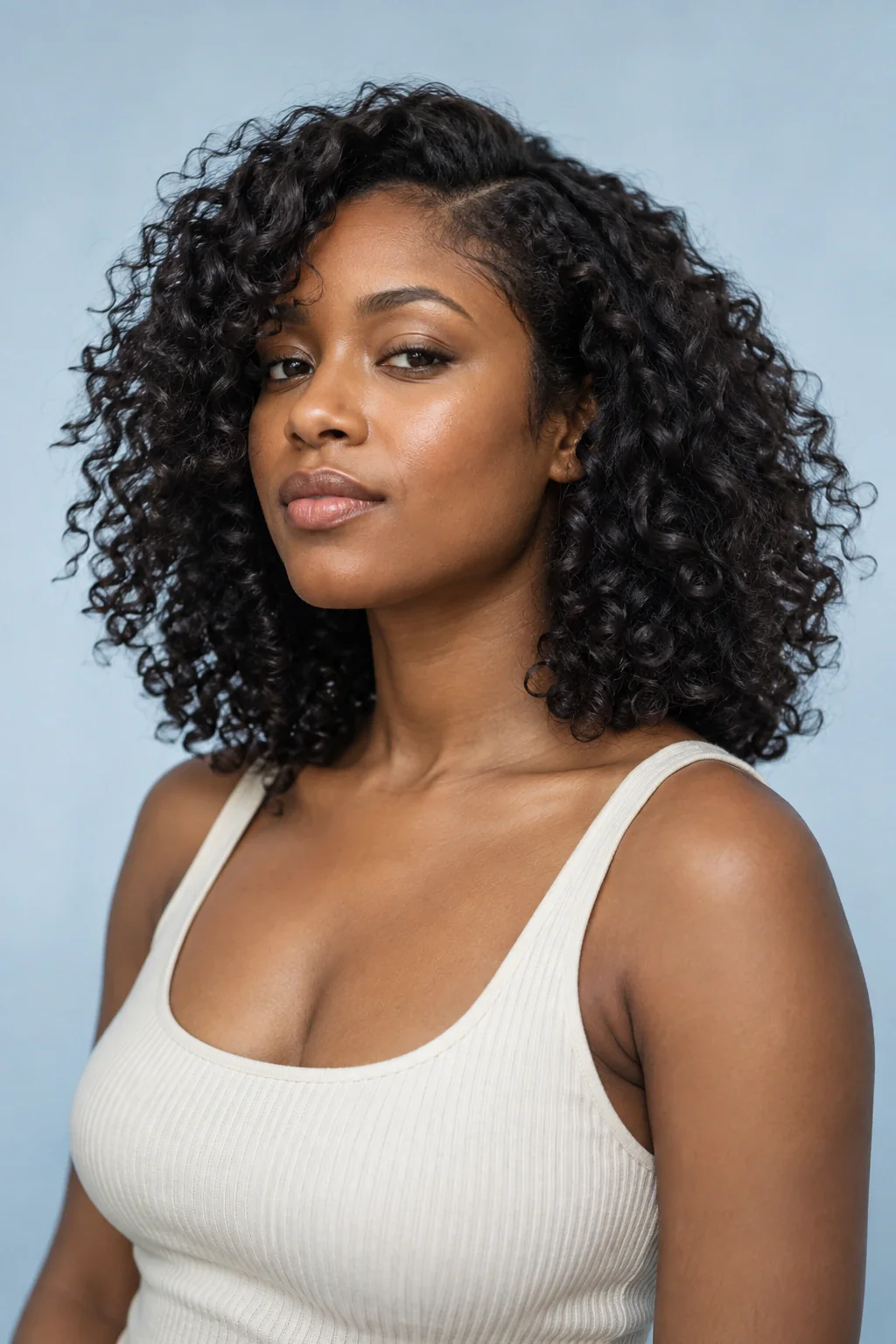
A young woman with shoulder-length defined black curls and a cream ribbed top against pale blue.
CURLS, COILS & SHAPE

Curly hairstyle try-on: choose a shape to compare.

A rounded curly bob, a shape with shorter sides and more height, and longer curls that frame the shoulders make three distinct starting points. Compare the outside silhouette and the space around the face.

01 / THE DETAILS

Compare three shapes, not three curl patterns.

Choose the part of the silhouette you want to change: width beside the cheeks, height at the top or length around the shoulders.

Bring your ordinary dry shape into the consultation. Explain how you dry, refresh and gather your hair, including any sections that behave differently. Those details help a stylist discuss an adaptation.

Rounded bob

Look at the perimeter around the cheeks and jaw, plus the opening through the front. Decide whether you enjoy a compact nape or more length at the back. Discuss where the dry ends should stop on your hair instead of copying the exact curls in the picture.

Shorter sides, fuller top

Compare the extra space beside the ears with the height through the crown. You may like the contrast while wanting softer side coverage. Keep glasses and earrings in the discussion, and ask for a side view of the shape you are considering.

Longer shoulder framing

Follow where the longest curls meet the shoulders and where the shorter front pieces stop. If you like to gather your hair, identify the sections that must reach. A long outline can still have a noticeably different front without shortening every section.

Treat a preview as a conversation about proportions. Save the shape you enjoy and describe what you want to preserve about the texture you already wear.

02 / THE DETAILS

Start with a familiar version of your hair.

Choose a portrait that represents the texture you normally enjoy wearing. If the source picture already straightens or hides the hair, the experiment may be less useful for a curl-focused decision. Keep a separate everyday photo for your stylist even if a preview introduces a different finish.

03 / THE DETAILS

Keep dry length in the conversation.

The length you notice in everyday life is the length your hair takes when worn, not just the length of a strand when extended. Tell your stylist how you usually dry and arrange your hair and which areas behave differently.

When the reference has a fringe, discuss it separately. The shortest front section sits in a place where its movement can be especially noticeable. Ask how the idea would work in your usual dry texture and whether a longer or more open interpretation would preserve the feeling you like.

  • Describe the dry outline you want to see.
  • Explain your regular wash and styling routine without promising a new one.
  • Identify the front, sides or nape where you want a different relationship.
  • Ask which part of the reference can translate and which part depends on another texture.
04 / THE DETAILS

Make the reference adaptable.

“I like this rounded silhouette and the space around the face. I want to keep wearing my natural texture. How could we get a similar balance with the way my hair dries?”

This illustrative brief makes the priority clear without asking for identical curls. Add a practical requirement if you have one: enough length for a comfortable gathering, an open area around glasses or a shape that can recover after headphones. These details help a consultation move beyond a single front photograph.

Compare any suggested adaptation with your original goal. If the technical plan changes but the mood remains, the reference has done its job. If the proposal depends on a finish you would rarely create, discuss a version closer to your everyday texture before deciding.

A LITTLE CLARITY

Your questions, considered.

Can I use a straight-haired reference for a curly haircut?

You can use it to explain a quality such as an open neckline, a compact silhouette or asymmetry. Be explicit about the feature you want to borrow, and discuss a translation that keeps your real texture central.