
0
Download on the App Store
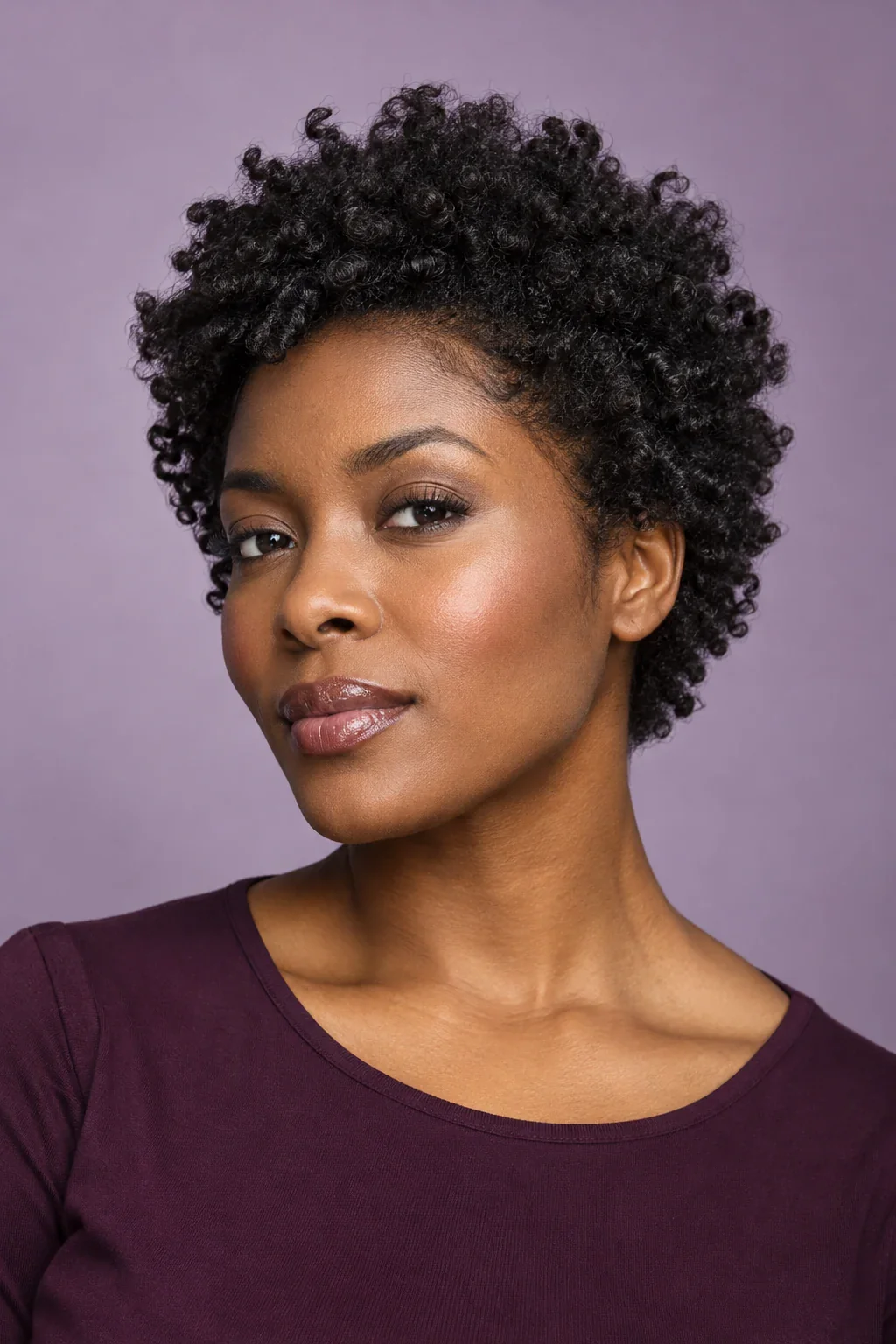
A woman with short sculpted natural curls and a plum shirt against a lilac background.
THE LOOK NOTES

The sculpted curls

Short curly hairstyles can combine a compact outline with textured volume, keeping the curls as the defining feature.

It has a strong shape without asking individual curls to look identical. Use the image to discuss the overall form and the areas you want to leave open.

Length
Short
Texture reference
Curly / Coily
Worth considering
Texture-led
Open your moodboard

Read the silhouette first

Step back from the image and notice where the width sits. A rounded outline can look very different depending on how much length remains at the top, beside the ears and at the nape. Those proportions matter more than the short-cut label. A side photograph can help make the conversation more specific.

Keep texture in the brief

Your curl pattern and the way it settles after drying will affect the finished shape. Show your stylist your usual routine and how you wear the hair between appointments. A reference with different curls can still communicate a mood, but it cannot predict the exact perimeter or the amount of shrinkage.

Give accessories their space

An open neck or visible ear makes room for a small statement earring. Test the jewelry with the actual outline: a large hoop may sit beside the hair, while a drop earring might catch within it. Keep the styling comfortable rather than forcing the hair away just to expose an accessory.

Plan how the shape evolves

Ask which area will change first as the cut grows. You may prefer a softer version that gives the outline more freedom between appointments. Save both a front and side reference, and explain whether your priority is a compact nape, height at the top or an evenly rounded silhouette.

Read the finer details.

Mood & identity9 min read

Romantic Hairstyles for Curly Hair

Keep your natural texture and choose one shape: half-up for visible length, a low bun for an open neckline, or a side sweep for short hair. Add a ribbon or barrette only if it contributes something the hair’s movement does not already provide.

Read the story
Style details9 min read

Curly Hairstyles with Earrings

Begin with one open ear and move the smallest curl group overlapping the jewelry. If you want both earrings visible, use separate local anchors or a small half-up. Check the earring closure and nearby hair together before relying on the pairing for a long event.

Read the story
MAKE THE LOOK YOUR OWN

A clear shape, with room for your texture.

This reference is about the outside silhouette and the way it opens around the face. It is not a request for identical curls. Start with the balance you enjoy, then discuss how that balance could work with the curl or coil pattern you normally wear.

01 / THE DETAILS

Compare the rounded shape with a more open side.

This short curl idea combines a rounded perimeter with space at the neck. The shape can change considerably depending on the length beside the ears and at the top. Compare those areas while keeping your own dry texture in mind.

  • Rounded all around: keep attention on an even outside curve, then decide how open you want the forehead. Discuss where the dry ends should sit at the cheeks and nape.
  • One side opened: move a small temple section to reveal an earring while leaving the rest of the curls full. A localized change can create contrast without flattening the whole side.
  • More height, less side width: use the image to discuss a taller silhouette with your stylist. Ask how that outline would be adapted to your own curls instead of expecting the pictured pattern.

Take a photograph of your ordinary dry hair to the consultation. Explain how you refresh it and whether you gather any sections. A cut should be discussed in the form you normally wear, including the way its outline changes between washes.

02 / THE DETAILS

Let the outline share space with accessories.

Try the idea with the earrings, glasses or collar you usually wear. A strong curl silhouette may be enough of a focal point on its own, or you may enjoy adding a contrasting detail. Look at the whole composition rather than treating accessories as a final addition after the hairstyle has been chosen.

For a camera day, use the actual framing and backdrop when testing your arrangement. The same outline can read differently in a tight crop and a full outfit photograph. Change the framing before deciding that the natural irregularity of the curls needs correction.

03 / THE DETAILS

Describe your everyday dry shape.

Tell your stylist how you normally dry, refresh and arrange the hair. The reference cannot show the behavior of your different sections or the amount of change between a wet and a dry state. Keep the conversation anchored to the version you actually wear.

Write one priority and one question in your board. For example: I want a clearer rounded outline, and I want to know how the front will sit on an ordinary day. This leaves room for a practical adaptation while keeping the reason you saved the image easy to understand.

A LITTLE CLARITY

Your questions, considered.

Can I borrow this shape with a different curl pattern?

You can use the image to explain the perimeter and distribution of fullness you enjoy. Ask a stylist how those qualities could translate to your own pattern. Identical curls are not a necessary part of borrowing the idea.

Should the reference look exactly like my wash-day hair?

It does not have to, but keep an everyday photo alongside it. That makes the difference between the inspiration and the starting point visible and helps you discuss what you are willing to change in your routine.