
For a thick turtleneck, start with a twist positioned above the collar; for a delicate high neckline, try a half-up style that exposes its front. Keep hair loose when you enjoy the combined volume, and move only the sections that catch.
Three hairstyles for high neck dresses to compare
Put the top on before picking a style. A roll neck occupies space behind your head as well as under your chin, so a bun sitting directly on the fold may be pushed upward. A fitted mock neck leaves more room, and a lace collar may have an edge you want to keep visible. The same hairstyle can behave differently with each.
Use the choices below to make a first comparison. Hold the hair in position with your hands, then check the side view. With curls or coils, judge the full outer shape: gathering the roots back does not necessarily lift the ends above the collar. Choose the version that clears the fabric without pulling.
Try three different amounts of openness
First gather your hair loosely away from the neck, using your hands before reaching for pins. Look at the effect of a completely visible neckline. Next release the lower lengths while holding the front back, creating a rough half-up shape. Finally wear everything loose in your usual part. These three quick versions reveal more about the ensemble than comparing several elaborate styles that all occupy the same space.
Photograph each version from the same distance. Include the top of the garment; a face-only selfie removes the very information you need. If the open version feels too formal, the answer may be a softer gathering point, rather than abandoning hair up altogether. If loose hair obscures a beautiful collar, move one side back. Small changes can keep the mood you like while letting the garment contribute something visible.
Place the gathering point around the fabric
A low arrangement is not automatically the easiest partner for a high neck. A bun sitting directly on a thick roll collar may be pushed upward whenever you turn. Gather the hair at a few different heights and check the side view. You are looking for physical clearance, whether that comes from lifting the shape slightly or choosing a flatter arrangement that sits closer to the head.
With long hair, try keeping the finished shape above the collar rather than letting its ends lie across the fold. With medium lengths, a small half-up section can clear the front without demanding that every layer reaches the back. Short hair may need only a change in direction around the ears. Leave any piece that is too short to join comfortably outside the arrangement, then decide how you want that piece to sit.
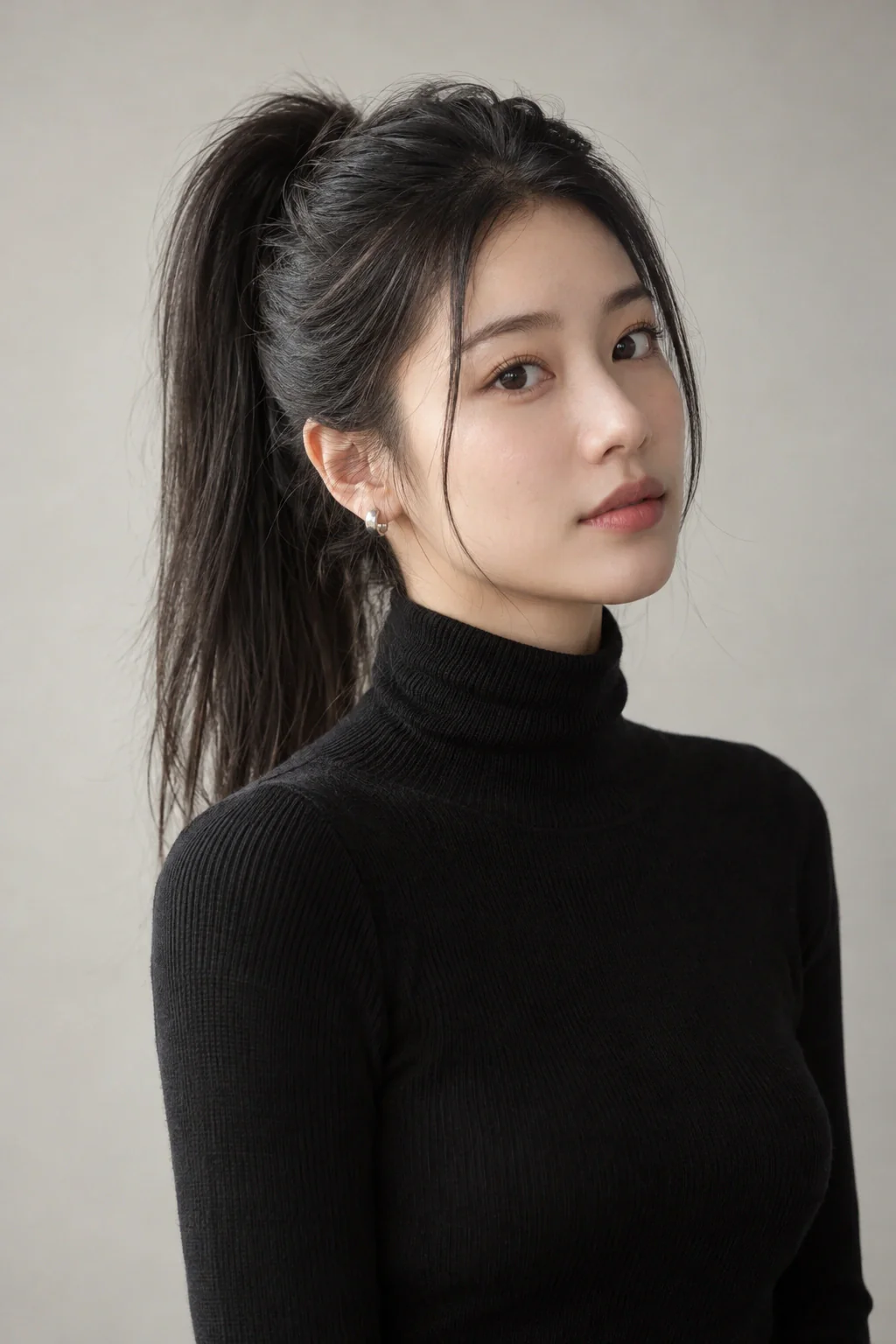
Let texture stay part of the composition
Curly and coily hair can create a striking outline beside a simple high neck. You do not need to smooth the surface to make the garment look intentional. Instead, decide where you want space: beside an earring, behind one shoulder or above the collar at the nape. Arrange only those zones and let the rest of the texture remain visible. A few purposeful clear areas can make the entire combination easier to read.
Fine straight lengths may lie almost flush against a smooth top, which can be exactly the minimal effect you want. If the outlines disappear more than you prefer, move some hair over one shoulder or gather a small upper section. Wavy hair can overlap a plain collar softly; check whether the ends flip against the fabric in a way you enjoy. The target is a chosen relationship, not a perfectly isolated silhouette.
Decide what happens around the ears
A high neckline already concentrates detail near the face. If you add earrings, glasses and a decorative clip, try them together before judging the hair alone. You may love a rich combination, but it helps to choose where the strongest detail sits. Clearing one ear can give a large earring its own space while leaving the other side soft. Clearing both ears can make a busy collar and symmetrical jewelry easier to see.
Avoid treating an ear tuck as a fixed pose. Turn your head and lean forward; does the hair immediately fall over the jewelry? If so, a discreet clip placed where it actually catches enough hair may work better than repeated tucking. If you prefer movement, choose earrings that remain comfortable when hair touches them. A hairstyle that demands constant correction changes the experience of wearing the outfit, even when its first photograph looks convincing.
Rehearse the transitions in your day
Put on the outer layer you expect to wear. A coat collar, scarf or hood may occupy the space that looked clear indoors. Try sitting with the back of your head against a chair as well. A bulky clip can feel very different once you leave the mirror. If the hairstyle works only while you stand perfectly upright, simplify its structure before adding stronger products or more decoration.
Plan how you will take the garment off. A narrow neck opening can disturb a finished arrangement; it may be easier to dress before the final pins go in. For an outfit change, consider a style that can be refreshed by releasing and regathering one section. Keep the relevant fastener accessible instead of packing an entire styling kit. The most helpful backup solves the specific collar conflict you already noticed during practice.
Fix the three most common collar clashes
If a bun rises every time you look up, the collar is acting like a shelf underneath it. Take the fastening out and move the base above the highest part of the fabric. Adding more pins in the same place leaves the conflict intact. If the new position is too high for your shorter layers, use a half-up style and leave those layers down.
If shoulder-length ends flip on the collar, decide whether you like the outward shape. To keep a straighter fall, place the hair over one shoulder or tuck the lower section into a loose gathering that sits clear of the fold. Test both while sitting: your shoulders and jacket often change the contact point.
If loose curls hide a decorative neckline, open two narrow temple sections first. You may reveal enough of the front without lifting the whole curl shape. Fasten each side where it reaches comfortably and check that the clips do not press on your glasses. Finish by putting on the coat or scarf you will leave home in. A style that clears the indoor neckline can still need a flatter fastening for the journey. Keep that change small enough to undo on arrival.
Solve a collar conflict without changing the whole look
Consider an outfit built around a ribbed cream roll neck, a dark skirt and small earrings. You like the softness of loose hair in the front photograph, but the back lengths bunch above the collar when you sit. Treat that as a problem in one location. Try bringing the lower lengths forward over one shoulder while leaving the front untouched, then try a loose gathering just above the obstruction. Compare the side views before deciding that all the hair needs to go up.
The useful question is what you want to preserve. If it is the movement around your cheeks, an arrangement with the back gathered may still meet the brief. If it is the long outline against the sweater, a one-sided placement may make more sense. Keep the version that retains your favorite feature and removes the physical interference. This example is a way to organize your own comparison, rather than a formula that every high neckline needs to follow.
Make a neckline note you can reuse
Give three familiar tops a quick entry in your outfit notes. Record the collar shape, where your hair touches it and the arrangement you preferred after wearing it for a while. A useful entry might read: folded knit collar; nape gets crowded; loose front with compact upper gathering. Another could say: smooth mock neck; no collision; curls left loose with one ear visible. The value lies in describing the actual contact and placement, not assigning a universal hairstyle to each garment type.
On the next occasion, use the closest entry as a starting point and change only the element that differs. A larger earring might call for more space on one side; a coat might change the gathering height. Photograph the revised combination if it solves a recurring problem. Over time, this small record becomes a wardrobe reference that saves experimentation, while still leaving room for a different mood whenever the familiar arrangement no longer feels right to you.
Your questions, considered.
Must I wear my hair up with a turtleneck?
No. Loose hair can look deliberate with a turtleneck, especially when you enjoy the combined texture. Try moving one side behind the shoulder or opening the front slightly. An updo becomes useful when the collar physically pushes the hair around, or when you want an uninterrupted view of the neckline.
What works with a high neckline and short hair?
Start with the direction of the front and sides. A tucked ear, a small side clip or a swept fringe can create space without pretending your hair is long enough for an updo. Check the nape against the collar too; its contact with the fabric may influence the finished outline.
How do I choose between a low bun and a half-up style?
Try both while wearing the garment and sitting down. A low bun may expose more of the collar but collide with bulky fabric. A half-up arrangement keeps movement in the lengths but leaves some overlap. Choose according to the detail you want visible and the arrangement you can wear comfortably.
Sources & what they support
The notes below explain the scope of each source. Hairstyle selections, outfit combinations and comparison exercises are HairSparks’s editorial suggestions; the links do not imply endorsement.
- Wella Professionals: wedding hair and the complete outfit ↗Professional background on choosing wedding hair alongside the dress, accessories and setting. The specific outfit pairings in this guide are our suggestions.
HairSparks and Hair Muse share the same publisher. App mentions are promotional. Read our editorial policy.