
Choose a lifted bun or twist for a clear back, or a side braid for visible length at the front. With half-up hair, move the remaining lengths over a shoulder if they cover the cutout. Place the fastening clear of any nape bow.
Hairstyles for backless dresses: reveal, frame or drape
Look at the dress from behind while wearing it. Locate the detail you want to show: a small cutout between the shoulders, crossed straps, a low curved opening, or a bow at the nape. These are different styling problems. Long hair can clear the front of a dress and still hide the feature at the back.
Begin with one of the options below and take a photograph that includes your waist. A face-only selfie cannot settle this choice. For a full curl shape, check where the ends land after gathering, since the finished silhouette may extend lower than the fastening. Short hair often clears the design already, leaving the front as the main styling choice.
See the outfit from several useful angles
Ask someone to take a straight-on back photograph and a three-quarter view, or use two mirrors without twisting your shoulders excessively. A contorted mirror pose can make the dress and hair sit differently from normal. Include the waist and shoulders so you can see the full relationship. Then take a short video while turning slowly. It can reveal hair moving into a strap or over a detail that remained clear in the still image.
Try the dress with the shoes you expect to wear if they change how you stand. You do not need a professional photo session; you need a realistic view of the outfit. Keep the lighting ordinary enough to see the edges. Dark hair against dark fabric may merge in a photograph even though the textures are distinct in person. If that matters to you, change placement before changing the entire hairstyle.
Choose lifted, one-sided or deliberately loose
A lifted arrangement gives the back detail the largest uninterrupted area. Its mood depends on the shape: a loose twist can feel relaxed, while a compact gathering can feel more graphic. A one-sided arrangement exposes much of the back but keeps visible length over one shoulder. Loose hair creates the most movement and can soften a stark opening. None of these options is inherently more appropriate for an evening outfit.
Compare them with rough hand placement before committing to a technique. If you love wearing your hair down, try moving only the front sections or gathering a small upper portion. If you want a clearer back, decide whether the lower lengths genuinely need lifting. A half-up style may reveal a high detail but still obscure a lower one. Judge the specific dress rather than assuming that the name of a style tells you what it reveals.
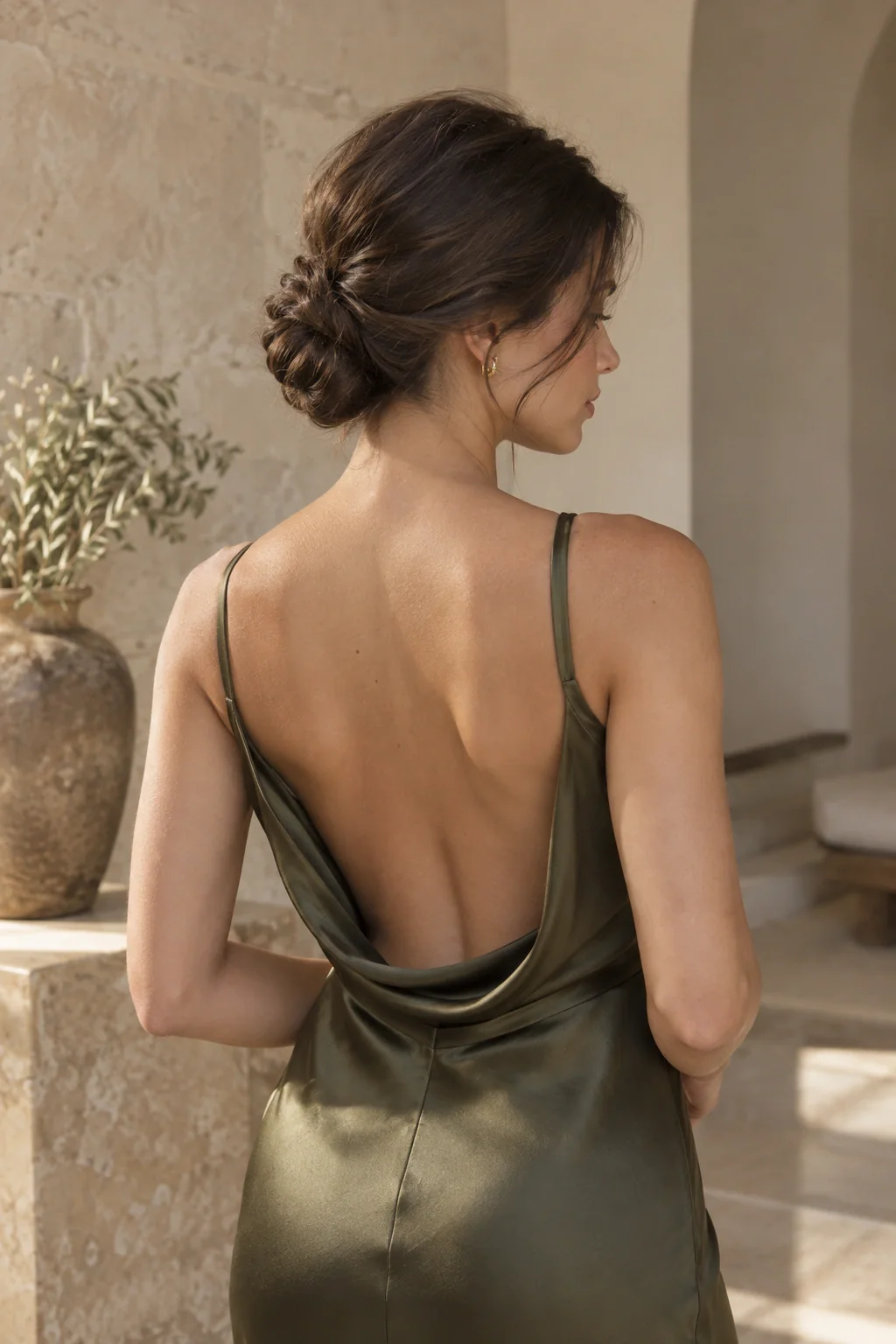
Keep the hairstyle away from fastening conflicts
Check the points where hair and garment meet: straps, hooks, decorative chains, beads and the top edge of a zipper. A side-swept style can look lovely until the lengths slide into a detailed strap. Move your arms naturally and put on any outer layer. If hair catches at the same point repeatedly, alter its route across the shoulder or secure a small section above that contact area.
A bun positioned exactly beside a bow can make both details harder to see. Try placing the hair higher, flatter or slightly to one side. A large clip may also press against the back of a chair or interfere with a wrap. Solve these physical conflicts with placement rather than ever more fasteners. The dress should sit correctly without depending on the hairstyle, and the hairstyle should remain comfortable when the garment shifts during ordinary movement.
Adapt the reveal to your length and texture
Short hair may already leave the back visible, allowing the styling decision to stay focused on the front. You can change the mood through direction, a small accessory or the amount of softness around the ears. Do not force short sections upward simply because the reference image shows a full bun. A clear nape with a loose, expressive front can make an equally complete evening look.
With curls and coils, a gathered shape can sit farther from the head than a smooth reference suggests. That volume can be beautiful against an open back. Check where the outer edge falls rather than trying to reproduce someone else's compact size. With very long hair, a low tail may still cover the dress detail even though the sides are clear. Fold, lift or redirect the length only if revealing that detail remains your priority.
Plan the getting-dressed sequence
Work out how the dress goes on before finishing the hair. A narrow opening pulled over the head can disturb a delicate arrangement; a dress that steps on or fastens at the side creates different options. If someone is helping with the back closure, allow them access before placing hair over it. Keep products and tools away from the garment during the final styling steps, especially when the fabric marks easily.
For a salon appointment, wear a top that can be removed without passing over the finished hairstyle, and bring clear dress photographs. Mention any wrap or jacket that will sit at the nape. If you are doing the style yourself, leave time to see the back after dressing. The last adjustment should respond to how the outfit actually sits, rather than to the version you practiced in a loose T-shirt the night before.
A back-view check that leads to a specific adjustment
Use a rear photograph and a slow turn to locate the first overlap. If the hair crosses a bow, move the base of the hairstyle, not just the ends. A bun two inches higher may reveal the knot; a side gathering may leave one strap clear. The amount of space is a personal choice, so stop once the feature you care about is readable.
If a side braid keeps sliding backward, check whether its base is still centered at the nape. Gathering the length toward the intended shoulder before braiding gives it a clearer route. Keep the hold comfortable. Short layers that cannot follow that route can stay loose or be fastened separately near the front.
For a half-up style, inspect the lower section independently. You may discover that it is the only part covering the dress. Either gather it too, or accept that the hairstyle reveals the upper straps while covering part of the opening. That is a better decision than repeatedly pulling the lengths forward during the event. Finally, sit against a chair with the wrap or jacket you will wear. If the accessory presses into the seat, replace it with a flatter fastening before refining the decorative finish.
Design the moment when the back becomes visible
A backless dress may be seen very differently during arrival, dinner and dancing. Imagine a dress with a small tie at the nape and an open panel below. Long hair worn down can cover both details while standing, then slide aside when you sit or turn. Decide which of those moments carries the look for you. If the open panel is the central feature, arrange the lengths where they remain clear of it during ordinary movement rather than only when you pose.
If you prefer a softer reveal, let the hair cover part of the opening deliberately and leave the tie visible above it. A one-sided arrangement can offer another balance, but test which direction the lengths return to after walking. You are not obliged to expose every inch of the dress. The aim is to choose how the clothing and hair share the back view, with an arrangement you can maintain without constantly reaching behind yourself to correct it.
Create a back-view reference with useful landmarks
Photograph the dress from behind and mark three locations in your notes: the highest detail you want visible, the edge of the opening and any fastening the hair must avoid. Then photograph the proposed hairstyle at the same distance. Compare the two pictures with attention to those landmarks. This gives you a practical way to explain why a bun needs to sit higher or why a loose section should fall to one side, without relying on vague instructions about elegance.
Ask a helper to capture a short walking sequence if you cannot see the movement yourself. Look for recurring overlap, not individual strands that change position for a second. If the same section always covers the feature you selected, adjust that section once and repeat the test. Finish the notes with the dressing order, especially where ties or zips need to be reached. A good reference should explain how you will get into the finished outfit as well as how it looks.
Your questions, considered.
Is a low bun best for every backless dress?
No. Its position may compete with a bow, strap or high cutout. Test a low bun against the actual dress, then compare a higher or flatter arrangement. The best position is the one that gives your chosen detail room and stays comfortable when you sit or add an outer layer.
Can I keep very long hair down with an open back?
Yes. Decide whether you want the hair to frame the opening or cover part of it. Sweeping the lengths over one shoulder may reveal more, but check that they stay there during movement. You can also choose to let the hair remain the main feature and show less of the dress.
What should I show a stylist before an event?
Share front and back photographs of the dress worn normally, plus the accessories and outer layer you expect to use. Explain which detail you want visible and whether you prefer hair up or down. That combination is more useful than a hairstyle reference whose dress has a completely different construction.
Sources & what they support
The notes below explain the scope of each source. Hairstyle selections, outfit combinations and comparison exercises are HairSparks’s editorial suggestions; the links do not imply endorsement.
- Wella Professionals: wedding hair and the complete outfit ↗Professional background on choosing wedding hair alongside the dress, accessories and setting. The specific outfit pairings in this guide are our suggestions.
HairSparks and Hair Muse share the same publisher. App mentions are promotional. Read our editorial policy.