
For an easy evening change, keep your normal texture and open one side with a tuck or barrette. Choose a half-up style if the front keeps falling forward; keep everything loose when the neckline and jewelry leave the lengths room to move.
Four evening styles that keep the length down
Loose evening hair works best when its distinguishing feature remains visible after you start moving. That could be an open side showing an earring, a pronounced front sweep, or the rounded silhouette of your curls. Choose the feature before changing the finish. You may already have the texture you want.
Try the options below with the evening top on. A shift of the hair across a bare shoulder can be more noticeable than another styling step through the ends. For short hair, use direction and the area around the ears; there is no need to imitate the volume or length of a longer style.
Give the front a deliberate route
The front is the part you will notice most in conversation and photographs. Try it in your normal part first, then move a small section away from the face or toward one side. You can create a dressed effect by deciding exactly where those pieces should sit. Keep the rest of the hair loose while you experiment. This isolates the change and avoids spending time restyling lengths that already look how you want.
If a section repeatedly falls into your eyes, decide whether it needs a discreet fastening or whether you prefer a different direction. Do not rely on holding your head at a flattering angle all evening. A small visible clip can be part of the look, while a hidden fastening can preserve the impression of loose hair. The choice depends on whether you want the detail to be noticed, not on a rule about what counts as formal.
Choose a finish you can maintain
A soft wave, defined curl, straight fall and airy texture each have their own evening possibilities. Choose a finish that is familiar enough for you to understand how it changes over several hours. If your hair usually gains movement after you leave home, a perfectly rigid outline may require more attention than you want to give it. If it tends to settle flatter, build the style around the shape you are likely to have later.
Avoid repeated heat passes solely to chase a photograph. The American Academy of Dermatology’s styling guidance supports limiting excessive heat and rough handling. Your visual goal can often be met through placement and accessories instead. If you use heated tools, follow their instructions and your usual appropriate product routine. The point is to choose an achievable evening finish, not to turn the preparation into a contest against every natural bend or strand.
Place the lengths around the garment
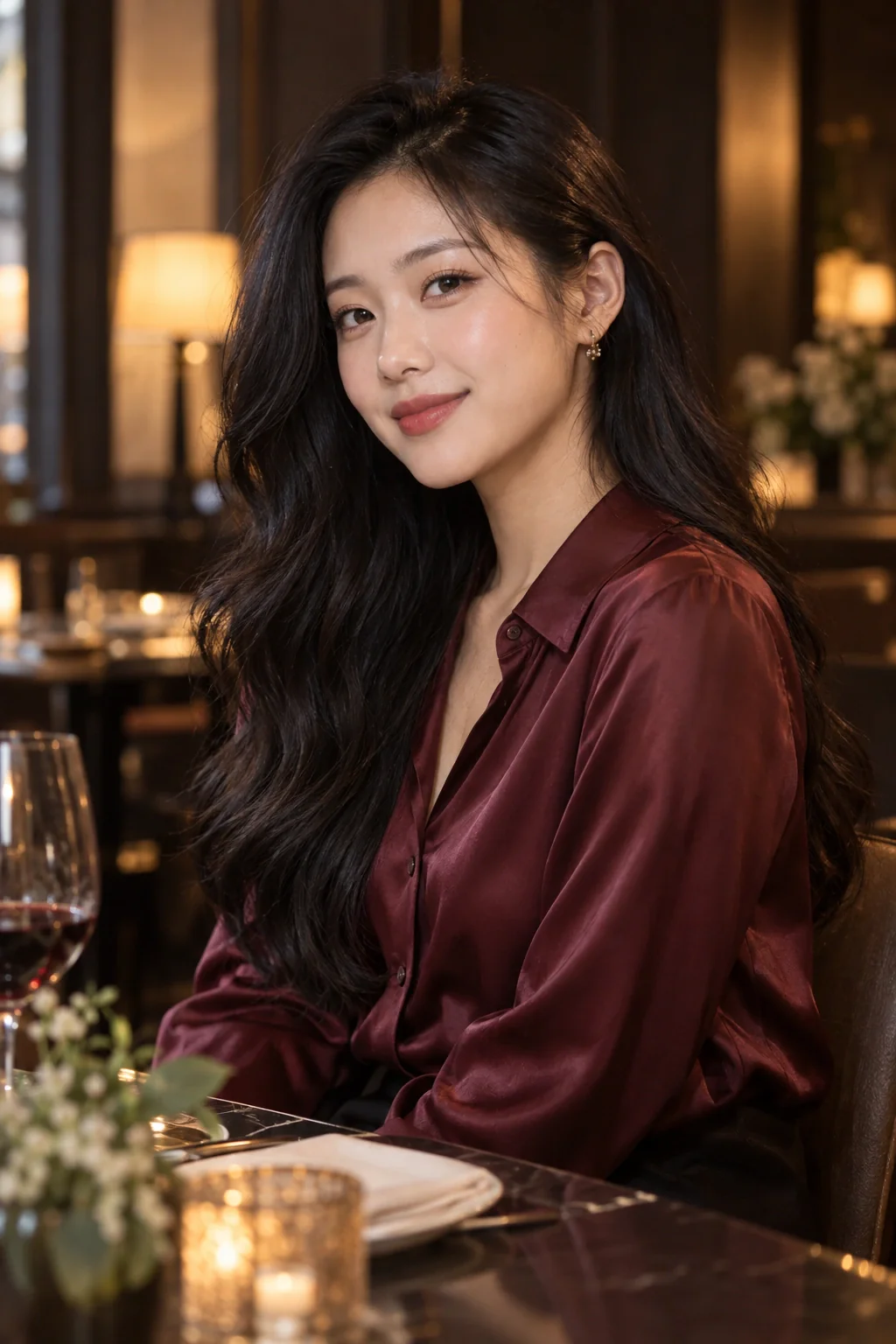
Loose hair can sit over both shoulders, behind both shoulders or mainly on one side. Try these arrangements with the outfit already on. A detailed neckline may benefit from a little more space, while a simple dress can let the hair become the main texture. With an open back, decide whether the lengths should reveal the garment or soften its outline. There is no need to expose every detail simultaneously.
Check where the ends meet the fabric. A collar, sequin, strap or necklace can change the way the hair moves. If a section repeatedly catches, redirect it or choose a small fastening rather than coating the whole hairstyle with more product. For shorter lengths, the contact point may be the shoulder itself. You might enjoy the bend it creates. Judge the moving outfit as a whole, instead of assuming that loose hair should fall in one uninterrupted line.
Add one detail that changes the mood
Choose a detail that is easy to see and easy to explain. A narrow metallic clip can make an open side feel finished. A ribbon can connect the hair to an outfit color. A deliberate ear opening can give earrings more presence. You may decide that no accessory is needed because the texture itself provides enough interest. More decoration is an option, not a measure of how much effort you have made.
If you add a piece, build the hairstyle first and test the accessory’s actual job. A decorative comb may need support; a heavy clip may shift the section downward. Wear it while turning and sitting. Keep the scale of the outfit in view: a small jewel may be visible in close conversation, while a larger piece reads across a room. Choose for the setting you will inhabit rather than for the largest possible impact in a selfie.
Make a discreet transition plan
Loose hair may feel perfect at arrival and less convenient when the evening becomes warmer or more active. Plan a change that preserves the mood without requiring a full updo. You could secure the front sections, move the lengths to one side or gather a small upper portion. Practice the transition once so you know whether your chosen clip can hold the amount of hair involved.
Carry only the items that support that change. A suitable fastener and a small mirror can be more useful than several unfamiliar products. If you are attending with someone who may help, show them the simple adjustment beforehand. Avoid an emergency plan that depends on a complicated hidden structure. The best backup is one you can perform calmly, with the hair you actually have after a few hours of movement, food and conversation.
Finish the front, then stop working through the lengths
Choose the view you will see most during the evening: conversation distance, with your shoulders in the frame. Check the part, the two sections beside your face, and the line of the neckline. If those three areas work together, you do not need every end to match its neighbor. This is especially relevant when a loose wave or curl pattern is the main feature.
For a side sweep, decide where the front crosses the forehead and where it exits beside the ear. If it falls into your eyes, shorten the sweep by fastening it closer to the temple. For a tucked bob, watch whether the tuck lifts the bottom corner; you may prefer a flatter clip behind the ear. For curls, move the whole curl group that obscures your eye without separating the rest of the shape.
Keep the later change equally focused. A small barrette can turn a side sweep into an open side, and two temple sections can become half-up without rearranging the lower hair. Put that fastener in your evening bag. After a few hours, make the change because you want more freedom to eat or dance, not because the loose finish has stopped resembling the first photograph of the night.
Create an evening difference that survives a coat
Suppose you are leaving work in a coat and heading straight to a restaurant. An elaborate loose finish may feel like the obvious way to mark the change, but most of it will sit beneath the coat during the journey. Focus instead on a detail you can establish after arrival: a side placement, an open ear or a small visible barrette. Keep the base familiar so the transition does not depend on rebuilding the full length in a crowded restroom with an uncertain mirror.
Rehearse the order at home. Put on the coat, remove it and make the final adjustment only after the collar is out of the way. Check whether the arrangement still feels like evening hair with the jewelry and neckline in place. If it does, write down that short sequence. The useful change may be the way the hair frames the outfit, rather than a dramatically different surface. You can retain the movement of loose hair while making the occasion visible through one chosen feature.
Separate the arrival photograph from the wearing plan
Save two references for the evening: the look at the start and the version you would accept after several hours. The second should still be an intentional choice, such as loose hair over one shoulder or a simple half-up arrangement. It is not a prediction that the first style will fail. It gives you permission to respond to the event without feeling that any change ruins the outfit. Name what carries across both versions, whether that is an open neckline or a soft face frame.
Pack only the item needed to move between those two versions. If the transition requires several unfamiliar steps, reduce it. During the evening, assess whether the hair interferes with what you are doing before deciding to adjust it. A few moving pieces may be consistent with the original mood. When you do make the change, follow the prepared sequence and return to the event. The point of a wearing plan is to reduce attention spent on your hair once the evening begins.
Your questions, considered.
Can natural curls look formal without being pinned up?
Yes. You can create an occasion look by arranging the front, choosing where the volume sits beside the outfit and adding a detail if you want one. The curl pattern itself does not need changing. A deliberate, comfortable placement matters more than making the surface resemble a smooth reference.
How can short hair feel different for an evening event?
Choose one visible adjustment: change the front direction, expose an ear, use a small clip or refine the outline you already wear. Add the outfit and jewelry before deciding that more styling is needed. Short hair can look complete without adding volume or imitating a long-haired arrangement.
What should I pack if I want to keep my hair down?
Bring the fastener that supports your specific backup, such as a clip for the front sections. A compact mirror can help with placement. Avoid packing a full kit unless you know you will use it. The aim is to solve one likely inconvenience while preserving the loose style you chose.
Sources & what they support
The notes below explain the scope of each source. Hairstyle selections, outfit combinations and comparison exercises are HairSparks’s editorial suggestions; the links do not imply endorsement.
- Wella Professionals: wedding hair and the complete outfit ↗Professional background on choosing wedding hair alongside the dress, accessories and setting. The specific outfit pairings in this guide are our suggestions.
- American Academy of Dermatology: hair styling without damage ↗Hair-care background on heat and handling. The outfit choices, styling sequences and visual comparisons here are editorial suggestions, not findings from a clinical test.
HairSparks and Hair Muse share the same publisher. App mentions are promotional. Read our editorial policy.