
Choose a side tuck for one visible earring, a half-up style for an open front with loose length, or a low ponytail for a matching pair. If a drop catches repeatedly, move the hair beside its fastening before changing the entire style.
Hairstyles for statement earrings: one ear or both?
Put the earrings on and turn sideways. The visible decoration and the fastening can need different amounts of room. A sculptural stud might cover much of the ear but end above the jaw; a fine chain can extend past a shoulder even though it looks visually lighter. Choose a hairstyle for that footprint.
Leave a little movement in the trial. A tucked section that stays clear in the mirror may fall over a hoop when you lean down. Test the simplest version first, then add a clip only where the hair keeps returning. For dense curls, open a narrow section around the ear and keep the surrounding fullness.
Compare one open ear with two
Sweep one side back with your hand and leave the other side as you normally wear it. This creates an asymmetrical arrangement that can feel less formal than gathering everything. Now open both sides and compare the result. The difference is often stronger than changing the entire finish of your hair. Take a shoulder-length photograph of each version so you can judge the balance of jewelry, hair and garment together.
One open ear works especially well when you like a loose outline but want a visible focal point. Two open ears can give a matching pair a more deliberate presence. If you wear different earrings, the asymmetry may be part of the idea already; avoid automatically making the hair symmetrical. Try placing the more open side beside the piece you want people to notice first, then check whether the combination still feels comfortable to you.
Make clearance practical, not just photographic
An earring that looks clear in a front-facing photograph may touch your hair whenever you turn. Wear the combination for a few ordinary minutes. Look down, reach for a bag, put on your coat and turn toward someone beside you. Pay attention to the back of the earring as well as the visible front. Fine chains, hooks and textured edges can interact with stray sections in ways a mirror pose does not reveal.
If a section repeatedly catches, move that section rather than pulling all your hair tighter. A small fastening above or behind the ear may be enough. If the problem comes from the jewelry itself, consider a simpler piece for that occasion. This is not a requirement to avoid expressive earrings; it is a way to choose an arrangement you can actually enjoy. The ideal amount of clearance depends on your hair and the specific design.
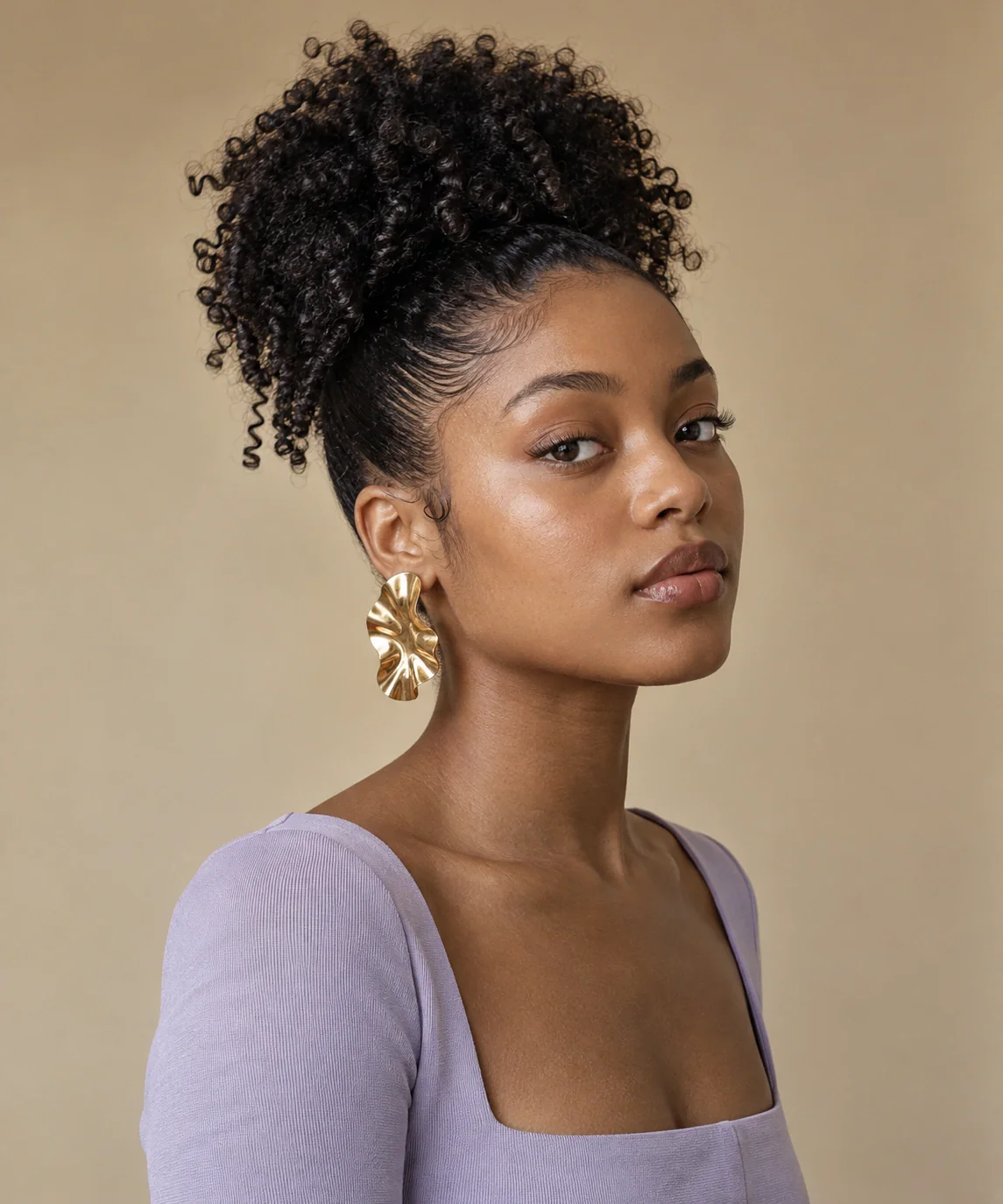
Keep natural texture while opening a small area
Opening an ear does not require flattening the whole side of the head. With curls or coils, you can hold a small section back while leaving the surrounding shape full. Work with the groups of hair that already sit together rather than repeatedly separating every strand. Try the arrangement without product first. If the exposed area looks smaller than expected, shift the fastening a little instead of automatically adding more tension.
For straight or wavy hair, a loose tuck may be sufficient at a quiet event but unreliable during dancing or an outdoor walk. A visible barrette can turn the fastening into a second intentional detail. Keep its scale in conversation with the earring: a plain clip can support a complex jewel, while a bold clip and earring can form a deliberate pair. There is no universal limit on accessories; the useful test is whether you like their relationship.
Consider the shoulder and neckline below
Long earrings do not sit in empty space. They may overlap a high collar, a padded shoulder, a scarf or a neckline with its own decoration. Put on those elements before deciding where the hair goes. If the earrings touch the garment constantly, lifting the hair will not remove that conflict. A change in jewelry length or a different top may solve the actual problem more directly than a more complicated hairstyle.
When the garment is simple, loose hair can provide an interesting background for metal or color. With lace, sequins or a strong print near the face, exposing the earrings fully may create a clearer arrangement. These are visual options, not dress rules. You might prefer a rich, layered effect. Try one adjustment at a time so you know whether it was the hair placement, the jewelry or the garment that made the combination feel better.
Build an evening version you can repair
For a long event, choose a fastening you can reach without seeing the back of your head. A side clip or a small half-up section is often easier to restore than a concealed, intricate arrangement. Practice removing and replacing it with the earrings already on. If the fastener repeatedly knocks the jewelry, change its position during preparation rather than discovering the problem in a dim bathroom later.
Bring a spare that performs the same job. A tiny decorative grip may not replace a structural clip holding a substantial section. If you expect to put on headphones, a hat or a scarf during travel, carry the earrings separately and add them after those layers come off. That sequence can preserve the hairstyle and make the journey more comfortable. The style plan includes arrival, the event itself and the trip home, not only the first entrance.
Keep an open ear without flattening the whole side
For straight or wavy hair, take the section that usually sits in front of the ear and guide it backward along its natural direction. Try a tuck first. If it slips, use a small barrette behind the ear, where it can hold the section without touching the earring back. Check the clasp before you leave it in place; a clip can be visually discreet and still press uncomfortably.
With curls or coils, lift a curl group from the temple and secure it behind the ear without combing the entire side flat. Leave the neighboring curls loose. If their ends cover the jewelry, reduce the loose section nearest the earring instead of drawing the whole front tighter. A visible clip can become part of the look if concealing it requires too much manipulation.
For a pixie or short crop, change the direction of the side pieces and let the cut supply the shape. There may be no need for a fastener. Finish by putting on glasses, then taking them off once: the arms can lift a tuck or knock a clip. If the arrangement becomes fiddly, choose a smaller open area or an earring shape that leaves the hardware more room.
Choose whether the earrings appear at rest or in motion
Picture long sculptural earrings worn with a plain black dress and loose textured hair. From the front, both earrings disappear; when you turn, one flashes through. That intermittent appearance can be the effect you want. Before opening both sides, decide whether the jewelry needs to remain fully visible or simply contribute movement and color. These are different styling briefs, and the second may need much less rearrangement than the first. A short video can show the distinction more clearly than a carefully posed selfie.
For continuous visibility, move the nearby hair while wearing the actual earrings and check their entire hanging area. For occasional visibility, keep some overlap and watch how the shape appears as you speak. Do not judge the result only by whether every part of the jewelry is exposed. Ask whether the amount you see feels deliberate and whether you can move comfortably. If the earring repeatedly catches, choose another arrangement or another pair rather than defending a photograph that does not work in wear.
Write a three-part jewelry brief
Before choosing the hairstyle, finish three statements: the feature I want visible is; the amount of hair I want loose is; the place I need clear is. For example, you might want a colored stone visible, most curls loose and a clear area around the clasp. This is more actionable than asking for hair that matches dramatic earrings. It also helps a friend or stylist understand which part of the combination matters most when a reference contains several competing details.
Use those statements to compare two arrangements, then add the neckline and bag strap to the test. If a strap crosses the earring's path when you put the bag on, the issue may be the movement sequence rather than the hairstyle itself. Practice taking the earrings out at the end, with the hair still arranged. Keep the brief with a picture of the successful placement, including a side view that reveals the space around the jewelry and its fastening.
Your questions, considered.
Do large earrings always need an updo?
No. An open side, a half-up arrangement or a simple tuck can show enough of the earring while keeping most hair loose. Choose an updo when you prefer the overall shape or when the lengths repeatedly catch on the jewelry. Size alone does not dictate how you must wear your hair.
Can I combine a statement clip and statement earrings?
Yes, if you like the combined effect. Try putting the clip farther from the earring, or echoing one color or material to connect them. Look at the full outfit rather than inspecting each accessory separately. A busy combination can be intentional; comfort and secure fastening are the practical checks.
What if only one earring stays visible?
That can be a deliberate styling choice. Open the side you prefer and allow the opposite side to remain softer. If you want both visible, secure the front sections independently so one shifting piece does not undo the whole arrangement. Avoid tightening the entire style solely to force visual symmetry.
Sources & what they support
The notes below explain the scope of each source. Hairstyle selections, outfit combinations and comparison exercises are HairSparks’s editorial suggestions; the links do not imply endorsement.
- Wella Professionals: wedding hair and the complete outfit ↗Professional background on choosing wedding hair alongside the dress, accessories and setting. The specific outfit pairings in this guide are our suggestions.
- Wella Professionals: styling with hair accessories ↗Examples of styling with accessories. Used for the distinction between a decorative finishing piece and the fastening that supports a style.
HairSparks and Hair Muse share the same publisher. App mentions are promotional. Read our editorial policy.