
Choose half-up hair when you want loose length but a clear front, a low ponytail when you prefer the neckline open, or a tucked bob for shorter hair. Test the choice sitting down; the section that stays put standing may move when you lean forward.
Date night hairstyles: half-up, ponytail or tucked bob
Start with the amount of hair you want loose beside your face. A dinner setting means repeated small movements: leaning toward a plate, turning to the person beside you, and putting a coat on a chair. Choose a style that accommodates those movements before adding its decorative detail.
The four options below work as starting shapes, not promises for every haircut. Short layers may need their own clip; a dense gathered section may need a larger fastener. Keep whatever natural texture you normally enjoy wearing. You can make the style feel different through an open ear or the placement of the gathering without introducing a new product routine that evening.
Build the look around the actual plan
Consider the whole evening. An outdoor meeting followed by dinner creates different needs from arriving directly at a quiet indoor table. A long train ride may flatten a high arrangement against the seat. A walk may move loose front sections more than you expect. You do not need to predict every possibility, but naming the obvious transitions helps you avoid a hairstyle that only works at the moment you leave home.
Choose which part of the style needs to remain stable. It might be the front around your eyes, an exposed earring or a comfortable gathering point. Let the rest be flexible. If the plan is uncertain, a partly gathered arrangement can offer a useful middle ground. You can keep most of the texture visible while securing the sections that would otherwise need attention whenever you move, lean forward or put on an outer layer.
Check the hairstyle at table height
Sit in a chair and lean forward as you would while eating. Do the front lengths fall where you will keep moving them? Does a large clip press into the chair? Does a low arrangement catch on your collar? These small practical checks can tell you more than another front-facing selfie. If a particular section causes the issue, adjust that section first rather than deciding that all your hair must go up.
Try turning toward someone seated beside you as well. Earrings, glasses and hair can interact differently at that angle. A small tuck may be sufficient for a quiet dinner, while a discreet clip can make it more dependable. Leave the hair as loose as you enjoy, but avoid a plan that requires constant touching to preserve it. The aim is to make room for conversation and food, not to maintain a carefully balanced pose.
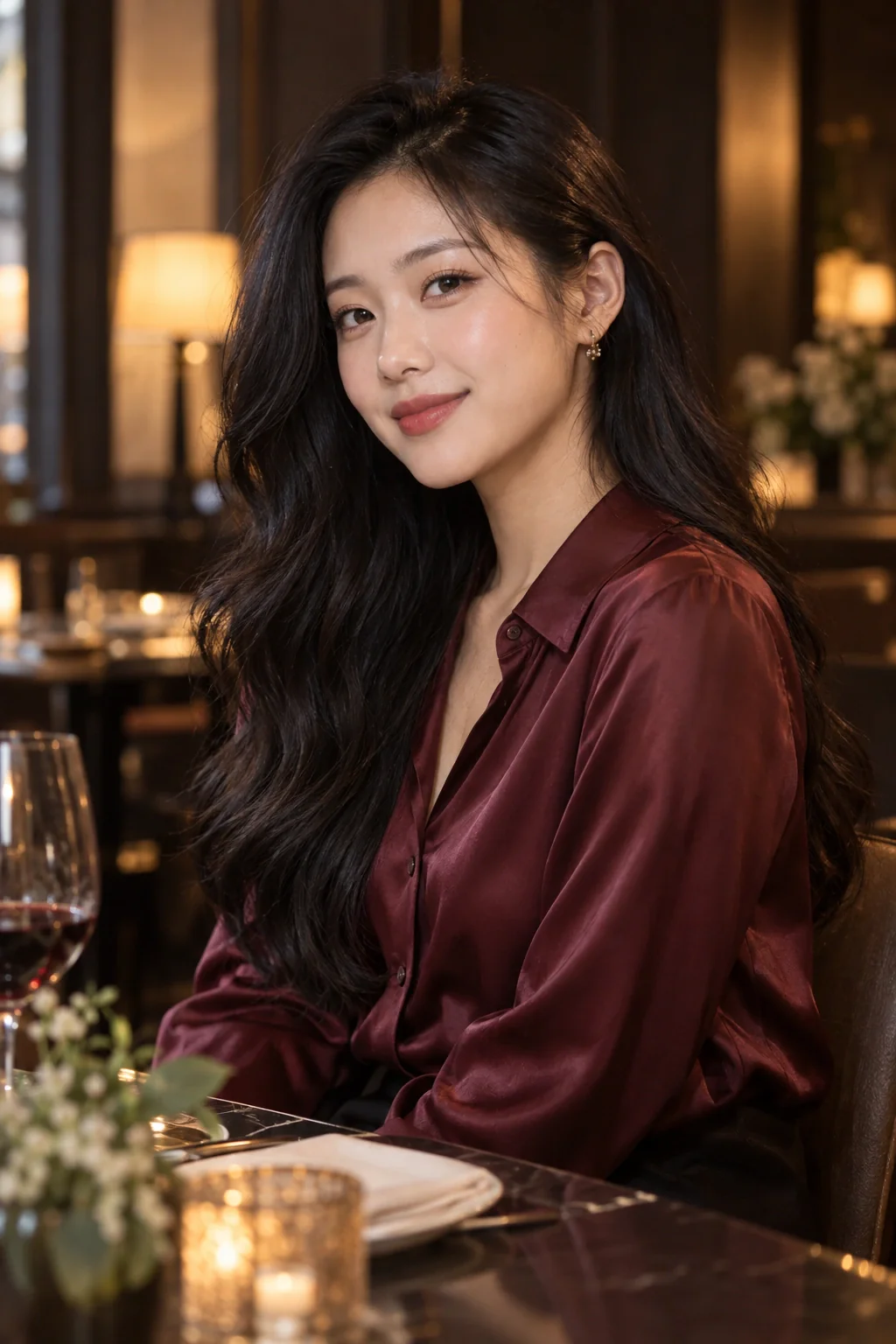
Keep one new detail and a familiar base
If you want the evening to feel special, change something small enough to understand. You might add a ribbon, expose one ear, move the front into a gentle sweep or choose a slightly more deliberate gathering at the back. Keep the rest of the routine familiar. This gives you a visible difference while reducing the uncertainty that comes from trying several new techniques immediately before leaving.
A new product, unfamiliar tool and new accessory can each behave differently on your hair. There is no need to test all three on the same evening. Practice an unfamiliar arrangement earlier if possible, then wear it for ordinary activities. If it needs repeated repair, simplify it. A style can feel romantic or polished because its details are coherent, not because its construction is complex or because you spent the longest possible time preparing it.
Connect the hair to the outfit
Put on the neckline and earrings before the final adjustment. A soft style beside a structured jacket can feel balanced; a clearer front beside a patterned dress can give the outfit breathing room. You may prefer rich texture throughout. The useful question is whether the combination expresses your chosen mood. Avoid changing the hair merely because a generic rule says a particular neckline requires it.
If the outfit has a detail you love, give that detail enough visibility. That might mean moving hair behind one shoulder or leaving an earring uncovered. If your hair is the feature you want to lead, choose a quieter accessory. Take a photograph that includes the shoulders and upper garment so you can see the relationship. A face-only image can make you overfocus on tiny strands while missing the outfit that everyone else will actually see.
Plan a small adjustment for later
After a few hours, you may prefer the hair slightly more contained. Carry a fastener that can gather the relevant sections without a full restyle. Practice that later version before leaving: loose hair into a small half-up shape, front sections behind the ears, or a longer length moved away from the neck. Choose an adjustment you can manage without needing someone to inspect the back of your head.
The backup should feel like a second valid look, not a punishment for the first one changing. If the evening moves to a busier venue, a more secure arrangement may help you relax. If you stay seated in a quiet restaurant, you may never need it. Knowing that the option exists can reduce the urge to overbuild the original style. One useful clip is often enough when you have already decided what job it will perform.
A five-minute seated rehearsal
Wear the top and earrings, sit at a table, and lean forward as if picking up food. If the same piece falls across your face twice, give it support. For a half-up style, include a slightly wider temple section. For a bob, move the tuck farther behind the ear or add a light clip. You only need to change the section causing the interruption.
Turn toward an imaginary conversation partner on each side. A side sweep may work beautifully in one direction and fall across your cheek in the other. If you enjoy that movement, keep it. If you know you will spend dinner pushing it back, change the sweep before you leave home. Check whether the earrings brush your neck or catch at the hairline during the turn.
Finally, sit back. A bulky claw at the middle of the head can press into a chair even when it feels fine standing up. Replace it with a flatter fastening or lower the gathering if that remains comfortable with the collar. Put the spare fastener in the bag you are taking. Once the style passes those checks, preparation is finished; spend the remaining time on getting dressed and arriving without a rush.
Choose for the actual seat and setting
A café terrace, a counter seat and a candlelit restaurant create different practical situations. For a counter dinner, imagine repeatedly turning toward the person beside you rather than facing straight ahead. A one-sided arrangement that looks appealing in a front photograph may move differently during that conversation. For a terrace, you may prefer a front section that stays clear without needing constant tucking. Build the first comparison around the actual setting, using a chair at home to approximate how you will sit and turn.
Then ask whether the hairstyle feels like your own choice. A familiar loose shape with one considered detail may serve you better than a completely unfamiliar arrangement selected because it seems conventionally romantic. If you keep checking the mirror during rehearsal, identify what is drawing your attention. It might be a fastening you can feel, a fringe in your eyes or simply a level of formality that does not match the plan. Solve that specific concern before adding further styling.
Use a two-option stopping rule
Set out your outfit and choose two hairstyles you can already make: one familiar and one with a small variation. Give each a single photograph that includes the neckline. Compare them using three questions: can I eat and talk comfortably, does the front stay where I want it, and does this feel like the mood I chose? Avoid opening a new collection of references after the comparison unless neither option meets those practical requirements. More alternatives can obscure a preference that was already clear.
If both work, choose the version you are more interested in wearing that evening. There is no need to manufacture an objective winner. Put the necessary accessory beside the outfit and give yourself a definite end to preparation. Afterward, note one thing you liked about wearing the style rather than scoring your appearance in photographs. That observation can become a useful starting point for another dinner, especially if it captures an experience such as leaving the hair alone while enjoying the conversation.
Your questions, considered.
Should I try a completely new hairstyle for a date?
You can, but practice it beforehand if the technique or fastening is unfamiliar. A familiar base with one changed detail is often easier to manage. Choose novelty because you enjoy it, not because you think your usual hair is insufficient. Comfort and your own preferences are useful guides.
What if I like loose hair but it gets in the way at dinner?
Secure only the front sections or move one side behind the ear with a suitable clip. You can preserve the loose lengths and overall texture. Test the arrangement while seated and leaning forward, since that movement reveals whether a simple tuck will be enough for the meal.
How do I make the style feel romantic without curling everything?
Try softness in placement rather than changing the entire texture: an easy sweep at the front, a loosely gathered upper section or a small fabric detail. Straight hair, curls and short cuts can all support that mood. The outfit, light and accessories contribute as much as a particular wave pattern.
Sources & what they support
The notes below explain the scope of each source. Hairstyle selections, outfit combinations and comparison exercises are HairSparks’s editorial suggestions; the links do not imply endorsement.
- Wella Professionals: wedding hair and the complete outfit ↗Professional background on choosing wedding hair alongside the dress, accessories and setting. The specific outfit pairings in this guide are our suggestions.
HairSparks and Hair Muse share the same publisher. App mentions are promotional. Read our editorial policy.