
Pair the mood with a shape and a practical requirement: “soft movement, a clear bottom edge, and enough front length to tuck.” Use ordinary words you understand. If an image shows only the color or fringe you want, label that explicitly.
Translate broad mood words into visible choices
Words such as romantic, bold, minimal, and polished can open a conversation, but they leave the haircut unspecified. Two people can use “effortless” to mean completely different things: a finish with movement or a routine with very few steps. Explain which meaning you intend before looking for a haircut name.
Use the translations below as starting language, not fixed definitions. Keep the version that describes your preference and replace the rest. You do not need professional terminology to point out a jaw-length edge, a rounded side, or front pieces that move behind the ears. Concrete observations give a stylist room to suggest how the idea could work.
Translate mood into lines and placement
Look at references and describe the physical details that create the impression. Use familiar words: rounded, straight, tapered, full at the sides, close around the ears, open at the forehead, or longer at the front. You do not need to know a professional cutting term to identify a visible feature. A precise everyday description is often more useful than technical language you are not sure you understand.
Try connecting a mood word to a feature in one sentence. “I like the calm feeling of a clear outline with fewer short pieces around the face.” Or: “I like the playful effect of an off-center detail while the rest stays simple.” These sentences make the relationship visible. They also allow the stylist to suggest another way to create the same impression if the exact reference does not translate easily to your current hair.
Give texture its own sentence
Describe how you want the surface and movement to look independently of the cut's outline. You may want visible waves within a defined shape, a smooth finish with flexible ends, or natural curls arranged away from the forehead. Separating these elements avoids the assumption that choosing a particular silhouette also means choosing every styling technique used in the reference photograph.
Be clear about what you want to preserve. If your natural movement is part of the appeal, say so directly. If you enjoy styling to a different finish occasionally, distinguish that occasion version from the everyday result. Your aesthetic can include both. The useful brief tells the stylist which one the haircut needs to support most often, so the plan is built around the hair you intend to wear rather than the most elaborate version you could possibly create.
Describe contrast without ranking your features
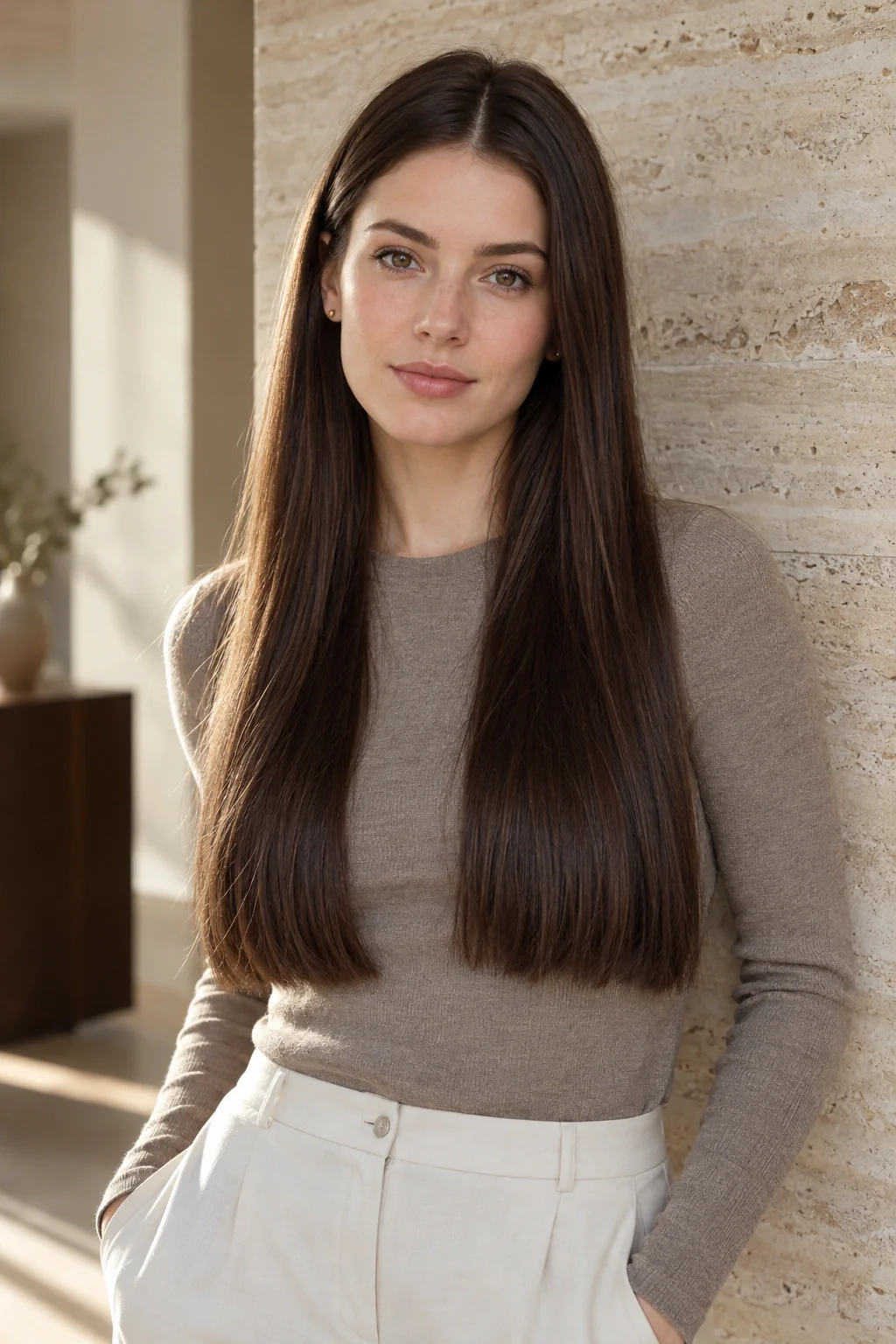
Contrast can come from color, texture, length, or the relationship between the hair and clothes. You might like a sharp outline against soft fabric, a light accessory on dark hair, or a smooth front with more movement through the back. These are compositional preferences. You do not need to explain them as corrections to your face or as ways to hide a feature.
Try replacing “I need to fix…” with “I would like to emphasize…” or “I enjoy seeing…” where that accurately reflects your goal. For example, you may enjoy an exposed neckline or prefer some hair around the temples. This language keeps the conversation specific and avoids turning a style preference into a judgment about your appearance. It also makes room for more than one successful solution, which is useful when you are still exploring.
Add the practical boundary
Aesthetic language becomes actionable when it includes a real-life limit. Say how you want to wear the hair on ordinary days, whether you need to gather it, and what kind of maintenance you are willing to do. “Soft and easy” is open to interpretation; “soft movement, with enough front length to tuck and a finish I can wear after my usual routine” is a clearer starting point.
Choose the boundary that matters most rather than listing every small preference with equal weight. A long list of equally strict requirements can make it difficult to see the main idea. Identify what is essential and what you are flexible about. You may care strongly about keeping the front comfortable while being open to several lengths. That flexibility gives a stylist room to propose a version you had not considered but may enjoy.
Use three complete briefs you can adapt
For a bob with movement: “I like a clear line around shoulder length. I want my waves visible, and I prefer the front open at one side. I need enough front length to tuck and want to keep my usual drying routine.” The length, finish, and function are all visible in this brief; the stylist can explain how they interact on your hair.
For a curly crop: “I want a rounded shape with space around the eyes. I want to keep the curl pattern and fullness at the sides. Please explain how the front will sit between styling days and which parts need maintenance.” This avoids using a smoother photo as the unspoken standard for the finish.
For a color discussion: “I want a warmer overall impression without changing the cut yet. I like the depth in this picture and the tone in that one. Please explain what is achievable from my starting hair and the upkeep it would involve.” Label each image with its role. If the stylist repeats a different plan back, stop and clarify the conflicting word or picture. Your brief is a working description, so update it during the conversation until both of you can state the same intended result in plain language.
Let the vocabulary evolve after you wear the result
Once you have tried a style, notice which words still fit and which were too vague. You may discover that what you called minimal was really a preference for a clear neckline, or that romantic meant movement rather than decoration. Update the description with those observations. Your vocabulary becomes more useful through wearing hair, not through finding the perfect aesthetic category online.
Keep the revised brief for future appointments, along with one ordinary photograph where you like the result. It can help you maintain a direction even when you change the length or color later. It also gives you a way to explain a disappointing detail without dismissing the whole hairstyle: “The outline is right, but I want more freedom around the front.” That kind of sentence creates a practical next step and keeps the conversation centered on your own experience.
Build a vocabulary from photographs of your own outfits
Choose three outfits you have worn and enjoyed, rather than collecting more hairstyle images immediately. Describe the repeated qualities in plain words: clean edges, relaxed layering, strong contrast, soft movement or a single unusual accent. Then look at how your hair worked with each outfit. You may discover that your aesthetic is less about a particular cut and more about the relationship between the hair and clothes. A familiar texture with one deliberate detail, for example, can appear across several different lengths and occasions.
Use those observations to write a short phrase you can test, such as relaxed texture with a clear front shape. Compare it with one hairstyle reference and ask whether the phrase explains what you like in the picture. If it does not, refine the phrase rather than adding more vague adjectives. The aim is a vocabulary you can use to make choices, not a polished personal-brand statement. Keep words that point toward visible decisions and remove those that sound appealing but do not help you distinguish between options.
Translate an adjective into an instruction someone can see
Take one word from your brief and ask what would make it visible. If the word is airy, perhaps you mean space around the face or movement through the ends. If it is graphic, perhaps you mean a distinct part or a clear perimeter. Write two possible interpretations and choose the one closest to your intention. This exercise shows why a stylist and client can agree on an adjective while imagining different results. The visible instruction provides a more reliable point of discussion.
Pair the instruction with a boundary from your routine. You might want a clear front shape that still allows glasses to come on and off comfortably, or visible movement without several separate styling steps. Read the finished sentence aloud and see whether another person could identify its main feature in a photograph. If not, add a location or action. A concise aesthetic brief becomes useful when it connects feeling, appearance and everyday behavior in language that can be understood without knowing your entire inspiration history.
Your questions, considered.
Do I need to know haircut terminology?
No. Clear descriptions of shape, placement, movement, and length are useful. If you use a technical term, pair it with an image or plain-language explanation so you and the stylist can confirm that you mean the same thing.
Can I have more than one hair aesthetic?
Yes. You may enjoy a quieter daily direction and a more expressive occasion version. Explain which one the cut needs to support most often, then discuss how styling can create the other mood when you want it.
What if I cannot find the right words?
Start by pointing to one detail in an image and explaining what you like about it. Describe what you do with your current hair during the day. Those observations can become a useful brief without a named aesthetic.
Sources & what they support
The notes below explain the scope of each source. Hairstyle selections, outfit combinations and comparison exercises are HairSparks’s editorial suggestions; the links do not imply endorsement.
- L’Oréal Professionnel: preparing for a hair consultation ↗Consultation context: bringing pictures, explaining styling habits and discussing maintenance with a professional. It supports the consultation advice, not our aesthetic judgments about individual looks.
HairSparks and Hair Muse share the same publisher. App mentions are promotional. Read our editorial policy.