
Sort inspiration into shape, front and color, then label why each image earned a place. Keep two contrasting directions instead of many near-duplicates. When a specific decision emerges, move to a two-option comparison; prepare the appointment brief after that.
Collect variety before choosing a favorite
Begin with the hair question that made you start saving: perhaps your current style feels heavy around a collar, the front keeps falling forward or a new color keeps catching your attention. You do not need to know the solution yet. Your first board should reveal possibilities, not pretend that you have already selected a complete haircut.
Use a few different kinds of image so the board does not become twenty versions of the first attractive photograph. The groups below are collection prompts. You can leave one empty when it has nothing to do with the change you want. A separate “love the outfit” folder can hold pictures whose appeal turns out to have little to do with hair.
Edit a crowded folder in three passes
Imagine a folder containing twelve bob pictures, several copper shades, two fringes and an elaborate updo. In the first pass, sort by purpose. Put the updo in an occasion group and the copper images in a color group. Keep the bob pictures together so their differences become visible.
In the second pass, remove repeated information. If four images show nearly the same length and front, keep the clearest one. If two pictures differ in a way you cannot name, set them aside and return later. Saving an image is easy; explaining why it matters is the step that turns a folder into a board.
In the third pass, label the remaining contrasts. “Shorter ends, open forehead” and “more length, softer front” are enough for an early comparison. Do not combine every attractive feature into one imaginary haircut yet. You may discover that your preference is about a tucked side or a different part, which you can try without changing the cut. Keep an archive folder for appealing ideas that do not answer the current question; they can stay yours without occupying the working board.
Separate shape, texture, and color
Give each image one main role. One might explain the outline, another the front placement, and a third the color relationship you enjoy. Label those roles directly. Without the labels, a stylist may assume you want the entire hairstyle in each picture, even when the references conflict. A clear note makes it possible to borrow a specific element without implying that every feature belongs in the final result.
Keep color references apart from cut comparisons when possible. A dramatic difference in shade can make one silhouette seem more appealing for reasons unrelated to its shape. Similarly, a very styled texture can hide the structure of a cut. You can still use the image, but explain the distinction. “Color only” and “Outline only; I want to keep my own waves” are simple annotations that prevent a great deal of misunderstanding.
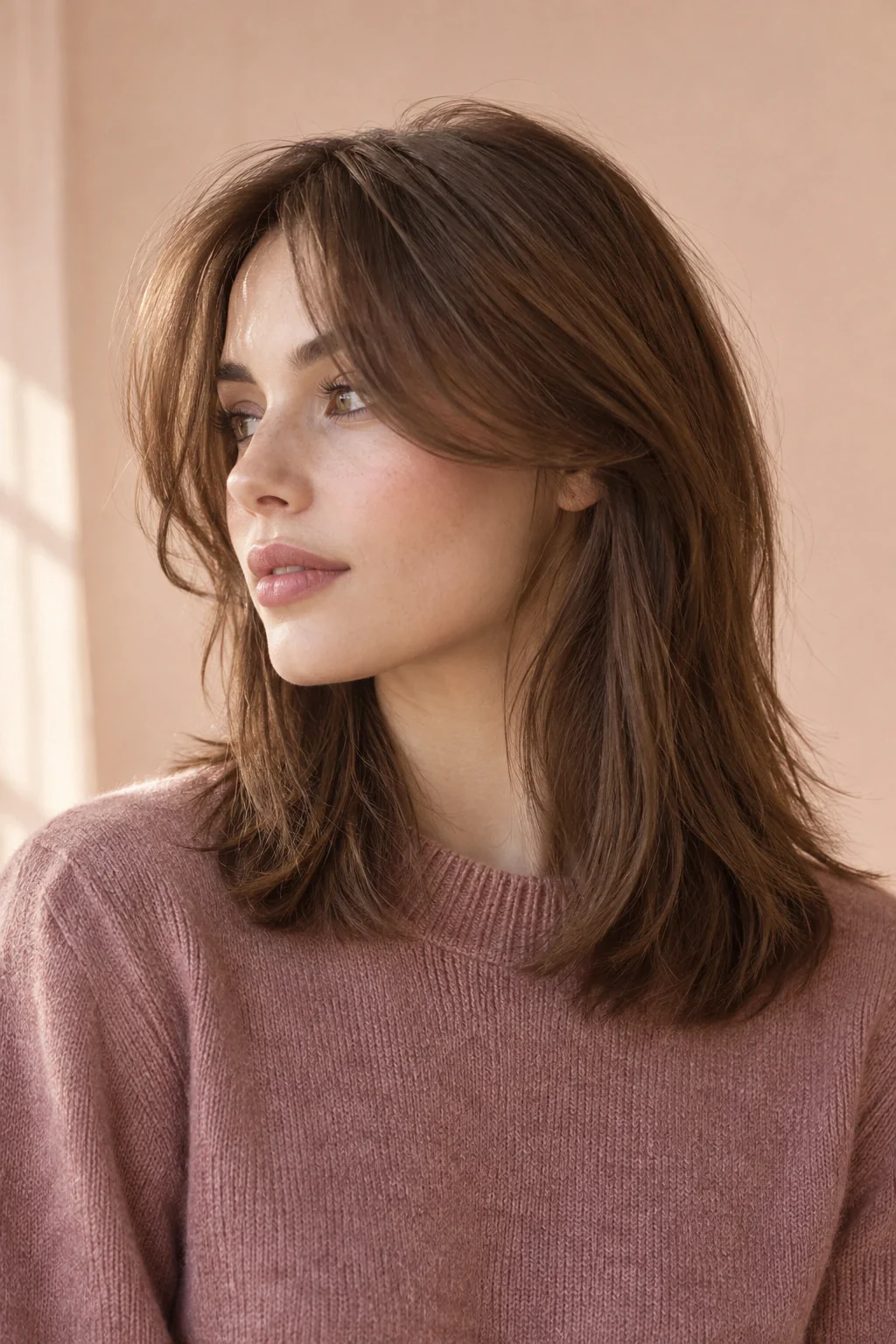
Add a picture of your current hair
Include a recent photo that shows your usual texture and a normal finish. This is the bridge between the inspiration and the actual starting point. You do not need to make the picture beautiful. Aim for a clear view of the shape, approximate length, and front placement. If the back or side is important to your decision, add another angle rather than expecting a front selfie to explain everything.
Write a few observations beneath it: what you enjoy, what feels awkward, and what you do repeatedly during the day. Perhaps you always move the same piece out of your eyes, or you like the way the length sits with a favorite jacket. These details are easy to forget when looking at polished references. They can also reveal that the most useful change is quite specific, rather than a complete transformation of the haircut.
Include your routine in plain language
Add a small text section describing how you actually wear your hair. Mention the time you normally want to spend, the tools you use comfortably, whether you often gather it, and how frequently you are willing to return for maintenance. Avoid aspirational answers unless you genuinely intend to change the routine. The purpose is to find an enjoyable fit, not to demonstrate how dedicated you could become.
Also include one fallback requirement. You might need a style that works with glasses, stays clear during exercise, or can be arranged quickly for a meeting. Professional consultation guidance treats lifestyle and maintenance as part of the discussion for good reason: photographs cannot show these needs. By putting them on the board, you ensure they receive the same attention as the attractive fringe or color detail that first caught your eye.
Show a boundary without making a negative gallery
One carefully chosen example can clarify something you do not want, especially if the distinction is subtle. Perhaps you like a fringe but not a dense, straight-across edge, or you want dimension without a very bright front section. Label the exact feature. Do not simply mark an entire person or image as bad; that gives little useful information and turns a practical preference into an unnecessary judgment.
A boundary note can also be written instead of illustrated. “I want to keep enough front length to tuck” is often clearer than a collection of short styles you dislike. Keep the board mostly focused on the desired direction. Too many negative references can make the plan feel contradictory and distract from the features you are excited about. The ideal boundary is precise enough to guide a decision without overwhelming the overall idea.
Know when discovery has become a decision
Stop collecting when you can name two directions and explain the difference between them. For example, your board may now show a jaw-length bob and a longer bob with curtain pieces. That is a length-and-front decision, not a need for another dozen unrelated pictures. Open the comparison guide and list the gain, compromise and unknown for each finalist.
If one direction already stands out, prepare a separate salon packet. That packet needs your current hair, the selected direction, the features to preserve and the questions requiring professional input. Keep the original inspiration board as an archive of how you got there. It should not become an instruction to copy every saved idea. Separating these stages makes each document easier to use: the moodboard discovers a preference, the comparison resolves competing options, and the appointment brief communicates the plan you want to discuss.
Give every image a job before it earns a place
Open your draft moodboard and label each image with the decision it helps you make. Useful jobs include explaining the overall outline, showing a preferred front detail, illustrating a color direction or representing a routine you would accept. If several pictures perform the same job without adding a meaningful difference, keep the clearest one. If an image is appealing only because of the clothing, lighting or model's expression, move it into a general atmosphere note rather than letting it stand in for a hair instruction.
This editing step can reveal missing information. You may have many front views but no useful view of the back, or several polished finishes without a reference for ordinary wear. Add only what answers that gap. The board becomes easier to discuss when its images have distinct roles, because you can explain what should be borrowed from each one. It also reduces the risk of accidentally asking for incompatible details simply because several attractive photographs were placed together without annotation.
Add a decision page beside the visual page
Create a small text page with three headings: chosen, undecided and needs professional input. Under chosen, list preferences you feel confident about, such as keeping enough length to gather. Under undecided, place genuine comparisons, such as a centered or offset part. Reserve professional input for questions about how a proposed cut or color could work from your current hair. This separates personal taste from information you do not yet have, so the board does not pretend to settle every question before the appointment.
After a preview session or consultation, move an item only when you have a clear reason. Record the reason in one sentence so you can remember why the board changed. If a new image contradicts a chosen preference, decide whether your preference has changed or whether the image belongs outside the final brief. This keeps the collection from expanding indefinitely and turns it into a living decision record, with enough clarity to support the next step instead of simply generating more possibilities.
Your questions, considered.
How many images belong on a hair moodboard?
There is no required number. Keep only images that contribute a distinct piece of information. A small set covering shape, a key detail, color if relevant, and your current hair is easier to discuss than a long unedited folder.
Can I use AI hairstyle images as references?
Yes. Use them to explain a direction. Ask a stylist to assess the practical translation.
What if my favorite references contradict each other?
Label what you like in each, then decide which feature is the priority. You may enjoy a color in one image and an outline in another. If the actual cut requirements conflict, bring that uncertainty into the consultation.
Sources & what they support
The notes below explain the scope of each source. Hairstyle selections, outfit combinations and comparison exercises are HairSparks’s editorial suggestions; the links do not imply endorsement.
- L’Oréal Professionnel: preparing for a hair consultation ↗Consultation context: bringing pictures, explaining styling habits and discussing maintenance with a professional. It supports the consultation advice, not our aesthetic judgments about individual looks.
HairSparks and Hair Muse share the same publisher. App mentions are promotional. Read our editorial policy.