
Lead with the chosen direction and show your current hair from more than one angle. State the shortest length you would accept, what must stay possible and how you style at home. Confirm the agreed interpretation before the service starts.
Build the board around five pieces of information
Start with a short written brief before collecting more pictures. State the change you want, the feature you want to preserve and the styling time or tools you are willing to use. For example: a more open front, enough length for a low tie, and an everyday finish that does not depend on a round brush.
Then give each image a job. One photograph may describe the length, another the fringe and another the color. They do not all need to show a complete hairstyle you want copied. A small collection with clear labels is easier to discuss than many similar portraits whose differences have not been explained.
Include honest photographs of your starting point
Take current photographs from the front, side and back in ordinary light. Include one version in your usual texture and, if relevant, another showing how you normally style it. Avoid filters that change the outline or color. The purpose is not to produce a beautiful portrait; it is to give the stylist clear information about the hair you will bring to the appointment.
Note anything the photographs do not show well, such as a section that changes direction, a layer that falls out of a tie or a part you usually wear differently. If the current style is older than the photograph, say so. A reference board becomes more useful when the inspiration sits beside an accurate starting point rather than replacing it.
Choose a small set with different jobs
Select a main reference for the overall direction, then add a few supporting images for specific details. One might show the length you like, another the fringe and another the texture or styling mood. A useful personal starting set is three to five images, but the number is less important than each image having a clear purpose.
Remove pictures that repeat the same idea without adding information. Also notice whether you are saving a hairstyle because you like the model, makeup, lighting or clothing. Cover those parts temporarily and look at the hair outline. If the appeal disappears, the image may belong on a general style board rather than in the small set you plan to discuss at the salon.
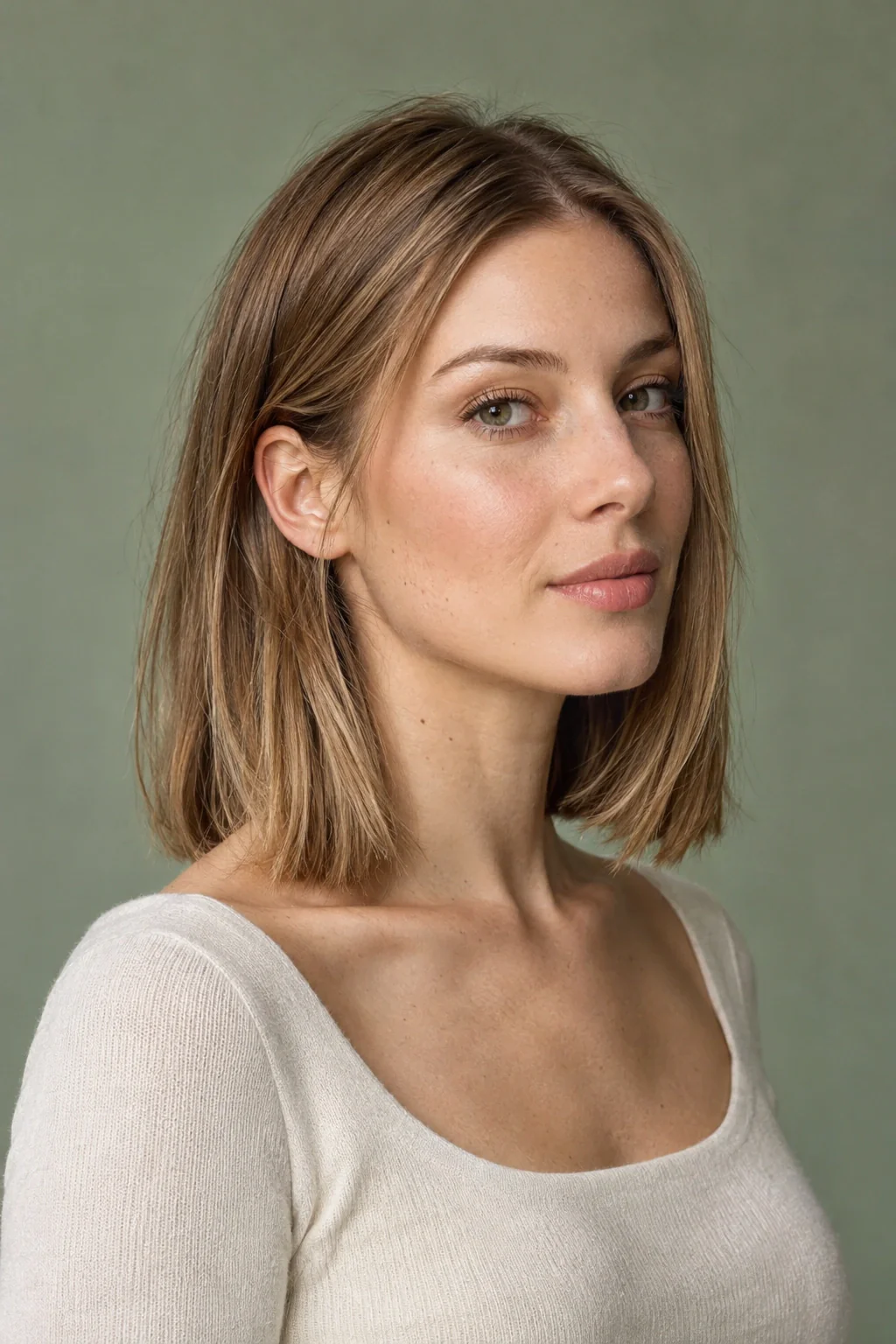
Annotate the exact feature you mean
Write a short note beside each image using concrete language: the open area around the ear, the length touching the collar, the soft corner of the fringe or the way the ends separate. If you like only one feature, say that clearly. A stylist should not have to guess whether the image represents the haircut, color, styling or the whole appearance.
Include a note about what you do not want copied when that could otherwise be confusing. You might like the length but prefer less styling, or like the fringe while keeping your current color. Keep those notes descriptive rather than critical of the person in the photograph. The goal is shared understanding of the reference, not a judgment about whether the original hairstyle is good or bad.
Separate the haircut from the finished styling
A photograph may show a cut shaped by a blowout, waves, a strong part, hidden pins or added hair. If you do not know which elements are present, mark the uncertainty rather than treating the image as a direct prediction. Ask the stylist what appears to come from the cut and what appears to come from styling.
Create separate notes for the everyday version and the occasional finish you might want. A haircut that can be styled into a dramatic shape may look quite different when left in your normal texture. That is not automatically a problem, but it is a conversation to have before the service. The board should help you understand both versions instead of focusing only on the most polished image.
Make routine and length preferences visible
Add a short routine card to the board: usual wash pattern, normal drying method, tools you use confidently and styles you need the hair to reach. You do not need to list every product. Focus on the habits that affect how you will wear the result. If you dislike frequent fringe styling or cannot manage a round brush, say so plainly.
Sam Villa's consultation guidance emphasizes habits, goals, likes and dislikes, including whether keeping length matters. Turn those topics into useful notes for your appointment. Show the shortest length you are considering on your own body or in a photograph, and ask the stylist to confirm it before cutting. A haircut name alone may not communicate where you expect the ends to sit.
Resolve conflicting pictures by ranking the features
A blunt bob photograph and a heavily layered photograph may both appeal, but they describe different visible edges. Do not remove one simply to make the board look consistent. Label what you like in each: the full lower line in the first, perhaps the movement around the front in the second. Ask the stylist which elements can coexist on your hair and which require a choice.
Rank the priorities before the consultation. If keeping a full edge matters more than obtaining a particular layered effect, put that first. If ponytail reach is essential, say so beside the shorter cut you are considering. If you like a fringe image but do not want its daily styling demands, make that tension explicit. A board is allowed to contain a question; it does not need to arrive as a finished technical haircut plan.
Use the answer to revise the board into an agreed brief. Keep the image that explains the main direction, cross out features you are leaving behind and note the adapted length or finish. Summarize the plan aloud before the service: where the ends will sit, what happens at the front and how you expect to wear it most days. The resolved priorities should guide the appointment more clearly than the original collection of attractive but competing pictures.
Leave the appointment with an agreed translation
Before the service begins, summarize the plan in your own words and ask the stylist to confirm or correct it. Name the intended length, front shape, part options and everyday styling expectations. If a reference is not achievable in the way you imagined, ask what related result is realistic and what tradeoff it involves.
After styling, take photographs and note the few steps that produced the finish. Ask for clarification on any step you do not understand while you can still see it demonstrated. Keep the original board alongside the result so you can explain what you liked at the next visit. Over time, your own photographs and observations can become the most useful references in the collection.
Prepare a board that can be read in one minute
Put the overall direction first, followed by the specific detail references and your current hair photographs. Give each picture a short caption that states its job. A stylist should be able to identify the central request without decoding a collage of equal-sized images and contradictory labels. Include the practical boundary near the top, such as wanting to gather the hair or preferring a routine with few steps. This makes your priorities visible before the conversation moves into technique or interpretation.
Read the board aloud to yourself once. If you cannot explain why an image is included, remove it or move it into an optional discussion group. If two pictures conflict, label the conflict as a choice you need help making rather than hiding it. The board does not need to look professionally designed. Its purpose is to communicate the visual intention, the current starting point and the questions that remain open, with enough structure that the appointment can focus on useful decisions instead of sorting through the collection.
Record the agreement separately from the inspiration
At the end of the consultation, write a short agreed brief in your own words. Include the intended outline, the detail that matters most, any practical constraint and the part of the reference that will be interpreted differently. Ask for clarification where your description does not match the professional's explanation. This step matters because a moodboard contains possibilities, while the appointment should produce a more specific plan. Keeping the two separate helps you remember which ideas were selected and which remained inspiration only.
Save the agreed brief beside the board and add a current photograph when you have the result. Later, compare your experience with that plan rather than with every image you originally collected. If you want an adjustment, describe the difference between the agreement and what you are experiencing, including when it appears in your routine. Keep the aspects you like visible in the discussion too. A reference board becomes more useful over time when it records interpretation and feedback, rather than remaining a gallery disconnected from what you actually chose and wore.
Your questions, considered.
How many reference photos should I bring?
A small set with clear purposes is usually easier to discuss than a large unlabelled collection. Try one main direction plus a few images for specific details. The important part is explaining what each picture contributes and including current photographs of your own hair.
Can I use an AI hairstyle preview as a reference?
Yes. Use it to communicate a visual preference. Ask the stylist to assess the shape, texture and length and translate the idea into a realistic plan.
What if I like references that contradict one another?
Keep the most useful ones and label the differences. Explain which feature matters most in each image. The stylist can help separate compatible details from choices that lead to different results, so you can agree on priorities before the service begins.
Sources & what they support
The notes below explain the scope of each source. Hairstyle selections, outfit combinations and comparison exercises are HairSparks’s editorial suggestions; the links do not imply endorsement.
- Sam Villa: Questions for a client consultation ↗Professional consultation questions about habits, goals, length, texture and previous likes or dislikes. Used for the conversation prompts, not universal rules about flattering hair.
HairSparks and Hair Muse share the same publisher. App mentions are promotional. Read our editorial policy.