0
Download on the App Store
THE POLISHED MOOD

Clear lines. Quiet confidence.

Polished hairstyles can use a defined part, a low ponytail, a shaped curly crop or a bob with one deliberate tuck.

It might be a defined part, a controlled outline or a gathered shape that leaves your clothes and expression in focus.

Explore the looks
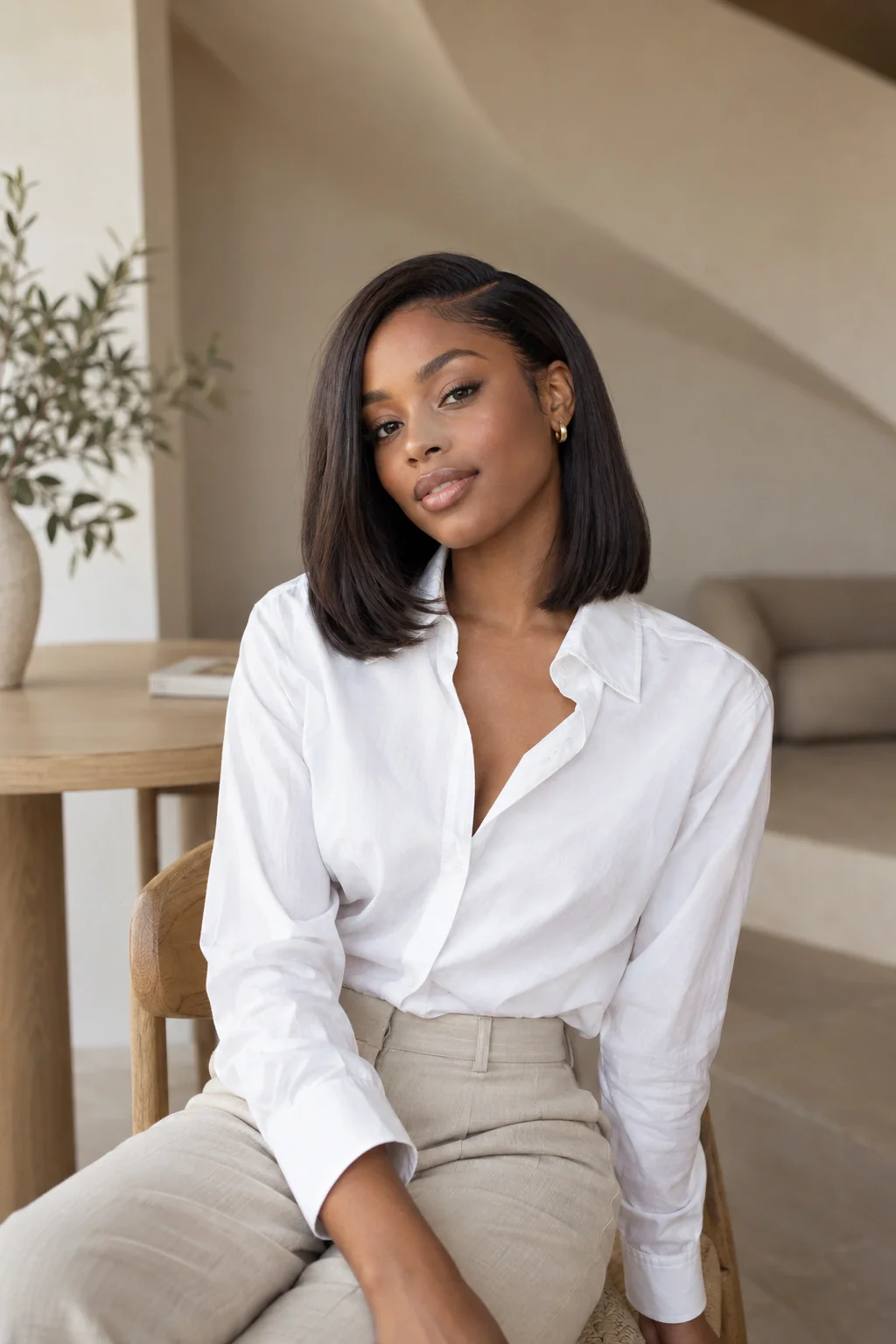
A young Black woman with a smooth collarbone-length side-parted lob and a white tailored shirt in a warm interior.
01

Define your version of finished

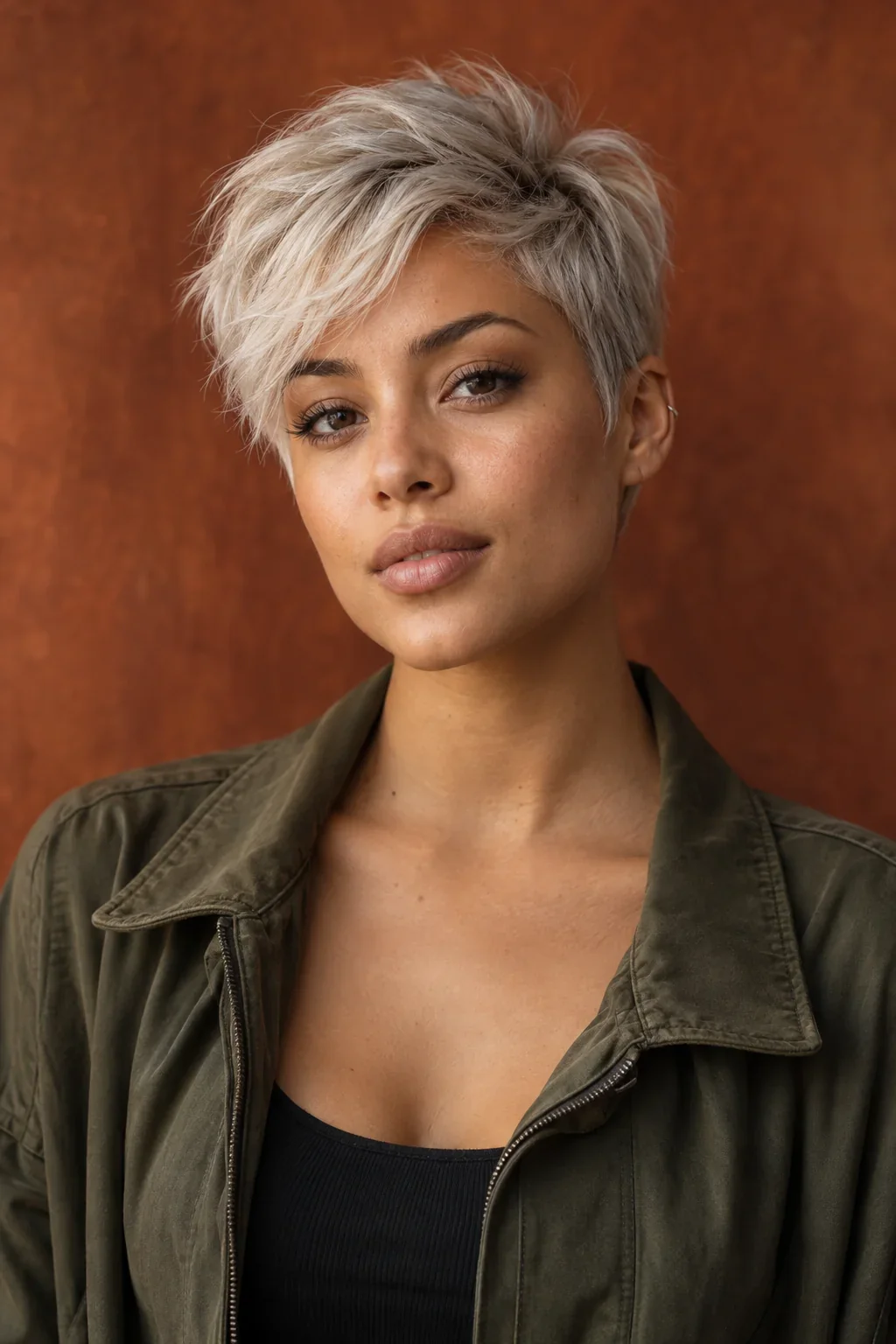
Polish does not require straight hair. Curls with a deliberate outline, a silver crop with a directed front and a soft twist can all read as finished. Decide which part of the silhouette you want to feel clear. Avoid turning a useful styling idea into a requirement for completely uniform texture.

02

Work with the outfit

Look at the whole area from the top of your head to the neckline. A high collar and statement shoulders might suit hair kept near the head; a simple open neckline might welcome more movement. Test both in the actual clothes. The relationship between fabric and hair tells you more than a close crop of your face does.

03

Plan the handover from morning to evening

A polished look should have an understandable reset. Keep the attachment point reachable and test whether you can restore the part without recreating the whole style. If a finish relies on a professional blowout, save that version for a day when the preparation makes sense.

The mood, in looks.

A little more inspiration.

Occasions9 min read

Hairstyles with Blazers

For a crisp blazer, try a low ponytail or tucked bob to reveal the lapels. For a slouchy jacket, keep loose texture and clear one side. If the collar pushes a low bun, lift its base or choose a flatter fastening.

Read the story
Occasions9 min read

Evening Hairstyles with Hair Down

For an easy evening change, keep your normal texture and open one side with a tuck or barrette. Choose a half-up style if the front keeps falling forward; keep everything loose when the neckline and jewelry leave the lengths room to move.

Read the story
Occasions9 min read

Graduation Hairstyles

Start with a low-profile crown and style the hair visible below the cap. Use a low ponytail or side braid if long hair meets the gown collar; keep curls loose when the fit allows. Check organizer guidance before adding or altering cap fastenings.

Read the story
Occasions9 min read

Hairstyles for Headshots

Keep the texture you want represented and test its outline at the final display size. If the hair disappears into the background, discuss the photographic setup before restyling. Choose a front placement you can hold naturally while speaking and turning.

Read the story
Occasions9 min read

Hairstyles for Job Interviews

Keep your familiar style and fix only practical distractions: hair across the eyes, a clip against the chair, or a section rubbing the microphone. A ponytail, curls, locs, and short texture can all be considered choices; none predicts the interview outcome.

Read the story
Mood & identity8 min read

Soft vs Sharp Hairstyles

Choose the edge first, then the texture inside it. A blunt bob can retain waves, and a rounded crop can have a precise fringe. If you like both moods, decide which feature should be crisp and which should remain flexible before discussing the cut.

Read the story
A CLEAR INTENTION

Choose the part that should feel finished.

Polish can come from a clear outline, a considered placement or the relationship between hair and clothing. It does not require every strand to look identical. Decide which visual cue makes the arrangement feel complete to you.

01 / THE DETAILS

Choose a clear part, a finished ponytail or an open ear.

A polished style has a visible decision behind it: the part is clear, the fastening is placed deliberately or the outline has room beside the clothes. You can create that finish with curls, waves or straight hair while keeping the texture recognizable.

  • Defined part with loose lengths: settle the front in a chosen direction and leave the rest of the hair to move. This is an option when an updo would feel too formal for the outfit.
  • Low ponytail with a covered elastic: build a comfortable ponytail first, then use a small section or suitable accessory to finish the base. Decoration comes after the fastening is secure.
  • One pinned side: expose an earring or clear the edge of a collar. Use this on a bob, crop or longer hair by moving only the section that shares space with the detail you want to show.

Check the finished shape from the side and back. A neat front can hide a fastening placed awkwardly against clothing. Keep the adjustment that improves the whole outfit; individual curls or loose ends do not have to become identical.

02 / THE DETAILS

Check the space around structured clothing.

A sharp lapel, high neck or pronounced shoulder already creates strong lines. Try the hairstyle with that garment and decide whether the hair should echo the structure or add a softer contrast. There is no need to match the mood of every element exactly.

Pay attention to the profile. A style can look composed from the front while resting awkwardly against a collar or headrest. A quick side photograph and a seated test can reveal the practical adjustment that makes the whole arrangement more convincing.

03 / THE DETAILS

Know what needs a reset.

Identify the one feature that must stay in place for you to enjoy the look. Then practice restoring that feature without recreating everything. A reachable fastening or a front you can redirect easily may be more useful than a complicated arrangement that only works immediately after styling.

For an important day, keep a simpler interpretation ready. You might preserve the clear front while allowing the lengths to soften. That gives the style room to change naturally without making the whole plan feel unsuccessful.

A LITTLE CLARITY

Your questions, considered.

Can polished hair include curls and coils?

Yes. Polish can come from a deliberate silhouette or arrangement. It does not depend on straightening the texture or removing every natural variation.

How can I avoid a style that feels too formal?

Keep the feature that makes it feel finished, then soften another area or simplify the accessories. Test the result with everyday clothes so the level of formality is easier to judge.