
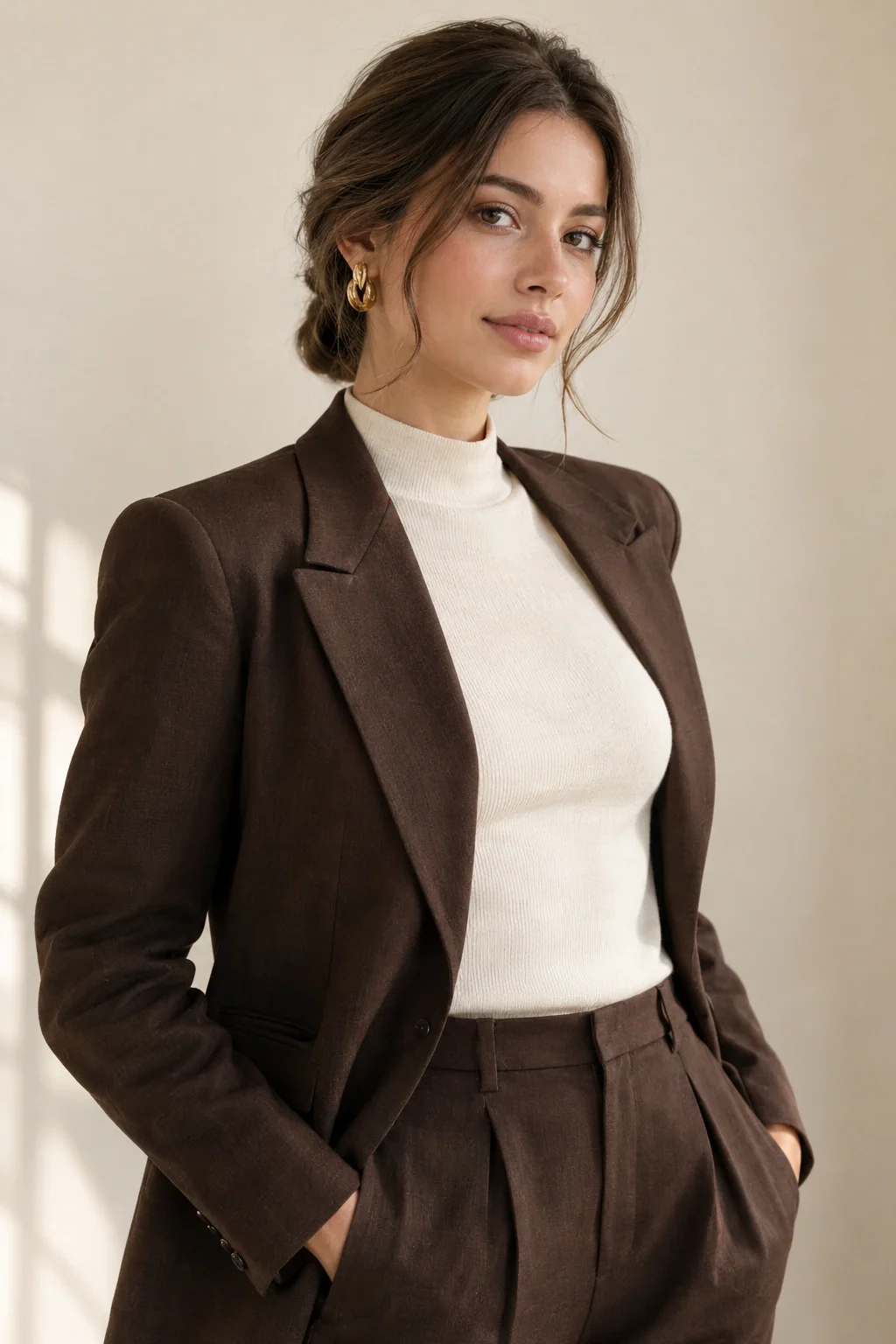
For a crisp blazer, try a low ponytail or tucked bob to reveal the lapels. For a slouchy jacket, keep loose texture and clear one side. If the collar pushes a low bun, lift its base or choose a flatter fastening.
Choose a hairstyle for the jacket you own
An oversized blazer can be boxy and architectural or soft enough to wear almost like a cardigan. Put it on over the intended shirt before choosing the hair. A broad lapel already makes a diagonal beside the face; a padded shoulder creates width lower down. Decide whether to expose those lines or let the hair overlap them.
Try the first comparison with the jacket open, then buttoned if you plan to wear it that way. Long hair resting on the front can obscure a shirt collar when the blazer closes. The options below give you different amounts of visible tailoring without requiring a new haircut or a straighter finish.
Compare a clear outline with a soft overlap
Gather the hair away from the lapels and observe the exposed lines of the jacket. Then release it so the lengths fall naturally over the shoulders. The first version may feel sharper; the second may make the outfit feel more relaxed or expressive. Those are possibilities, not obligations. Curly volume beside strong shoulders can be a deliberate statement, while straight loose hair can create a very clean vertical line.
Take a photograph that includes the waist. A close selfie cannot show whether the hairstyle works with the scale of the jacket. If neither extreme feels right, move one side behind a shoulder or secure just the front sections. This middle option can keep the softness of loose hair while allowing a lapel to remain visible. Make one placement change at a time so you can identify what improves the ensemble.
Keep the collar from pushing the hair
A blazer collar can lift or redirect hair at the nape, particularly when the jacket is structured. Turn your head and sit down while wearing a rough version of the hairstyle. A low bun may rest against the collar; loose ends may bend outward over it. Neither is automatically a problem. Decide whether you like the movement and whether the contact remains comfortable through an ordinary conversation.
If the collar keeps shifting a gathered style, try moving its position slightly higher or choosing a flatter shape. If you prefer hair down, let the ends sit intentionally over the jacket rather than repeatedly trapping them underneath. Short hair can need a quick nape check after the jacket goes on. The useful question is not whether hair should touch clothing, but whether the contact produces a shape and sensation you are happy to keep.
Use finish to set the occasion
The same arrangement can support several moods. A loosely gathered back with visible texture may suit a daytime outfit; a more deliberate front and a small metallic accessory can make it feel ready for evening. You do not have to change the entire hairstyle between work and dinner. Choose the detail that marks the transition, such as an exposed ear, a smoother front section or a different fastening.
Keep the finish compatible with your usual hair behavior. If you normally wear curls, arranging the front with care may be enough to make the look feel dressed. If your straight hair falls neatly without much effort, extra texture is optional. Avoid assuming that polished always means flat or that casual always means deliberately messy. The blazer supplies structure; your hair can agree with it in whichever way feels authentic to you.
Think about the bag, scarf and commute
The jacket rarely travels alone. A shoulder bag can trap long hair against the blazer, and a scarf can fill the space beneath a low arrangement. Put those items on during your trial. If you regularly move the bag from one shoulder to the other, check both sides. A hairstyle that looks balanced but repeatedly catches under the strap may be less useful for a day spent walking or commuting.
A temporary travel arrangement can solve this without changing the final look. You might loosely gather the lengths until you arrive, then release them over the jacket. Alternatively, choose a half-up style that keeps the face clear when you carry a bag but leaves the lower texture visible. Carry the one fastener needed for that transition. Planning around your actual journey is more useful than packing products to repair a problem caused by placement.
Build a short-hair version through direction
Short hair can work with an oversized blazer without imitating a long-haired reference. Consider where the front points and how the sides sit against the ears. A swept front can echo the diagonal of a lapel. A soft, forward fringe can provide contrast to a sharp shoulder. A small clip can open one side without flattening the entire silhouette. Try these as individual changes rather than adding every possible detail together.
For a cropped or tightly curled shape, the jacket may already provide enough visual change for the occasion. Your usual finish can be the strongest choice. Check that a shirt collar or scarf does not obscure the part of the haircut you particularly like. If a photograph makes the top of the look feel too busy, remove an accessory first before assuming that the hair needs more control or a completely different texture.
Two outfit formulas and a quick evening change
For a daytime formula, combine an open blazer, a plain top, and a low ponytail with the lengths behind you. The lapels and shirt opening remain visible, while the tail avoids a crossbody strap across the chest. If shorter front pieces fall out, tuck or clip them at the side instead of pulling the ponytail higher solely to catch them.
For a softer formula, wear the blazer over a fine knit and keep curls or waves loose. Move the hair off one lapel and let it overlap the other. This makes the asymmetry clear without changing the texture. On a short cut, an open ear and a forward fringe can create the same contrast between an exposed side and a softer side.
For dinner, preserve whichever base has stayed comfortable. Swap a plain side clip for a metallic barrette, add earrings to the open side, or release the ponytail and keep the front tucked. Make the change with the blazer on; the collar can alter where the released hair lands. Photograph the whole upper body once the combination works. Note the jacket and hairstyle together, so next time you can repeat the pairing without rebuilding it from a close-up hair photograph.
Translate one blazer across two different days
Take a broad-shouldered blazer that you wear both with jeans and over an evening outfit. For the daytime version, try your familiar loose shape and notice which side lands on the lapel when you move. For the evening version, keep the same texture but clear that lapel and introduce a deliberate part or fastening. This comparison isolates the effect of placement. It avoids assuming that dressing up requires a completely different texture, a new haircut or a lengthy preparation routine.
The larger silhouette of the jacket can remain the anchor in both versions. What changes is the relationship between its edges and your hair. Record whether you prefer a continuous soft outline over the shoulders or a clear break between hair and tailoring. If the blazer already has an unusual collar, consider making that the focal detail and reducing hair ornament. If the jacket is plain, a visible clip or asymmetric sweep can provide the point of interest instead.
Make the shoulder test part of getting dressed
Wear the blazer, carry your usual bag and perform the movements you expect during the day. Reach for something on a shelf, cross your arms and sit at a desk. Notice whether hair collects under the bag strap or folds into the back collar. Then compare the same movements with one small change, such as moving the lengths forward before putting on the bag or gathering the lower section. The test should reveal a specific adjustment rather than produce a long list of imagined problems.
Keep the winning arrangement in a note with the jacket's name or a photograph. Include the placement that mattered: behind the left shoulder, above the collar or loose across both lapels. Next time, begin there and adapt the front to your mood. This creates an outfit formula with flexibility. You can change jewelry, lipstick or shoes without having to solve the same shoulder and collar relationship from the beginning whenever you reach for that oversized blazer again.
Your questions, considered.
Does an oversized blazer need a sleek hairstyle?
No. Curls, waves, braids, loose lengths and short texture can all sit comfortably beside tailoring. A sleek finish is one option if you want stronger contrast with the jacket volume. First compare the full outfit, then choose the amount of openness and texture that gives you the mood you want.
How can I move from work to dinner without restyling everything?
Choose a daytime shape with an easy change built in. You might release a front section, expose an ear or replace a plain fastening with a decorative one. Test the change with the blazer beforehand. A small deliberate adjustment is often more manageable than rebuilding the entire style after a long day.
What if the collar keeps flipping my ends outward?
Check whether you like the outward movement as part of the look. If you do not, try placing the lengths behind the shoulder or gathering the section that meets the collar. Repeatedly smoothing the ends may not solve a physical contact point; changing where the hair sits can be more useful.
Sources & what they support
The notes below explain the scope of each source. Hairstyle selections, outfit combinations and comparison exercises are HairSparks’s editorial suggestions; the links do not imply endorsement.
- Wella Professionals: wedding hair and the complete outfit ↗Professional background on choosing wedding hair alongside the dress, accessories and setting. The specific outfit pairings in this guide are our suggestions.
HairSparks and Hair Muse share the same publisher. App mentions are promotional. Read our editorial policy.