
Keep your familiar style and fix only practical distractions: hair across the eyes, a clip against the chair, or a section rubbing the microphone. A ponytail, curls, locs, and short texture can all be considered choices; none predicts the interview outcome.
Pick the familiar style with the fewest interruptions
Think of a recent day when you barely noticed your hair after getting ready. Use that style as the starting point. The interview does not require a new texture or unfamiliar fasteners. A reliable front and comfortable seating matter more than reproducing a polished image from someone else’s routine.
Try the options below with the upper half of the outfit on. Sit, speak aloud, and look down at notes. If something interrupts those actions, name the section or contact point causing it. Keep the rest of your preferred style unchanged unless you want a broader change for your own reasons.
Choose the style you know how to maintain
An interview day is not the easiest moment to learn a complicated new technique. Choose a base you can reproduce with your usual tools and products. You know which pieces tend to move and what you can fix quickly. If you want a change, practice it earlier and wear it through ordinary activities. That gives you information about comfort and reliability rather than relying on how it looks immediately after styling.
Keep your natural texture if that is how you want to present yourself. A deliberate arrangement does not have to mean a smooth or tightly gathered surface. Curls can remain full, braids or locs can retain their usual shape, and short hair can stay expressive. Focus on the parts that might distract you personally, such as a front section repeatedly falling into your eyes. Solve that issue without treating the rest of the hairstyle as something to correct.
Test the hair with the complete upper outfit
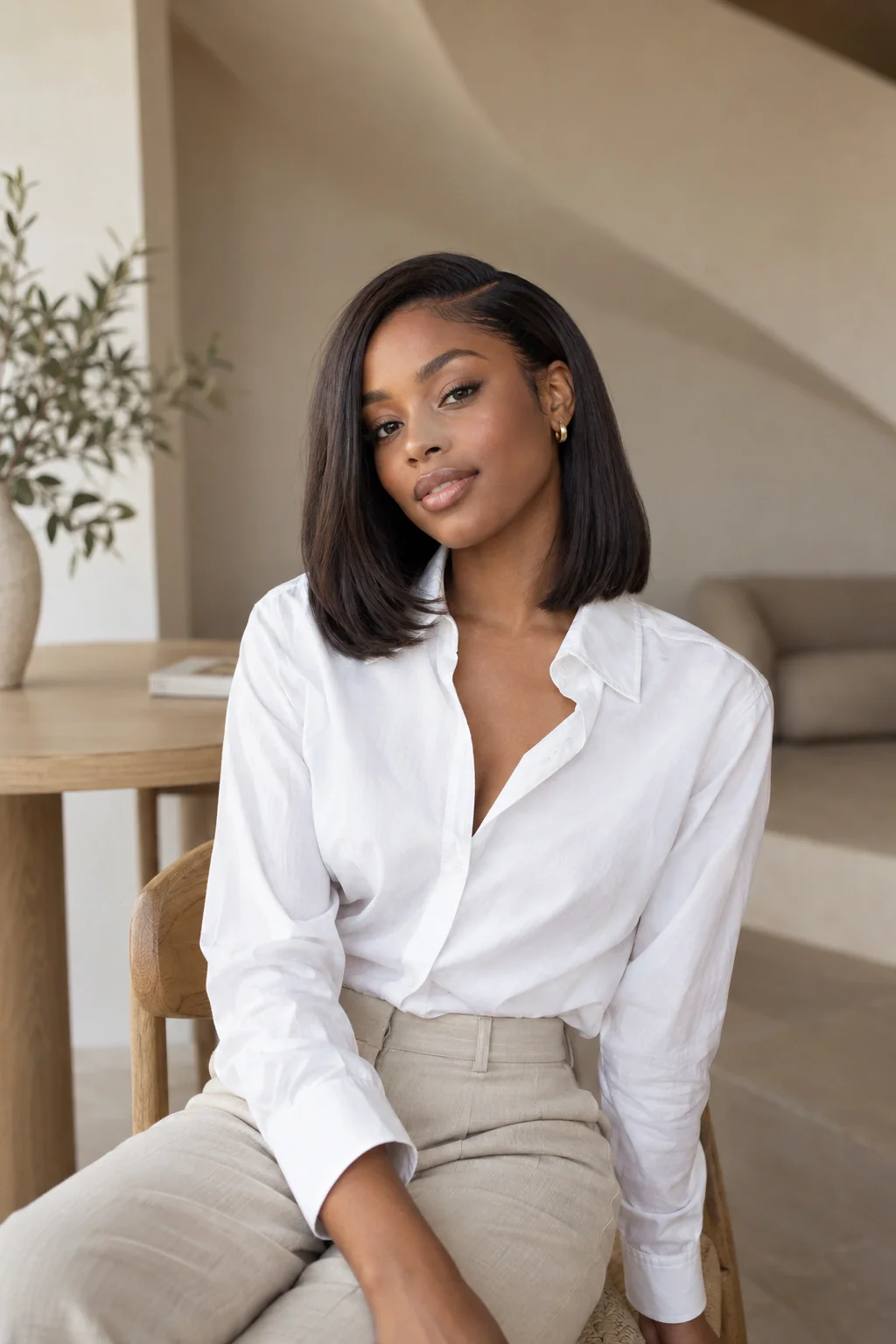
Put on the shirt, jacket, neckline and any jewelry you intend to wear. Sit down and speak aloud for a minute. Notice whether the collar pushes the hair, whether an earring catches or whether a necklace becomes tangled in a loose section. These are practical interactions you can resolve before the day. A photograph from the waist or chest up can help you see the ensemble at the distance another person will usually experience it.
If the outfit is structured, you may prefer softer hair; if the clothes are simple, you may enjoy a stronger hair detail. Those are personal visual choices. Avoid assuming the outfit needs to disguise your usual style. Choose one coherent combination and stop comparing endless alternatives. The more familiar the ensemble feels, the easier it may be to leave appearance decisions behind and return to the substance of the interview preparation.
Account for the journey to an in-person meeting
Consider transport, weather and the time between leaving home and entering the room. A high clip can press against a seat; loose lengths can catch under a bag strap; a scarf can disturb a carefully arranged front. Test those interactions with the hairstyle before the day. You may decide to travel with a simple temporary gathering and release it on arrival, or to choose a flatter arrangement that stays comfortable throughout.
Allow a modest arrival buffer for practical checks, within the timing appropriate to the appointment. Carry the fastener that supports your chosen style rather than a large emergency kit. If the weather changes the texture slightly, ask whether the hairstyle still feels comfortable and coherent before trying to rebuild it. The meeting does not require you to preserve a photograph-perfect surface. Your preparation should make the transition into the conversation calmer, not create extra last-minute work.
For video interviews, test the actual frame
Use the camera and platform you expect to use, with the planned chair, background and lighting. Hair may appear differently in that frame than in the bathroom mirror. Check that the top of the hairstyle is not unintentionally cropped and that the front remains visible when you look at the screen. If the outline blends into the background, consider changing your position or background before deciding the hair needs a different style.
Try any headset or earbuds during the test. A band can flatten the top or displace a clip, while a microphone wire may interact with loose lengths. Choose placement that keeps the equipment comfortable and functional. Do not spend the test chasing every small strand on screen. Confirm the practical setup, make a brief recording if helpful, then close the self-view when appropriate so you can focus on the interviewer instead of continuously monitoring your appearance.
Make a small contingency plan
Identify the most likely inconvenience and prepare one response. If the front tends to fall forward, carry a suitable clip. If a gathering depends on one tie, bring a spare. If your hairstyle changes after wearing a coat, allow time for a quick rearrangement. A specific contingency is easier to use than a bag of unfamiliar products and an expectation that you can fix anything immediately.
If something changes unexpectedly, simplify. A comfortable, understandable arrangement is preferable to repeatedly tightening a style that has become awkward. You can move one section without changing the whole look. Keep the response proportionate to the problem and remember that the interview is not a styling appointment. Once you can see clearly, sit comfortably and speak without managing the hair, return your attention to your notes, questions and the people you are about to meet.
Set an interview-morning stopping rule
Decide on the style the day before and put its tools with the outfit. On the morning, complete your familiar routine, check the front, and sit once with the jacket or shirt collar in place. If the fastening is comfortable and your view is clear, the styling decision is finished. Reopening a folder of haircut ideas at this point creates a new decision that the interview does not need.
For an in-person appointment, bring one spare fastener and allow the normal arrival time needed for the journey. If a coat has shifted the nape or front, restore that section. A slight change in texture after travel is not evidence that the whole style needs repair. For a video interview, make a brief equipment check and leave the hairstyle alone once you can speak and look at notes comfortably.
Afterward, evaluate only what you can observe: whether a clip pressed, whether the front stayed clear, and whether the setup was easy to repeat. Do not interpret a hiring decision as feedback about the hairstyle. Keep a short practical note if it will make the next interview easier, then return your attention to the substance of the conversation and any follow-up work required.
Rehearse the part of the interview that usually distracts you
Think about a previous conversation in which you repeatedly adjusted your hair. Was it falling forward while you read notes, catching in a headset or moving when you put on your glasses? Recreate that action while wearing the proposed outfit. Choose a small practical adjustment that addresses the behavior, such as a different front placement or a fastening clear of the headset. This is a preparation exercise focused on your attention, not an attempt to infer what an interviewer believes about a particular hairstyle.
Then practice answering one ordinary question without watching yourself. Notice whether you still feel a need to fix the arrangement. If the hair fades from your attention, the practical part of the decision may already be solved. Keep the familiar elements you like and avoid turning the rehearsal into a search for an imagined universal professional look. Different workplaces and people have different preferences; your useful control is a comfortable, intentional presentation that lets you concentrate on the conversation and the evidence of your work.
Create a final check that ends the preparation loop
Write a short arrival checklist covering the actual circumstances: coat removed, glasses comfortable, front clear enough for notes and any fastening secure. Perform it once after the journey or before joining the video call. If an adjustment is needed, make the smallest one that solves the problem. Do not reopen the entire hairstyle decision at that point unless the arrangement is genuinely uncomfortable. A prepared stopping point protects the time you need to settle, review names and focus on why you are there.
After the interview, evaluate the hairstyle through its effect on your experience. Did it stay comfortable while you spoke? Could you move naturally and look at your notes? Did the preparation take an amount of time you would willingly repeat? Keep those observations separately from how you think the interview went. You cannot reliably attribute another person's decision to a hair detail, but you can learn which arrangement supports your own concentration and feels consistent with the personal style you want to bring to future conversations.
Your questions, considered.
Do I have to wear my hair up for an interview?
No. Choose the arrangement that feels comfortable and recognizable to you. Loose hair can work when it stays out of your view and does not require constant adjustment. A gathered style can be convenient, but it is not a universal standard of professionalism or a predictor of the interview outcome.
Should I straighten natural curls for a formal meeting?
Only if that is how you personally want to wear your hair. Natural texture is compatible with a considered presentation. You can arrange the front, coordinate the outfit and check the meeting setup without changing the curl pattern. The practical goal is comfort and focus, not conformity to one texture.
What is worth checking right before the interview?
Check that your fastening is comfortable, the front is not blocking your view and any headset or collar sits properly. Make a small adjustment if needed, then stop. Your final attention is better spent on the conversation, your questions and the information you want to communicate than on tiny styling variations.
Sources & what they support
The notes below explain the scope of each source. Hairstyle selections, outfit combinations and comparison exercises are HairSparks’s editorial suggestions; the links do not imply endorsement.
- Wella Professionals: wedding hair and the complete outfit ↗Professional background on choosing wedding hair alongside the dress, accessories and setting. The specific outfit pairings in this guide are our suggestions.
- Nikon: planning portrait backgrounds and clothing ↗Photography background on clothing and backgrounds in portrait composition. Our hairstyle and framing exercises apply that context to a personal photo.
HairSparks and Hair Muse share the same publisher. App mentions are promotional. Read our editorial policy.