
Keep the texture you want represented and test its outline at the final display size. If the hair disappears into the background, discuss the photographic setup before restyling. Choose a front placement you can hold naturally while speaking and turning.
Match the hair decision to the final crop
Ask whether the photograph will be a tight profile image, a chest-up portrait, or a wider biography picture. That tells you which parts of the hairstyle will appear. A bun may sit beyond a tight crop, while long loose hair can meet the bottom edge of a chest-up image. Neither requires a different hairstyle automatically, but both deserve a framing discussion.
Use a normal photo of your current hair and crop it approximately to the requested shape. View it small enough to resemble its final use. You are checking whether the outline and front read clearly, not inspecting individual strands. Then prepare two small variations for the session.
Keep a familiar texture as the base
A headshot session is often easier when the base style is one you already understand. You know how it falls, which sections move and what you can adjust without rebuilding it. Natural curls, coils, waves, straight hair and short texture all belong in a portrait. There is no single professional texture. Choose the finish you want represented rather than assuming the camera requires a smoother or more restrained version.
If you are considering a substantial new hairstyle, separate that decision from the photo appointment when possible. Give yourself time to wear it and learn how it behaves. For a small change, practice with a simple photograph at home. The purpose is not to predict the photographer’s exact result, but to see whether the arrangement still feels like you when viewed as an image rather than as a moving reflection in the mirror.
Test the hair inside the intended crop
Use a simple photograph and crop it roughly the way the final image will be displayed. Look at the overall outline and the areas around the eyes, ears and neckline. A high arrangement may disappear beyond a tight crop, while loose lengths may be cut at an awkward point. You can discuss framing with the photographer instead of automatically changing the hairstyle to fit a sample that may not be mandatory.
View the test at a small size as well as full screen. A tiny accessory may disappear, while a large one can become the strongest feature. Decide whether that supports the image you want. Avoid enlarging the photograph until every individual strand feels like a problem. The useful check is whether the hairstyle reads clearly at its actual display size and whether the face remains visible in the way you prefer.
Check background and light before changing the hair
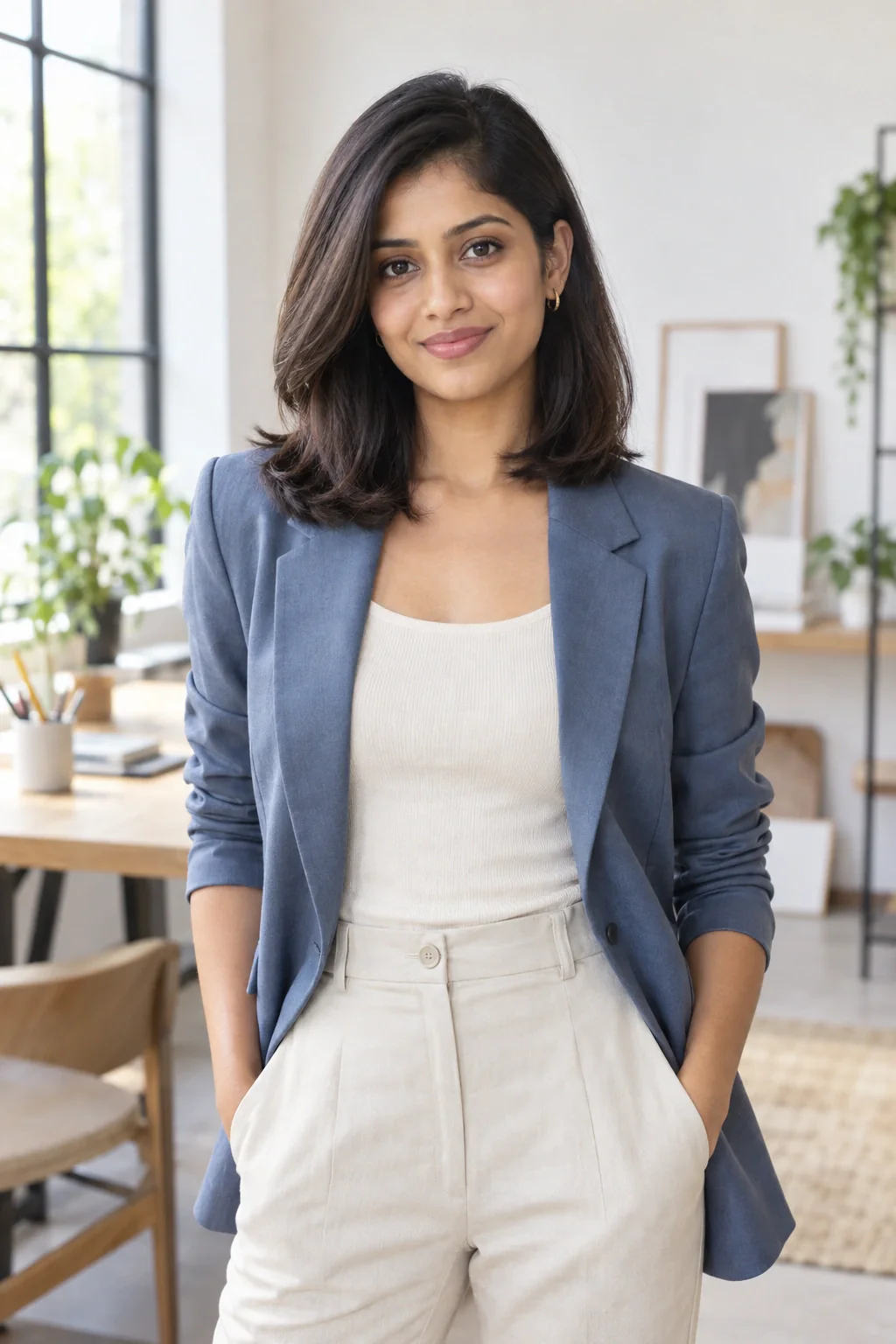
Hair can appear different against a light wall, a dark backdrop or a busy environment. Nikon’s portrait guidance emphasizes the role of background and clothing in the overall composition. If the hair outline seems to disappear in a test image, ask whether a change in background, position or lighting could help before deciding that the hairstyle itself is wrong. The photographer can assess those relationships in the actual setup.
Avoid making universal assumptions about which hair colors need which background. Texture, direction and lighting all affect the result. Bring the issue as a preference: you want the curl outline visible, the fringe clearly separated or the length readable against the jacket. That gives the photographer a concrete target. Your role is to explain what matters to you, not to prescribe technical lighting adjustments you may not need or understand.
Coordinate the visible clothing and accessories
Wear the neckline you intend to use or bring a close equivalent to a styling appointment. A high collar can change where loose lengths sit, while a jacket can push the nape or hide the lower outline. Earrings and glasses occupy the same limited frame as the front sections. Decide whether they should be fully visible or appear through the hair. Test the combination rather than evaluating each item separately.
If you have several clothing options, keep the hairstyle stable for the first comparison. Then change one hair detail if necessary. This makes it easier to see what the garment contributes. A busy pattern or reflective accessory may draw attention, but that can be a creative choice rather than a mistake. Discuss the intended image with the photographer. The aim is a coherent portrait, not obedience to a fixed list of acceptable clothes or hairstyles.
Plan a short sequence of useful variations
Choose two or three small variations in advance: both sides loose, one side behind the shoulder, or the front lightly secured. Start with your preferred everyday version so you have a clear baseline. Then make one change at a time. This gives you genuinely different options without consuming the session with a complete restyle between every photograph. Keep track of which version you are wearing if the differences are subtle.
Ask to review a few representative frames at a sensible point rather than after every shutter click. Check the features you named, such as the visible earring or the direction of the front. If a change is needed, explain it specifically. Avoid vague requests to make the hair better. A clear adjustment, like moving a section away from one eye, is easier for both you and the photographer to evaluate in the next set of images.
Bring a small shot list instead of a restyling kit
Write down three versions: your ordinary placement, one side moved behind the shoulder, and the front secured. Keep the texture and outfit stable for the first comparison. The photographer can then show what the placement changes, without a new neckline, accessory, and finish competing for attention in each frame.
Choose one sentence describing what you want visible, such as “keep the curl outline against the background” or “show the tucked side and earring.” Share that sentence before the session. If the outline disappears, look at background and lighting with the photographer before changing the hair. If only the front falls over an eye, move that section and leave the rest of the style intact.
Pack the fastener and familiar tool required by the three versions. A small mirror helps check a side clip; a product you have never used adds uncertainty. Confirm professional styling arrangements in advance if they are included in the booking. Review a representative frame after each placement, then finish the comparison. Your goal is a recognizable portrait you can use repeatedly, not a complete catalog of hairstyles photographed in one appointment. Select the frame for expression and the overall result as well as the hair.
Decide what must stay consistent across the image set
A headshot session may produce a website portrait, a square profile image and a wider photograph for an introduction page. Ask which details should remain recognizable across those uses. A familiar part, visible texture or open area around one eye can provide continuity even if the crop changes. This does not mean freezing the hair into one pose. It means choosing the feature that represents you and making sure each setup includes enough of it to preserve the intended impression.
Write a short priority note before the session and share it with the photographer. For example, you might prefer the natural side volume to remain visible even when the crop becomes tighter. Ask to review one representative frame from each setup rather than judging every small movement during shooting. If the preferred feature disappears, solve the framing or placement with that specific goal in mind. The note turns a vague wish to look like yourself into a concrete point everyone can check together.
Use a selection exercise before approving the final image
When reviewing possible headshots, separate hairstyle preference from overall image usefulness. First look at expression, framing and the intended purpose of the photograph. Then consider whether the hair supports those choices. A slightly different arrangement may still be the better portrait if the expression feels natural and the image works at its final size. Conversely, a beautifully arranged hairstyle does not automatically make a photograph suitable for a small profile circle or a professional introduction with limited space.
View the shortlist at the approximate size in which it will appear. Notice whether the hair outline remains readable and whether a decorative detail becomes distracting when reduced. Compare the images against your original priority note, not a growing list of tiny imperfections discovered during close inspection. If you request a correction, describe the exact issue and ask what can reasonably be addressed. Keep the goal an accurate, useful portrait rather than a picture whose hairstyle has been refined beyond the way you recognize yourself.
Your questions, considered.
Should I wear my hair differently for a professional headshot?
Only if that is the version you want represented. A familiar style is often easier to manage and more recognizable. You can refine placement around the face or neckline without changing your natural texture. Ask about the intended crop and background before making a major styling decision.
Can I wear my hair up if the bun will be outside the crop?
Yes, if you like how the visible front and sides look. The final image may not show the full arrangement, so test the crop to avoid surprises. If the bun is an important part of your preferred silhouette, discuss a slightly wider framing option with the photographer.
What if my hair blends into the background?
Tell the photographer which outline or texture you want visible. Background, position and lighting can all influence separation, so changing the hairstyle is not the only option. Review a representative frame before deciding. A simple placement adjustment may help, but the photographic setup should be considered too.
Sources & what they support
The notes below explain the scope of each source. Hairstyle selections, outfit combinations and comparison exercises are HairSparks’s editorial suggestions; the links do not imply endorsement.
- Nikon: planning portrait backgrounds and clothing ↗Photography background on clothing and backgrounds in portrait composition. Our hairstyle and framing exercises apply that context to a personal photo.
HairSparks and Hair Muse share the same publisher. App mentions are promotional. Read our editorial policy.