
Choose familiar styles individually, then coordinate the overall mood through clothing and setting. Secure a front section only when it repeatedly interrupts the person wearing it. For outdoor photos, bring the clip or tie for a practiced second version instead of expecting identical hair in every frame.
Choose hair for the type of family photograph
A seated studio portrait and a walk through a park create different demands. In a studio, the main decisions may be the front, neckline, and visibility of an accessory. During a walk, hair moves across shoulders as people turn toward one another. Ask about the session format before choosing how much length to leave loose.
Each person can use a different hairstyle while the photograph remains coherent. These options respect individual styling preferences, without requiring a matching look. Start with the version they normally find comfortable, then make the smallest adjustment that helps them participate without repeatedly moving hair away.
Coordinate the mood without making everyone identical
Choose an overall feeling for the photographs, such as relaxed, lively or more formal. Then let each person interpret that through a style they enjoy. A coordinated family image does not require matching hair texture, identical accessories or the same level of containment. Different hairstyles can sit together naturally when the clothing and setting have a clear relationship. Individual comfort usually produces a more useful starting point than forcing uniformity.
Discuss preferences before the day, especially if someone strongly likes or dislikes a particular arrangement. A person who never wears their hair fully back may feel unlike themselves in that style. Someone who prefers a gathered look may not want loose hair for the sake of softness. The photograph is a record of the people in it. Keep the visual planning collaborative rather than treating every head of hair as another element to standardize.
Use clothing to guide small placement decisions
Try the hairstyle with the top or outer layer intended for the photographs. Hair may cover a collar, sit over a pattern or disappear against a similar color. Nikon’s portrait guidance notes that clothing and background contribute to composition. This is a reason to look at the full combination, not a rule that everyone must wear plain clothes. Decide what you want visible and make a small placement change if it helps.
For longer hair, compare lengths in front of the shoulders with lengths behind them. For short hair, check the relationship with a collar or scarf. Accessories can connect to the outfit without matching exactly. If several people wear decorative pieces, look at the group together to see whether any one detail draws more attention than intended. You can adjust the accessory before deciding that someone’s whole hairstyle needs to change.
Keep the front comfortable during interaction
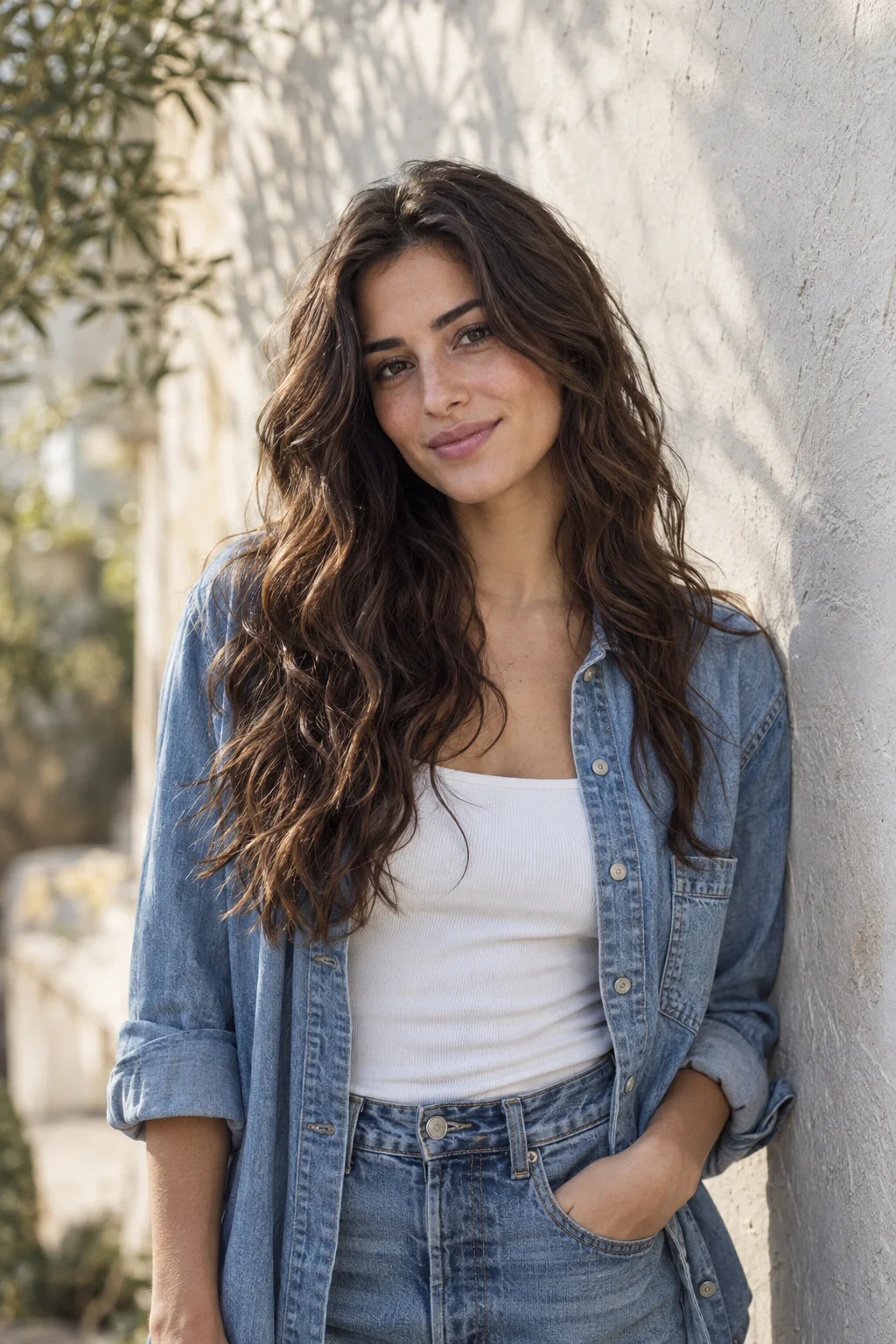
Family photographs often include leaning toward another person, looking down or turning to laugh. Try those motions with the chosen hairstyle. If the front repeatedly crosses the eyes and the person finds it annoying, secure the relevant section in a familiar way. A small clip or partial gathering may be enough. Leave the rest of the texture visible if that is what they prefer.
Do not make every arrangement tighter merely to reduce movement. Comfortable hair can shift slightly and still look coherent in a photograph. If someone is sensitive to clips or bands, choose an alternative rather than asking them to tolerate it for the whole session. A style that causes distraction is unlikely to make the experience easier. The practical target is a clear, comfortable front where wanted, with enough freedom for natural expressions and interaction.
Prepare for outdoor variation without chasing perfection
For an outdoor session, think about what the hair usually does in similar conditions. Wind may move loose sections; moisture may alter the texture. Choose an arrangement that accepts some of that variation. If keeping one feature visible matters, such as a face-framing section or an accessory, give it suitable support. Let the rest of the hairstyle remain flexible rather than trying to preserve a studio finish in every frame.
Ask the photographer how they prefer to handle small adjustments between locations or groups. A brief pause at a natural transition is often more useful than interrupting every image. If the weather changes substantially, consider a simpler arrangement you already practiced. Do not promise everyone that the hair will remain unchanged. A good plan gives the group a comfortable fallback and keeps the session focused on people, setting and shared moments.
Make one person responsible for the small kit
Choose a small kit based on the actual styles: suitable fasteners, a familiar brush or comb where appropriate and a mirror. Keep items organized so nobody has to search through several bags. If an accessory is essential, bring a plain backup that can perform its fastening job. The kit should support quick corrections, not introduce new styling options halfway through the session.
Agree who will carry it and when it is useful to check. A short group look before the first photograph and after a major clothing or location change may be enough. Avoid making one person feel watched throughout the session. If something needs adjusting, describe it neutrally and specifically, such as a clip coming loose. Keep the tone practical so the hair remains a small part of preparation rather than a source of criticism or anxiety.
Use one arrival check and one transition check
On arrival, look at the hair after everyone removes coats, hats, or travel layers. The nape may be caught inside a collar, a clip may have shifted against a car seat, or the front may need resettling. Correct those travel effects before the first photograph. Keep the language neutral and concrete: “the clip is loose” gives a clear next step without criticizing someone’s appearance.
For the first posed image, let each person arrange the front as they prefer. Ask the photographer whether loose hair hides a face from the chosen position; changing where someone stands may solve the overlap more easily than changing the hairstyle. Take the composed frame, then allow the session to become more active.
Use a location or clothing change for the second brief check. If wind has moved the hair but everyone remains comfortable, you may leave it alone. If a section keeps obscuring the person’s view, use the prepared clip or tie. Keep the small kit with one person so the solution is accessible. Between these pauses, avoid monitoring every strand. The hairstyle plan should support the people in the photograph, including their expressions, movement, and preferences, while leaving the session free to unfold.
Choose a shared level of preparation, not matching hair
Imagine a family photograph in a park with different outfits and several hair textures. Coordination can come from everyone choosing an arrangement that feels similarly relaxed, while each person keeps their own shape. There is no need for identical parts, matching accessories or the same degree of smoothness. Discuss the setting and the activities first. If the session includes walking or playing, everyone can choose the amount of front clearance and loose movement that makes participation comfortable for them.
For your own hair, decide which feature you want to recognize when looking back at the pictures. It might be your usual curls, a familiar fringe or the way you normally wear one side tucked. Preserve that feature while making any practical adjustment the session requires. This gives the photograph a connection to ordinary life. A highly unfamiliar arrangement may be enjoyable, but it should be a chosen part of the occasion rather than something adopted because coordinated photographs supposedly require everyone to look polished in the same way.
Make a touch-up agreement that keeps the session moving
Before the photographs begin, agree on what deserves a pause. A fastening that has come loose or hair covering someone's eyes may call for a quick adjustment. A few moving strands may not matter to the picture you want. Setting that distinction helps prevent several people from offering simultaneous corrections whenever someone turns. Ask the photographer how they prefer you to raise a concern, and nominate one accessible place for the small kit rather than passing accessories between pockets throughout the session.
Review a few frames at a useful distance when there is a natural break. Check whether the arrangements support the expressions and activity, then continue. If your hair needs an adjustment, use the version you practiced instead of inventing a complicated new style on location. Afterward, select images for the relationships and moments they contain as well as the grooming. The point of preparing the hair is to make participation easier, with enough flexibility that the photographs still reflect people moving and interacting together.
Your questions, considered.
Should everyone wear their hair in the same way for family photos?
No. Coordinate the overall mood and clothing while allowing different familiar hairstyles. Matching texture or accessories is optional. People may feel more comfortable and recognizable when their hair reflects how they normally present themselves. The group can still look coherent through color, setting and the way the photograph is composed.
How do we handle wind during an outdoor session?
Choose a style that allows some movement and secure only the sections that repeatedly cause discomfort or hide something important. Bring a simple practiced fallback and discuss natural adjustment breaks with the photographer. Wind does not make every frame unusable; movement may be part of the photograph’s character.
What should be in the family touch-up kit?
Pack the items the chosen styles actually need: suitable spare fasteners, a familiar comb or brush where appropriate and a compact mirror. Keep everything together with one person. Avoid new products or complex styling tools unless they are part of an agreed plan with a professional assisting the session.
Sources & what they support
The notes below explain the scope of each source. Hairstyle selections, outfit combinations and comparison exercises are HairSparks’s editorial suggestions; the links do not imply endorsement.
- Nikon: planning portrait backgrounds and clothing ↗Photography background on clothing and backgrounds in portrait composition. Our hairstyle and framing exercises apply that context to a personal photo.
- Wella Professionals: styling with hair accessories ↗Examples of styling with accessories. Used for the distinction between a decorative finishing piece and the fastening that supports a style.
HairSparks and Hair Muse share the same publisher. App mentions are promotional. Read our editorial policy.