
Use a lightweight clip only where enough hair supports it. If the crop is too short for a secure fastening, choose a comfortable headband or earrings. A clear haircut shape with one well-placed accessory is a complete evening look.
Hair accessories for short hair: begin with the hold
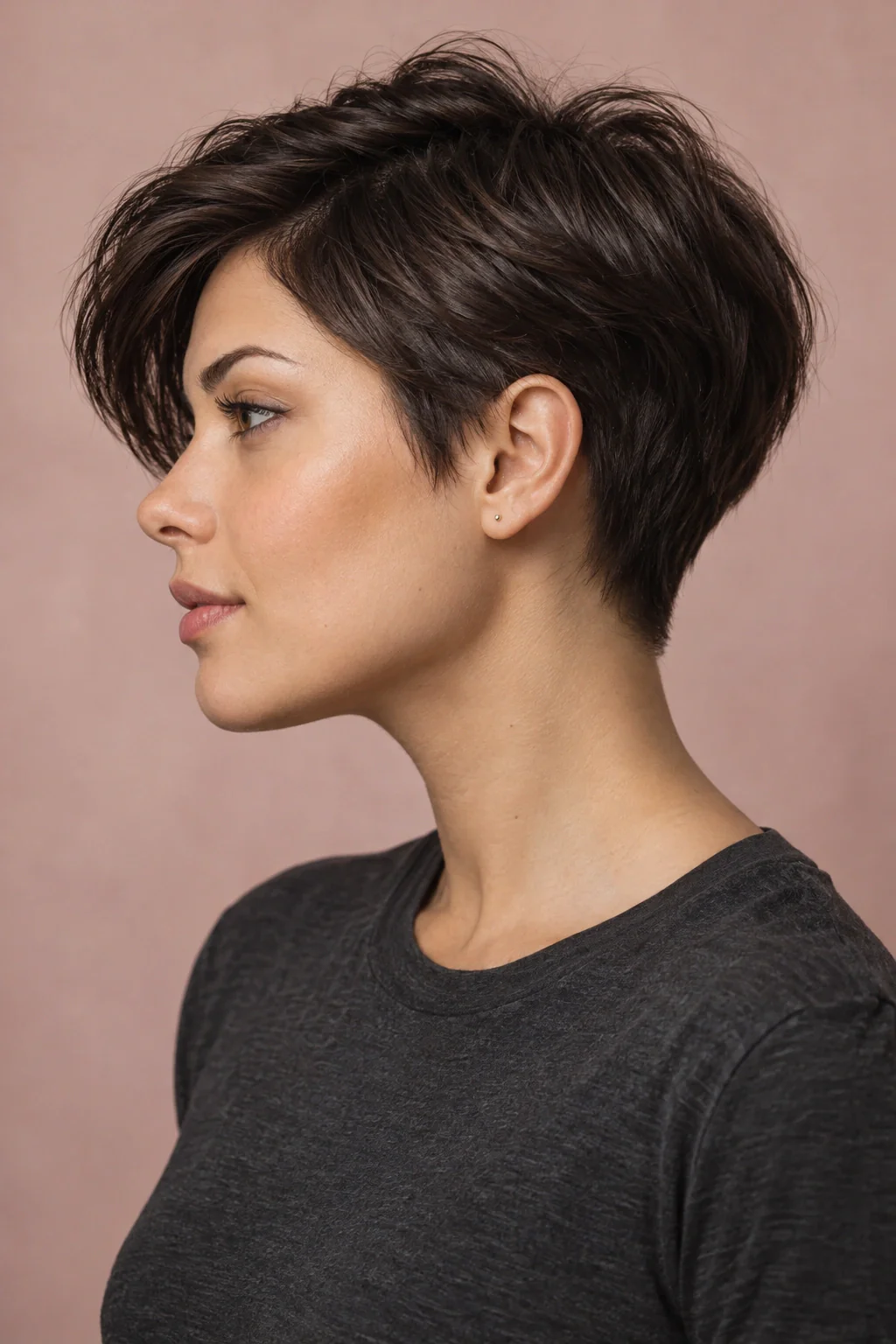
Look at the haircut before holding an ornament against it. A bob has a visible lower edge and often a longer temple section; a pixie may have a sweeping top with close sides; a very short crop may offer almost no grip for a clip. Those differences matter more than whether the accessory is advertised for an evening event.
Put on the neckline and earrings while comparing. Hold the possible accessory near the hair to judge scale, then check the fastening on a real section. A large decoration on a small clasp can look appealing but still tilt if the hair beneath cannot support it. Start with these options and keep comfort part of the choice.
Find a fastening point before choosing the decoration
Shorter hair gives some accessories less material to grip. Check whether the clip can close around a real section comfortably, rather than relying on the last few tips. A small barrette may work near a longer temple area while a large comb has no useful base. The decorative size and the fastening size are separate considerations.
Open the accessory and inspect the mechanism before putting it in. Try it on the intended section and release your hands. If it rotates or slides, change the position, amount of hair or accessory. Do not compensate by pulling the section tightly across the head. A lightweight piece attached in a suitable place can look more deliberate than a larger ornament that needs constant correction.
Use a single side clip as a clear line
For a bob, place the front section gently behind one ear and try a slim clip just above or behind it. Keep enough softness at the temple if you prefer a relaxed outline. For a crop with a longer top, direct that section to one side and choose a clip where the length comfortably reaches. The line can be horizontal, diagonal or slightly curved depending on the piece.
Check the clip's relationship to your glasses and earring. If all three occupy the same small space, move the hair accessory higher or let the earring be the only detail. A single visible clip can feel quietly formal when the rest of the hair remains familiar. You do not need a matching clip on the other side unless you want the symmetry as part of the look.
Treat a headband as part of the silhouette
A headband adds a line across the head and can also change how the hair sits around it. Place it in front of the fullest area, then slightly farther back, and compare the profile. A narrow band can act as a subtle accent; a padded or sculptural one becomes a larger shape. Choose with the full outfit visible rather than judging the item alone.
Test comfort before the event, especially near the ears. Wear the band long enough to notice whether it presses or slips. Do not rely on a style you can tolerate only for a photograph. With curls or coils, decide how much texture remains in front of the band and how much rises behind it. Let the texture stay visible instead of automatically flattening the entire top.
Let earrings lead when the hair is very short
On a very short crop, there may be no reason to fasten an ornament into the hair. Earrings can provide the evening detail while the haircut keeps its own shape. Compare a compact sculptural stud, a small hoop and a longer drop if you already own options. Look at the space between the earring, collar and hairline.
You do not need large earrings simply because the hair is short. A small reflective detail can be enough with a dramatic neckline, while a larger piece may work beside simple clothing. Check that the back or clasp feels comfortable and that the jewelry does not catch nearby hair when you turn. A clear view of the earring is a placement choice, not a reason to force the hair away from the ear.
Build the hair structure before adding sparkle
If you plan a twist or small pinned section, make it secure and comfortable first. Then add the decorative piece in a position its fastening can support. Aveda's embellished-hair tutorial follows that order: create the arrangement and add accessories afterwards. This helps distinguish the part doing the holding from the part providing the visual accent.
For a short bob, the structure may be no more than a small side twist. For curls, it may be a locally pinned area that leaves the rest of the shape full. Avoid placing a heavy ornament on a section that is already struggling to stay in position. Simplify the base, choose a lighter piece or let the accessory sit elsewhere. Decoration should complete the hairstyle rather than rescue an unstable one.
Choose one relationship with the outfit
An accessory can connect through color, material or shape. A dark velvet bow can echo a soft fabric; a simple metallic barrette can relate to jewelry; a curved clip can repeat a rounded neckline. Pick the connection you like and let the other elements remain less coordinated. A complete matching set is not necessary for the styling to feel considered.
Check the rear view if the accessory sits behind the ear or near the back. It may overlap a collar, tie or garment fastening. If the outfit has an elaborate shoulder detail, move the hair ornament so both can be seen. If the result feels crowded, remove one piece and compare. A smaller number of visible details often makes it easier to appreciate the shape of short hair.
Solve the accessory problem before adding another pin
If a barrette slides, check whether it closes around a supported section or only the last few ends. Move it nearer the temple or choose a smaller, lighter piece. If a comb has no stable base in the short hair, forcing in more teeth does not create the missing length. A flat clip, band or earring can carry the evening detail with less construction.
If the ornament rotates, inspect its weight and the amount of hair beneath it. A tall decoration may tilt on a tiny section even when the clasp closes. Try a quieter angle or smaller piece. If it presses against glasses, move the hair accessory away from the arm. If a headband becomes uncomfortable behind the ears, choose another shape instead of relying on tolerating it for the whole event.
Practise removal with the same care as placement. Open the fastening fully and support the hair before lifting the piece away. Keep a plain alternative in your bag if you plan to change later. Photograph the successful position with the outfit visible, including a side view. On the day, recreate that placement and leave the rest of the cut recognizable; short hair often gives a small accessory enough visibility without additional decoration.
Choose between decorating the hair and framing it
With a short cut, an accessory can sit within the hairstyle or contribute from beside it. A clip decorates a specific section; an earring frames the silhouette without asking the hair to hold anything. Try both approaches with the evening outfit before assuming the hair itself needs ornament. If your favorite detail is the clear outline of the cut, jewelry may preserve it more effectively. If you enjoy a visible change within the hair, a small clip placed where the section can support it may be the better direction.
Compare the options from the side as well as the front. The best view of a short haircut can include details that disappear in a straight-on selfie, such as the shape around the ear or the direction of the nape. Choose the accessory relationship that keeps those features as visible as you want them. An evening look does not need a larger ornament simply because there is less hair. Scale the choice to the composition you enjoy and the fastening that works comfortably with your current length.
Rehearse the accessory after the coat and glasses
Put on the coat, glasses or other items that will share space with the accessory. Then remove and replace them in the order you expect during the evening. A decorative piece may sit comfortably on its own but become awkward when a glasses arm passes beneath it or a collar brushes the same area. Test those interactions before finalizing the placement. If moving the ornament changes the look, compare the revised position with an alternative accessory rather than forcing the original arrangement to remain unchanged.
Keep a photograph of the successful placement and practice removing it without disturbing nearby sections. If someone else will fit the accessory, show them the practical landmarks as well as the front-view reference. A note about keeping clear of the glasses arm can be more useful than an exact distance copied from another person's image. Finish with an outfit photograph that includes the jewelry. This confirms whether the hair detail contributes the evening emphasis you wanted or whether a simpler arrangement already allows the whole look to feel complete.
Your questions, considered.
Can I wear a hair accessory with a pixie cut?
Often, if there is a section that can support the fastening comfortably. A longer front or top may hold a small clip. If the cut is too short for the accessory, try a suitable headband or let earrings provide the evening detail instead of forcing a clip into the tips.
Should a hair clip match my earrings exactly?
No. You can connect them through a similar finish or keep one quiet while the other stands out. Try the pieces together with the outfit. The useful question is whether they have enough visual space, not whether they came from the same set.
What if a decorative comb will not stay in short hair?
Its fastening may need a base your current length cannot provide. Choose a lighter clip, a different placement or a headband rather than adding tension to make it work. If a professional is styling your hair for the event, bring the actual accessory to the trial.
Sources & what they support
The notes below explain the scope of each source. Hairstyle selections, outfit combinations and comparison exercises are HairSparks’s editorial suggestions; the links do not imply endorsement.
- Aveda: Embellished party hair ↗Technique context for building a pinned style before adding decorative accessories. A decorative piece does not necessarily provide the main support.
HairSparks and Hair Muse share the same publisher. App mentions are promotional. Read our editorial policy.