
Let the garment supply most of the formality, then give the hair a clear part or anchor. With a decorated collar, move the length back; with a simple neckline, loose texture can stay prominent. Choose a shape you can wear comfortably throughout the event.
Four relaxed styles with enough structure for evening
A tailored suit, an embellished neckline or a long dress already contributes a strong formal element. Choose which part you want the hairstyle to reveal. If the lapels disappear beneath the hair, a tuck may solve the problem. If the garment is simple and open, the loose texture can remain a larger part of the look.
Start from your familiar hair texture and change the placement around that clothing detail. The suggestions below keep the construction modest while giving it a visible purpose. They do not require every surface to be smooth. Refine the chosen part, tuck or fastening and leave movement where you enjoy it.
Keep natural texture and refine its placement
Start with your ordinary texture on a day when you like its shape. Arrange the lengths so the outline feels balanced with the garment. You might bring one side forward, tuck the other behind the ear or lift a small crown section. Aveda's short curly updo tutorial uses local twists while leaving texture elsewhere, a useful example of changing structure without changing the entire surface.
With curls or coils, decide which groups you want framing the face and which you want held back. With straighter hair, choose whether the ends sit over the shoulders or behind them. The action is placement, not correction. A formal outfit does not require you to erase volume, flyaways or texture that you enjoy; it simply gives those features a different visual setting.
Pair tailoring with a soft, clear line
Try a low, softly gathered ponytail with a blazer. Establish the part first, gather the hair where it clears the collar and leave the surface comfortable. The tail can keep its existing movement. A plain tie or understated barrette helps the hairstyle read as a choice while the jacket supplies the sharper structure.
If you prefer loose hair, expose one side of the collar with a tuck and let the other side fall naturally. Check the lapels after moving your head; hair trapped underneath may create an accidental lump or hide the garment's shape. Adjust the lengths once the jacket is on. This small practical step often does more for the full look than making the hair smoother or adding another accessory.
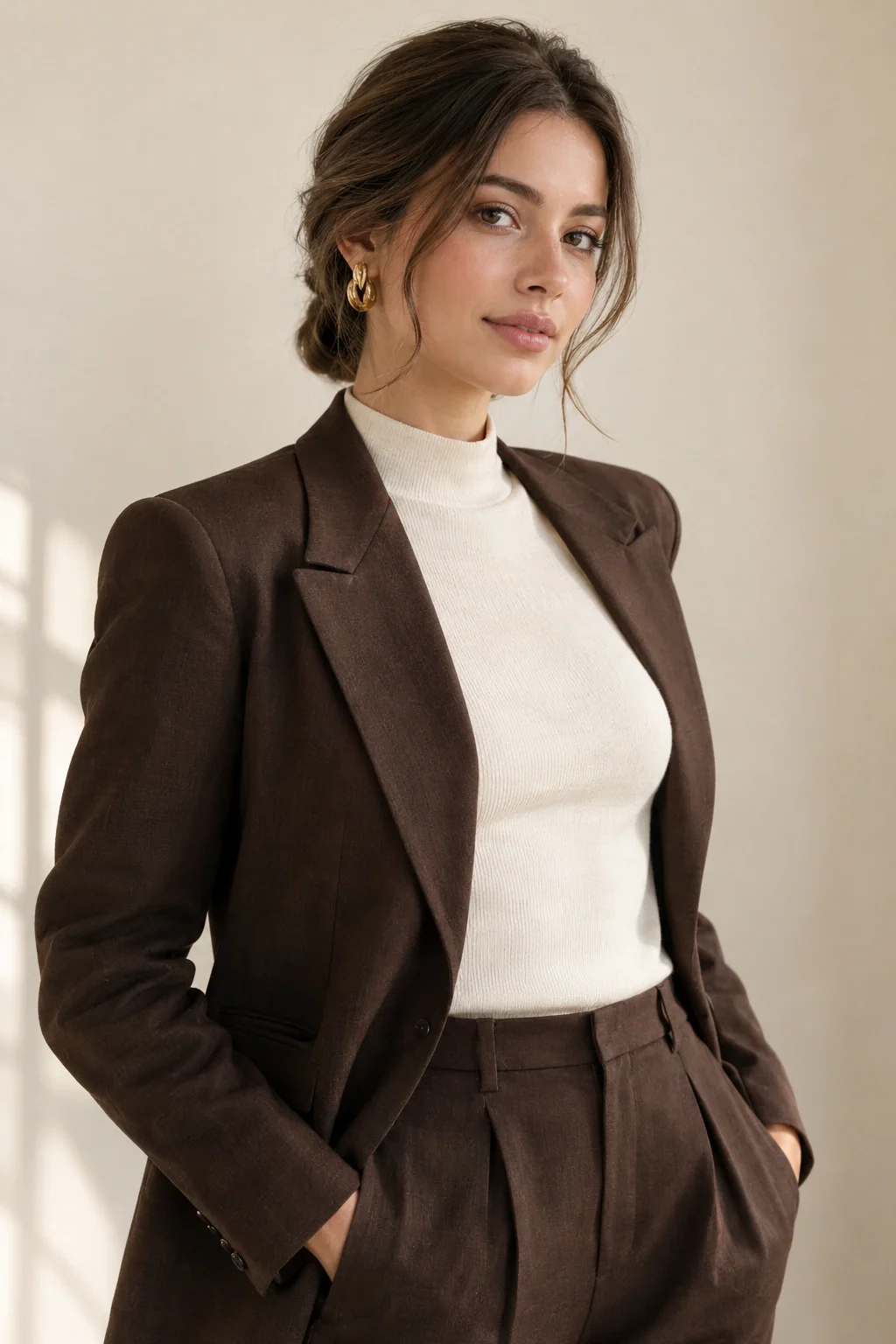
Let an evening neckline determine where hair sits
With an open neckline, loose lengths can become part of the line across the shoulders. Try placing them on one side, then both, and notice which view you prefer. With a high or embellished neck, a simple gathered style may give the fabric more room. You can still leave a soft fringe or a few intentional front pieces if that keeps the look familiar.
A back detail deserves its own check. If you chose a garment for a low back, bow or fastening, decide whether the hair should reveal it fully or partly. A low bun, side sweep or half-up may each offer a different amount of openness. Use a rear photograph to compare. The hairstyle should relate to the actual garment, rather than an imagined category of evening dress.
Use one precise detail among softer ones
A clean part, a carefully placed clip or a neat ponytail base can provide enough precision to make relaxed texture feel intentional. Pick one of those details and give it attention. The remaining hair can keep movement. If you refine every surface until it feels unlike your usual style, you may lose the easy quality that made the combination appealing.
Try this with a loose bob: establish a clear side or centre part, tuck one side and leave the lower texture alone. For longer hair, make a simple half-up connection and let the lengths remain soft. For a crop, arrange the front direction and choose the position of the fullest area. The precise detail differs by haircut, but it gives the eye a clear organizing point.
Balance hair accessories with jewelry
If the earrings are prominent, give them space before choosing a hair ornament. An exposed ear may be all the styling detail you need. If the jewelry is minimal, a slim metallic clip or fabric ribbon can connect the hair to the occasion. Hold the accessory beside the hairstyle first to check its scale before fastening it.
Consider material as well as color. A matte clip can feel quiet beside textured fabric; a polished surface can echo a smooth bracelet or shoe detail. You do not need a perfect set. Avoid adding an accessory solely because the hairstyle feels too ordinary in isolation. Put the whole outfit together first. The contrast between familiar hair and formal clothing may already be the feature you were looking for.
Keep the movement compatible with the event
Relaxed hair should still let you do what the occasion involves. At a seated meal, long front sections may become inconvenient when you lean forward. During dancing, a loose arrangement may need a simple tie later. Decide which parts should remain clear and add a small anchor where useful, without rebuilding the hairstyle into something much tighter.
Practise with the clothing and accessories you will wear, including a coat if there is an outdoor journey. Check whether the hair catches on a clasp or necklace. A comfortable alternative, such as moving from loose hair to a low ponytail, can be part of the plan. The evening version does not have to remain identical from arrival to the last song to count as a successful hairstyle.
Use a whole-outfit check to decide what needs finishing
Step back far enough to see the shoulders, waist and hairstyle together. First check the feature you chose the outfit for. Are the lapels visible? Can you see the neckline, the earring or the back detail? If not, move the nearest hair section before deciding that the entire style needs more polish.
Next, check the organizing feature. A part should read clearly if that is the design; a ponytail base should sit where you intended; a side clip should hold its section without tilting. Fix that local area. Loose waves beside a defined base can look deliberate without having the same finish at every point. With a crop, the front direction may be the only styling decision you need to emphasize.
Finally, sit and move as the occasion requires. A loose front that repeatedly reaches the plate at dinner may need a small clip. Hair caught inside a jacket should be released and placed where it can move freely. Keep a tie for a later dancing transition if you want one. Once the garment is visible, the anchor is comfortable and the texture still feels like your own choice, stop refining. The contrast between familiar hair and formal clothing is the effect you set out to create.
Find the one detail that connects the two moods
Put on the formal outfit and identify what gives it its structure: tailoring, fabric, a strong neckline or a particular accessory. Then choose one hair detail that acknowledges that structure while leaving the rest relaxed. You might clear a lapel, expose a collar or give the front a defined direction. This creates a visible connection between hair and clothing without making every surface equally polished. The contrast can be deliberate when both parts have clear roles in the complete outfit.
Photograph the combination at conversation distance and describe those roles in a sentence. For example, the jacket supplies the clean lines while the loose texture adds movement. If the relationship is hard to see, adjust placement before changing the texture. A few centimeters of visible neckline or a different side arrangement may make the intention clearer. Keep the version that feels like your own way of wearing the clothes, rather than assuming formal clothing requires a hairstyle that is less familiar or more elaborate than you enjoy.
Test whether relaxed has become inconvenient
A relaxed finish can include movement, asymmetry and visible texture, but it still needs to work during the event. Rehearse the actions that matter: sitting for dinner, putting on a coat, speaking at a microphone or moving through a reception. Notice whether any section interferes with those actions. If it does, secure or redirect that section while preserving the rest of the softness. The adjustment is about function, and it does not require turning the whole style into a rigid arrangement.
Compare the revised version with the original outfit photograph. If the relaxed mood remains visible, keep the practical change. If the arrangement now feels too controlled, restore softness in an area that does not cause the problem, such as the loose lengths or a front section that stays clear of your eyes. This gives you a way to balance the two aims with specific decisions. The successful version should let you participate comfortably while retaining the contrast between formal clothes and a hairstyle that still feels easy to wear.
Your questions, considered.
Can natural curls look formal without being smoothed?
Yes. A considered shape, comfortable placement and a detail that connects to the outfit can create an occasion look while preserving curls. You might expose an ear, define the front arrangement or gather one section. Formal styling does not require a single texture.
How do I stop relaxed hair looking accidental?
Give it one clear decision: a deliberate part, a defined anchor, an exposed neckline or a well-placed accessory. Then assess the full outfit. You do not need to polish every surface if the overall shape and relationship to the clothes are clear.
Is loose hair appropriate with a very dressy outfit?
It can be. Consider the event's dress expectations, the garment's details and your comfort. Loose hair may work especially well when the clothing already provides structure. Keep any sections that interrupt eating, seeing or moving supported with a small clip or other suitable fastening.
Sources & what they support
The notes below explain the scope of each source. Hairstyle selections, outfit combinations and comparison exercises are HairSparks’s editorial suggestions; the links do not imply endorsement.
- Aveda: Curly updo for short hair ↗Example of pinning a front twist on short curly or wavy hair while preserving texture elsewhere. The exact result depends on available length and fastening.
HairSparks and Hair Muse share the same publisher. App mentions are promotional. Read our editorial policy.