
Try two part positions with the same garment and hair texture. Choose a side shift to change the direction of the front; use a tuck when the collar simply needs space. Keep the smaller change if a deep part repeatedly falls across your eye.
Match the part experiment to the garment detail
Put on the main top or a garment with a similar neckline before moving the part. Stand far enough back to see both shoulders. A close selfie can make two parts look very different around the face while hiding the clothing relationship you are trying to change. Begin with the hair in its normal texture and leave the accessories consistent.
Pick the garment feature you want visible, then try the smallest change that opens or echoes it. The combinations below are prompts for comparison, not matching rules. Your cut and natural fall may make a near-center part easier than an exact center, or favor a modest side shift over a deep sweep.
Compare a middle part with an almost-middle part
A centre line can make the front arrangement feel orderly and balanced. Try it with the lengths behind both shoulders, then bring some hair forward and compare. The part is only one element; the amount of hair visible on each side can change the effect just as much. Keep those positions similar when you compare alternatives so the difference remains clear.
If an exact centre part sits awkwardly, move it slightly to one side. An almost-middle part can retain an even feeling without forcing a strong growth pattern into a line it does not want to follow. Use your fingers for a softer boundary or a comb for a clearer line. Neither finish is inherently more flattering; one may simply belong more naturally with the outfit's level of precision.
Use a side part to place visual weight
A side part puts more hair on one side of the face. Think of that fuller area as a shape you can move around the outfit. It might echo an asymmetric neckline, sit opposite a prominent shoulder detail, or create a flowing line across a plain top. Try both sides if your haircut allows, because the garment and your growth pattern may make them behave differently.
Begin with a modest change rather than an extremely deep line. A small shift often tells you whether you like the direction without requiring a complete restyle. If the fuller side immediately crosses your eye, tuck or pin a small section and check the result again. The useful choice is not just left versus right; it is how that part connects to the hair around the temples and ears.
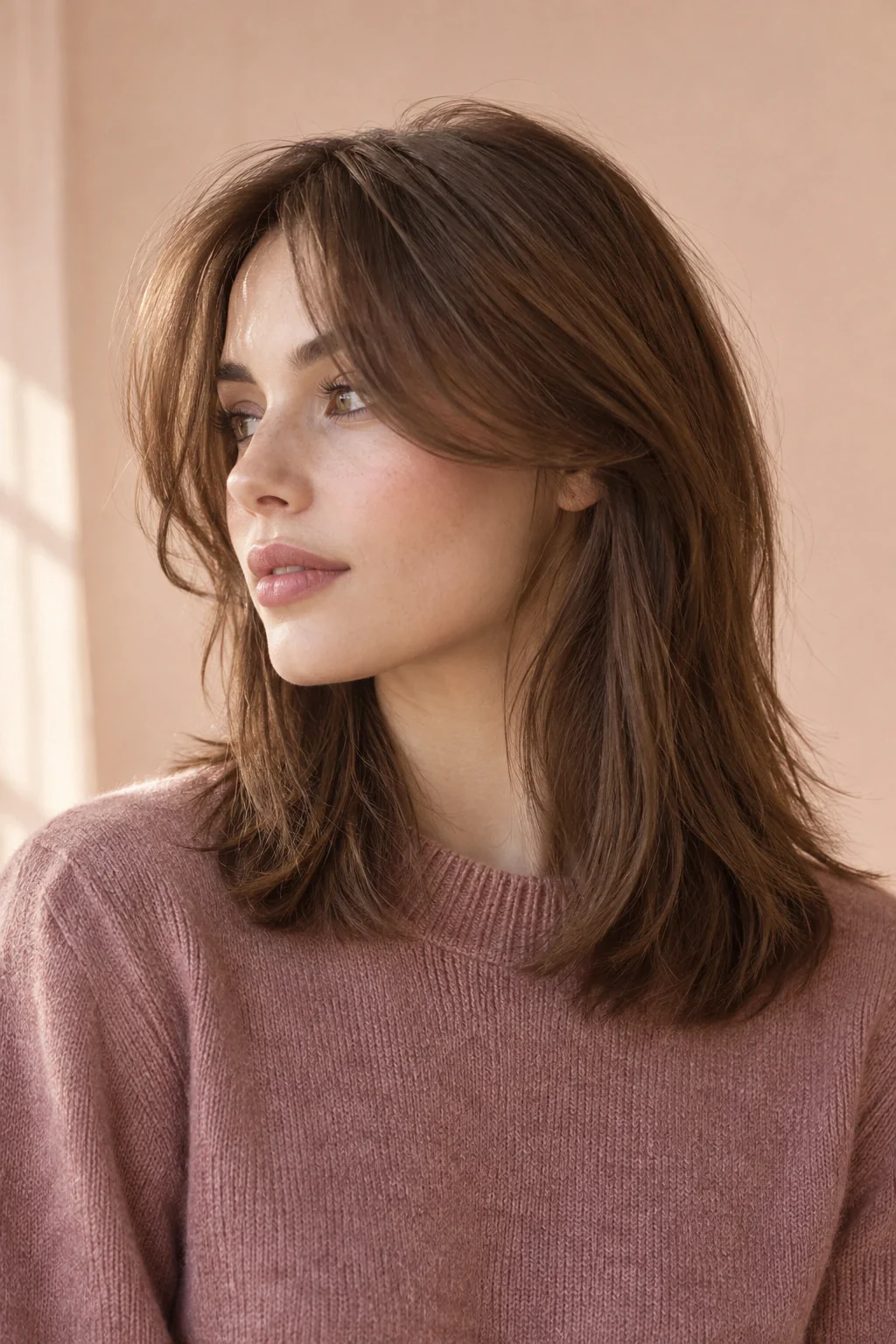
Give collars and necklines room
With a detailed collar, try placing the front lengths behind the shoulders so you can see the garment's shape. A middle or soft side part may both work; the clearer neckline may be the change that matters. If you prefer hair in front, leave it on only one side and look at how that line meets the collar.
For an open neckline, you may enjoy hair falling forward as part of the composition. Keep the ends from accidentally hiding the detail you chose the garment for, such as a pendant or unusual seam. With a high neck, compare an exposed ear or a slightly lifted front section to a fully loose outline. These are quick visual options rather than rules about which necklines require hair up or down.
Plan the part around one visible accessory
Put your earrings on while you test the part. A fuller side can hide one earring and leave the other as the main accent, which can be a deliberate choice. If you want both visible, combine the part with gentle tucks or side clips. For a hair ornament, decide whether it belongs on the fuller side as a statement or the quieter side as a supporting detail.
Look at the spacing between the accessory, hairline and collar. If everything gathers into one small area, move one element rather than assuming the entire hairstyle is wrong. A barrette can sit slightly higher, the hair can tuck behind one ear, or the earring can become the only metallic detail. The aim is enough room to notice the pieces you selected without making the look feel overarranged.
Respect the haircut and growth pattern
A part change redistributes the haircut, so the ends may not fall identically on both sides. Move the part, let the hair settle and inspect the lower outline before adding styling products. If one side looks unexpectedly short or bulky, decide whether you like that new shape. You can return to your usual line, make a smaller shift or ask your stylist about versatility at the next appointment.
Sam Villa's consultation guidance encourages discussing styling habits and the looks a client wants to achieve. A useful version of that conversation is: I normally part here, but I would like this alternative for some outfits. Bring photographs of both arrangements on your own hair. They show the practical change more clearly than naming a centre or side part without demonstrating how your cut currently behaves.
Photograph the comparison without changing everything
Take a front photograph and a three-quarter photograph of each option in the same position and light. Keep the garment, expression and camera distance similar. This is a personal styling comparison, not a measurement of attractiveness. Look for whether you can see the neckline, whether the hair feels balanced with the outfit and whether the arrangement still looks like you.
Limit the first comparison to two versions. If you take ten photographs with different earrings, curls and angles, choosing becomes harder. Once the part is settled, refine one other detail such as a tuck or a clip. Save the useful picture with a short note: soft side part with open collar, or almost-centre with statement earrings. Specific notes make the idea easy to reuse.
Keep an everyday part and a reliable dressed-up variation
Choose an everyday position that settles without continual attention. Then keep one alternate version for outfits that need a different front shape. It could be a small side shift with one ear exposed, the same part with both lengths behind the shoulders, or a near-center line with a clipped temple. An occasion option does not need to become a completely different haircut.
Try the alternate part before a deadline. If the fuller side falls across your eye, move less hair across or support that front section with a small clip. If one lower edge suddenly looks shorter, the redistribution may be revealing how the cut was shaped. Return to a smaller shift and bring both versions to a stylist if broader part flexibility matters to you.
Record the combination with the garment visible: open shirt, near-center part, left side behind the shoulder. A front-only photograph of the hair may not explain why that version worked. Keep the comfortable variation even if a more dramatic part looks striking in a still picture. The best repeatable option is the one that shows the clothing detail you chose and stays manageable while you sit, turn and move through the occasion.
Use the outfit's strongest line as a comparison marker
Identify one clear line in the outfit: an asymmetric neckline, a jacket opening, a shoulder strap or a row of buttons. Photograph your familiar part while wearing the garment, then try one alternative and keep everything else similar. Look at how the visual weight of the hair sits beside that line. You may enjoy repeating the direction, balancing it with more hair on the opposite side or letting the clothing remain dominant while the hair stays relatively quiet. None of these relationships needs to be a universal rule.
Write a sentence explaining the version you prefer. A note such as more hair on the plain shoulder lets the neckline remain visible is more useful than simply labeling one part better. It tells you what the part is doing in this outfit and helps you adapt the idea to another garment. If the preferred placement does not settle comfortably with your haircut, keep the visual intention and explore a small fastening or front arrangement rather than repeatedly forcing the part into an unfamiliar position.
Create a fallback when the preferred part will not settle
A part that works well in a reference may not stay where you place it on a particular day. Before abandoning the outfit idea, decide what the part was meant to achieve. If it was intended to expose an earring, a tuck or clip may create the same space. If it shifted visual weight toward one shoulder, moving the lengths may answer the brief without changing the line at the scalp. This keeps the styling decision focused on the desired effect rather than a single method.
Test the fallback in movement and compare it with the outfit photograph. If it preserves the important relationship, record it beside the preferred version. You now have two routes to the same mood, useful when your hair or available time differs. Avoid spending the whole preparation period correcting a line that keeps returning to its familiar place. A deliberate arrangement built around your actual hair can serve the outfit more convincingly than an exact part that needs constant attention throughout the event.
Your questions, considered.
Does every neckline have a best hair part?
No. Necklines provide visual context, but personal preference, haircut and natural fall matter. Compare the actual garment with two part placements. You may discover that moving the lengths behind one shoulder makes more difference than moving the part itself.
Can I switch the part on an asymmetrical haircut?
Sometimes, but the shape may change noticeably because the cut was designed with a particular distribution of hair. Try a small shift and inspect the ends. For a larger change, show your stylist both the usual and desired placement so they can discuss what the cut permits.
What should I do if my new part keeps moving back?
Reduce the size of the change or use a small clip to support the front section. You can also ask your stylist to demonstrate an appropriate drying direction for your growth pattern. Avoid treating persistence as proof that you need more and more product.
Sources & what they support
The notes below explain the scope of each source. Hairstyle selections, outfit combinations and comparison exercises are HairSparks’s editorial suggestions; the links do not imply endorsement.
- Sam Villa: Questions for a client consultation ↗Professional consultation questions about habits, goals, length, texture and previous likes or dislikes. Used for the conversation prompts, not universal rules about flattering hair.
HairSparks and Hair Muse share the same publisher. App mentions are promotional. Read our editorial policy.