
Start with one tucked side and compare it with your usual shape. Move the lengths or ponytail off-center only if you want a stronger effect. If the far side pulls or short layers cannot reach, bring the anchor closer to the middle.
Choose which part of the hairstyle moves off-center
A side part changes the distribution near the face; a side ponytail changes where the lower length collects. An ear tuck opens one side without moving much hair at all. Decide which of those effects you want before combining them. The smallest version often reveals whether you enjoy the asymmetry without requiring a complete restyle.
Start with the cut in its usual texture and wear the neckline you want to pair with it. Try the change with your hands, then release the hair and notice where it returns. Choose a comfortable anchor only after you know which direction you want. These four variations offer different levels of emphasis.
Give the fuller side a clear direction
When more hair sits on one side, decide where it should travel. It might curve around the cheek, sweep backwards from the forehead or fall over a shoulder. Guide that section with your hands and let it settle. If it repeatedly crosses your eye, change the angle or create a small anchor rather than simply adding more hair to the sweep.
Keep the front and lower lengths connected visually. A strong side sweep at the top with the ends divided evenly over both shoulders may be exactly the contrast you want, but compare it with the lengths following the same general direction. The second version can feel more continuous. The first can feel more relaxed. Choose by the full outline rather than assuming there is one correct way for the fuller side to behave.
Let the quieter side remain intentional
The side with less visible hair needs a decision too. You can tuck it cleanly, leave a soft contour near the temple or add a small twist. Aveda's short curly updo tutorial uses front twists on an already parted style, showing that a local arrangement can change the front while the rest keeps texture. Use a similarly limited intervention if you want a clear open side.
If a few shorter pieces remain, decide whether to leave them as part of the edge or secure them separately. Avoid chasing every small hair until the side feels much tighter than the rest of the hairstyle. An exposed ear, a visible clip or a soft temple line can each communicate intention. The quiet side does not need to look empty or perfectly flat.
Work with an asymmetric haircut honestly
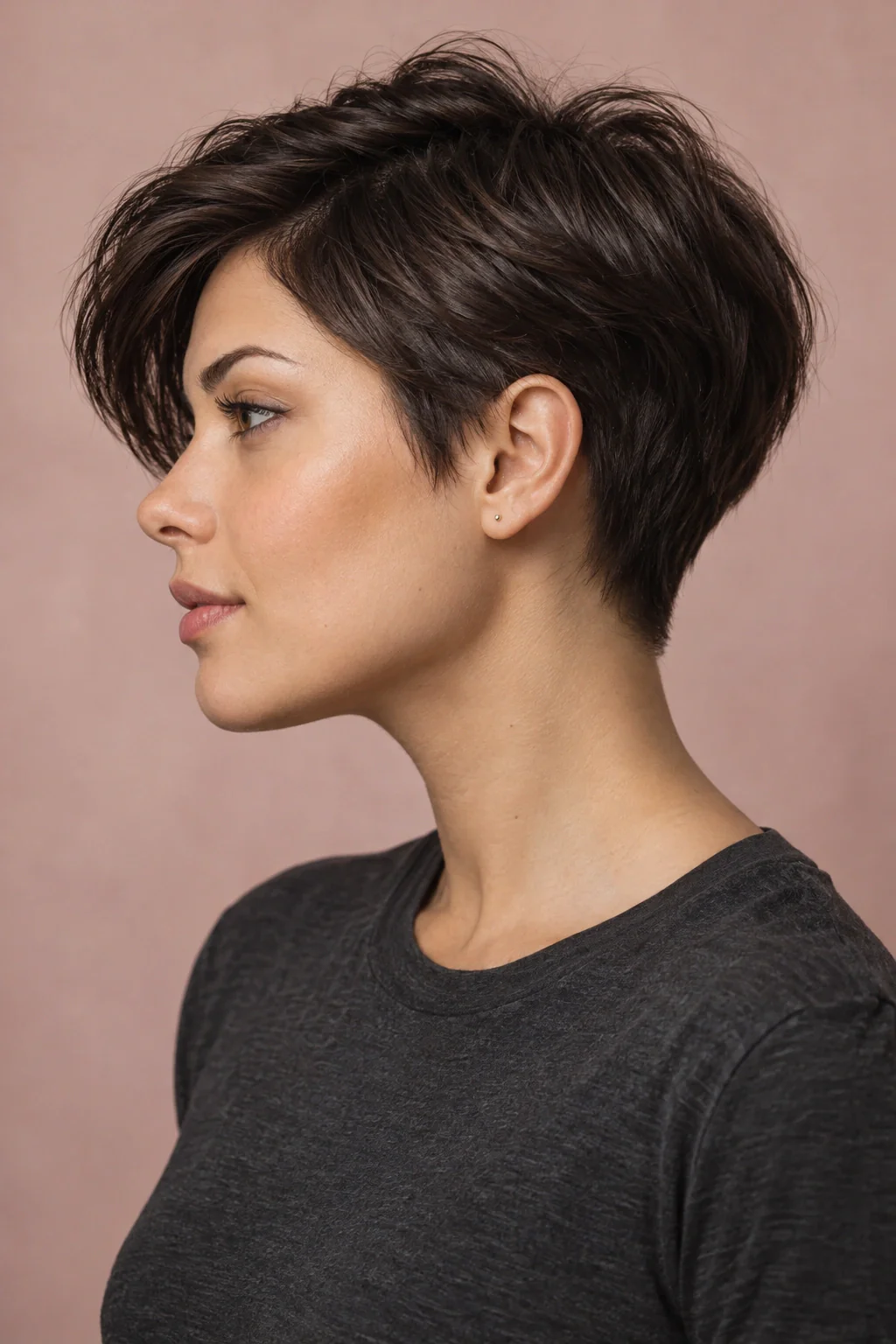
If your haircut already has different lengths on each side, start by understanding its designed part and fall. Switching the part may reveal a different lower edge or place a short layer in an unfamiliar position. Try a modest shift and inspect the result before treating the change as a simple styling swap.
Use the existing length difference as a feature. The shorter side may show an earring while the longer side creates movement; a clip may emphasize the open side without requiring the long section to move far. If you want several part options from an intentionally asymmetric cut, discuss that goal with the stylist who shapes it. Temporary styling can explore possibilities, but it cannot promise that every redistribution will preserve the original haircut line.
Connect the direction to the outfit
Put on the garment and identify any asymmetric detail, such as one shoulder, an angled collar or a side fastening. Try the fuller hair on the same side, then the opposite side. One may echo the garment's direction; the other may give the detail more space. Both are valid visual approaches, so compare the actual result rather than following a universal matching rule.
With a symmetrical outfit, hair can provide the off-centre element on its own. A plain shirt and one visible earring may be enough. If the clothing already has several strong details, keep the hair accessory simple. The aim is not to create perfect balance by calculation. It is to find a relationship between the shapes that you enjoy when you look at the complete outfit.
Place an offset anchor where it can hold comfortably
A side ponytail or low side twist needs enough reach from the opposite side. Gather the hair with your hands first and locate the point where it rests without strain. That point may be closer to the middle than the reference photo you saved. Use it as the starting anchor and let the tail fall towards the preferred shoulder.
If short layers cannot reach, use a separate discreet clip or choose a half-up variation. Do not pull the far side tighter just to move the fastening farther across. Check the nape and the area behind both ears for comfort. The arrangement should feel like a natural redirection of the hair, with a structure that you can wear while turning your head and sitting normally.
Check the route from the quiet side to the fuller side
Look at the back as well as the front. A side sweep may leave an unexpected horizontal gap or a section traveling diagonally across the nape. If that route looks awkward, reduce the amount you are moving or bring the anchor nearer the center. You can preserve the one-sided impression through the tail's direction without placing the tie at the farthest possible point.
Then check the quiet side. Short layers may need a nearby clip or may look better left as a soft contour. Avoid tightening the opposite side to capture pieces that cannot reach. A small open area around the ear is enough to make the asymmetry visible; it does not need to become a completely flat strip from temple to nape.
Release your hands and turn both ways. If the fuller front crosses the eye, redirect a smaller section or support it near the temple. If the long hair returns behind the shoulder, decide whether a low tie would make the line easier to wear. Compare that with a more modest sweep. Keep the version whose direction remains readable during movement, not only when every section is held in place for the photograph. A clear route through the hairstyle usually needs fewer fastenings and less attention.
Create a familiar way back to symmetry
Plan how you will change the style if you want both sides open later. A side tuck can release easily; an offset ponytail can move to the centre; a clip can shift above the other ear. Practise that transition once, especially if you are using an unfamiliar accessory. It makes the asymmetric option feel flexible rather than like a commitment you must maintain for the whole day.
Save the version you like with a note about its main decision: open left ear, lengths over right shoulder, or low anchor slightly off-centre. Avoid recording only a close-up of the front, because the side and back contain useful placement information. A small set of clear references lets you repeat the mood while allowing the hair to vary naturally each time.
Give the fuller side and quieter side different jobs
An asymmetric arrangement becomes easier to design when each side has a purpose. The fuller side might show texture or carry the length; the quieter side might reveal an earring or create space beside a neckline. Write those jobs before moving the hair. Then compare the result with the outfit and check whether the chosen details are actually visible. If both sides still compete for attention, reduce an unrelated ornament rather than assuming the asymmetry needs to become more extreme to read clearly.
Turn and look down during the test. Notice whether the quieter side remains open or whether the lengths repeatedly cross back over it. If they return, decide whether a small anchor can support the arrangement or whether a gentler difference between the sides would suit your hair better. The aim is a chosen relationship, not a demand for a perfectly empty side. Some movement can remain part of the style as long as it does not erase the feature you wanted the arrangement to show.
Choose the direction using the whole event outfit
Try the asymmetry in both directions while wearing the outfit, even if one side feels more familiar. Look at earrings, straps, necklines and any shoulder detail that may share the same space. You might prefer the hair on the plain side, or enjoy grouping the visual detail together. There is no requirement to balance every element evenly. What matters is whether the direction serves the composition you chose and remains comfortable when you carry a bag or put on an outer layer.
Take front and back photographs of the preferred direction and note the path the hair follows. This helps you recreate the arrangement without relying only on how it looks from the mirror. Keep a simple route back to your familiar placement in case you want a change later. If a clip supports the quieter side, practice releasing it cleanly. A reversible asymmetric style can be expressive while remaining practical, especially when you understand both the initial arrangement and the way you will return the hair to a more familiar shape.
Your questions, considered.
Does asymmetry mean I need an asymmetric haircut?
No. A tuck, side sweep, offset ponytail or single clip can create asymmetry temporarily on many haircuts. Start with one feature and compare it with your usual arrangement. A permanent length difference is a separate decision.
Should hair sit on the same side as an asymmetric neckline?
There is no required side. Putting hair on the same side can repeat the garment's direction, while placing it opposite may reveal the detail. Try both with the actual outfit and choose the relationship you prefer.
What if the side sweep keeps falling across my face?
Reduce the amount of hair in the sweep, change its direction or anchor a small front section. You can keep an asymmetric look without leaving the eye area obstructed. If the dramatic version needs constant correction, use a more modest shift.
Sources & what they support
The notes below explain the scope of each source. Hairstyle selections, outfit combinations and comparison exercises are HairSparks’s editorial suggestions; the links do not imply endorsement.
- Aveda: Curly updo for short hair ↗Example of pinning a front twist on short curly or wavy hair while preserving texture elsewhere. The exact result depends on available length and fastening.
HairSparks and Hair Muse share the same publisher. App mentions are promotional. Read our editorial policy.