
Choose one change in width, height or visible length. Start with a tuck or half-up before attempting a faux bob. A folded length can suggest open space around the shoulders, but its retained bulk cannot predict how a real shorter haircut will fall.
Choose a silhouette change you can make in the mirror
Look at the hair from the front and side and identify the area you want to move. Less width near the ears, more height above the forehead and a shorter line at the shoulders are separate goals. Choose one for the first experiment. Otherwise, a new part, pinned sides and folded ends can make it impossible to tell which change you enjoyed.
Keep the texture and clothing familiar while trying the options below. Hold the section with your hand before adding clips or pins. That lets you compare the shape without building a complicated style you may immediately undo. You are exploring placement, so the first version does not need an immaculate finish.
Change width by moving the side sections
To explore a narrower side outline, tuck one or both front sections behind the ears or hold them close to the head with small clips. Leave the rest of the hair in its usual texture. Notice how much difference this creates before adding anything else. A small tuck may reveal the neck or earrings and make the whole hairstyle feel more deliberate.
To explore more width, release the tucks and arrange the existing wave or curl groups towards the sides with your hands. On straight hair, bringing more of the lengths forward over the shoulders can create a fuller front view without increasing actual volume. Compare the same camera angle each time. The goal is to discover which placement you prefer, not to make your hair occupy the largest or smallest possible space.
Move the highest point of the hairstyle
The highest point might sit at the front, the crown or a small gathered section at the back. Hold a section gently upwards with your fingers and compare those locations before styling. A lifted front can feel expressive; a little crown shape can look quieter from the front but more noticeable in profile. Decide where you want the emphasis rather than asking for volume everywhere.
Sam Villa's crown-volume education uses a profile view during the discussion. Borrow the useful habit of looking from the side, without treating any suggested proportion as a rule. If the front view looks good but the back feels unexpectedly tall, lower or soften that section. A temporary clip or loosely gathered top section can help you explore the placement before choosing a more involved styling method.
Test a shorter outline with a loose fold
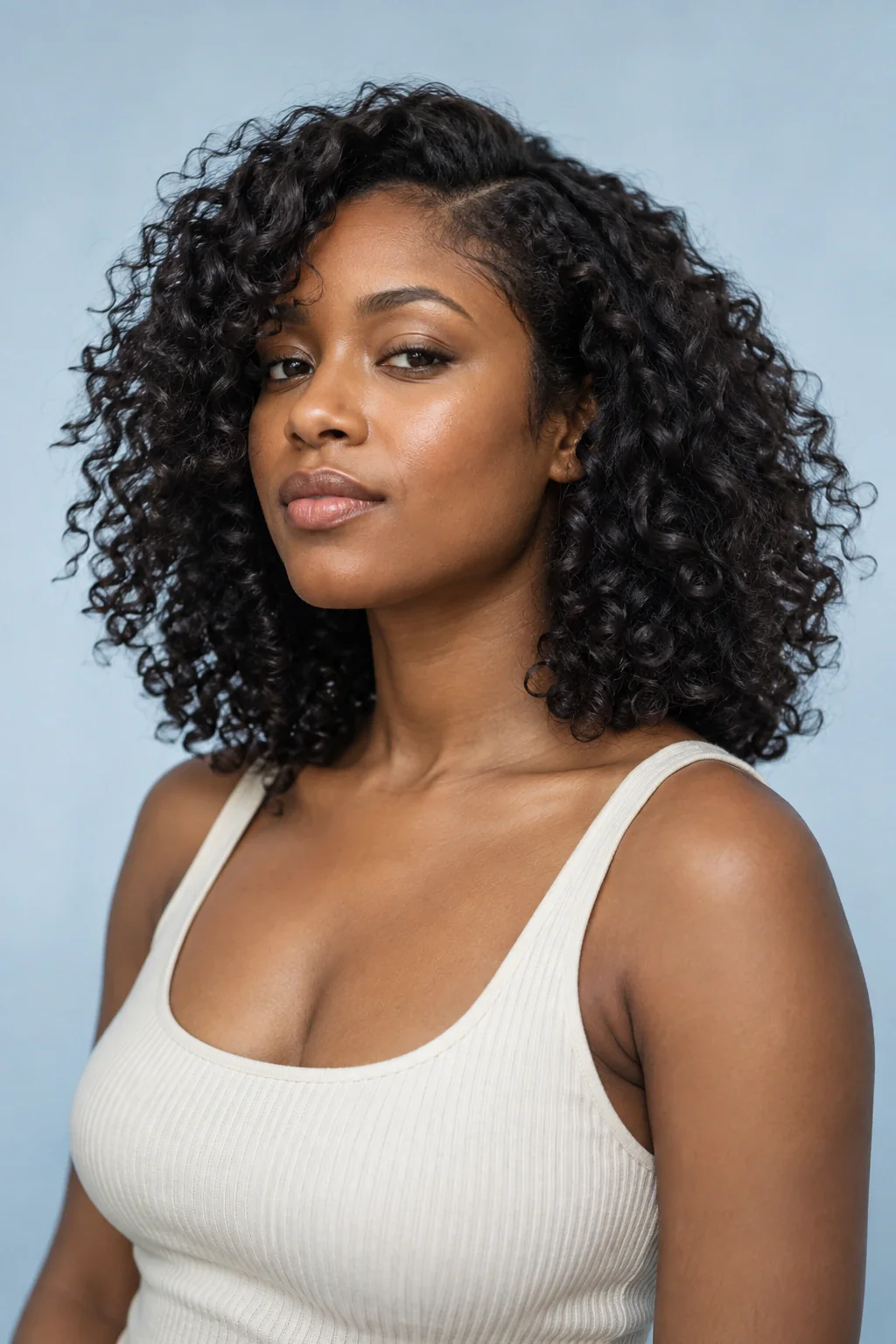
On longer hair, gather the ends loosely near the nape and fold a portion underneath to suggest a shorter edge. Hold it in place with your hands first. This is a shape experiment, so an imperfect fold can still tell you whether you enjoy more space around the shoulders. Do not judge the folded ends as though they were a professionally cut bob.
If you want to wear the fold briefly, secure it with appropriate pins and check the back in a mirror. Keep the weight supported and the arrangement comfortable. Layered ends may escape, and thick hair may form a much fuller outline than a real short haircut would. Record those limitations. The exercise explores visible length; it cannot show precisely how your texture would fall after cutting.
Create an open neck without hiding every length
A half-up, side sweep or low gathered section can change the neck area even when most of the hair remains visible. Put on a collared shirt or an outfit with a back detail and see which part of the hair covers it. Move just that portion, then check whether the new outline is enough. You may not need an updo at all.
For long hair, placing all the lengths over one shoulder creates an asymmetric line and reveals the other side of the neck. For a bob, one tucked side can have a similar effect on a smaller scale. If the moved section will not stay where you place it, use a comfortable anchor close to its natural path. The temporary shape should work with ordinary head movement rather than depend on a still pose.
Use texture as a visual choice
Defined curl groups, loose waves and a brushed, airy finish each create different edges around the same haircut. Begin with the texture already present and decide whether you want the outline to look more separated or more continuous. A few arranged wave groups may add visible movement; a carefully placed tuck may make the outline feel cleaner without changing the texture at all.
Do not combine a dramatic part change, new texture and a folded length in the first comparison. You would be testing several ideas at once and could not tell which one mattered. If thermal styling is part of a later experiment, use tools and preparation according to their instructions. The simplest temporary changes often give enough information before you decide whether a more time-consuming finish is worth trying.
Distinguish a styling preview from a haircut decision
A tucked-under style can suggest a shorter length, but it retains the mass and layers of your current hair. A side sweep can suggest asymmetry, but it does not predict how newly cut sections will move. Write down what you like in visual terms: the exposed neck, the lighter front, the higher crown. Those are useful preferences to discuss, even when the temporary styling is imperfect.
Bring photographs of the experiment and your normal style to your stylist. Explain which part is the idea and which part is only a makeshift fastening. Ask how a cut could create a related shape in your usual texture and routine. This keeps the conversation focused on achievable options rather than asking the stylist to reproduce a pinned illusion strand for strand.
Decide whether styling already supplies the change
Compare the temporary version with your usual hair and describe the difference without a haircut label. “I like seeing the collar” gives you more options than “I need a bob.” An ear tuck, side sweep or low gather may supply that open space on the days you want it. If the styling takes little effort and feels comfortable, keeping it as another option may be enough.
If the shape appeals but the construction is inconvenient, record that tradeoff. A faux bob may show a shoulder-level line you love while requiring more pins than you want to use. A crown half-up may create height but remove too much fullness from the lower outline. Those observations clarify a future haircut conversation without pretending the temporary version demonstrates the cutting technique.
Bring the normal and temporary photographs to a stylist, including the side view. Explain which result matters and which fastening was just part of the experiment. Ask how a related shape would behave in your everyday texture, whether the front would still tuck and what gathered options would remain. You can then compare a permanent change with the styling option you already know. The decision becomes about daily behavior and desired shape, not just the appeal of a convincing pinned illusion.
Draw three outlines without changing the texture
Use a simple front photograph and sketch three broad shapes around it: narrower at the sides, more open at the neck and shorter-looking through the back. These are visual prompts rather than predictions of a haircut. Choose one and explore how placement or gathering might suggest it with your current length. Keeping the texture familiar makes the comparison easier to read because you are concentrating on the boundary of the hairstyle instead of simultaneously changing its surface, color and finish.
Photograph the temporary version with the same outfit as the starting point. Check whether the outline you imagined is visible from more than one angle. A folded length may suggest a shorter shape from the front while revealing its construction at the back, which can still be useful if you understand the distinction. Label the experiment honestly in your notes. You are learning about a preferred proportion, not demonstrating exactly how a new haircut would look or behave through everyday movement.
Separate an outfit solution from a haircut wish
Wear the temporary silhouette with the garment that prompted the experiment, then try it with an ordinary outfit. If the preference appears only with a particular neckline or shoulder detail, you may have found an occasion styling solution. If the new outline appeals across several contexts, it may be worth discussing a cut. Neither conclusion is more successful. The experiment has clarified whether the desire belongs to one ensemble or to a broader change you would like in the way you wear your hair.
Write down the feature that remains appealing across the comparisons, such as a clearer neck or less width beside the shoulders. Take that description to a stylist together with current photographs and the temporary experiment. Explain which parts were achieved through gathering so they are not mistaken for your natural fall. Ask how a cut could interpret the same intention and what tradeoffs it would introduce. This turns a reversible styling exercise into a focused conversation while preserving the option to enjoy the temporary version exactly as it is.
Your questions, considered.
Can a faux bob tell me whether I should cut my hair?
It can help you explore how a shorter outline feels around your face and clothes, but it is not an exact haircut preview. Folded hair retains extra bulk and your existing layers. Use it to identify preferences, then ask a stylist how a real cut would behave.
What is the easiest silhouette change for short hair?
Try changing which side is tucked, moving the front section slightly, or adjusting where the fullest area sits. A small change around the temple or crown can be noticeable on a crop. Compare from the side as well as straight on.
Do I have to add volume to make my hair look different?
No. Reducing visible width with a tuck, exposing one ear, changing the part or moving the lengths behind a shoulder can all alter the outline. Choose the feature you want to change rather than assuming that a new style always needs more height.
Sources & what they support
The notes below explain the scope of each source. Hairstyle selections, outfit combinations and comparison exercises are HairSparks’s editorial suggestions; the links do not imply endorsement.
- Sam Villa: Discussing volume at the crown ↗Professional context for looking at crown volume in profile and discussing the tools used at home. We do not adopt prescriptive rules about facial proportions.
HairSparks and Hair Muse share the same publisher. App mentions are promotional. Read our editorial policy.