
Choose three repeatable changes around the front, fastening and accessory. Keep the everyday version simplest. If the polished version needs a completely different texture or unfamiliar tools, scale it back to a clearer part or anchor you can make comfortably.
Build three versions from the hairstyle you already repeat
Use your normal wash-and-style result as the base, including the texture you usually wear. Then decide which small changes belong to everyday, polished and playful. The three versions do not need equal effort or entirely different silhouettes. They need to serve different moments in your week without requiring you to learn a new routine from the beginning each time.
Choose the features you want to keep across all three, such as a fringe, visible curls or a clear bob edge. Change the front direction, fastening or accessory around those constants. The examples below are starting sets; substitute a nearer clip or smaller gathered section when your layers do not reach.
Define effortless as fewer decisions
For the effortless version, keep the base texture and choose one small arrangement that makes the hair practical. That could be a side tuck, a narrow half-up or a comfortable low tie. Use the minimum set of tools you already know. The result should feel easy because the steps are familiar, not because you are trying to make a complicated style look unworked.
On a bob, this might mean your normal part with one ear visible. On longer hair, it might mean loose lengths placed behind one shoulder and a small clip holding the front. On curls or coils, it might mean shaping the outline with your hands and leaving the pattern alone. Name the steps plainly so the version is easy to repeat on a morning when you have little time.
Define polished through a clear organizing detail
Keep most of the base and refine one visible feature: the part, the front direction or the fastening. A ponytail with a deliberate base can feel polished even when the tail keeps texture. A short cut can feel more defined when the front is arranged clearly and the sides are placed intentionally. You are adding clarity rather than automatically removing all movement.
Aveda's ponytail tutorial illustrates how a finished base can change a familiar gathered style. Adapt that idea to your haircut with a neat tie, a suitable clip or a simple hair wrap if you can make one comfortably. Check the result with the outfit you would wear for this mood. The polished version should have a useful purpose, such as making a collar or earrings more visible.
Define playful with one visible change
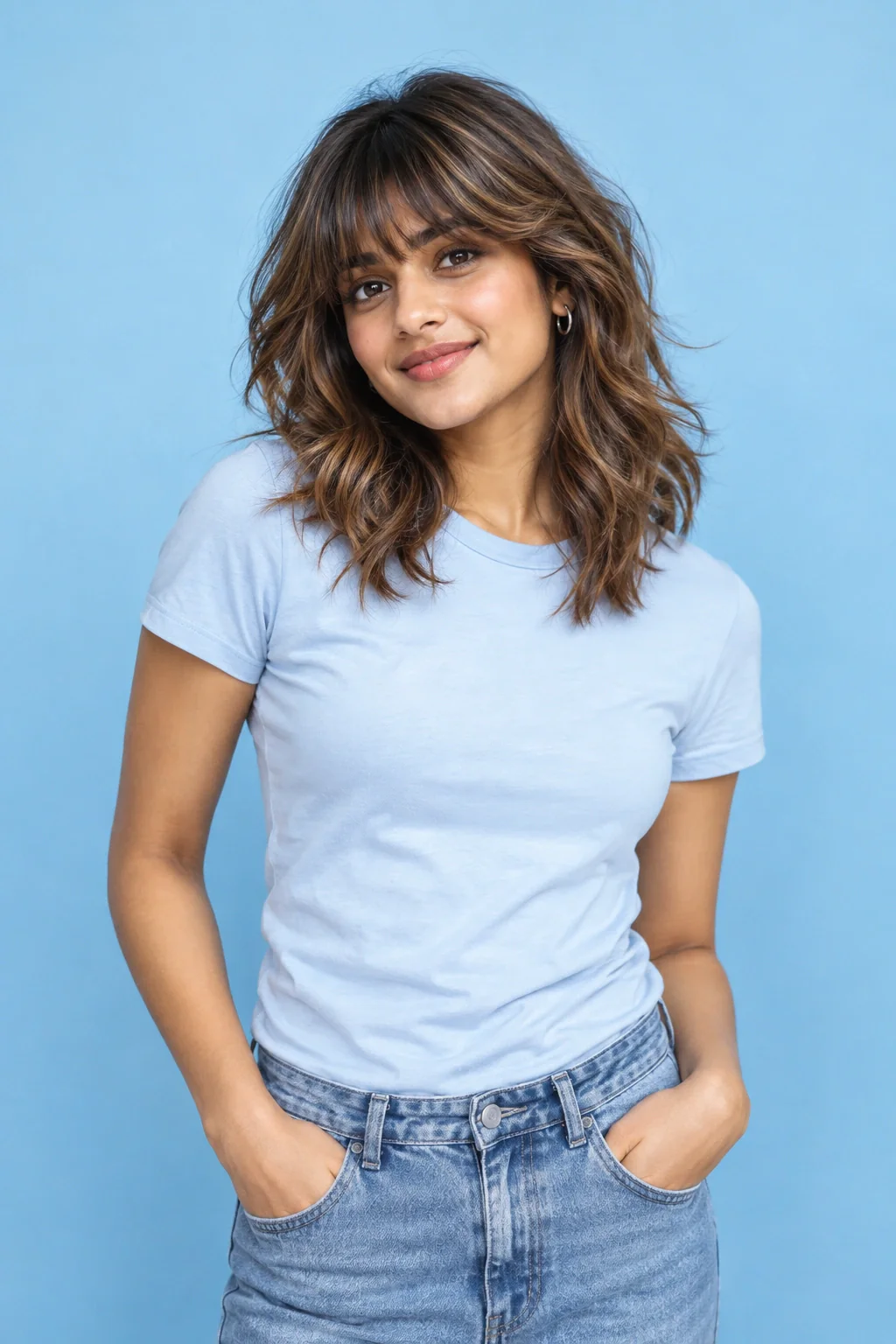
For the playful version, choose an accessory, an offset placement or a small change in the silhouette. A colored clip, a scarf at the ponytail base or a miniature top section may be enough. Keep the rest familiar so you can tell whether that single detail creates the mood you want. Playful does not have to mean a large or youthful-looking ornament.
Try the detail in two positions before deciding. A clip above the ear may feel quiet; the same clip closer to the front may become the main feature. A ribbon with short ends creates a different effect from one that falls beside the tail. Choose the version you enjoy wearing, including its scale and movement, rather than copying how the accessory was styled on its packaging.
Translate the three moods to your actual length
For a crop, the changes may live mainly at the front: natural direction for effortless, a clearer sweep for polished and a small clip or altered texture for playful. A bob can use one tuck, a modest half-up and a visible accessory. Longer hair can vary between loose placement, a considered ponytail and an offset or scarf-accented arrangement.
These are examples, not a fixed menu. If your curls do not suit a particular sweep, choose a different local change. If the layers cannot reach a half-up anchor, use separate side clips. The three moods should use what your haircut can do comfortably. A version that depends on hidden extra length, unfamiliar tools or substantial daily effort may be inspiration, but it is not yet a reliable part of this small routine.
Write each routine as a sequence, not a mood label
Give each version three short instructions: front, structure and finish. For a bob, everyday might read “usual part, one tucked side, loose ends.” Polished could be “clearer part, slim side barrette, earring visible.” Playful could be “front loose, mini crown ponytail, colored tie.” The steps explain how to recreate the look without relying on remembering what effortless meant last week.
For longer hair, build two moods from the same comfortable ponytail. Keep the anchor position fixed and change the finish from plain cuff to patterned scarf, or change the front from a defined part to a softer side placement. With curls, a local temple anchor can be the structural constant while accessory scale changes the mood. You do not need a new product list for each version.
Time yourself informally on an ordinary morning and notice where the sequence stalls. If the half-up repeatedly needs rebuilding, use two temple clips. If the scarf knot takes the most attention, keep that version for days when you want the extra step. Photograph the front and fastening once each version works. Label which one handles glasses, a high collar or a busy commute best, so choosing a mood also means choosing a routine suited to the day.
Test the effort honestly
Try each routine on an ordinary day and notice where you hesitate or restart. A style that takes several attempts may still be worth keeping for occasions, but label it accordingly. The effortless version should not quietly require the most skill. The polished one should not depend on a product you dislike using. Give each mood a realistic place in your routine.
Record comfort as well as time. A high anchor may look good but feel inconvenient with a chair or helmet; an accessory may be easy to place but awkward with glasses. Adjust those details before deciding the haircut lacks versatility. Often the useful change is a lower clip or a smaller gathered section, not a different cut. Keep the versions that work while you are living in them.
Use the experiment at your next appointment
Bring the three photographs and explain which version you wear most often. Show where a section does not reach or where a shape takes too much work. Sam Villa's consultation guidance encourages discussing styling habits and desired options. Your small set of examples turns that discussion into something concrete the stylist can assess on your own hair.
Ask which parts of the haircut support those moods and whether a future adjustment would help without making the base harder to maintain. You may decide to keep the cut exactly as it is and improve the styling sequence instead. The purpose of three moods is not to create three separate identities. It is to give you a manageable range of choices that still feels recognizably like your hair.
Create a controlled three-look comparison
Choose one ordinary outfit and photograph your haircut in its familiar base arrangement. Build the first mood by changing only the placement, the second by changing the organizing detail and the third by adding a visible accent. Keep the texture as similar as practical so you can see what each decision contributes. The three versions do not need to be dramatically different. A clear part, a softer front or a small accessory can be enough to shift the impression while keeping the haircut recognizably yours.
Write a caption for each photograph naming the actual change rather than only the mood. For example, left ear open with lengths loose explains more than polished. Compare the captions with the images and remove any styling step that does not contribute to the intended difference. This gives you a small set of repeatable operations, useful on days when you know how you want to feel but do not want to browse a large collection of unrelated hairstyle references before getting dressed.
Test the menu across three real days
Wear each version during a different ordinary day and note the context, preparation time and any adjustment you made. Avoid choosing only occasions that perfectly suit the hairstyle; the point is to learn how the menu functions in your routine. Perhaps the playful version is easiest because the accessory organizes the front, while the supposedly effortless version requires more attention. Let those observations change the labels if necessary. Your own experience is more useful than an assumed hierarchy of which mood should take the least work.
After the three days, choose the version you would repeat tomorrow and identify why. Keep all the looks you enjoy, but simplify or replace one that never feels worth the effort. You can also combine a useful practical detail from one version with the mood of another. Save the resulting menu with the outfit notes that helped it work. The exercise should leave you with flexible choices built around one haircut, rather than three fixed costumes that require a particular occasion before you feel allowed to wear them.
Your questions, considered.
Do I need different products for each styling mood?
Not necessarily. Direction, placement and accessories may create enough difference using your usual routine. Add a product only when it has a clear job and you know how to use it. A smaller set of familiar tools can make all three versions easier to repeat.
What if my haircut only seems to work one way?
Try smaller changes around the front, ears or fastening before attempting a dramatic restyle. Some cuts are designed around a strong shape or part, which limits certain options. Bring examples of the alternatives you want to a stylist so you can discuss realistic versatility.
Can the polished version keep natural texture?
Yes. Define the part, anchor or overall outline while preserving waves, curls or coils. Polished can mean deliberate placement and a clear finish. It does not require every section to be straight or completely smooth.
Sources & what they support
The notes below explain the scope of each source. Hairstyle selections, outfit combinations and comparison exercises are HairSparks’s editorial suggestions; the links do not imply endorsement.
- Aveda: Polished ponytail tutorial ↗Technique example using ponytail placement and a hair wrap around the elastic. Our suggestions do not require painful tightening or promise a fixed wear time.
- Sam Villa: Questions for a client consultation ↗Professional consultation questions about habits, goals, length, texture and previous likes or dislikes. Used for the conversation prompts, not universal rules about flattering hair.
HairSparks and Hair Muse share the same publisher. App mentions are promotional. Read our editorial policy.