
Start with a ponytail or bun you can already secure, then add the scarf as decoration. For short hair, compare a narrow band with a wider wrap. If the scarf slips, change the fold or position before pulling the knot tighter.
Choose where the scarf should place the color
Hold the scarf beside the finished hairstyle before tying it. Around a ponytail, the fabric moves with the tail. Around a bun, it creates a compact band of color. Across the head, it frames the face. A loose wrap covers more of the top and becomes a larger part of the outfit. Choose that visual role before deciding on the knot.
Check the scarf's length and thickness in a folded form. A generous square may make a bulky knot when rolled narrowly, while a short strip may not leave the tails you imagined. Build a reliable hair fastening first whenever the scarf is only meant to decorate it. Then compare these placements.
Fold a band with a width you actually like
Lay the scarf flat and fold it into a strip. For a square scarf, you can begin diagonally and continue folding towards the point; for a long scarf, fold the sides inward until the width suits the look. Hold the strip across the head before tying it. A narrow band leaves more hair visible, while a wider one becomes a stronger part of the outfit.
Place it slightly behind the hairline, then farther back, and compare. Decide whether a fringe or a small front section stays outside. Keep the fold smooth enough that an unexpected corner does not become the main feature unless you like that effect. The band does not need to be perfectly uniform, but its visible width should feel intentional from the front and sides.
Choose a knot position that fits your day
A knot at the nape can look quiet from the front, but it may rest against a collar or chair. A knot above the forehead becomes an obvious styling detail. A side knot creates an asymmetric accent. Try the intended position with the outfit and any glasses before tightening it into place.
Keep the tension comfortable and check whether the band shifts when you turn your head. If it slides repeatedly, change the width, position or hairstyle beneath it rather than pulling it progressively tighter. You can also use an appropriate discreet hair fastening if it helps and does not create a pressure point. The scarf should stay in the arrangement through ordinary movement without making you constantly aware of the knot.
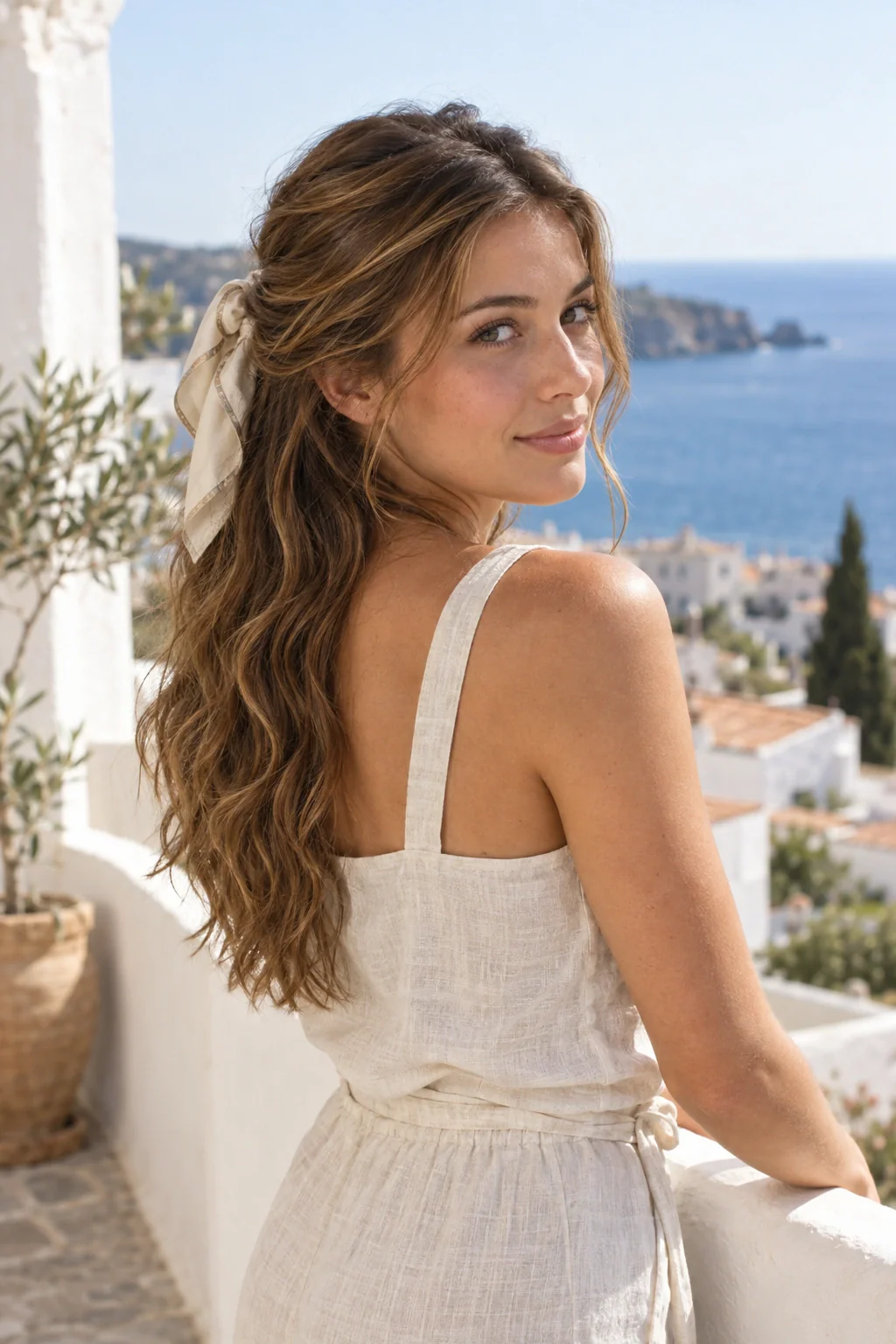
Add a scarf to a ponytail without rebuilding it
Make the ponytail with a suitable tie first, then wrap or knot the scarf around the base so the fabric becomes the visible detail. Decide whether the tails should be equal, offset or short enough to form a small bow. Let them fall beside the hair and compare the combined length. A scarf nearly as long as the ponytail creates a different line from a compact accent at the top.
Check that the knot sits where you can reach and adjust it easily. If the scarf covers the tie but keeps moving, try a smaller fold or a different knot arrangement you can make reliably. Avoid adding so much fabric that the base tilts or feels heavy. The ponytail remains the structure; the scarf contributes color and movement around it.
Use a bun as a small stage for pattern
Create a comfortable bun or folded ponytail, then hold the folded scarf around its base. A narrow wrap can show only a band of print, while a small bow gives the fabric more presence. Be Aveda Institutes' summer styling guide includes a scarf paired with a bun, illustrating how a familiar gathered style can carry a separate fabric accent.
Choose where the ends should sit before fastening the scarf. They can rest below the bun, point to one side or tuck under the wrap if the length permits. Check the back with a mirror so the pattern does not accidentally hide the shape you intended. If the bun is small, use less visible fabric; if the scarf is large, a headband or loose wrap may show its design more clearly.
Try a loose wrap without forcing a polished finish
For a relaxed wrap, decide how much of the top you want covered and leave the rest of the hair arranged before placing the fabric. Bring the scarf into position gently, then tie it where the ends comfortably meet. Keep the front edge deliberate: it can sit behind a fringe, reveal the hairline or frame a few chosen front pieces.
Check the shape from the side as well as the front. Extra fabric can gather at the back, so adjust the fold rather than compressing the hair underneath to make room. If the wrap keeps slipping, choose a more manageable scarf or return to a band. A loose wrap is most useful when the fabric and haircut cooperate; it does not need to reproduce a tutorial made with different dimensions.
Make the folded pattern work with the outfit
Look at the scarf after folding, not only when it is spread flat. A large motif may vanish inside a narrow band, while a border can become a clear stripe around a bun. Shift the fold to reveal the part you want visible. You can make the same scarf feel quieter or bolder without changing the hairstyle underneath.
Compare the folded colors with the area of clothing nearest them. A patterned collar plus a large knot at the front places several details in one small space. Move the knot towards the side or nape, use a narrower band, or let the scarf be the main pattern beside a plain neckline. You can also combine patterns deliberately; check that the result is the combination you intended.
Consider the tails as part of the full silhouette. Long tails beside a ponytail create another moving line, while a short bow concentrates the color at the base. A dress with its own neck ties may need a different knot position so the shapes remain readable. Finally, sit and turn with the scarf on. If the tails catch a bag strap or the knot presses against a collar, shorten or move the fabric before deciding the whole accessory cannot work.
Make a practical plan for loose ends
Let the scarf tails move while you turn, sit and put on outerwear. Notice whether they overlap a bag strap, catch on a closure or fall into the activity you are doing. Shorten or tuck the ends when that makes the arrangement easier. If the day's work involves equipment with specific hair or clothing requirements, follow those requirements and choose a contained option.
Practise untying the scarf before you need to remove it quickly. Support the hair and undo the fabric rather than dragging the entire knot through the style. Keep a plain tie or clip as an alternative if you decide to take the scarf off. Once you find a fold and placement you enjoy, save a photograph showing the knot as well as the front so the arrangement is easy to repeat.
Choose where the pattern begins and ends
Fold the scarf and hold it beside the outfit before putting it in the hair. Decide which part of the pattern you want visible and where the plain or quieter areas should sit. A scarf can look very different depending on its fold, even before the knot position changes. Try a narrow and a wider fold with the same hairstyle, then compare the result at outfit distance. This gives you a way to adjust the amount of pattern without adding another accessory or changing the entire arrangement.
Next, decide whether the ends should be part of the silhouette or tucked into a compact shape. Long visible ends may be the main detail you enjoy, but they need to fit the activities and clothing of the day. Check them against a collar, jacket and bag strap. If they occupy too much of the same space, choose a different knot position or a shorter visible finish. The scarf should have a defined visual role, with its practical placement supporting the pattern rather than constantly interrupting it.
Make a scarf plan that still works when it comes off
Consider whether you will remove the scarf during the day. If so, arrange a base you are willing to wear on its own and use the fabric as an added layer of expression. A familiar ponytail or gathering may remain complete after the scarf is untied. This can be useful when moving between settings or when you want a quieter version later. If the scarf is doing essential structural work, rehearse the alternative fastening before relying on the arrangement outside the house.
Practice the removal sequence while the hairstyle is still in place. Notice whether the knot is accessible and whether the fabric can be released without dragging the surrounding hair. Store the scarf where it will not become tangled with other accessories when you take it off. Keep a photograph of both versions with the outfit so the transition feels intentional. A versatile scarf style is not defined only by how many knots you can create; it also includes knowing how the look changes when the fabric is no longer part of it.
Your questions, considered.
Should a scarf replace my hair tie?
It can in some arrangements, but a separate tie is often more practical when the scarf is mainly decorative. Build a comfortable ponytail or bun first, then add the fabric. This lets you adjust the scarf without losing the hairstyle's support.
How can I stop a scarf band from sliding?
Try a different width, placement or amount of hair left in front before increasing tension. The fabric and the shape underneath may not suit that position. A suitable discreet fastening may help, or the same scarf may work better around a ponytail or bun.
Can I wear a scarf with short hair?
Yes. A band can frame a crop or bob, and a small wrap can become the main accessory. Choose the width and knot location with the haircut visible so the fabric does not cover more of the shape than you want.
Sources & what they support
The notes below explain the scope of each source. Hairstyle selections, outfit combinations and comparison exercises are HairSparks’s editorial suggestions; the links do not imply endorsement.
- Be Aveda Institutes: Five easy summer hairstyles ↗Professional examples of gathered summer styles and scarf styling. A scarf is discussed as a styling accessory, with no sun-protection claim.
HairSparks and Hair Muse share the same publisher. App mentions are promotional. Read our editorial policy.