
Secure the front first, then decide whether the long lengths also need grouping. Use a half-up for a short outdoor walk and consider a ponytail or braid for longer exposure. Carry the fastening you can use to change the style without a full restyle.
Choose by exposure and the amount of loose hair you want
A five-minute walk and an afternoon by the water ask different things of the hairstyle. Think about how long you will be outside, whether you can adjust on arrival and which loose sections become distracting. Hair moving around the shoulders may be welcome; hair repeatedly crossing the eyes may need a nearby anchor.
Start with the minimum structure that serves those needs. A front half-up can keep the face clear while leaving most hair loose. A ponytail gives long lengths a common direction. A braid contains the tail more fully, although short layers may still escape. These are adaptable options, not guarantees for every weather condition.
Give the front its own support
The front often causes the most interruption because it crosses the eyes or catches on glasses. Test a small temple twist, one tucked side or a narrow half-up section before gathering the whole head. Look down and turn your head to see whether the chosen anchor holds the pieces that usually move forward.
ghd's pinned-back styling tutorial demonstrates temple sections secured while the rest of the hair remains loose. For a breezy day, use that basic structure with your existing texture and a fastening you already trust. Leave a face-framing piece only if you are happy for it to move. If it repeatedly lands in your mouth or eyes during the trial, include it in the anchor rather than leaving it out solely to copy a reference.
Keep long lengths in a manageable group
A low ponytail or loose braid gives long hair a clear place to move. Choose an anchor that feels comfortable and does not require the surface to be pulled tightly. A braid can keep the tail grouped; a ponytail leaves more movement visible. Try both with the jacket or top you plan to wear because the collar may influence which feels easier.
If the hair is heavily layered, shorter pieces may escape a braid. You can treat them separately with small clips or choose a ponytail that accepts a softer outline. Avoid repeatedly tightening the main fastening to catch layers that do not reach it. The hairstyle should remain manageable when it changes slightly, not depend on every end staying in its original position.
Choose a shape that still works after movement
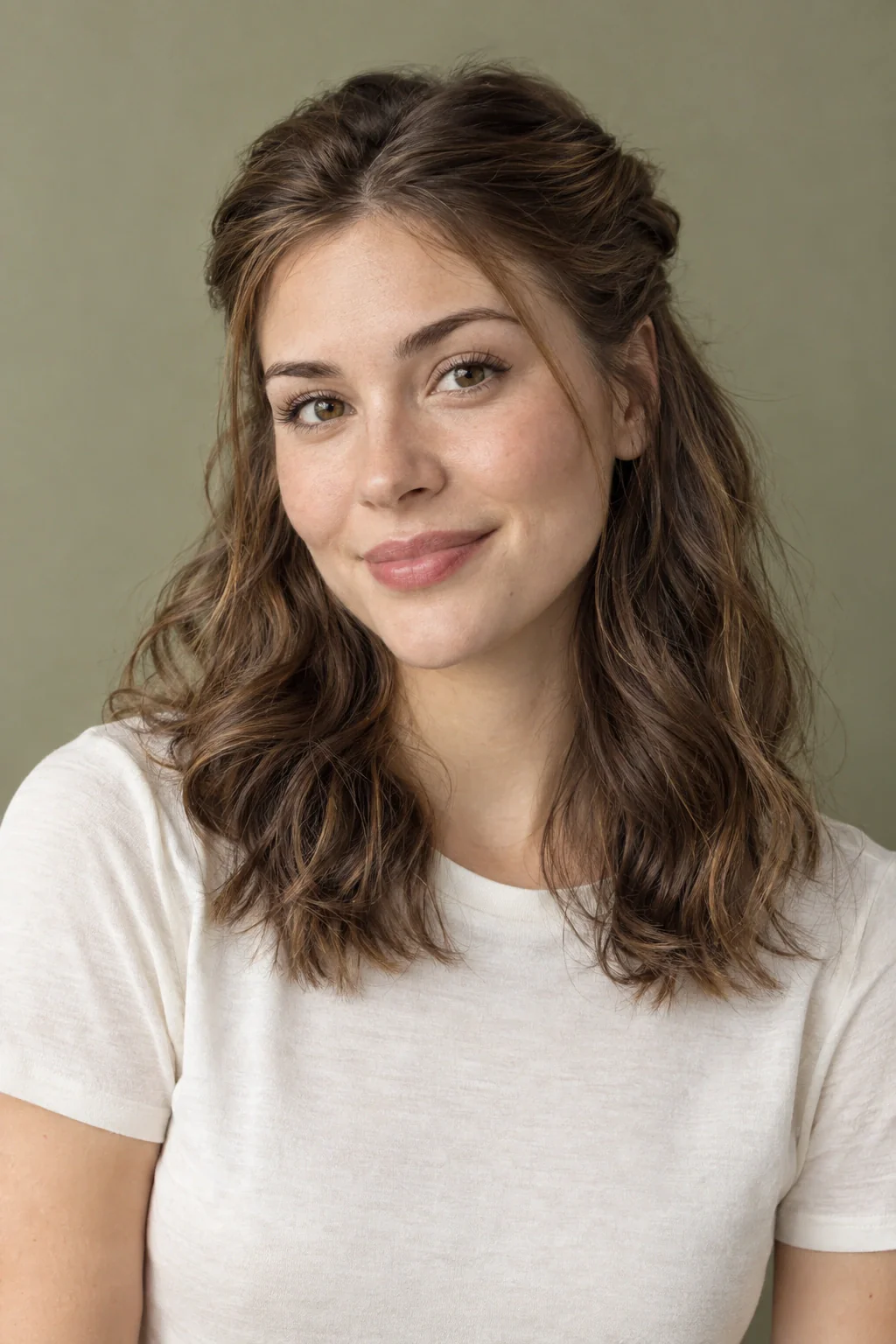
Some hairstyles rely on a precise surface, while others are built around visible texture and softer edges. For a breezy day, consider how the style will look after the front loosens a little or a few ends lift away. A gathered structure with a relaxed surface may still read clearly even when it no longer looks freshly arranged.
This does not mean that you must abandon a polished look. You can keep the part neat and the anchor deliberate while allowing the tail or lower lengths to move. Choose the areas that carry the design. If the entire effect depends on a perfectly smooth line all around the head, decide whether you want the maintenance that comes with that choice for the particular day.
Check accessories before trusting them outdoors
Try the actual accessory with the actual hairstyle. A decorative comb may need an established base to stay in place, while a clip may close comfortably only around a smaller section. Secure the structure before adding ornamentation, then turn your head and move around. If a piece rocks or slides indoors, change the arrangement before taking it outside.
Loose ribbons and scarf tails add movement, but decide where you want that movement to happen. Keep them away from closures or objects they might catch on during the activity. If an accessory feels heavy or distracting, a smaller one may give you enough detail. Carry a plain fastening as a backup so the hairstyle still has a workable shape if you remove the decoration.
Plan the transition between outside and inside
You can wear one simple arrangement for the journey and make a small change at the destination. A low tie might keep the hair grouped on the walk, then become a half-up once indoors. A side clip can stay in place while you release the lengths. Practise the transition once so you know whether it leaves a shape you like.
If you prefer the hair down throughout, carry a tie and decide in advance when you would use it. This removes the feeling that changing the style is a failure. A practical hairstyle can adapt to weather, seating and activity. Keep the fallback simple enough to do without a full mirror, particularly when you are attending an event where you may have little space to adjust.
Use a realistic movement check
Before an important day, wear the style during an ordinary walk in similar conditions if that is convenient. Notice the sections you touch repeatedly, whether the accessory remains comfortable and how the shape looks afterwards. This is a personal rehearsal, not a performance test that predicts every weather condition. Use the observations to simplify the parts that need too much attention.
At home, a normal movement check is useful even without wind: look down, turn side to side and put on the outer layer. Avoid building an elaborate simulation or blasting the hair with a device. You mainly want to know whether the anchors are comfortable and whether the design can tolerate movement. One small adjustment to the front may solve more than adding extra hold across the whole style.
Make the backup an extension of the first style
Choose a fallback that starts from the same part and front anchors. If you begin with temple twists and loose lengths, a low tie can gather the back without undoing the front. If you begin with a ponytail, braiding the tail may contain more of the length. If a decorative clip becomes distracting, replace it with a plain fastening that fits the same section.
Practise the transition using only what you plan to carry. A backup that requires a new blowout or a large mirror is not helpful halfway through an outdoor event. Check whether any scarf tails, ribbons or loose sections become inconvenient with your coat and bag. Keep the shape comfortable and avoid tightening the whole style to capture a short layer that cannot reach the main anchor.
Decide in advance when you would make the change: before the outdoor ceremony, after the photographs or when the loose front begins interrupting the activity. That removes the need to keep renegotiating the hairstyle every time a strand moves. Once the important sections stay manageable, allow the surface to soften. Your plan has done its job when you can see, move and enjoy the setting without continually rebuilding the hair.
Divide the route into exposed and sheltered stages
Map the actual journey in simple terms: walk to transport, travel, walk to the venue and indoor time. Decide which sections of the hair need support during the exposed stages and which you would like to release once inside. This creates a two-stage plan without assuming that the entire evening must be styled for the brief outdoor journey. For example, a temporary gathering of the lengths can protect the intended indoor outline from becoming a constant distraction while you walk, then be removed after taking off your coat.
Rehearse the transition in the order it will happen. Remove the outer layer before making the final indoor placement, and keep the temporary fastening somewhere accessible for the return journey. If the hairstyle cannot be changed easily, choose an arrangement whose movement you already enjoy across both settings. The planning question is how much flexibility the route needs. You do not have to design for every imaginable weather condition, but you can prepare for the exposure you reasonably expect on the day.
Judge the shape after movement instead of only before it
Make the proposed arrangement and move through ordinary actions that shift the hair: walking around, turning and putting on the outer layer. Then take a photograph without immediately correcting the result. Compare this settled version with the first image. Which parts still communicate the mood, and which parts have moved into places you dislike? Use that comparison to choose a small adjustment. A style that remains appealing after movement may be more useful than one whose initial photograph is stronger but whose outline requires constant resetting.
If loose pieces appear, decide whether they fit the intended finish before adding more control. If the front repeatedly crosses your eyes or an accessory shifts, address that specific issue. Keep the final note about behavior, such as front stays clear while the back moves, rather than promising a windproof result. Conditions can vary, and a practical plan leaves room for that variation. Your aim is an arrangement that tolerates the ordinary changes you are comfortable with and has an accessible alternative when you want more containment.
Your questions, considered.
Is there a hairstyle that is completely windproof?
It is more useful to plan for movement than to expect a complete guarantee. Hair length, texture, fastenings and conditions vary. Choose anchors that keep important sections manageable and a shape you still like when the surface becomes a little softer.
Can I leave my hair down on a windy day?
Yes, if you are comfortable with the movement. A small pinned front or half-up can clear the face while the lengths stay loose. Carry a tie or clip so you can gather the hair if the weather or activity makes the loose arrangement inconvenient.
Should I use extra hairspray instead of more clips?
First check what is moving and why. A section that needs an anchor may not be helped by coating the whole hairstyle. Choose a comfortable structure, then use a familiar finishing product according to its instructions if you want additional hold.
Sources & what they support
The notes below explain the scope of each source. Hairstyle selections, outfit combinations and comparison exercises are HairSparks’s editorial suggestions; the links do not imply endorsement.
- ghd: Pinned Back Glamour ↗Technique example using twisted and pinned temple sections while leaving other lengths loose. Our length adaptations and outfit pairings are editorial suggestions.
HairSparks and Hair Muse share the same publisher. App mentions are promotional. Read our editorial policy.