
For a short outdoor ceremony, start with the loose or half-up style you enjoy. For hours outside, consider a more gathered option or a rehearsed fallback. Try the hairstyle with the neckline and real accessory so placement and comfort are settled before the event.
Choose a starting style from the event schedule
Write down where the day changes: travel, ceremony, meal, photographs and dancing. A garden ceremony followed by indoor dinner offers a different styling choice from an exposed venue where you remain outside for hours. Check whether you will have a place and a few minutes to change the hair later. The schedule helps you choose how much flexibility the first style needs.
Keep the base texture familiar and choose a shape that leaves the garment detail you like visible. There is no requirement to wear all the hair up outdoors. Start with the option that suits the likely conditions and the amount of movement you are happy to wear.
Start with a texture you know how to wear
Choose a base texture you have experience styling and maintaining. That might be natural waves, defined curls, a smooth finish or a softly gathered shape. An important event can be a good reason to refine a familiar look, but it is a difficult moment to learn how an entirely new routine behaves over several hours.
If a professional is styling your hair, discuss the texture you normally wear and how much change you want. Bring photographs of your own hair as well as inspiration images. Explain whether you prefer the finish to remain very controlled or are happy with a softer outline later. The goal is shared expectations, not a promise that the hair will look identical in every condition.
Choose how much hair stays loose
Compare loose, half-up and gathered versions while wearing a top with a similar neckline. Loose hair shows movement and length; a half-up can open the face; a gathered style can reveal the neck and back. Decide which benefit matters for this occasion. There is no requirement that an outdoor hairstyle must be an updo.
For shorter hair, look at local changes rather than attempting to gather every section. Aveda's short wedding-hair guide offers partial twists and other sectioned arrangements, which can be useful starting references. A side pin, small half-up or clear front direction may provide enough structure. Keep the haircut's own shape visible and choose a version that can tolerate a few pieces moving without looking as though the entire design has come undone.
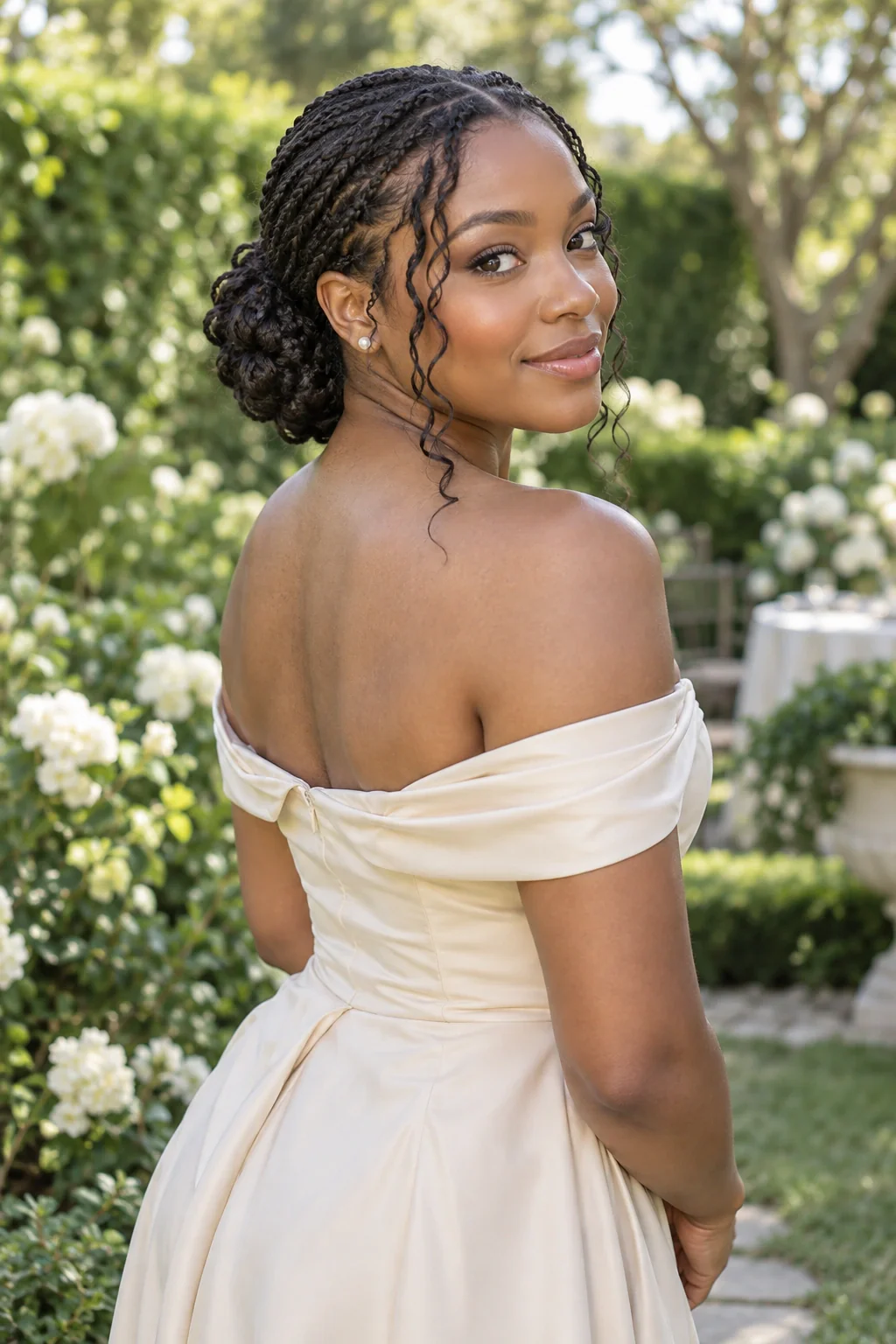
Try the outfit and accessory together
Wear the earrings, neckline and hair accessory during the rehearsal. Check the back of the garment with a mirror or photograph. A comb may cover a dress detail you wanted visible; a low bun may sit against a collar; a long earring may meet the front hair each time you turn. These are easier to adjust before the event.
If you are using a veil, headpiece or other substantial accessory, bring the actual item to a professional trial where possible. Its weight and attachment are more useful information than a product picture. Establish the hairstyle's support first, then fit the accessory according to its design. If you plan to remove it later, rehearse that change so the remaining hair still forms a complete style.
Plan for movement without demanding stillness
Think about the areas you most want to keep clear. A front section crossing the eyes may need a comfortable anchor, while the lower lengths can move freely. A braid or ponytail can keep long hair in a manageable group. Choose the structure for those practical jobs, then allow some softness around it if that suits the mood.
Carry a simple fastening for a change later. A loose hairstyle might become a low tie after the ceremony; a half-up might become a gathered style for dancing. Practise the transition once so it feels familiar. An adaptable plan does not mean you expect the original style to fail. It means the hairstyle can change as the event changes, just as you might remove a jacket or switch shoes.
Run a rehearsal that answers the unresolved questions
Choose the questions before the trial. If you are unsure about an accessory, wear the real piece. If the low bun might meet the collar, use the garment or a close neckline substitute. If you want the hair loose for the ceremony and gathered for dancing, practise that transition. A trial should answer those practical uncertainties instead of producing only a finished photograph.
Wear the style beyond the first mirror check. Sit, turn, look down and walk normally; include a short outdoor walk when convenient. Notice which section you keep touching and whether an accessory becomes uncomfortable. The observation should be specific enough to act on: the left temple falls forward, the comb tilts, or the tail catches the collar. A single trial cannot guarantee the event weather, but it can reveal a fastening that already struggles indoors.
Change the relevant part and repeat the same movement. Move the pin, use a smaller ornament or shift the anchor clear of the garment. If a professional is styling you, bring those notes and ask them to confirm the preparation and adjustment plan. Photograph the accepted front, side and back. Keep those trial images with the event schedule so the final hairstyle is based on a version tried on your hair, with room for the day to change.
Pack only the touch-ups you can use confidently
A small kit might include spare pins, a comfortable tie, a familiar clip and any product you already know how to apply. Include only the tools that fit the hairstyle and the venue. If the plan depends on recreating a complex wave pattern in a small restroom, simplify the plan or arrange professional help for the relevant part of the day.
Ask the stylist which fastenings can be adjusted and which should be left alone if the hairstyle is intricate. Put those instructions in plain words you can remember. If a friend is helping with a veil or accessory, show them the removal step in advance. The kit and plan should reduce uncertainty, giving you one or two reliable actions rather than a bag full of items you may not need.
Choose what matters in the photographs and the experience
Tell the photographer or the person taking pictures if there is a hair detail you especially want recorded, such as the back arrangement or a family accessory. That is more practical than spending the day checking whether every strand remains in place. Once the main photographs are taken, you can choose a simpler arrangement if comfort or the activity calls for it.
Look at the hairstyle as part of the celebration rather than a separate performance. A little movement can belong to an outdoor setting. Keep the parts that matter to you clear and comfortable, then let the rest of the plan be flexible. After the event, save notes about what worked so the next occasion begins with your own experience rather than another large collection of unfamiliar reference images.
Identify the longest stretch without a useful mirror
Read the event schedule and find the period when you are least likely to have time or space to adjust your hair. It might be the ceremony, a garden meal or travel between locations. Choose an arrangement you are comfortable wearing through that stretch, then build the decorative detail around it. This shifts the planning from an ideal arrival photograph to the part of the day that actually asks the most from the style. You can still choose an expressive look, with its structure serving the event rather than competing with it.
Rehearse that version with the complete outfit and outer layer. If one detail needs frequent correction during a short trial, simplify it before adding more ornament. Decide which changes you are happy to accept, such as softer loose sections, and which would interfere with comfort, such as hair repeatedly crossing the eyes. Keep those priorities in a small note. They give you a practical basis for deciding whether to touch up during the celebration or simply let the hairstyle move as intended.
Give the indoor or evening transition its own identity
If the celebration moves indoors or becomes more active later, plan a second version that keeps one recognizable feature from the first. This might be the same front arrangement with the lengths gathered, or the same accessory moved onto a smaller section. Try the change at home with the mirror access you expect. A transition should be something you can perform calmly, not a new technique saved for the first time during an already busy event with limited space and attention.
Name the two versions according to their purpose, such as ceremony open neckline and evening loose front. The names help you remember what each arrangement is meant to preserve. Pack only the relevant extra fastening and know which original pieces need to come out. At the event, make the change when it suits the activity or your comfort. You do not need to wait for the first look to become a problem. A planned second version can be part of the outfit's progression and a way to enjoy more of the day without repeated small corrections.
Your questions, considered.
Should I always wear my hair up for an outdoor event?
No. Choose according to the setting, duration and your preferences. A half-up or locally pinned front can make loose hair easier to manage, while a gathered style may suit a detailed neckline. Consider what needs to stay clear and how much movement you are comfortable with.
When should I test an occasion hairstyle?
Give yourself enough time before the event to make useful adjustments or discuss them with a stylist. The rehearsal should include the accessory and a similar neckline. Wear it beyond a still photograph so you can assess comfort and how the shape settles.
What is the best backup hairstyle?
The one you can create confidently with the tools you will have. A low ponytail, simple clip arrangement or familiar bun may be useful. Practise the transition from the original style, because a backup is only helpful when it works with the hair's existing texture and fastenings.
Sources & what they support
The notes below explain the scope of each source. Hairstyle selections, outfit combinations and comparison exercises are HairSparks’s editorial suggestions; the links do not imply endorsement.
- Aveda: Three wedding-day styles for short hair ↗Professional examples of braids, half twists and sectioned occasion styles on shorter hair. These show possibilities, not a guarantee that every length can use the same fastening.
HairSparks and Hair Muse share the same publisher. App mentions are promotional. Read our editorial policy.