0
Download on the App Store
THE OCCASION EDIT

The special-day edit

Wedding guest hairstyles can pair half-up curls, a low bun or a tucked bob with your neckline; the same starting shapes can work for birthdays and graduations.

Consider the ceremony, travel, photographs and the part of the day when you finally get to relax.

Find your starting point
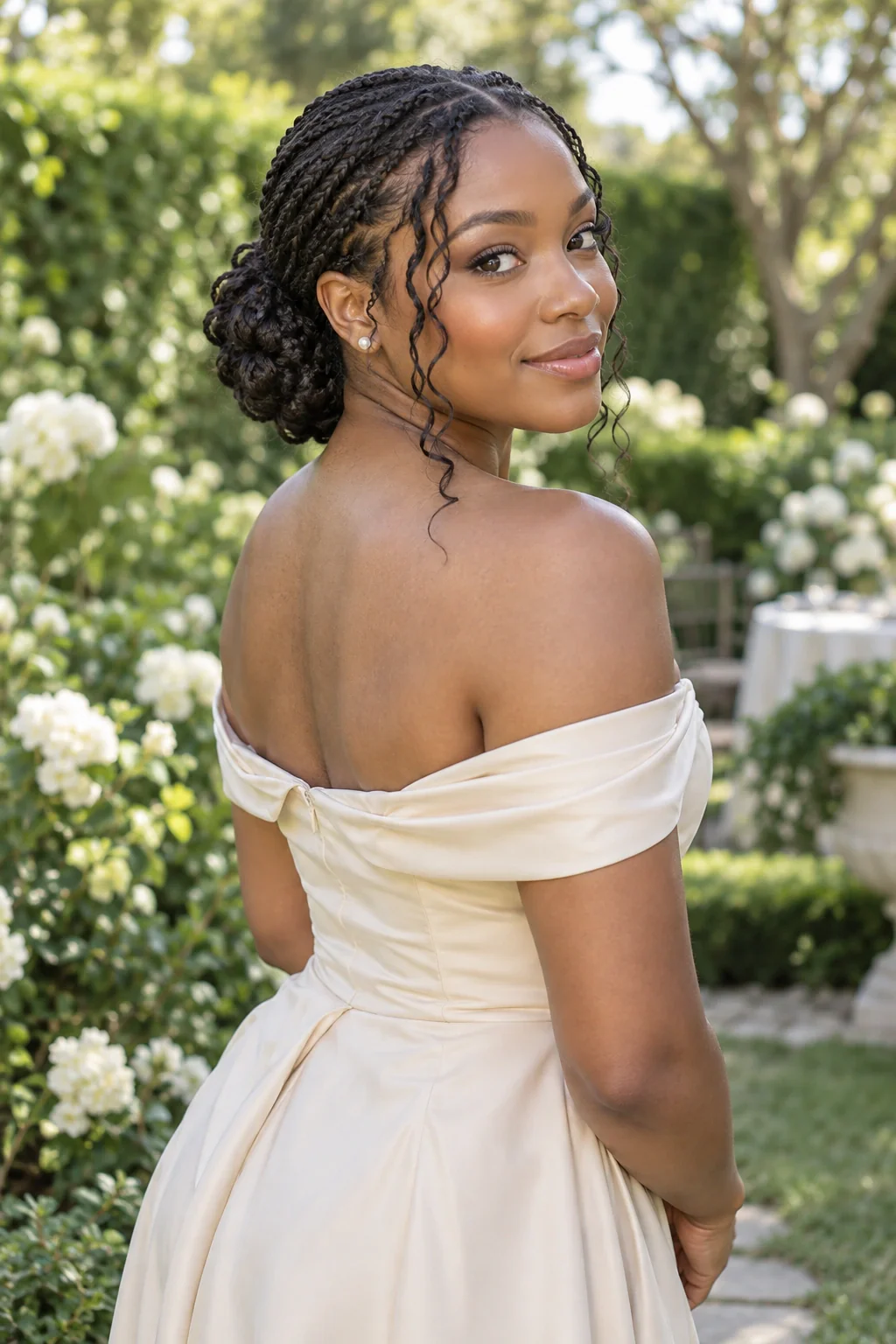
A young Black woman with a braided low bun, loose face-framing curls and a cream off-shoulder dress at a garden celebration.
01

Picture the whole day

Start with your neckline and accessories, then choose how much of the neck and ears you want to show. A hairstyle does not need to reproduce the mood of the dress exactly. A little contrast can make both elements feel more personal.

02

Try it in real life

Trial the complete combination, even if that means a quick practice at home. A hair accessory that works alone may compete with earrings or catch on a veil-like scarf. The shape also needs to be comfortable against a seat or car headrest.

03

Keep a little flexibility

For a long day, decide which details matter most. Keep those stable and allow the rest to soften naturally. A photograph of the trial and a short note about the fastening can help you recreate the idea without chasing every strand.

Ideas for the occasion.

Occasions9 min read

Birthday Hairstyles

For an all-day birthday, start with a half-up style and a removable statement accessory. For dancing, choose a ponytail or contained twist you can wear comfortably. Keep the base familiar if the bow, clip, or shape is already a big change.

Read the story
Occasions9 min read

Graduation Hairstyles

Start with a low-profile crown and style the hair visible below the cap. Use a low ponytail or side braid if long hair meets the gown collar; keep curls loose when the fit allows. Check organizer guidance before adding or altering cap fastenings.

Read the story
Occasions9 min read

Wedding Guest Hairstyles for Humid Weather

If your hair gains curl or volume in humidity, begin with that texture and secure the front in a half-up style or low bun. If you prefer hair down, choose a familiar loose finish and carry the fastener for a reception change.

Read the story
Style details9 min read

Casual Hairstyles for Formal Outfits

Let the garment supply most of the formality, then give the hair a clear part or anchor. With a decorated collar, move the length back; with a simple neckline, loose texture can stay prominent. Choose a shape you can wear comfortably throughout the event.

Read the story
Everyday styling9 min read

Hairstyles for Outdoor Events

For a short outdoor ceremony, start with the loose or half-up style you enjoy. For hours outside, consider a more gathered option or a rehearsed fallback. Try the hairstyle with the neckline and real accessory so placement and comfort are settled before the event.

Read the story

Start with a mood.

A PLAN FOR THE WHOLE OCCASION

Keep the special feeling through the schedule.

A milestone often contains several smaller events: getting ready, traveling, greeting people, taking photographs and finally relaxing. Your hair can respond to that sequence without losing its special feeling. Start by naming the outfit detail and the moment you most want to enjoy, then build a practical plan around them. The hairstyle should belong to the celebration you are attending, not only to its first posed photograph.

01 / THE DETAILS

Choose what deserves the clearest view.

Put on the actual outfit, or use a photograph that shows its neckline, shoulders and back. Identify the feature you would be disappointed to hide. A patterned collar, distinctive earring or open back may suggest where to leave space. If you prefer the hair to overlap the clothing, make that choice after seeing the detail unobstructed. You can enjoy a layered composition; you simply want to know which part of the outfit is doing the visual work.

Keep the hairstyle reference specific. A back view that shows a beautiful gathering may say little about the front you will see in most conversations and photographs. Find or sketch the important front relationship too: a clear face, a soft side or a familiar fringe. If a stylist is involved, explain which feature matters most and which can be adapted. That gives them room to create a workable interpretation without losing the reason you chose the image.

02 / THE DETAILS

Use the trial to answer concrete questions.

A useful trial does more than show whether you like the hairstyle immediately after it is finished. Wear the relevant earrings, try the outer layer and sit in a normal chair. Turn, talk and look down. Notice which areas demand attention and whether a fastener becomes uncomfortable. Record the changes you want in plain language, such as less hair beside the left earring or a lower profile at the back. These notes are easier to act on than a general request to make the style better.

Photograph the arrangement after some ordinary movement as well as at the start. The later view helps you judge whether the style changes in a way you enjoy. If the occasion involves a coordinated group, agree on the shared details before the day and let individual versions be adapted to each person's hair. Matching the level of formality or accessory finish can provide a connection without requiring every cut and texture to produce the same shape.

03 / THE DETAILS

Make the practical information easy to carry.

Keep the final reference, appointment time, preparation instructions and accessory details together. If a professional is styling your hair, follow their instructions for your individual service rather than combining several generic internet routines. Decide who will keep any useful spare fasteners and how a simple adjustment can be made later. A short, complete note is more helpful in a busy preparation room than scrolling through a long conversation to find the agreed version.

Choose what can relax after the formal part of the occasion. Perhaps the ornament comes out after photographs, or the front can become softer once dinner begins. A planned transition avoids treating every change as damage to the original look. Keep the detail that carries the special feeling and release the rest when you want to. The celebration should leave room for hugs, conversation and enjoyment, with the hairstyle supporting those moments rather than becoming another schedule to manage.

A LITTLE CLARITY

Your questions, considered.

How exact does my trial hairstyle need to be?

It should be exact enough to test the questions that matter: placement, comfort, outfit interaction and the front view. If a detail is still undecided, record it clearly. A useful trial produces a plan for the final version, not merely an attractive picture with unexplained differences.

Can I change the hairstyle during the celebration?

Yes, if the change is practical and you want it. Ask how to remove an accessory or simplify the arrangement without disrupting the parts you wish to keep. Practice a self-styled change beforehand, and carry only the familiar items it needs.