
If your hair gains curl or volume in humidity, begin with that texture and secure the front in a half-up style or low bun. If you prefer hair down, choose a familiar loose finish and carry the fastener for a reception change.
Wedding guest hairstyles that leave room for texture
Use your own experience of similar weather to choose the base. Some hair gains volume around the front; some waves become less defined; some straight lengths settle flatter. Name the change you normally see, then choose a hairstyle whose main feature does not depend on that area staying identical for hours.
A humid-weather plan is more specific than asking for maximum hold. You might need the neckline clear for a high collar, the front away from your earrings, or the length off your neck during dancing. Choose the shape below that meets that need while keeping the texture you expect to have outdoors. None promises an unchanged finish.
Separate the ceremony from the reception
Look at the information the hosts have provided. An outdoor ceremony followed by an indoor reception creates different needs from an entirely outdoor celebration. Include the journey, waiting time and any photographs. Do not build the plan around an assumed schedule or climate-controlled space. If key details are unclear, use the invitation or event information available rather than guessing about the venue.
Decide whether you want one arrangement for the entire day or a small transition after the formal part. A partly gathered style can preserve visible texture during the ceremony and become more contained later. A comfortable updo can remain consistent but may need careful placement around a chair or collar. Choose according to the experience you want. There is no obligation to wear your hair up simply because humidity is part of the forecast.
Choose where structure earns its place
Identify two or three areas that matter most: an open face, a clear neckline, a stable accessory or lengths kept away from the neck. Put the structural work there. The rest of the hairstyle can remain softer. This is often more useful than trying to control every strand equally. A deliberate front can keep the look recognizable even if the loose texture becomes fuller as the day progresses.
Test the fasteners on your actual hair rather than assuming a decorative piece will provide enough support. If the arrangement slips, adjust the section size or fastening position. Avoid compensating with uncomfortable tension; a style that pulls is not an acceptable trade for a neat photograph. A smaller, comfortable gathering may be more reliable than a large one held too tightly. Build the support first, then decide whether a visible accessory adds anything to the outfit.
Keep the finish close to a texture you know
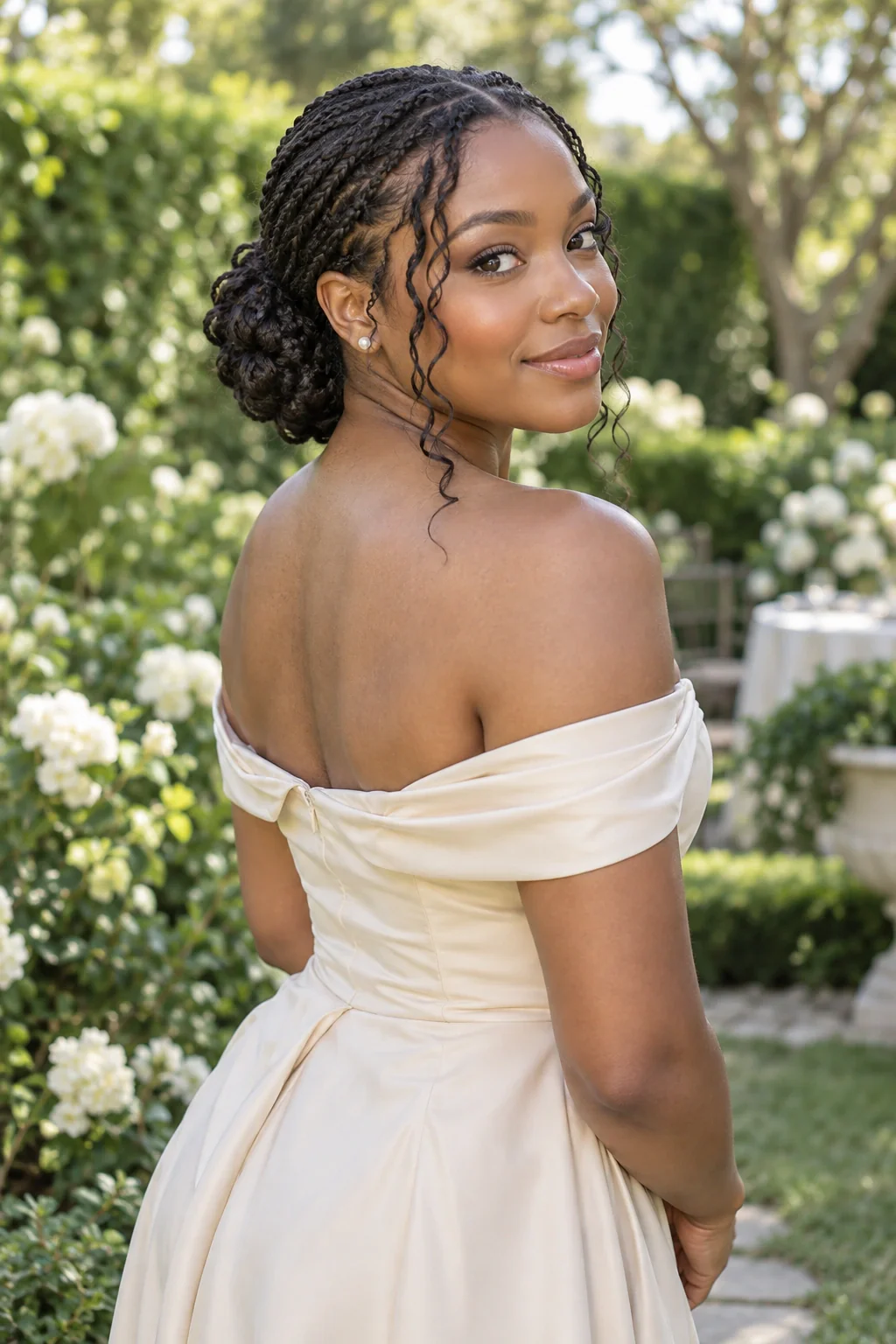
If your hair naturally curls or waves in humid conditions, consider a finish that already includes that movement. You can still refine the front or choose a deliberate silhouette without trying to erase the pattern. If your hair stays comparatively straight, a smooth loose arrangement may work well, but avoid assuming it needs artificial waves to look festive. The event mood can come from placement and accessories as much as from texture.
Use familiar products according to their directions if they are part of your normal routine. No product can promise an identical result on every head of hair or in every outdoor setting. If you are booking a stylist, explain your usual weather behavior and the venue plan. Ask for a finish you can adjust later without starting again. A practical conversation about the likely changes is more helpful than requesting an absolute guarantee against movement or flyaways.
Include the dress and jewelry in the rehearsal
Humidity is only one part of the decision. The outfit may have a high collar, an open back, straps or earrings that affect where the hair should sit. Wella’s professional wedding guidance treats clothing and accessories as part of the styling discussion. For a guest, the same planning habit helps you create a coherent ensemble without needing a bridal-style level of preparation.
Try the hair with the actual neckline and jewelry. If you want a back detail visible, make sure the loose lengths do not cover it once they move. If a large earring catches on the front sections, secure those sections separately. A wrap or jacket may also sit at the nape during travel. Solve these contact points early so the weather plan does not become a catch-all explanation for problems caused by the outfit itself.
Pack a reception change, not a repair fantasy
Choose one later version that you would be happy to wear even if the original style stayed intact. Perhaps the loose lengths gather into a relaxed twist, or the front becomes a small half-up arrangement. Practice the change on hair that has already been worn for a while. A backup dependent on fresh styling tools and perfect lighting may be unrealistic at the venue.
Carry the relevant fastener and a small mirror if useful. Keep the kit modest and familiar. If a friend will help, explain the adjustment in advance rather than asking them to recreate a complicated reference during the reception. The backup should give you more freedom to eat, dance and move. It is not a failed version of the hairstyle; it is the part of the plan designed for a different stage of the celebration.
Choose the reception change before the ceremony
For half-up hair, keep the upper fastening and gather the remaining length into a low ponytail when you want it off your neck. Test whether the upper clip still feels comfortable above the new tie. If it presses or creates too much bulk, remove it and use the ponytail as the second look. You do not need to preserve every part of the ceremony style.
For loose curls or waves, gather the front first. That may solve the discomfort without containing all the hair. If the length is still in the way, use the bun or twist you already know how to make on worn hair. For a side braid, a simpler reception change may be moving its tail behind the shoulder and replacing a decorative ribbon with a plain tie.
Pack the fastener for that exact transition. A narrow decorative clip cannot necessarily support the section you plan to gather later. Rehearse after wearing the starting style for a while, with the dress or a similar neckline on. You are checking placement and comfort, not proving that the weather will behave. Once the face and fastening are comfortable, leave the softer surface changes alone and enjoy the celebration.
Decide which part of the look can become softer
Consider a wedding with an outdoor ceremony and an indoor reception. Instead of expecting every area to keep exactly the same finish, identify the feature that carries the outfit. You might want an open neckline and visible earrings, while being happy for the loose lengths to change shape. In that case, put the reliable structure near the front and keep the back flexible. If the entire silhouette matters more than individual waves, choose a gathered outline you already know how to wear in similar conditions.
Write the distinction down before your trial: fixed intention and flexible detail. This makes it easier to evaluate the result after a few hours. Hair that changes texture has not automatically missed the brief if the chosen framing still works and you remain comfortable. Avoid using a preview or polished reference as a forecast of how the day will unfold. Use it to identify the visual intention, then test that intention through a practical arrangement suited to your own experience.
Build a reception change around the same outfit detail
Choose a second arrangement that preserves the feature you selected for the ceremony. If the first style exposes a decorative shoulder, the later version should keep that shoulder visible too. If a pair of earrings is the main accent, leave their surrounding space clear when gathering the lengths. This continuity helps the change feel like another version of the outfit rather than an emergency departure from it. Practice the transition with the actual dress and fasteners so you know what you can reach comfortably.
Place the necessary accessory where you will actually carry it during the wedding. Check whether you can make the change with a small mirror and whether any original pins need to be removed first. Keep the sequence short enough to perform without extensive help. You may never need it, but having an agreed alternative can reduce the urge to inspect every moving strand. At the event, respond to comfort and the chosen outline rather than comparing the hair endlessly with its first photograph.
Your questions, considered.
Is an updo the only sensible choice in humidity?
No. A partly gathered style or loose texture you know well can work if it suits your comfort and the event. Decide which sections need support and which changes you are willing to accept. An updo is useful when you want the lengths contained, not a universal requirement for humid weather.
Should I try a new anti-humidity product on the wedding day?
Use a familiar routine when possible. If you want to try a new product, test it beforehand and follow its directions. Performance varies with hair and conditions, so do not let a product promise replace a practical hairstyle plan. Comfortable placement and a simple backup remain useful regardless of the finish.
What should I tell a stylist about the event?
Explain the outdoor and indoor portions, your outfit details, your usual hair behavior in similar weather and the texture you prefer wearing. Say which areas must stay clear and what you can adjust yourself later. This gives the stylist concrete priorities without asking for an unrealistic guarantee of an unchanged finish.
Sources & what they support
The notes below explain the scope of each source. Hairstyle selections, outfit combinations and comparison exercises are HairSparks’s editorial suggestions; the links do not imply endorsement.
- Wella Professionals: wedding hair and the complete outfit ↗Professional background on choosing wedding hair alongside the dress, accessories and setting. The specific outfit pairings in this guide are our suggestions.
- American Academy of Dermatology: hairstyles that pull ↗Care guidance on repeated tension from tight hairstyles. Supports the advice to change a style that pulls or feels painful; it does not establish the hold of a particular fastening.
HairSparks and Hair Muse share the same publisher. App mentions are promotional. Read our editorial policy.