
Choose reversible hair for fittings. Show each garment with the neckline clear, then with the hair you expect to wear over it. Include a back view for back details, remove bulky clips during dressing, and follow the fitter’s guidance around delicate fabric.
Pick a style that lets you compare the dress fairly
A fitting hairstyle needs to move out of the way, come loose for a comparison and go back together without a long restyle. Choose a ponytail, loose braid or clip you can remake confidently. Keep the fastening in a small pouch during clothing changes so it does not disappear among garments or catch a delicate detail.
For early shopping, keep the hair flexible enough to try several necklines. For an alteration appointment or final event check, bring the chosen hair reference and ask whether any specific preparation would help. You can imitate an open neckline by holding the hair up; a full professional updo is not necessary for every appointment. With short hair, expose the relevant detail using a tuck or your hand, while keeping the haircut’s true length visible.
Choose a style that comes apart cleanly
A simple ponytail, loose braid or easy clip arrangement can work well when it is familiar and comfortable. The point is reversibility: you should be able to release the hair for a quick comparison, then secure it again without needing a full set of tools. Avoid choosing a construction that depends on many hidden pins if you expect to put several garments over your head. Every clothing change becomes more awkward when you are also trying to protect a delicate arrangement.
Place a bulky fastener where it does not obstruct the garment being tried. A large clip at the back may interfere with a collar, veil trial or close-fitting hood. You can remove it briefly, but that only helps if you know where to put it and can reset the hair. A small pouch keeps the fastener from disappearing among hangers, bags and discarded clothing. Bringing a spare familiar tie is sensible; bringing a whole styling collection usually adds more handling than value.
If your short hair cannot be gathered, choose a front direction you can restore with your hands or usual small tool. You do not need to pretend it can become an updo for the sake of the fitting. Clear the relevant garment detail with a gentle tuck or simply hold the side back for a photograph. The visual experiment can be temporary. What matters is seeing the clothing clearly enough to decide whether you like its relationship with your actual haircut.
Make two views of every serious contender
For a garment you are seriously considering, take one look with your ordinary hair arrangement and another with the hair cleared from the neckline and shoulders. Keep the clothing, posture and viewing distance as similar as possible. This makes the contrast meaningful. If you change the hair, the shoes and your pose all at once, it becomes difficult to know what changed your opinion. A controlled comparison is especially useful when the garment feels beautiful but strangely unlike you.
The loose version shows how the piece works with your everyday identity. The cleared version reveals fabric lines, shoulder placement and any decorative detail that hair may cover. Neither is the correct answer by default. You might discover that a formal neckline feels more relaxed with your natural texture left visible. You might prefer the crispness of a visible collar. The fitting is a chance to notice that preference before assuming the garment requires a hairstyle you do not enjoy wearing.
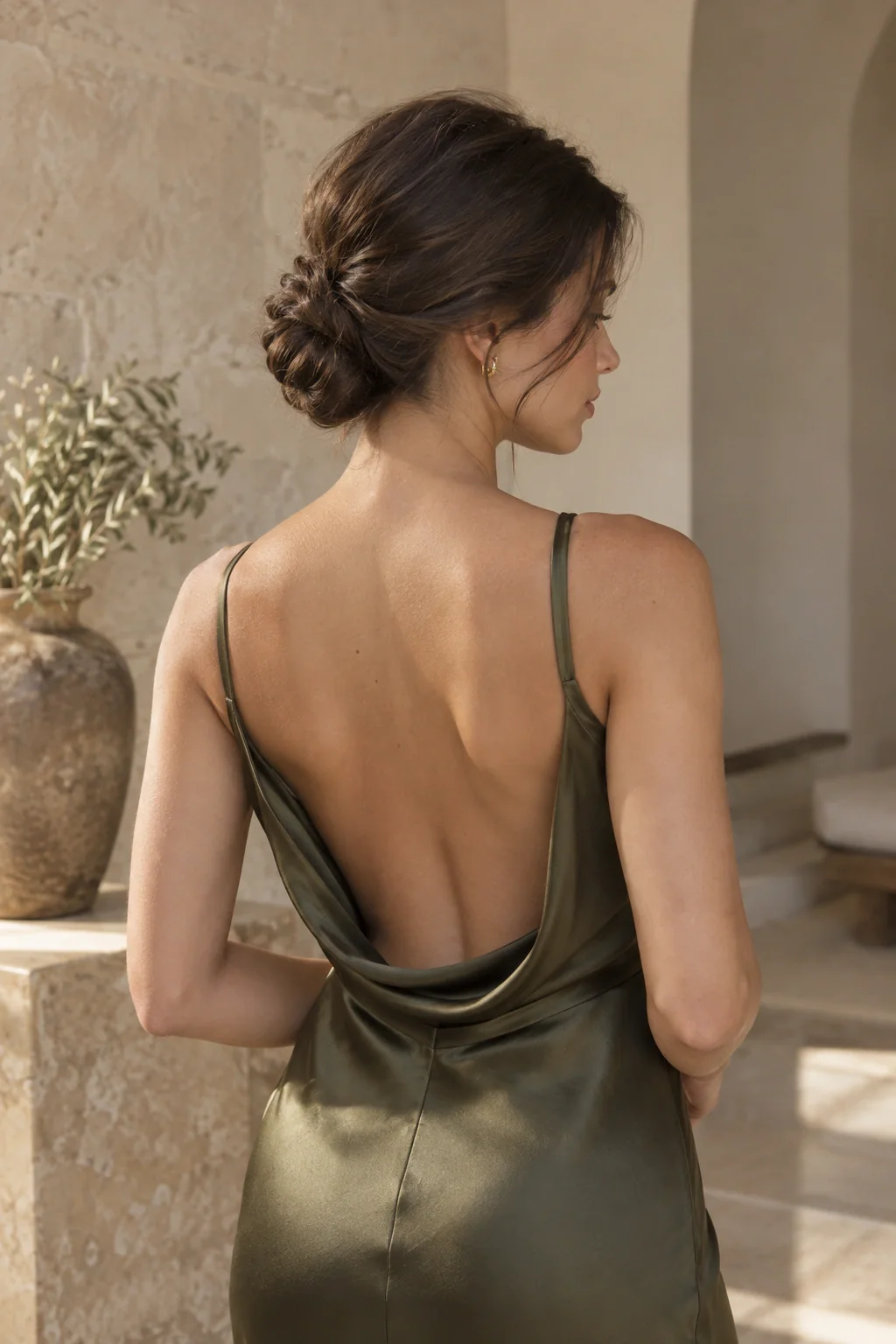
Ask whoever photographs you to include the garment's relevant area. A face-only image cannot help you assess a dramatic back or the junction between hair and sleeves. Take a back view when the back matters, and a side view when the neckline projects or rises. You do not need dozens of photographs. Two or three purposeful views, each answering a question, are easier to revisit than a long sequence in which you no longer remember what you were testing.
Handle delicate details with the fitter’s help
Lace, beading, hooks and small decorative elements can make dressing more involved. Follow the fitter's advice about how to put on and remove the garment. If hair or an accessory catches, stop and free the area gently rather than pulling harder. Move decorative hair pieces aside during the actual change, then reintroduce them when you are standing comfortably in the garment. The appointment is not a test of whether a hairstyle can survive every possible snag.
For a high neck or an embellished shoulder, gather the hair away while the fitter checks the clothing. Once the practical work is done, release the amount you expect to wear over it and assess the appearance. This sequence gives the garment detail room to be examined before styling deliberately overlaps it. You may decide that some beautiful embellishment can remain partly hidden because you love the fuller hair outline. That is an aesthetic choice; simply make it after seeing the detail clearly.
Avoid applying hair products around borrowed clothing or delicate fabric during a fitting unless the studio has explicitly arranged a styling service. If a small reset is needed, use the method and space the staff recommends. For a bridal or formal appointment, ask in advance what hair preparation and accessories would be helpful. Wella Professionals' wedding guidance emphasizes considering dress details during hairstyle planning. That supports bringing useful visual information, while the exact fitting procedure belongs to the people handling your garment.
Keep comparisons fair across changing-room light
Changing-room mirrors can make every decision feel urgent, especially when the lighting differs from home. Use the same position for your most important comparison photographs so the hair is not receiving a different highlight in each one. If allowed, look at the garment in another ordinary lighting area before deciding. You are not trying to correct the shop's lighting; you are checking whether your response is stable enough to trust outside that single mirror.
Hair color can change how you read a fabric. A warm copper length beside a cool pink dress may feel deliberately contrasting in one light and more blended in another. Notice the relationship without turning it into a rule about which colors you are allowed to wear. If your hair is likely to change before the event, mention that in your notes. A later color appointment should not surprise you into reconsidering a dress because you forgot that the original comparison involved a different frame.
Photographs are records, not verdicts. A still image may catch a strand across a key detail or make an ordinary fold look more prominent than it feels in motion. Review the images alongside what you remember from wearing the garment. If you felt comfortable moving and liked the whole outline, one awkward frame should not erase that experience. Conversely, an excellent photograph should not persuade you to ignore a neckline that repeatedly catches your hair whenever you turn.
Bring the right evidence for an event hairstyle
If this fitting is part of preparing for a specific event, bring the hair reference you currently favor and identify the feature that matters. Is it an open neck, a side-swept front, a compact back or loose movement through the lengths? Naming that feature allows you to imitate the relevant shape quickly without recreating the entire photograph. A hand-held gathering can be enough to see whether the back detail has the space you wanted.
Bring a real accessory when its size affects the outfit. A large bow, comb or veil cannot be judged accurately from a tiny image on a phone. Check its relationship with the garment only when the fitter is ready and the clothing is safely on. If the accessory requires professional placement, use the appointment to discuss its position rather than improvising a complicated attachment. A later hair trial can test the structure properly with the person who will create it.
Pair the preview with a current photograph of your own hair and the actual outfit.
Include the getting-dressed sequence in your decision
A hairstyle can look ideal once the dress is on and still make the morning unnecessarily awkward. Consider how the garment closes, whether it must pass over the head, and when accessories should be added. Coordinate that sequence with your hair stylist or fitter if you are using their services. Do not assume every event look follows one universal order. The actual dress, hairstyle and preparation space determine what is easiest to handle.
Practice with a top that has a similar opening if you cannot rehearse in the real garment. You are not testing fabric fit; you are learning whether your hands can manage the movement without catching the hair. If a large arrangement at the crown makes the process difficult, perhaps it can be finished after dressing, or perhaps another hairstyle provides the same mood with less bulk. Ask the professional involved before changing a detailed plan close to the event.
Think about changing out of the outfit too. You may be tired, away from home or ready to remove the hair accessories quickly. A simple understanding of which fastener comes out first can save unnecessary pulling and confusion. Keep the original accessory pouch available. These small practical details do not diminish the specialness of the look. They allow you to enjoy the garment and hairstyle without treating either as an object that must remain untouched for the entire day.
Leave the fitting with three views and one decision
For a dress you are seriously considering, capture the view that answers the clothing question. A front photograph shows the neckline; a side view can show a raised collar or sleeve; a back view reveals the area a loose hairstyle may cover. Keep posture and distance similar when comparing hair up and down, so the change is easy to understand.
Use those views to choose what needs testing next. If loose hair hides the only detail you love, try a half-up option before rejecting the dress or committing to a full updo. If the dress looks better with your normal texture, keep that as the event starting point. A styling question can remain open without reopening every clothing choice. Share the relevant image with the fitter or stylist when its fastening or construction needs professional input.
Your questions, considered.
Should I arrive at a bridal fitting with my wedding hair done?
Ask the studio what would help for that appointment. For many comparisons, a simple gathering and a reference image can show the important neckline relationship without requiring a full style. A final coordinated trial may call for more exact preparation. Follow the practical plan agreed with the fitter and hair stylist.
What is the easiest hairstyle for trying on several tops?
Choose the familiar style you can release and rebuild quickly. A small gathering or loose braid can be useful, while a bulky clip may need to come out before each change. Keep a pouch for the fastener. The best choice is the one that lets you handle the clothing without repeatedly repairing complicated hair.
How can I judge a dress if I have not chosen my hair yet?
Compare it with your usual loose arrangement and with the relevant neckline or back cleared. These two views reveal the range of the outfit without pretending you have made the final hair decision. Save notes about which detail you preferred, then use them to guide a later trial rather than selecting a hairstyle from scratch.
Sources & what they support
The notes below explain the scope of each source. Hairstyle selections, outfit combinations and comparison exercises are HairSparks’s editorial suggestions; the links do not imply endorsement.
- Wella Professionals: considering dress details during wedding hair planning ↗Professional background on choosing wedding hair alongside the dress, accessories and setting. The specific outfit pairings in this guide are our suggestions.
HairSparks and Hair Muse share the same publisher. App mentions are promotional. Read our editorial policy.