
Choose one or two shared features, then agree on individual versions for different lengths and textures. Confirm styling costs, accessories and preparation instructions early. A matching finish or visible neckline can connect the group without requiring everyone to wear the same construction.
Choose a shared detail that works across the group
Start with one visible connection: the same ribbon color, exposed earrings or a similar degree of formality. Then ask each bridesmaid which hairstyle she feels comfortable wearing. A low twist, side-tucked bob and half-up curl shape can look related when they share that detail, even though the lengths and construction differ.
Check the actual dresses before choosing an accessory for everyone. A large comb may have room beside one neckline and feel crowded near another person’s lace shoulder. Let the group’s common feature stay small enough to adapt. If professional styling is involved, show the stylist each person’s current hair and ask about suitable versions before appointments are scheduled. A coordinated brief should make the shared intention clear without requiring an unwanted cut, color change or texture change.
Translate the idea across lengths and textures
Suppose the shared direction is a clear neckline and a soft front. Long hair might become a loose, comfortably secured arrangement at the back. A bob might use a small side gathering or remain loose with the front directed away. A short crop could use its existing shape with one decorative detail. These are different hairstyles, but they can express the same relationship with the dress. The common intention is more important than making every back view identical.
Texture can also remain individual. A group does not need every curl straightened or every straight length curled to appear coherent. You can connect the looks through accessory finish, visible ears or the amount of formality instead. Discuss the actual hair with the professional who will style it. They need to know what each person is bringing to the chair, including existing braids, extensions or a recent cut, rather than receiving one reference and discovering the differences on the morning.
For a person whose hair differs markedly from the chosen example, identify the part of the example worth keeping. It may be the compact silhouette or the playful placement of a ribbon, not the exact weave of a braid. This translation protects the shared idea while allowing a sensible technique. If achieving the reference would require a change someone does not want, choose another version. The wedding hairstyle should not quietly become an unagreed haircut, color service or texture change.
Use the dresses to refine the group composition
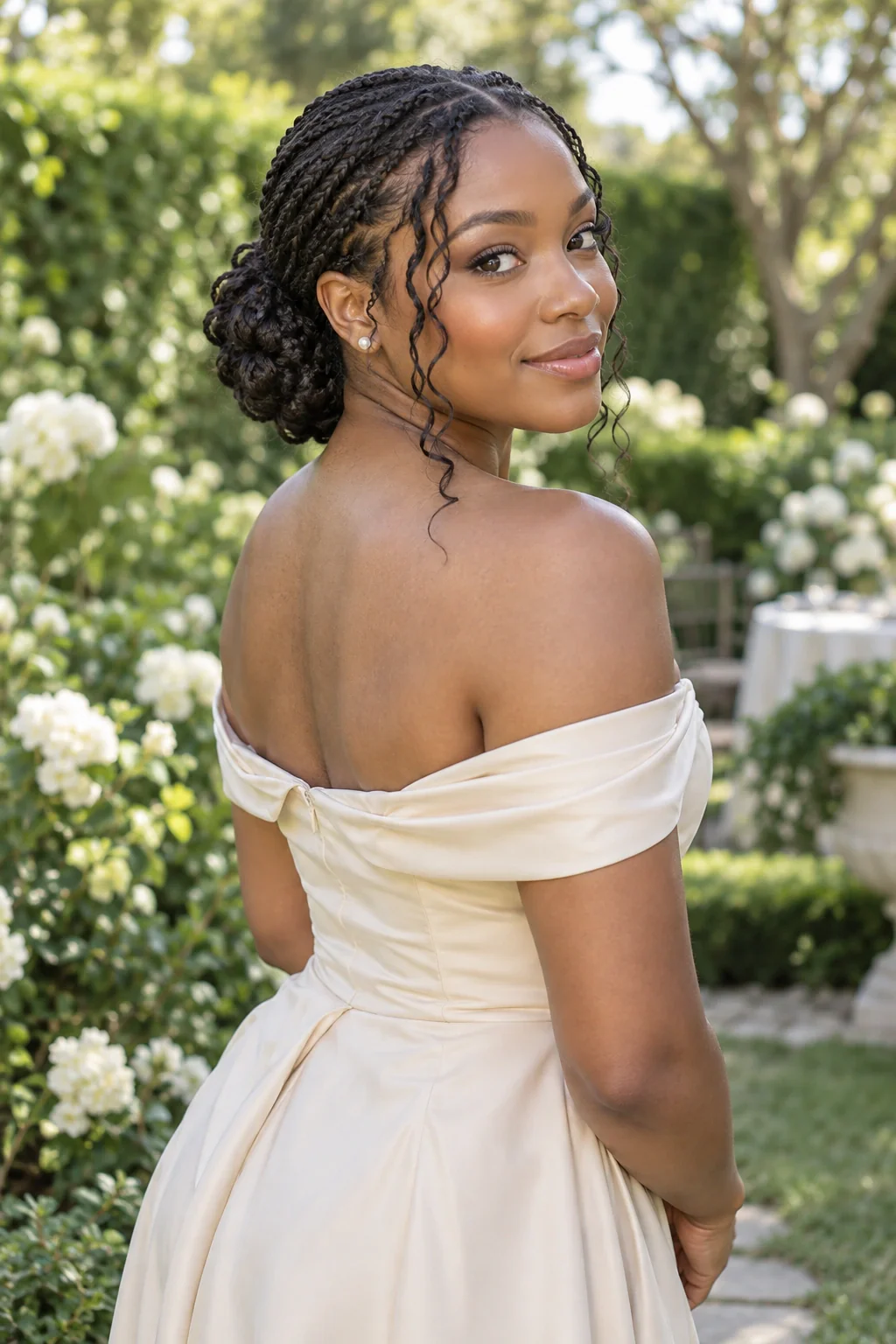
Lay out photographs of the actual outfits alongside the hair references. If the dresses have different necklines, the hair can respond to those differences while retaining the shared mood. A high collar may benefit from more visible space around it; an open back may invite a gathering; a simple strapless line may look lovely beside loose texture. These are editorial possibilities, not rules. Test the relationship on each person before turning an attractive suggestion into an instruction.
Wella Professionals' wedding guidance highlights bringing dress information into hair planning. For a group, that principle becomes particularly useful because one shared accessory may sit beside several different fabrics and shoulder shapes. A comb that looks clear against a plain dress can feel crowded next to beading or lace. Consider whether the accessory should be the exact same object for everyone or simply share a finish. Similar tones with different sizes may suit the group better than identical scale.
Look at the party together at a realistic distance if you can, or arrange straightforward photographs side by side. You are checking whether the overall degree of formality feels related, not ranking who looks most alike. Individual faces and haircuts will remain different, as they should. If one style seems visually disconnected, adjust the specific detail causing it, such as a large ornament or a much sharper front, instead of rebuilding everyone's look to satisfy an abstract idea of symmetry.
Make cost and preparation part of the agreement
Discuss who is arranging and paying for styling before anyone books an appointment or buys an accessory. If a particular service or object is required, say that clearly along with the expected cost and who covers it. Vague phrases such as everyone should look polished can conceal very different assumptions about professional styling. Clear information gives people a fair chance to plan and avoids the awkwardness of discovering an unexpected expense close to the event.
Clarify whether self-styling is welcome and what support is available. A person who already knows a reliable version of the chosen look may prefer to do it themselves. Another may need a stylist experienced with their texture. Both can belong in the same coordinated plan. If professional services are booked, share accurate information about each person's hair and intended result so the stylist can allocate appropriate time and confirm what is feasible within the appointment.
Follow the chosen stylist's individual preparation instructions rather than circulating one blanket washing rule for the group. Hair routines and styling methods differ. Ask what each person should do, what they should bring, and whether the hair must arrive dry or in a particular state. Put the instructions in one concise note. A clear, specific message is easier to follow than several group-chat fragments that mix general internet advice with the actual professional's plan.
Give every person a small, useful reference brief
Prepare a compact brief for each hairstyle: one main image, the detail to keep, any adaptation agreed with the stylist, and the actual accessory if one is being used. Add a current photograph of that person's hair when useful. The brief should explain the result rather than overwhelm the stylist with a large moodboard. A sentence such as soft front, neckline clear, natural curls retained is easier to interpret than five images with contradictory textures.
Keep the group's shared direction at the top, followed by the individual variation. This prevents the wedding morning from becoming a debate about whether a short-haired person's version matches closely enough. The adaptation has already been agreed. If the person wants a trial, use it to check comfort, accessory placement and how the front feels around their face. A trial is most useful when it resolves a question; it does not need to become an excuse to keep changing the entire concept.
An AI preview can help someone describe a shape they are considering. Keep a current hair photograph beside it and let the stylist assess the practical version.
Build a schedule around real people and transitions
Ask the stylist for the time required for each agreed service and work backward from the moment everyone needs to be dressed. Include time for getting into outfits, placing final accessories and moving to the next location. A schedule that accounts only for time in the hair chair leaves the busiest transitions unexplained. Different hairstyles may require different durations, so avoid dividing the morning into equal slots simply because it looks tidy on paper.
Consider who will be helping whom. A person assisting with dress closures may need their own hair complete before that task begins. Someone traveling separately may need a different arrival arrangement. If makeup and hair services overlap, make sure the professionals know the plan rather than asking the group to negotiate it on the day. Assign one person to hold the final schedule and reference notes, so last-minute questions do not require everyone to search through old messages.
Keep the waiting time comfortable. Choose clothing that can be changed without unnecessary disturbance to the agreed hairstyle, and follow the stylist's advice about the dressing sequence. Store accessories in labeled pouches until they are needed. If the plan includes a final check just before photographs, make that time visible. A calm schedule is not produced by assuming nothing will shift; it comes from leaving enough room for ordinary human transitions.
Agree on what can change during the celebration
Hair will move during hugs, travel, photographs and dancing. Decide which detail matters most later in the day and which changes are welcome. Perhaps the accessory should stay for the ceremony but can be removed for the reception. Perhaps everyone is free to release a few pieces or regather their hair once formal photographs are finished. Making this explicit avoids the feeling that a coordinated style must remain untouched for the entire celebration.
Ask the stylist how to manage the simple adjustment each person is likely to need. That may be replacing a displaced pin or removing a decorative piece without undoing the whole structure. The answer should be specific to the hairstyle, not a generic emergency kit filled with unfamiliar products. Keep only the useful items accessible and agree who carries them. A person wearing a short crop will not need the same backup as someone with a large gathered arrangement.
Comfort should remain an ongoing consideration. If a fastener hurts or a style feels too tight, it needs adjustment even if the photographs have not happened yet. You can preserve the overall mood while changing a small practical detail. The purpose of the group look is to support a shared occasion, not to demand endurance from the people in it. A relaxed, comfortable group will bring more life to the event than a perfectly matched set of immovable hair silhouettes.
Resolve the four decisions that can delay the wedding morning
The final plan should tell each person where to be, what preparation to follow and which agreed hairstyle is being created. Keep one current version of that information. If a new inspiration picture appears after the styling has been agreed, first ask which unresolved problem it answers; otherwise it can reopen choices that were already workable.
Confirm details with the people providing the services. Different textures and constructions can need different appointment times, so let the stylist allocate the schedule. Include dressing and accessory placement in the plan instead of filling every minute with chair time. On the morning, assess whether the agreed detail is present and everyone is comfortable. Small differences from a photograph can remain when the hairstyle still satisfies the individual brief.
Your questions, considered.
Do bridesmaids need identical hairstyles?
Only if the group has explicitly agreed to that choice. A shared mood, accessory finish or amount of neckline openness can connect different hairstyles. Adapting the shape to each person’s length and texture often makes the plan more comfortable and manageable while keeping a clear visual relationship.
What if one bridesmaid has very short hair?
Translate the shared idea into a detail that works with the cut: an open side, a similar accessory finish or the same degree of formality. Do not require a bun-shaped substitute simply because others wear buns. Agree on the adaptation in advance so it feels intentional within the group plan.
How many reference images should we send the stylist?
Use one main image per person, plus a short note explaining the feature to retain and any agreed changes. Include current hair information and accessory details where relevant. A small, consistent brief gives the stylist a clearer task than a large folder of competing inspiration, particularly when several people share the appointment schedule.
Sources & what they support
The notes below explain the scope of each source. Hairstyle selections, outfit combinations and comparison exercises are HairSparks’s editorial suggestions; the links do not imply endorsement.
- Wella Professionals: wedding hair planning with the dress and accessories ↗Professional background on choosing wedding hair alongside the dress, accessories and setting. The specific outfit pairings in this guide are our suggestions.
HairSparks and Hair Muse share the same publisher. App mentions are promotional. Read our editorial policy.