
0
Download on the App Store
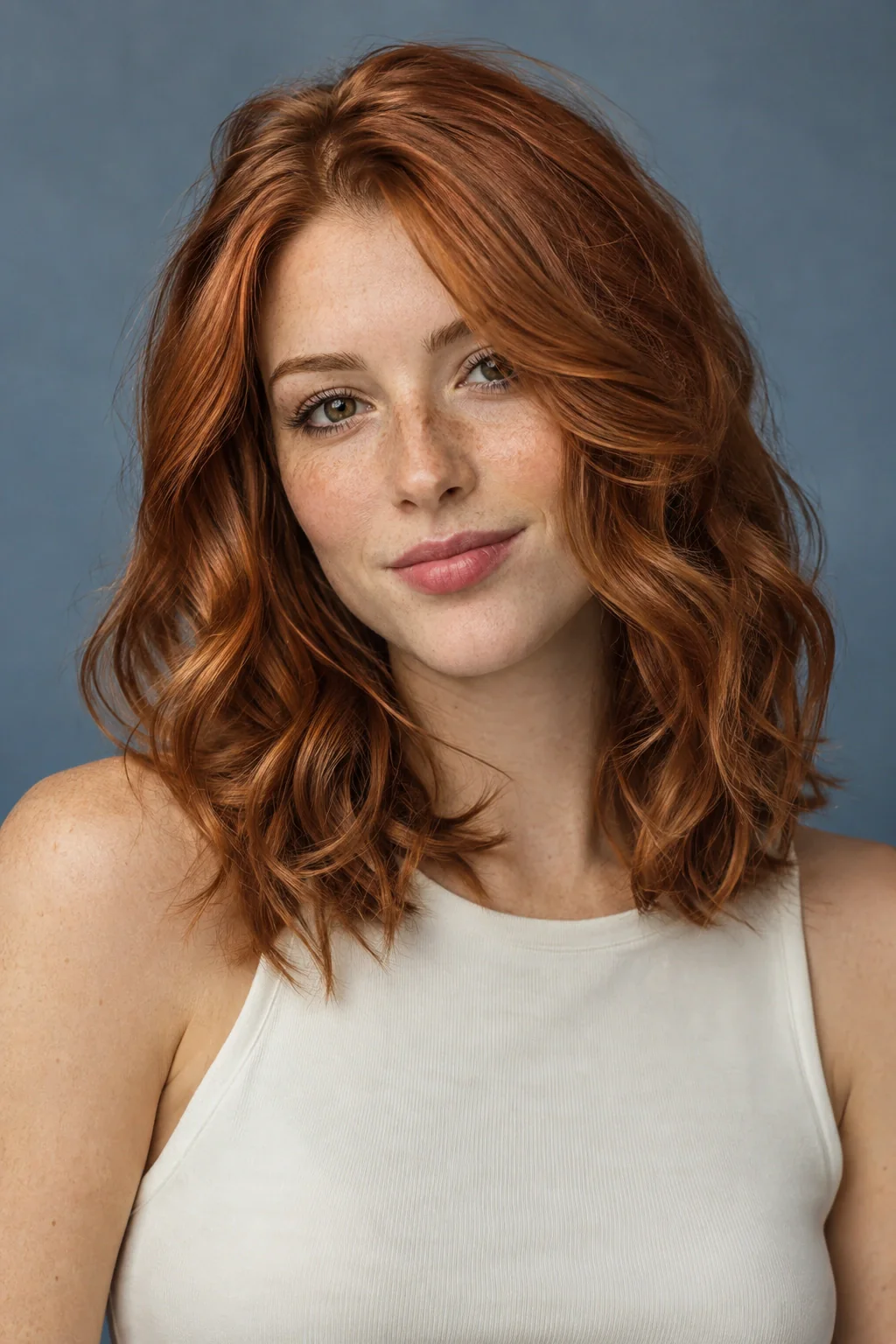
A young freckled woman with glossy ginger-copper shoulder-length waves and an ivory sleeveless top against blue-gray.
THE LOOK NOTES

The copper ripple

Copper hair color ideas can use shoulder-length waves to show red-orange warmth and movement beside the face.

The warm copper tone looks different against the cool background and the light shirt, while a side-swept front gives the outline a relaxed asymmetry. Consider those choices separately before deciding what you want to change.

Length
Medium
Texture reference
Wavy
Worth considering
Color upkeep
Open your moodboard

Isolate the color idea

Keep your current cut in mind while evaluating the copper family. It is easy to mistake a new finish or lighting for a preference about color. A useful next step is to compare broad warmth and depth on a consistent photograph, then take the direction to a colorist rather than treating a screen as a formula.

Look at the clothes you wear

Try the idea beside cream, black and a color you wear often. Warm hair can become a stronger accent against a quiet outfit, but there is no universal palette you have to obey. Use your own preferences as the test. The lavender background is part of why this editorial image feels distinctive.

Keep the front flexible

The side movement is a styling choice you can explore without committing to this exact shade. Notice how much of the forehead stays visible and whether the front falls comfortably when you turn your head. The useful version should let you see and move naturally.

Ask about the real process

Your starting color, previous services and hair condition determine what a colorist may consider suitable. Discuss upkeep and the path back to a quieter color before booking. An AI visualization can help communicate a family of tones.

Read the finer details.

Color stories8 min read

Hair Color Ideas for your Wardrobe

Keep your three most-worn tops in the comparison and change only one color variable at a time. If both warm and cool shades appeal, choose the depth first. Your wardrobe can clarify taste; it does not assign a compulsory hair-color category.

Read the story
Color stories8 min read

Warm vs Cool Hair Color

Choose the lightness first, then compare warmer and cooler versions near that depth. If both appeal, describe which features you prefer in each. A neutral-looking result is also a valid brief; the colorist can assess what it means for your starting hair.

Read the story
MAKE THE LOOK YOUR OWN

Warm color, moving shape, separate choices.

This look combines a copper direction with shoulder-length movement. You might love both, or only one. Splitting the two ideas gives you a clearer route into a preview and a more useful conversation about the real-world version.

01 / THE DETAILS

Separate the copper shade from the wave.

This portrait gives you two ideas: a warm copper color and shoulder-length waves with a swept front. Decide which part you want first. A quieter color with the same movement and copper on a simpler shape are both valid directions to explore.

  • Keep your color, borrow the front: change the part or pin one side so the hair moves across the forehead. Compare that asymmetry with your usual front before adding any color decision.
  • Keep your cut, explore copper: use a personal color preview to compare warm brunette with a red-orange direction. Judge the whole color effect and the area nearest your face separately.
  • Consider both changes: keep two comparison images, one showing the shape and one showing the color. Explain each preference at the appointment so a dramatic photograph does not become an unclear request.

For the color conversation, explain your starting shade and previous services. Ask about upkeep and possible alternatives before deciding on the process. A preview can communicate the warmth you enjoy.

02 / THE DETAILS

Let familiar clothes test the idea.

Picture the shade with a dark jacket, a neutral shirt and a color you regularly wear. The lavender backdrop in this portrait contributes to the overall impression. Your own wardrobe may create a different relationship, and that is worth exploring before making the hair the only subject.

Keep your response personal. You might enjoy a strong contrast where someone else would choose a quieter combination. The point of the experiment is to understand what you like, not to make a palette category approve the choice.

03 / THE DETAILS

Choose how much of the ripple belongs in everyday life.

The bends give this reference a softer outline. Ask whether you enjoy that finish occasionally or want movement built into the way the cut works on an ordinary day. A stylist can explain which parts of the image come from styling and which might translate through a change in shape.

For the color conversation, share the starting point and relevant previous services with a colorist. Ask how to adapt the warmth, what upkeep means and whether a quieter version would suit your preferences.

A LITTLE CLARITY

Your questions, considered.

Can I use this reference without changing my haircut?

Yes. Save it as a color direction and say that the current shape should remain. Conversely, you can borrow the movement while keeping your color. Explain which part the reference represents.

Does this image show an achievable copper result for my hair?

It shows an editorial idea. A colorist needs your real starting color, history and condition to discuss achievable options and upkeep. Use the picture to describe warmth and contrast, not to establish a process.