
With one-color clothes, change the hair’s outline before adding decoration. Show a collar with a low ponytail, keep curls full beside simple fabric, or tuck one side of a bob. Check the choice with your coat and earrings.
Choose a hairstyle for the shape of your outfit
A monochrome outfit makes a useful backdrop for a visible hair shape. Put on the clothes and identify the area nearest the hair: an open shirt collar, a close knit neckline or broad jacket shoulders. Choose a hairstyle that gives that area the amount of space you want.
Keep the clothes and accessories unchanged while comparing two options. On shorter hair, use a tuck or a different front direction in place of a ponytail. On longer hair, notice where the ends land after you turn your head. Curls and coils can stay full in every comparison; opening the neckline does not require smoothing the whole head. Pick the version whose shape remains clear when you step away from the mirror.
Decide whether to repeat or interrupt the finish
Imagine a cream ribbed sweater with flowing cream trousers. A soft, mobile hair shape can repeat that relaxed feeling. A compact twist with an exposed neckline may interrupt it, giving the outfit a sharper edge. Neither is the more correct choice. Choose the version that expresses the energy you want that day, and name the contrast in a short phrase such as soft clothes, clear hair outline. That phrase will be more useful than searching for an exact outfit duplicate online.
You can make the same comparison with crisp clothes. A black shirt with a defined collar and straight trousers may feel complete with a neat low ponytail. Loose waves, curls or a tousled bob can make the combination feel less formal. Keep the experiment modest: change the arrangement of the hair rather than assuming you need an entirely different texture. If you usually wear coils, for example, a slightly different side shape can create contrast without replacing your familiar hair with a smooth reference image.
Give all-black clothes a readable edge
Dark hair and black clothing can form a continuous outline in a photograph. Whether you enjoy that effect is an aesthetic preference. If you want a more visible separation, try exposing a small area of neckline, moving the lengths behind a shoulder, or bringing one section forward against an open collar. These changes affect where the hair sits rather than asking you to change its color. Check the result in the light you will actually use, because a bathroom mirror and an evening photograph can look quite different.
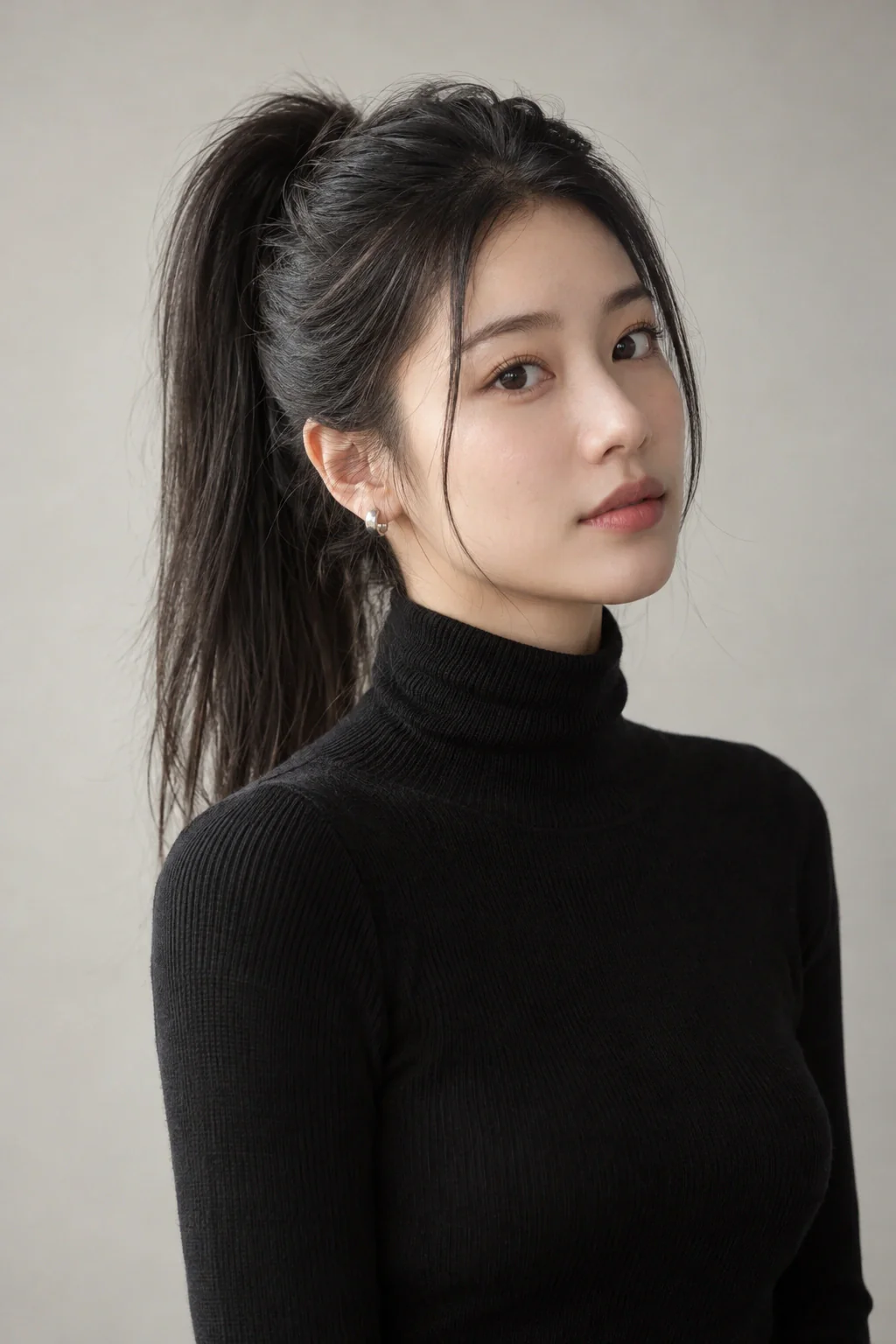
For a black turtleneck, compare a low gathered shape with a half-up arrangement that leaves movement at the back. With an open black shirt, an ear tuck may be sufficient. If you like the uninterrupted dark outline, leave it alone and let a shoe, bag or earring supply the visible detail. Avoid adding three bright accessories simply because the hair seems subtle in one image. First check whether the whole outfit already says what you want it to say.
Keep light outfits from dictating a soft hairstyle
Cream, white and pale gray clothes can support graphic hair just as easily as romantic hair. A compact bob with a clear side part may provide an interesting line against a loose pale outfit. A full curly shape can add another generous form. The useful decision is whether you want the hair to look contained or expansive, not whether pale clothes require a delicate appearance. Try both with your existing length before reaching for tools or adding an accessory.
If the outfit contains several pale textures, such as a cotton shirt, knit vest and fluid trousers, consider simplifying one hair detail. Keep your familiar texture but choose one part and one fastening point. Alternatively, leave the hair entirely loose and remove a decorative clip. This is an editing exercise, not a ban on detail. When you can identify the part of the outfit you most enjoy, you can give it enough room to remain visible while still keeping your hair recognizably yours.
Use tonal outfits as a bridge, not a matching test
A tonal outfit might mix chocolate trousers, a tan shirt and a camel coat. The shades do not have to match one another exactly, and your hair does not have to match any of them. Instead, look for a relationship you like: warm colors with a quiet shape, several browns with a shiny metal clip, or muted clothes with a lively fringe. The hairstyle can provide structure even when the color palette is deliberately blended.
Hold a possible accessory next to the outfit before putting it in your hair. A brown clip may disappear pleasantly; a black one may create a clear mark; a tortoiseshell pattern may connect several colors. Test placement as well as color. The same clip near the temple feels different from one mostly hidden at the back. Choose the job you want it to do, then judge whether the accessory fulfills that job without needing an explanation from you.
Pick one point of emphasis around the face
With a single-color outfit, earrings, glasses, a fringe and a hair accessory can all feel like focal points. You can keep several, but give them a hierarchy. If the earrings are the detail you want people to notice, clear enough hair for them to be readable. If a bold fringe is your favorite feature, quieter earrings may let the fringe lead. A strong pair of glasses can share the area with hair that moves, provided the arrangement stays comfortable.
Make a quick three-photo comparison: everything included, one accessory removed, and one hair section repositioned. Keep the camera distance consistent so you are comparing the styling rather than the crop. Choose the photograph in which your attention goes where you intended. You may discover that the fuller version feels most like you. Editing does not always mean subtracting; sometimes it means moving one small detail so the different elements can coexist more clearly.
Adapt the idea to your actual length and texture
On short hair, contrast may come from the direction of the front, an open temple or the relationship between a fringe and collar. You do not need enough length for an updo to create a distinct mood. For a bob, compare both sides loose with one side behind the ear. For medium or long hair, compare a low gathering with a loose shape that has only the front sections held. Judge each at outfit distance rather than measuring how closely it resembles a long-haired reference.
For waves, curls, coils, braids or locs, begin with the shape you already have. A monochrome outfit gives that shape a quiet background; it does not require you to make it smaller. If you want a more compact outline, gather only the sections that reach comfortably and leave the rest intentional. The American Academy of Dermatology advises against repeated tight pulling. In practical styling terms, a shape that depends on discomfort is not a useful everyday solution, regardless of how tidy it appears.
Build three examples from one wardrobe
Start with an all-black shirt and trouser outfit. Version one keeps the hair loose with a familiar part and uses no visible accessory. Version two clears one ear and adds a single earring or slim clip. Version three gathers the hair low while leaving a deliberate front detail. Compare the energy of the three combinations: relaxed, more graphic, or more contained. Save the version you would actually wear, including a note about the part that made it feel right.
Repeat with a cream sweater and cream skirt, but change the question. Compare a rounded hair outline with a narrow one, rather than repeating the same accessory test. Finally, try a tonal brown outfit and decide whether you prefer a blended accessory or a contrasting one. These examples produce three useful discoveries instead of twelve almost identical photographs. Your notes might say open neckline for the black shirt, full texture with cream knit, and quiet fastening with the camel coat.
Test movement before adding more hold
A pleasing still photograph is only one view of an outfit. Sit down, turn your head, put the coat on and remove it again. Watch where the hair lands against collars, straps and jewelry. If the lengths keep covering the feature you wanted to show, solve that specific movement with a small anchor or a different placement. Do not assume the entire hairstyle needs to become firmer. A single falling section may be the whole problem.
Give the arrangement a short ordinary trial before an occasion. Wear it while preparing a bag or walking around the room, then look again without rebuilding it. If the loosened version still looks good, that is useful information: you have chosen a forgiving shape. If it becomes a different hairstyle after a few turns of the head, simplify the design. A monochrome outfit can make repeated adjustments feel conspicuous to you, so a comfortable shape you can leave alone is often the more satisfying choice.
Turn a daytime base into an evening finish
A monochrome outfit can change character without a complete restyle. Suppose you wear a black shirt with a loose low ponytail during the day. For dinner, keep the tie in place, settle the front and choose either a visible earring or a decorative fastening.
Choose the transition according to the hair you have at the end of the day. Released hair may keep the bend from a tie, so decide whether you enjoy that shape before planning to wear it down. If your curls look best left alone, keep the loose lengths and adjust only the front. A crop can shift from casual to sharper through a clearer part and one exposed temple; there is no length requirement for a finished evening look.
Your questions, considered.
Does monochrome mean my hair accessory must match exactly?
No. An exact match is one option, but a nearby tone, a different material or a deliberate contrast may be more useful. Decide whether the accessory should disappear, connect two shades or become the visible accent. Test it beside the complete outfit and then in the actual fastening position. A beautiful object held in your hand can behave quite differently once it sits among the hair.
What if I want all-black clothes and a very understated hairstyle?
Keep the understatement. A continuous dark outline can be an intentional choice, and you do not need to introduce a bright clip for visibility. Check whether the neckline and movement feel comfortable. If you want one small distinction, expose an ear, alter the front direction or choose a slightly different part. Those changes can be enough without transforming the overall mood.
Can natural volume be the main detail in a minimal outfit?
Yes. A quiet palette can make a generous natural shape feel especially clear. Start with your usual comfortable styling and evaluate the whole outline. You may prefer to simplify an accessory rather than reduce the hair. The question is which elements you want to emphasize, not whether minimal clothes require flat hair or a particular texture.
How many comparison photos are useful?
Three clearly different arrangements usually give you more information than many small variations. Keep the clothes, camera distance and light similar, and compare loose, partly held and gathered versions first. After choosing a base, test one finishing detail. Write down the reason for the favorite so that you can repeat the idea with another monochrome outfit instead of copying only one photograph.
Sources & what they support
The notes below explain the scope of each source. Hairstyle selections, outfit combinations and comparison exercises are HairSparks’s editorial suggestions; the links do not imply endorsement.
- American Academy of Dermatology: avoid hairstyles that pull tightly ↗Care guidance on repeated tension from tight hairstyles. Supports the advice to change a style that pulls or feels painful; it does not establish the hold of a particular fastening.
HairSparks and Hair Muse share the same publisher. App mentions are promotional. Read our editorial policy.