
Plan the cap fit, care routine and afterward separately. Keep the swim hairstyle compatible with the equipment, then use a simple front reset, half-up style or comfortable gathering after your usual care. Allow time for the changing room you will actually use.
Choose a cap-compatible base and a separate after-swim style
First establish whether you are swimming or staying beside the water. If you will swim, check the facility’s cap and product rules, and follow the equipment maker’s fitting guidance. Choose the hairstyle within those requirements. An elaborate poolside look is a different task from containing hair comfortably beneath the cap you use for a lane session.
Try the cap on and take it off at home with the hair comfortably gathered. Long lengths may need distributing within its available space; short hair needs attention at the front and nape. Keep unnecessary hard accessories away from pressure points. Then choose the style you will make after following your usual post-swim care. Plan for the hair’s condition after swimming, including any changed texture, and give the changing-room routine enough time.
Find a comfortable arrangement that fits your cap
Use your actual cap while testing the hairstyle. Gather the hair in a way that accommodates its length and volume without creating an awkward lump or pulling tightly at the front. The best arrangement depends on the cap's design and your hair, so follow the maker's fitting guidance. A small loose gathering may suit one person, while another needs a different distribution of the lengths. The test is whether the combination fits as intended and feels comfortable when you move.
Long hair does not have to become one large knot. You can discuss or experiment with a comfortable arrangement that keeps the lengths together and fits the available space. For shorter hair, focus on the front and nape rather than trying to make a miniature version of a long-hair style. Keep unnecessary hard accessories out of the arrangement, especially where they press beneath the cap. Use only items compatible with the equipment and the venue's rules.
Put the cap on and remove it during practice, not just once before leaving home. Notice whether a particular section catches or whether you lose track of a fastener. Slow, familiar handling is more useful than a complicated construction you can assemble only with a large mirror. If the cap cannot accommodate your hair comfortably, look for an appropriate fit rather than increasing tension to force the hair into less space. The hairstyle should support the equipment, not compete with it.
Treat care as a separate job from making it look styled
The American Academy of Dermatology's general swimmer guidance includes wearing a swim cap, rinsing promptly after swimming and using appropriate cleansing and conditioning afterward. Its summer hair advice also discusses pre-swim care. Use those resources as a starting point and follow the directions for the products you choose, your own professional advice and the pool's rules. This article is about organizing the day and styling decisions; it is not a personalized treatment plan for your hair or scalp.
Do not assume a cap means the hair will remain perfectly dry or that a tidy arrangement replaces post-swim care. Plan for the condition your hair is actually in when the session ends. If you have colored or chemically treated hair, ask your stylist about a suitable swimming routine before making frequent sessions part of your schedule. The answer may depend on your current services and products, which a hairstyle photograph cannot reveal.
Pack the care items you know you will use in containers allowed by the venue. Keep them distinct from the small styling items needed after dressing. When everything is loose in one bag, the quick reset becomes a search through wet towels and clothing. A practical arrangement might have one washable pouch for shower items and a separate dry pouch for a tie or clip. The organization should make your routine easier without adding unnecessary products or steps.
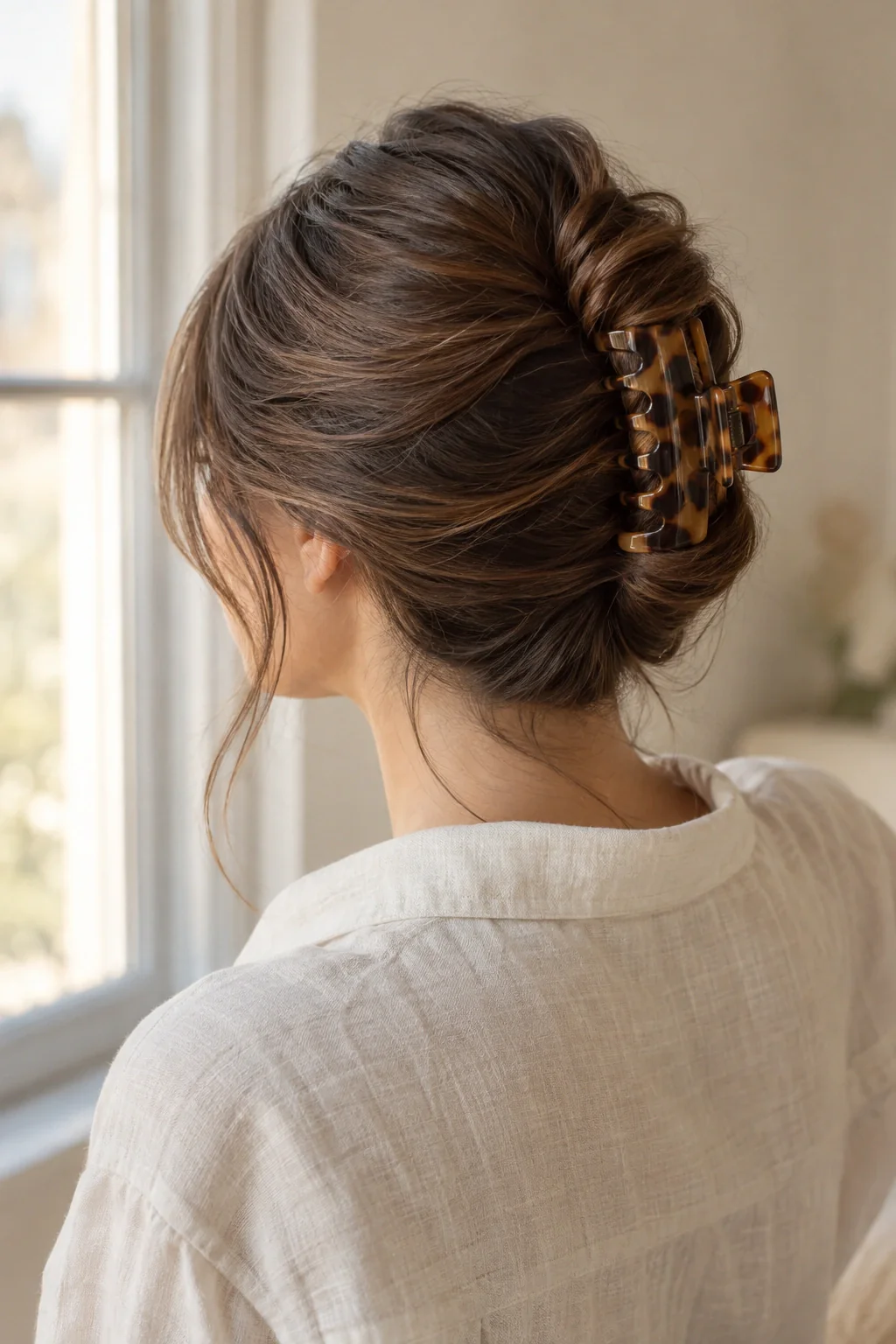
Budget for the changing room you actually have
Consider the facilities realistically. Are there showers, mirrors, sockets, shared dryers or only a basic place to change? Do you need to queue? Can you comfortably carry your usual tools? A hairstyle plan that assumes a private bathroom with unlimited time will be frustrating in a busy public changing room. Choose a post-swim look you can manage with the space available, and leave additional styling for home if that is the more practical option.
Bring a towel or wrap suited to your usual routine and handle the hair gently. The AAD recommends absorbing water rather than rubbing hair vigorously; its guidance also distinguishes detangling approaches for straight and textured hair. Follow the approach appropriate to your hair instead of treating one quick technique as universal. You do not have to finish an entire salon-style routine in the changing room to leave looking intentional. Comfortable, cared-for hair in a simple shape is a valid outcome.
If you swim before work or an appointment, rehearse the complete transition on a less pressured day. Time the actual sequence, including getting your belongings together. This is not about racing through care. It is about knowing whether the plan fits your schedule. If the interval is too short, choose a later appointment, a simpler post-swim look or another session time. A realistic plan is more dependable than relying on everything being unusually quiet at the pool.
Choose a post-swim shape that welcomes change
Select a hairstyle based on what your hair usually does after your swim routine. If it settles into texture you enjoy, a soft loose arrangement or a small front gathering may be enough. If you prefer to keep the lengths contained while they settle, choose a comfortable style you already understand. Avoid demanding that the hair imitate a dry, freshly styled reference when you have not allowed the time or facilities required to achieve it.
For short hair, a clear direction at the front can make the whole cut feel deliberate. For medium lengths, a partial gathering may be more realistic than trying to contain every layer. For long hair, think about where the lengths will sit against the clothes you put on afterward. The relevant question is whether the arrangement remains comfortable and manageable in its actual condition, not whether it resembles the style you wore on the journey to the pool.
Leave room for the shape to evolve. You might depart with the front gently arranged away from the face and choose a final part later when the hair has settled. You might start with a loose gathering and release it at home. Treat that transition as part of the plan rather than as unfinished grooming. A swimming day contains different stages, and the hair can look appropriate at each stage without staying visually identical from morning to evening.
Match the next outfit to the practical reset
The clothes you put on after swimming can make the hair transition easier. A top with a manageable opening is simpler than one that requires protecting a delicate arrangement as it passes over your head. A high collar may meet damp ends or push against a gathering, so check the combination you intend to wear. Choose for comfort and the day's setting rather than assuming the hairstyle alone must do all the work of making you feel dressed.
If lunch or errands follow the pool, a simple outfit detail can carry the mood while the hair stays uncomplicated. Visible earrings, a chosen neckline or a favorite jacket may be enough. This is an editorial styling option, not a requirement to distract from your hair. The aim is to let the whole outfit feel considered without forcing a lengthy restyle into a short changing-room window. Hair can remain relaxed while the ensemble still feels like you.
For a more formal commitment, plan a separate preparation interval. Swimming and a polished evening look can belong to the same day, but they need not be compressed into one hurried transition. Decide when and where you will complete the final styling, and pack only what is needed for the stages away from home. Giving the evening its own time is often easier than trying to preserve a morning finish through water, a cap and a changing room.
Build two kits for two different kinds of swim day
A regular lane session and a leisurely weekend visit may need different bags. For the regular session, keep the reliable basics ready: required equipment, care items, a towel, a familiar fastener and clothing that works with the simple reset. Replace or wash items according to their instructions and your routine, so the bag is genuinely ready next time. A repeatable kit removes small decisions that otherwise make a short swim feel like a large production.
For a longer leisure day, add only the items connected to your actual plans. If you will dress for dinner afterward, keep the evening accessory dry and separate. If you will travel home immediately, you may not need it at all. Avoid packing multiple tools because they create a reassuring sense of possibility. A smaller kit built around one tested method is easier to use than a heavy bag of alternatives you have never tried in the available space.
Review the kit after a real outing. Which item did you use, which was missing, and which remained untouched? Adjust the contents accordingly. This feedback is more useful than copying another swimmer's product list, because the facilities and your next destination may differ. The practical goal is a bag that supports your own care and style sequence. Once that works, the hairstyle becomes one manageable step in a day you already know how to navigate.
Fix the bottleneck in your pool-to-next-stop routine
If getting out of the pool always feels rushed, identify where the time goes. A shower queue, searching for a dry tie and trying to create a hairstyle that needs a home bathroom are different problems. Choose the change that addresses the particular bottleneck.
Keep care and decoration in separate parts of the bag. Pack the products your routine requires according to venue rules, and keep the afterward fastener dry and easy to find. Put on the next top before finishing a delicate hair detail when that makes dressing easier. For a formal commitment, allow a separate styling interval instead of expecting a casual pool reset to deliver the same finish. The choices below make the transition more concrete.
Your questions, considered.
Will a swim cap keep my hairstyle unchanged?
Do not build your plan around that assumption. Use the cap according to its instructions and the pool’s rules, then plan for care and a reset afterward. Its fit and your swimming activity matter more than preserving a decorative arrangement. A simple, comfortable style underneath is usually easier to manage than a delicate finished look.
What if I have curly or coily hair?
Use your established care routine and equipment that accommodates your hair comfortably. Plan the post-swim shape around the texture you actually have, with time for the handling it needs. General advice cannot replace guidance tailored to your current hair, services and products. A familiar front gathering or relaxed contained shape may be a useful styling option.
Can I swim before an event without a full restyle?
That depends on the event, your hair routine and the facilities available. Rehearse the transition first. A relaxed lunch may suit a simple reset; a detailed formal hairstyle may need a separate preparation interval. Set the schedule honestly instead of relying on a cap to preserve a style it was not designed to guarantee.
Sources & what they support
The notes below explain the scope of each source. Hairstyle selections, outfit combinations and comparison exercises are HairSparks’s editorial suggestions; the links do not imply endorsement.
- American Academy of Dermatology: swimmer care and gentle hair handling ↗Care background on gentle handling and avoiding repeated pulling. Used for comfort and fastening guidance, without diagnosing an individual hair or scalp concern.
- American Academy of Dermatology: summer and swimming hair care ↗Dermatologist guidance for hair around summer and swimming. The styling choices in this guide do not claim to make hair waterproof or prevent all pool-related damage.
HairSparks and Hair Muse share the same publisher. App mentions are promotional. Read our editorial policy.