
Place the hair around the velvet garment’s neckline and shoulders. Use a compact twist to clear a high collar, a side tuck beside lapels, or loose texture with an open neck. Test one accessory after the shape works with the outfit.
Choose a hairstyle for the velvet piece you own
A velvet blazer frames the hair differently from a high-neck dress. Put on the complete outfit and identify the nearest detail: lapels, a raised collar, an open back or a simple neckline. Start with a hairstyle that reveals that feature. If the velvet is only in a skirt, use the top’s neckline to place the hair.
You can keep your current texture in each option. Full curls can sit above a simple neckline, a straight bob can make a clear edge beside lapels, and longer braids or locs can be directed behind one shoulder. Try the shape with your hands before reaching for a fastening. This lets you compare an open neck with a softer overlap, without committing to an elaborate style merely because the garment is reserved for evenings.
Understand the surface without overexplaining it
Dress and Textile Specialists' guide, produced with the V&A, describes velvet as a fabric with a dense pile. That factual detail helps explain why texture is such a noticeable part of the garment, but it does not prescribe a hairstyle. Look at your own piece as you turn under ordinary light. Notice whether you read it as soft, reflective, deeply colored or visibly patterned. Use those observations as the background for the hair comparison.
The styling suggestions here are editorial choices, not textile-care advice or scientific rules about which finishes belong together. Different velvet garments can have different fibers, construction and surface effects, so follow the garment's own care information for clothing questions. For the outfit, compare a quieter hair outline with a more expressive one. You may prefer the fabric to carry most of the texture, or you may enjoy several textures together. Both possibilities deserve a practical test before you add more styling steps.
Decide whether the hair repeats softness or adds a line
To repeat a soft feeling, begin with your natural movement and let the hair sit loosely around the garment. Keep the front arranged enough that you can see the neckline you enjoy. To add a clearer line, gather the hair comfortably, expose an ear or make the part more visible. The distinction is about the overall shape, not about whether the hair is straight, curly, coily, braided or loc'd. Each texture can be arranged with different degrees of openness and definition.
Compare the options with the same jewelry and collar position. If you change several elements simultaneously, the most successful version may be difficult to repeat. Name the relationship you prefer: full curls with a simple velvet neckline, compact hair beside a broad lapel, or loose movement with a narrow dress. A short phrase helps you preserve the idea later, even when the hair settles or the exact arrangement changes during an evening of sitting, walking and talking.
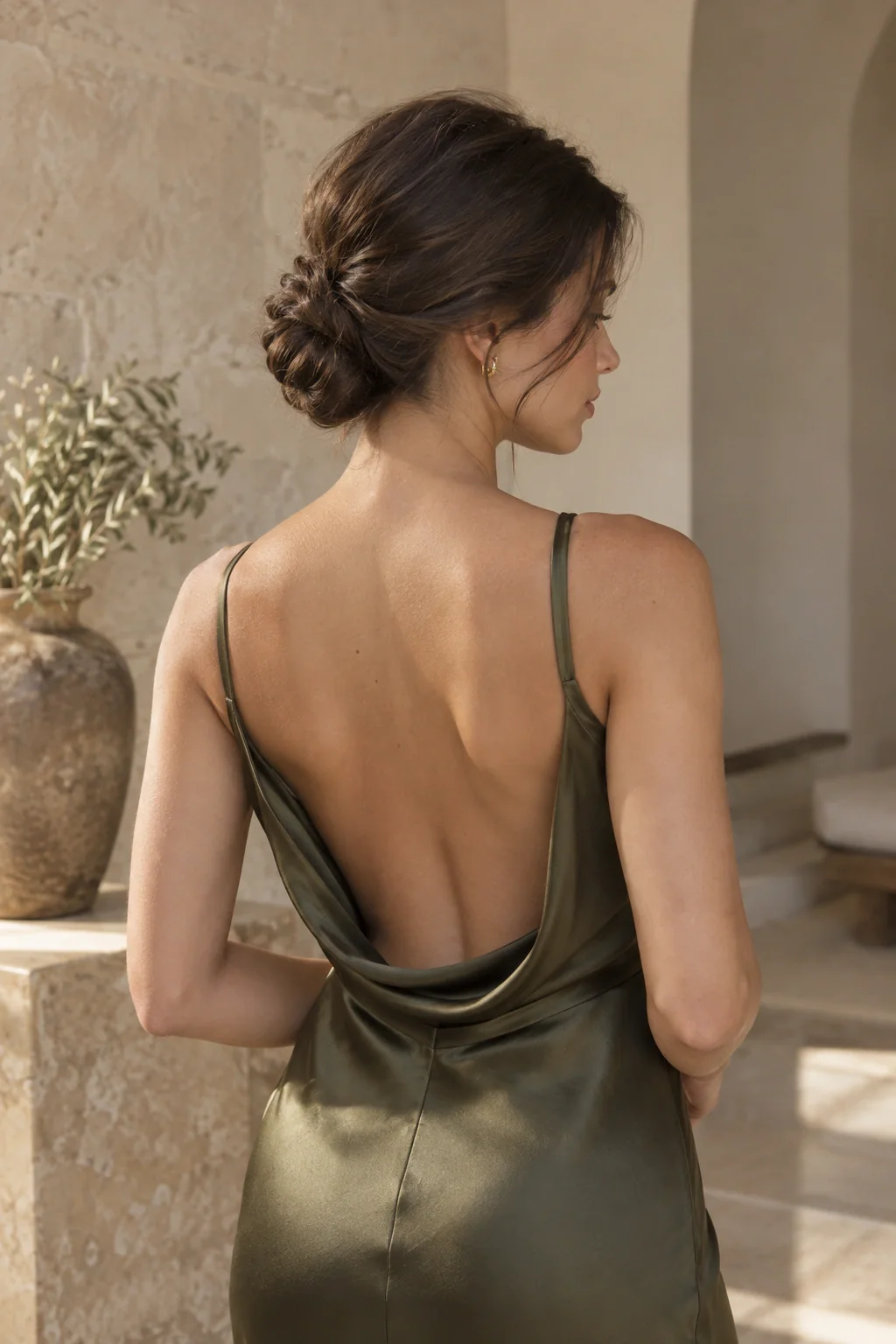
Give a high velvet neckline room without requiring an updo
With a high neckline, try lifting the hair away with your hands and compare the exposed space with the loose version. You may like a clear gap, a partial opening at one side or the continuous outline of hair over fabric. An updo is one option, but a half-up arrangement or front tuck can reveal enough of the garment while preserving the loose shape you enjoy. Short hair may already create that space without any additional fastening.
Check the back of the neckline as well as the front. A low gathering can sit against a raised collar or decorative closure, which may become uncomfortable when you turn. Move the anchor until the garment and hair have enough room. If only a small front section hides the detail you want to show, address that section alone. The useful question is how much of the neckline you want visible, not whether every high-neck outfit should be paired with hair entirely off the shoulders.
Treat a velvet blazer differently from a velvet dress
A velvet blazer often introduces lapels, shoulder structure and an open front. Hair can echo those lines with a clear part or soften them with movement. Try the jacket over the actual top you will wear, because the visible neckline beneath it changes the frame. With a T-shirt, a familiar loose shape may keep the combination relaxed. With a more open evening top, an exposed side can make the outfit feel different without replacing the hairstyle completely.
For a dress, look at the feature that gives it its identity: neckline, back, sleeve or overall drape. Place the hair so that feature remains as visible as you want it to be. If the dress is simple and the fabric is the main event, a restrained accessory may be enough. If you want an expressive combination, try a more generous hair shape rather than adding several small ornaments. One clear choice is easier to recognize and repeat than many unrelated finishing details.
Compare color in the clothes you will actually wear
A dark velvet outfit can create a continuous background behind dark hair, while a lighter or brighter piece may create a more obvious separation. You do not need to change hair color to solve that visual relationship. Expose a little neckline, move the lengths behind a shoulder or choose an accessory that creates the amount of contrast you enjoy. Check the effect in both the preparation light and a light similar to the destination when possible.
If you are exploring a future hair color direction, keep the velvet outfit as one reference among the clothes you wear regularly. A shade should not have to work only with one special garment. Use previews to compare broad possibilities, then discuss any real color service with a colorist. For this outfit today, placement and accessories are the immediate tools available. Keep the experiment focused so that an evening styling decision does not turn into an unnecessary commitment to a lasting change.
Choose metal, ribbon or no accessory at all
An accessory can either repeat the richness of the garment or provide a different surface. A small metal clip may make a clear mark; a fabric ribbon can feel softer; a quiet functional fastening can leave the velvet as the most noticeable texture. Try each relevant option in the actual hair position. A ribbon held beside the dress is not the same as a ribbon tied at the back, where only part of it may be visible.
Check whether the accessory repeats something you already wear, such as an earring or bag clasp. Repetition can connect the outfit, but exact matching is unnecessary. If the combination feels crowded, remove one nearby detail before abandoning the hair idea. You can also choose no visible hair accessory. A deliberate part, an open temple or the shape of natural curls may supply all the finishing detail you want. The absence of ornament can be a positive styling decision rather than an unfinished stage.
Build an evening version around comfort
Wear the hairstyle for a short trial while doing ordinary things: sitting against a chair, looking down, reaching for a bag and turning to speak. Velvet may be part of an outfit reserved for occasions, which can make it tempting to choose a more complicated hairstyle than you normally wear. Use the trial to check whether that extra complexity adds something you enjoy. If it mainly adds fastening points to monitor, simplify the construction while keeping the intended silhouette.
You can make loose hair feel considered by holding the front and leaving the back mobile. You can make gathered hair feel softer by allowing a comfortable edge around the face rather than pulling every section into the anchor. Choose the arrangement that remains pleasant over time. A reference photograph captures one moment, while an evening includes movement and different viewing angles. The style should still feel like yours after the first posed photograph has been taken.
Prepare a coat-friendly arrival plan
Evening outerwear may cover the neckline and press against a hair fastening. Test the coat with the outfit, then decide which part of the hairstyle you will adjust after removing it. A decorative clip can sometimes be added at the destination; a temporary gathering can be released; loose lengths can be moved back into the planned position. Keep the arrival change to one clear action when possible, especially if you will have limited mirror access.
Put the needed accessory in a small, easy-to-find place rather than loose among other belongings. If another person helps you with the coat, tell them where the hair fastening sits so the collar does not catch it. Do not add more hold everywhere simply because the journey exists. A small transition plan often protects the overall idea more effectively than trying to make the hairstyle remain identical through every layer of clothing and every stage of the evening.
Choose one finish that stays visible in the whole outfit
An accessory works best when its placement makes sense before its decoration is added. Hold the section with a suitable plain fastening first, then compare a metal clip, ribbon or no visible ornament. A ribbon at the back contributes little to the front view; an earring may give you the detail you wanted more directly.
Look at the outfit from a few steps away and check the side view. If the velvet and hair already create a rich combination, a clear part or exposed ear may finish it. If you want more contrast, try one small bright surface. Keep the accessory clear of the collar and any outerwear. Test the style while seated and turning your head.
Your questions, considered.
Does velvet require a vintage hairstyle?
No. A vintage reference is an optional creative direction. A familiar bob, natural curls, braids, locs, loose hair or a simple gathered shape can all work with velvet. Start with the garment’s neckline and outline, then decide whether you want continuity or contrast. The fabric alone does not determine the period, level of formality or texture of the hairstyle.
Can I combine velvet clothes with a velvet hair ribbon?
Yes, if you enjoy the repeated texture. Test the ribbon in its actual position and check how much of it remains visible. You can use a related color or a deliberate contrast. If the combination feels too detailed to you, first simplify another nearby accessory or reduce the visible ribbon. A repeated material is a choice to evaluate, not an automatic styling error.
What works with a high-neck velvet dress when I dislike updos?
Try a half-up arrangement, one open side or front sections held back while the lengths stay loose. Compare how much neckline each version reveals. You may prefer some overlap rather than a completely clear collar. Check the back fastening and comfort as well. The goal is the amount of visible space you enjoy, not a requirement to remove all hair from the shoulders.
Should I make my hair shinier to match the fabric?
Only if you like that finish and already have a comfortable way to create it. First compare the garment with your hair as it is. A difference in surface can be attractive, and shape or placement may provide enough definition. There is no need to add an unfamiliar product merely because the outfit has a noticeable sheen. Choose the relationship that suits the complete look.
Sources & what they support
The notes below explain the scope of each source. Hairstyle selections, outfit combinations and comparison exercises are HairSparks’s editorial suggestions; the links do not imply endorsement.
- Dress and Textile Specialists with the V&A: Identifying Woven Textiles, velvet section ↗Textile background on velvet’s pile and surface. Hair-and-velvet pairings in this guide are our editorial interpretation, not rules from the textile reference.
HairSparks and Hair Muse share the same publisher. App mentions are promotional. Read our editorial policy.