
Keep a preview when you can name the hair feature you prefer: a chin-length edge, an open forehead or a darker overall shade. If the appeal depends on a changed face or implausible hair, discard that comparison and try a clearer direction.
Compare AI hairstyle previews in three passes
Start with the original photograph beside the result, at a similar size.
Then read the hair as separate choices. A preview may combine a shorter cut, warmer color and glossy finish; liking the package does not mean you want all three. Write down the parts you would keep. A note such as “collarbone length, current color, no fringe” is already a more precise outcome than saving an unlabeled favorite.
Inspect the boundaries and key details
Look around the hairline, ears, neck, shoulders, and the ends. These areas help you understand where the proposed hairstyle begins and ends.
Check whether the image shows the information relevant to your question. A front view may help you explore a fringe or outline around the face, but it does not fully describe the back. A long style may obscure the neckline entirely. Write down what remains unseen rather than assuming the missing areas will match your expectations. A useful reference can be incomplete, as long as you do not confuse its visible portion with a complete haircut plan.
Separate shape, color, and finish
Evaluate one dimension at a time. First consider the overall outline and length. Then consider the front placement or fringe. Finally look at color and surface finish. If all of these change together, your enthusiasm may come mainly from one element. You might like the darker color while feeling neutral about the shorter cut, or enjoy the movement without wanting the generated fringe.
Make a note for each dimension using ordinary language. “Keep the outline idea; investigate a longer front; color undecided” is a perfectly useful result. You do not have to accept the generated image as an indivisible package. Breaking it into parts gives you more control over the actual decision and makes it easier to combine the strongest feature with real photographic references or a stylist's proposal.
Question density and movement
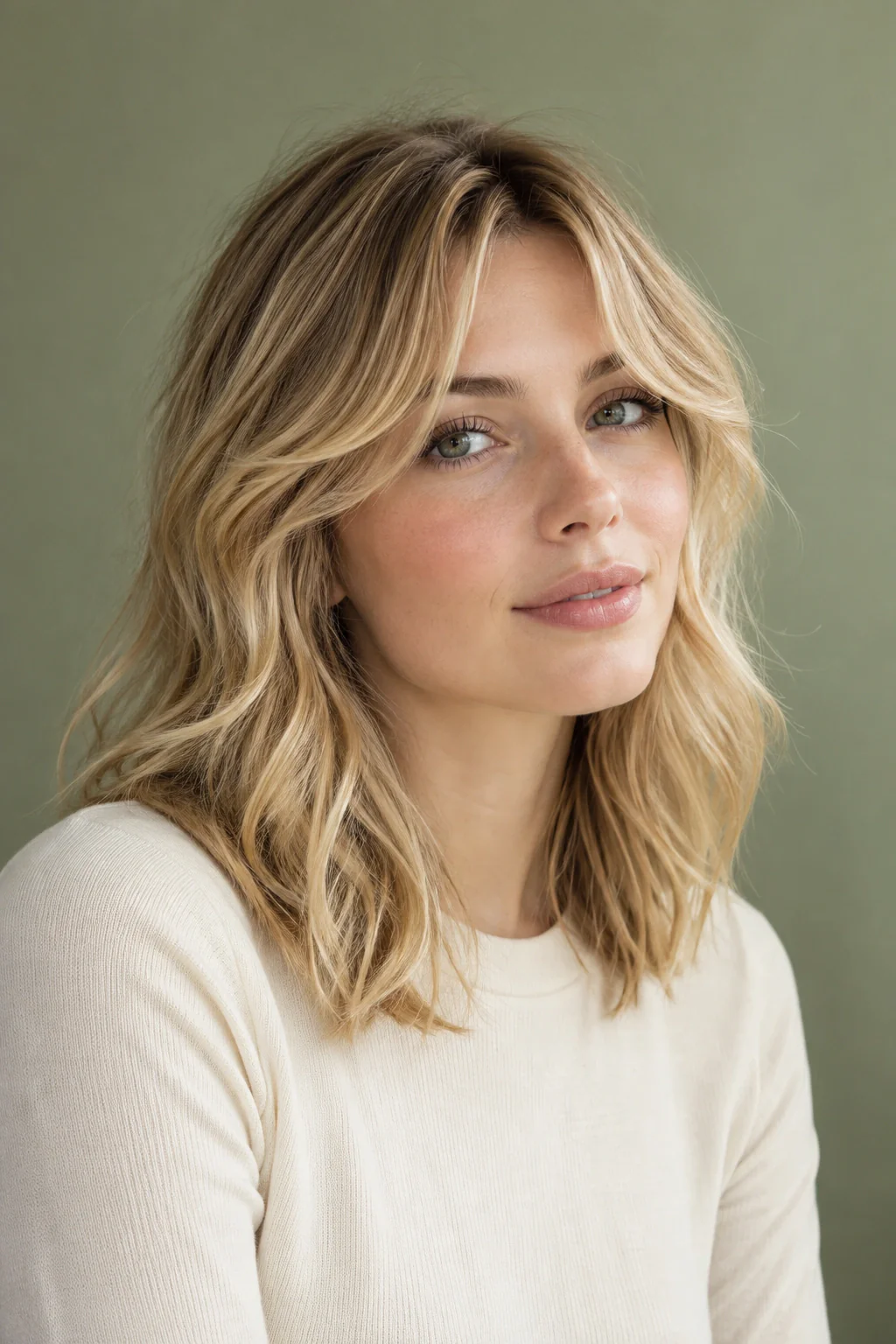
A preview may show a volume, distribution, or surface finish that you like. Ask what the look would require from your own texture, length, density, and styling routine. These are practical questions for a professional who can assess your hair directly.
Pay particular attention to details that seem to solve every inconvenience at once: a fringe that falls perfectly, ends that always curve in one direction, or volume that stays exactly where you want it. You can use these features to describe the desired impression, but leave their everyday behavior open for discussion. A real hairstyle has to work while you move, wear clothes, and go through your routine.
Compare two options that answer the same question
Choose the question before the next comparison. For length, compare a chin-length bob with a collarbone cut while keeping the color direction similar. For the front, compare an open forehead with a fringe at roughly the same overall length. For color, keep the hairstyle as similar as the tool allows. You can still learn from imperfect matches, but name any extra changes that could be influencing the choice.
Give each option a keep note and an unresolved note. A bob might earn “keep the space above the collar; ask about the everyday finish.” Those notes prevent a beautiful surface from quietly winning over the feature you initially cared about. If neither option answers the question, change the question or stop the comparison.
Finish with a two-image shortlist, not a ranking of your face. Bring the selected idea, the original photo and a real haircut photograph to a stylist. Ask which visible elements can translate to your length, texture and routine. The strongest outcome is a specific preference with an honest unknown attached; another twenty images are unnecessary when the next missing answer requires someone to assess your hair directly.
Understand the app relationship
HairSparks and Hair Muse are from the same publisher. That relationship is worth knowing when you see an app invitation here.
Check the current listing and the app's own prompts for availability, and photo requirements before using it. Do not infer privacy or storage practices from how simple the upload screen looks; consult the current policy when those details matter to your decision. You can also do useful planning without an app by comparing labeled references and writing down your priorities. The purpose of any tool is to make your own preferences clearer, not to decide them for you.
Convert the image into questions for a stylist
Bring the original photo, your preferred preview, and one or two real hair references. Explain which feature you want to explore, then ask how it could translate to your starting hair and normal routine. Useful questions include where the shortest pieces would sit, what the everyday finish would look like, and which parts of the reference depend on styling rather than cutting.
Write down the adapted plan after the conversation. It may preserve the mood while changing the length, fringe, or color placement. That is a successful use of the preview: it helped you begin a more specific discussion. The final reference should be the agreed, workable plan rather than an insistence that reality reproduce every pixel. Keep the image as inspiration and let professional assessment, your preferences, and your practical requirements determine what happens next.
Annotate the result
Open a preview beside the original photograph. A preference might be liking the shorter outline.
A preference can enter the moodboard; an uncertainty can become a question for a stylist.
Compare the decision with and without the preview
Write your current hairstyle preference before opening another result. Then review the preview and note exactly what, if anything, changed your view. Perhaps the open neckline became easier to imagine, or a fringe looked more prominent than expected. The exercise keeps attention on the question the preview was intended to support.
Finish by asking what information is still missing. Add those questions to a practical trial or professional conversation. Save the preview with a caption explaining the feature you mean.
Your questions, considered.
Can I show a generated hairstyle to my hairdresser?
Yes. Explain the specific features you like. Add real hair references and ask which parts can be adapted to your starting hair.
How can I compare bangs and length separately?
Keep the overall length similar while comparing an open forehead, curtain bangs and a fuller fringe. Then hold your preferred front shape in mind while comparing two lengths. Record one clear observation for each picture: how much face stays open, where the lower edge sits, or where the fullest area falls.
What belongs in the note beside my favorite hairstyle?
Name the feature that made the difference: a jaw-length edge, a parted front, more room around the neck, or warmth through the lower lengths. Add the element you want to keep from your current hair, then give the note a clear next action, such as comparing a second fringe or discussing the neckline at your appointment.
Sources & what they support
The notes below explain the scope of each source. Hairstyle selections, outfit combinations and comparison exercises are HairSparks’s editorial suggestions; the links do not imply endorsement.
- Hair Muse AI on the App Store ↗Official listing for Hair Muse availability and described features.
- L’Oréal Professionnel: preparing for a hair consultation ↗Consultation context: bringing pictures, explaining styling habits and discussing maintenance with a professional. It supports the consultation advice, not our aesthetic judgments about individual looks.
HairSparks and Hair Muse share the same publisher. App mentions are promotional. Read our editorial policy.