
Choose the hair placement after setting the collar. Try a low ponytail for a clear neckline, a side tuck for a bob, or loose lengths behind one shoulder. Keep the fastening away from the back collar and check the shirt while seated.
Choose between a ponytail, side tuck and loose back
Button the shirt, roll the sleeves if you wish and put on the jewelry you plan to wear. The collar is your starting point: look at how high it sits at the back and how much space it leaves at the front. Then compare these placements using your usual texture.
A low ponytail gives the front of the shirt more space but may meet the back collar. Loose hair preserves movement but needs a place to fall when you lean forward. A side tuck changes less and suits a bob whose shorter layers cannot reach the back. With curls, coils, braids or locs, move comfortable groups of hair and keep the volume you like. The shirt’s fluid surface can sit beside any of these textures; the relevant choice is where the hair rests.
Compare continuity with contrast
To continue the shirt's fluid feeling, try a loose hair shape with movement around the shoulders. It can be straight, wavy, curly or coily; continuity comes from the overall ease rather than a prescribed texture. To create contrast, gather the hair into a clearer outline or expose one side of the neckline. Compare the two with the same collar position. If you change the shirt and hair at once, it becomes harder to tell which choice produced the effect you liked.
Use a short description for each version. Loose shirt, loose hair might feel calm and unforced. Fluid shirt, compact hair could feel more deliberate. Open collar, visible curls may give you the energy you wanted without any extra styling. These are editorial interpretations, not rules about what a fabric means. Choose the combination that matches your intention and is practical for your day, including the amount of time you want to spend arranging the hair again later.
Work around the collar without making it rigid
Let the collar settle normally after you move your shoulders. Some shirts hold an open shape; others shift or fold softly. Place the hair around that behavior rather than repeatedly flattening the collar into an idealized position. If loose lengths keep slipping inside the shirt, decide whether you mind the overlap. A partly tucked section can look relaxed, but it may feel distracting if you keep reaching to release it throughout the day.
For a clearer neckline, move the lengths behind one shoulder or secure the front sections while leaving the back loose. A low gathering is another option if it sits comfortably above the collar. Try the shirt while seated, since the front may drape differently at a desk or table. The goal is a hair-and-collar arrangement that remains recognizable in ordinary positions, not one that works only when you stand tall and hold the fabric in place.
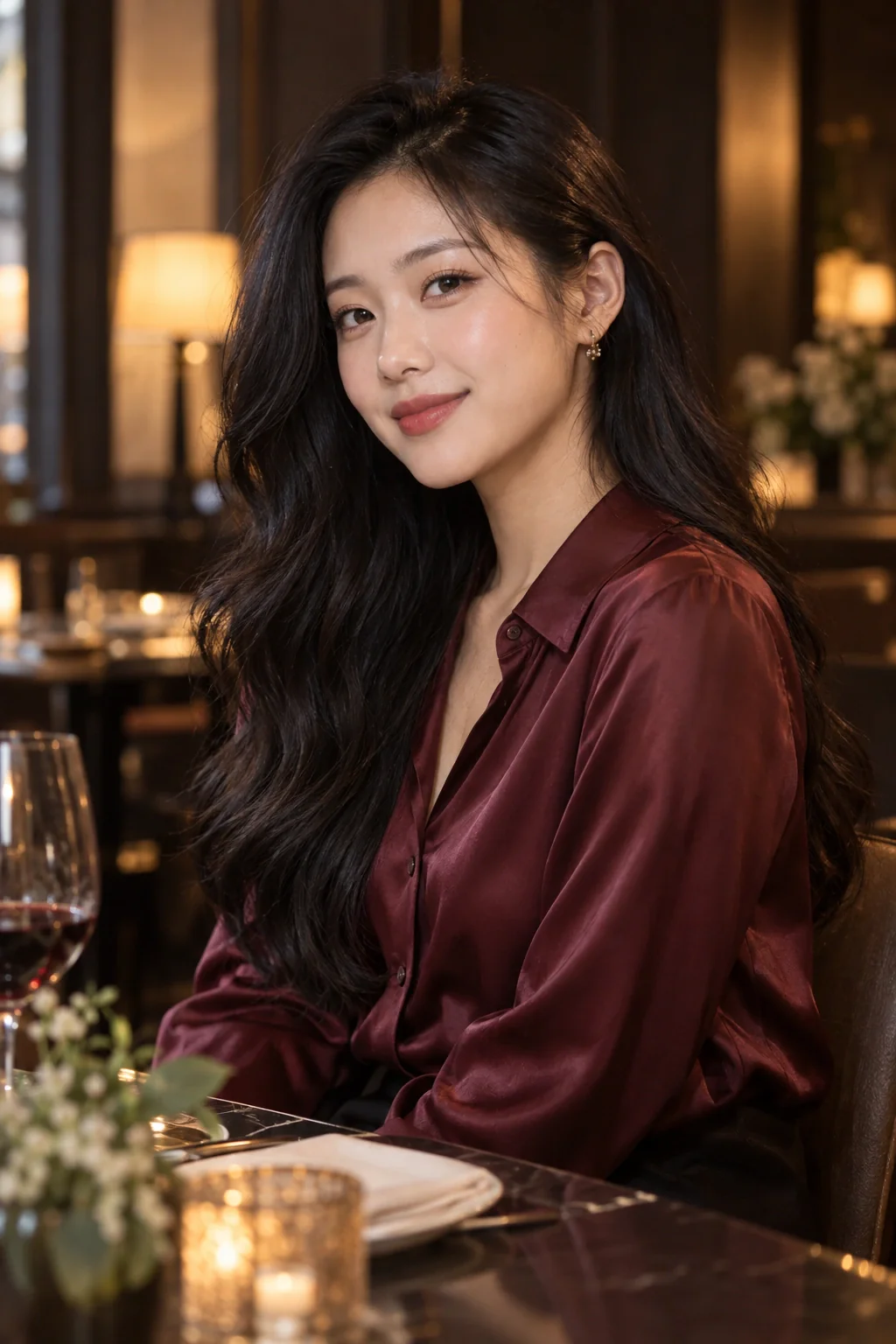
Choose how much sheen you want in the whole outfit
A lustrous shirt can make neighboring finishes more noticeable. A quiet hair surface may create a soft contrast; a more defined finish may echo the fabric. You can assess that relationship without adding a new product. First look at the hair as it is, in the light where you will wear the outfit. Then adjust placement, the part or an accessory. Sometimes those changes provide enough definition, and an attempt to make every surface equally shiny only complicates the plan.
Keep claims about the fabric separate from what you see. Shirts described as silky can be made from different materials and have different textures, so follow the garment's own care information for clothing questions. This guide uses silk-shirt as an outfit reference, not as a claim that every fluid fabric behaves identically. The practical styling question is simply whether you enjoy the visible contrast between your actual shirt and your actual hair in the setting you have planned.
Give jewelry a clear place near the neckline
Put on the necklace or earrings you most want to wear before making the final hair adjustment. With an open collar, a necklace may sit inside a small framed area. Hair brought forward can partly cover it; hair moved back can make it more prominent. Neither is automatically wrong. Decide whether the jewelry should be a central feature or a quieter detail that appears as you move, and arrange the hair accordingly.
For larger earrings, check whether the collar brushes them when you turn. If both fabric and hair occupy the same space, move one element rather than tightening the entire hairstyle. You might open one side, choose a smaller earring or alter the collar position. A single visible earring can also be an intentional choice. Photograph the whole upper outfit to judge the relationship, because a close view of the jewelry alone will not show how the hair and shirt frame it.
Make a gathered style feel like part of the outfit
A low ponytail, loose knot or comfortable clip arrangement can give a fluid shirt a defined counterpoint. Begin by gathering the hair with your hand and moving the proposed anchor until it clears the collar. Leave the front as soft or as open as you prefer. Do not assume that gathered hair has to mean a tightly pulled surface. The garment can feel polished while the hairstyle retains movement and a few deliberate edges.
The American Academy of Dermatology advises avoiding repeated hairstyles that pull tightly. Apply that narrow comfort principle when testing your gathering point: if the style feels strained, release and change the arrangement. A different accessory, a smaller gathered section or a slightly higher placement may solve the problem. Once the anchor is comfortable, decide whether to show it or keep it quiet. A visible tie or clip can connect with the outfit, but it should not be needed to disguise an uncomfortable construction.
Use loose hair without losing the shirt's shape
For a loose version, decide how much of the front panel should remain visible. Try all the lengths behind the shoulders, one side forward and both sides forward. The difference can be substantial even though the hair itself has not been restyled. With a printed or brightly colored shirt, you might want more fabric visible. With a plain shirt, the loose hair may be the detail that gives the outfit its character.
Hold only the sections that interfere with the view you want. An ear tuck, small twist or narrow half-up section can reveal the collar while preserving a loose back. For a bob, adjust the front direction rather than forcing all the ends behind the shoulders. For curls, coils, braids or locs, work with comfortable groups and their existing shape. The point is to distribute the hair around the garment, not to make every texture behave like a smooth, long reference photograph.
Build a work version and a dinner version
For a daytime shirt-and-trouser outfit, choose the arrangement you can wear while looking down, using a computer or carrying a bag. That may be a partial gathering or simply an open front. Keep the accessories easy to remove and replace if you use headphones. The shirt can provide much of the outfit's visual interest, allowing the hair to stay familiar. Write down the practical reason for the choice so you can repeat it on a busy morning.
For dinner, retain the same base and change one visible relationship. Open the collar slightly if that suits the outfit, reveal an earring, move the lengths to one side or replace a functional clip with a decorative one. Avoid making the evening version depend on starting with freshly styled hair. A useful transition takes the day's actual shape as its starting point. Try the adjustment once at home, using the same mirror access and approximate time you expect to have later.
Check the layers that share the shirt's neckline
A blazer, cardigan or coat may cover part of the shirt and change where the hair can sit. Put that layer on during the test. A long loose section can fall inside a lapel, while a low gathering can meet the back collar. If the outer layer will come off at your destination, decide which version matters most and plan a small arrival adjustment. You do not have to make one exact arrangement serve every moment of the journey.
Test your bag as well, particularly if you carry it on the same shoulder as a loose side section. Move the strap into place before arranging the lengths, then remove and replace it once. If the hair repeatedly becomes trapped, use a different placement for travel. This is a practical outfit issue, not a reason to abandon loose hair entirely. A temporary gathering or a single section moved behind the shoulder can keep the destination style available without requiring a full restyle.
Troubleshoot the collar, necklace and fastening
A silk shirt can shift at the neckline when you sit or reach, changing where loose hair lands. Try the outfit seated before fixing the style in place. If the ends slip inside the opening, move the affected side behind the shoulder or use a small temple twist to keep the front back.
Check jewelry separately. A necklace can look clear while standing and disappear beneath hair when you lean forward. A long earring may touch the collar even after you tuck the hair. Decide which detail matters more before changing the hairstyle again. For the evening, the easiest update may be opening one ear or changing a visible clip. Make the final adjustment after removing any jacket that covers the shirt.
Your questions, considered.
Does a silk shirt need sleek hair?
No. Natural texture, a soft loose shape or a compact gathering can all work with a fluid shirt. Decide whether you want to continue the softness of the garment or create a clearer contrast. Try the shirt with your familiar hair first. A change in placement or an open side may create the effect you want without changing texture or adding a glossy finish.
How do I stop loose hair from disappearing inside the collar?
Let the collar settle, then place the hair deliberately in front of or behind it. If only a front section keeps slipping inside, hold that section with a small comfortable anchor. Test the arrangement while seated and looking down. A low gathering is another option, but check that its fastening does not sit directly against the raised back of the collar.
Can I use the same idea with satin or a silky-looking blouse?
Yes, as a visual styling exercise. Look at the actual drape, neckline and surface of the garment rather than assuming that all fluid fabrics are identical. Follow its care label for clothing care. For the hairstyle, compare movement and a clearer outline with the piece you own, and keep the combination that feels comfortable in the setting where you will wear it.
What is a quick evening change after wearing the shirt all day?
Keep the established hair base and alter one detail: reveal an ear, move the lengths to one side or exchange a functional fastening for a visible accessory. Try it with the evening jewelry and collar position. A transition built around the hair you already have is more repeatable than a plan that depends on recreating a fresh morning finish.
Sources & what they support
The notes below explain the scope of each source. Hairstyle selections, outfit combinations and comparison exercises are HairSparks’s editorial suggestions; the links do not imply endorsement.
- American Academy of Dermatology: avoid hairstyles that pull tightly ↗Care guidance on repeated tension from tight hairstyles. Supports the advice to change a style that pulls or feels painful; it does not establish the hold of a particular fastening.
HairSparks and Hair Muse share the same publisher. App mentions are promotional. Read our editorial policy.