
Keep the front clear enough to look down and up comfortably. Use a tuck or temple twist for loose hair, or keep a familiar ponytail and change its visible detail. Test the coat, glasses and bag before leaving for the gallery.
Choose one of four easy evening starting points
An evening at a gallery often means moving between close reading, looking across a room and talking to someone beside you. Pick a hairstyle whose front you can leave alone through those movements. A familiar loose style can work with one small anchor; a ponytail can become an evening look through a different earring or visible fastening.
Choose the version your length can make comfortably. A short fringe can stay separate from a tucked side, and a bob does not need to imitate a long ponytail. With curls or coils, hold the section that falls forward while leaving the main texture free. Put glasses on before placing a pin near the temple. If the venue or invitation has practical guidance, let that shape the plan alongside your own preferences.
Start with an outfit detail worth echoing
Put on the main outfit and identify one feature you would like the hair to relate to. It might be an asymmetric neckline, a bright shoe, a sculptural earring or the clean outline of a dark shirt. The hair can echo a line or introduce a different texture without matching every color. If the clothes are already expressive, a familiar hair shape may be the detail that keeps the whole combination comfortable and recognizably yours.
Try describing the relationship rather than labeling the look. A loose shape beside a sharp collar is clearer than creative hair. An exposed ear next to a metal earring is more repeatable than gallery chic. These descriptions also make it easier to decide what to leave out. If the outfit's unusual seam is the feature you love, you may not need an additional decorative clip. If the clothes are quiet, the clip can become the evening's deliberate accent.
Give a familiar loose style one clear change
Keep your usual texture and change only the front arrangement. Try an ear tuck, a small side twist or a slightly different part. This creates a visible decision without making the whole evening depend on an unfamiliar styling technique. Look down as though reading a label, then turn toward someone beside you. If a section falls into your face, hold that section specifically instead of gathering all the hair just because one piece needs help.
The ghd pinned-back tutorial uses temple twists while leaving the lengths loose. For this occasion, that basic arrangement can be simplified around the texture already present. Secure a comfortable section where it reaches naturally, and leave the back unchanged. The resulting style can feel deliberate without appearing overly fixed. If you have short hair, use the same principle at a smaller scale: a changed front direction or a quiet clip can provide the single difference you want.
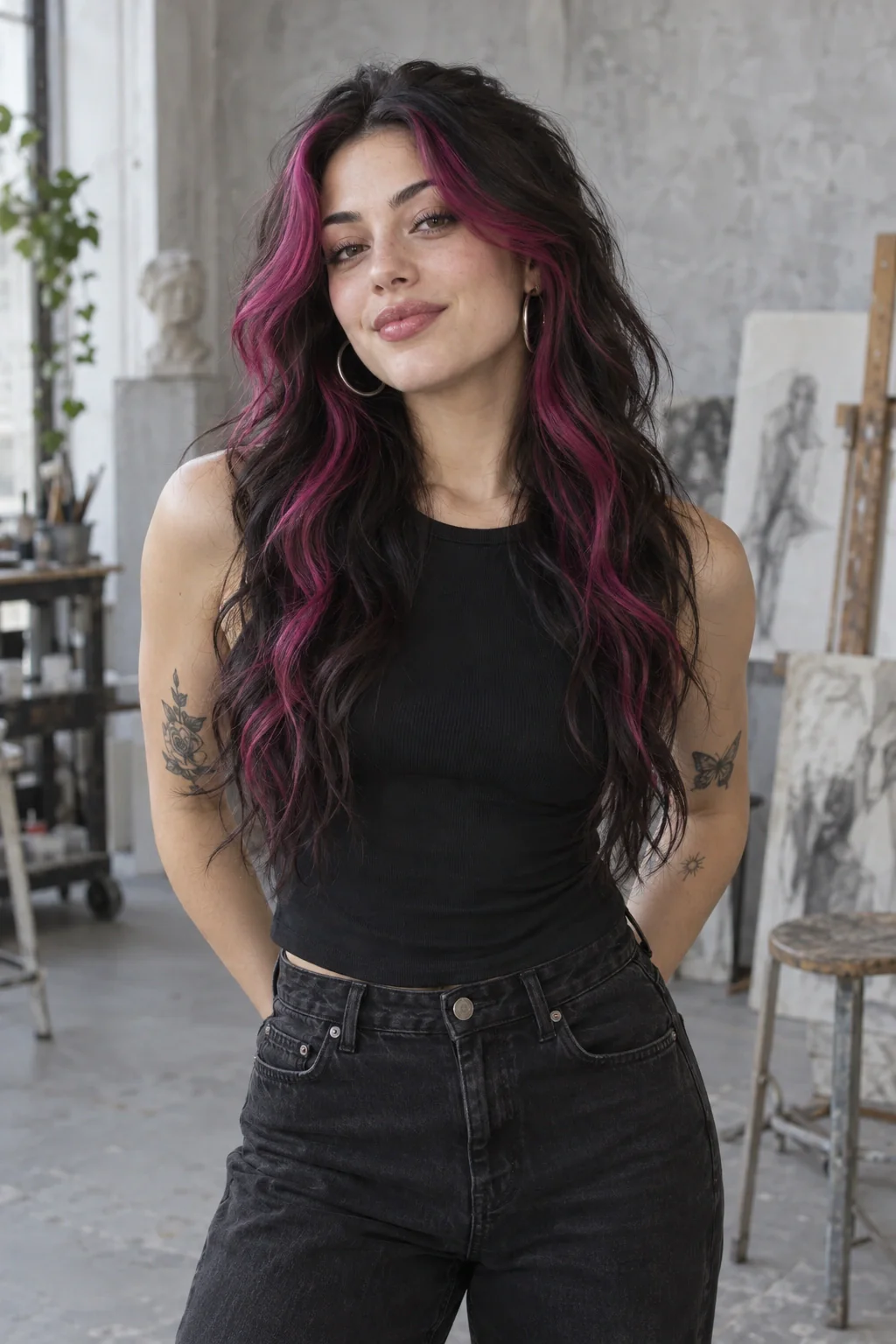
Let an accessory be visible on purpose
A barrette, comb or ribbon can be part of the outfit rather than something you hide. Choose the placement according to the hair section that needs support, then decide how visible the accessory should be. Near the temple, it is part of the front view. Farther back, it becomes a detail people notice when you turn. A partially hidden accessory can be appealing too, but make that a choice rather than repeatedly repositioning it throughout the evening.
Test the fastening before choosing it for its appearance. A heavy ornament on a small section may shift independently of the hair. A clip with the wrong capacity may slide or struggle to close. Use an accessory that comfortably fits the section and check it while walking around. If the decorative piece needs a separate functional anchor, arrange that at home. The accessory should give you one enjoyable detail, not a new task to manage whenever you move your head.
Make room for looking, listening and conversation
A gallery visit involves several viewing distances. You may lean slightly forward to read, look upward at a large work, or turn repeatedly during a conversation. Rehearse those ordinary movements in front of a mirror. Notice whether the hair covers your eyes, catches an earring or slides into the front of a jacket. You are checking the arrangement's behavior, not trying to make the hair perfectly still.
If you prefer loose face-framing pieces, leave them in a position you can ignore. A piece you keep pushing away is not serving the evening well, even if it looked attractive in the first mirror check. You can retain softness by leaving another piece farther from the eye or loosening the outline around an anchor. For glasses, put them on during the trial. A hairstyle that works only without the glasses you need is not yet a finished plan.
Keep natural texture central to the idea
An interesting hairstyle does not have to involve changing your texture. A curly or coily shape can be the main visual feature; braids or locs can create a strong rhythm; straight hair can offer a clear line. Begin with what is already present and decide how to place it around the outfit. That approach gives you a more useful starting point than assuming an evening occasion requires waves, a smooth finish or a completely different silhouette.
If you want a change, choose one that does not depend on erasing the original shape. Open a side, gather the top, move the lengths behind a shoulder or reveal a fastening. For a short cut, experiment with the direction of the front. Evaluate the style while wearing the clothes, because a detail that seems small by itself can become distinct beside a simple neckline. The aim is an individual combination, not a recognizable costume for a particular kind of cultural event.
Plan the transition from work or daytime
If the gallery visit follows a normal day, choose an evening adjustment that begins with the hair you expect to have by then. A low ponytail could become a loose shape with one tucked side; hair worn down could become a half-up arrangement; a functional clip could be replaced with a more visible one. Keep the change within your actual time and mirror access. A realistic five-minute plan is preferable to an elaborate style you cannot recreate away from home.
Pack only the items that make that change possible. A suitable tie, the chosen accessory and a small brush or comb if you normally use one may be sufficient. Do not carry a collection of alternatives that leaves the decision until you arrive. If the daytime hairstyle creates a shape you do not enjoy when released, keep it gathered and change the front or accessory instead. Your evening version can be a variation of the day's hair rather than a complete reset.
Think through coats, bags and walking between venues
Put on the outer layer and bag together. A broad strap may trap loose lengths; a raised collar may push a low gathering upward; a scarf can hide the neckline you planned to reveal indoors. Decide on a journey arrangement and an indoor arrangement. They can be almost identical, with just one section moved after the coat comes off. Separating those two moments makes it easier to choose a style that works beyond the mirror.
If you will walk between several places, use a fastening you can access easily. A decorative element buried under several layers of hair is harder to adjust without a proper mirror. Leave enough room to remove the coat without dragging the accessory. For a windy route, keep a familiar tie available so the lengths can be gathered temporarily. Once indoors, release or reposition them according to the original plan instead of rebuilding a more complicated version every time you change location.
Try three distinct versions before choosing
Begin with the clothes you intend to wear and take a photograph of your usual hairstyle. For the second version, change the front arrangement while leaving the rest alone. For the third, add or relocate one visible accessory. These versions answer different questions: whether you need any change, whether placement is enough, and whether a decorative detail adds something you enjoy. Keep the light and camera distance similar so the outfit remains the reference point.
Choose the version you would be happy to leave alone for a while. The most expressive photograph is not automatically the most enjoyable hairstyle to wear. Note what made your favorite work: an open neckline, a soft edge beside glasses, or an accessory that repeats one metal detail. If two versions feel equally good, use the simpler one for this evening and keep the other for a future outfit. You do not need to combine every successful experiment into a single hairstyle.
Make a five-minute change after work
If the gallery follows work, choose a change you can make from the hairstyle you are already wearing. A ponytail that has been tied all day may be easiest to keep, while loose hair that has become distracting can turn into a half-up style. Decide which direction you prefer before packing. Pack the fastening or accessory required for that change.
Remove the coat and bag before the final adjustment, because both can move the front and cover the neckline. Check the result with the glasses and earrings you will wear inside. Avoid relying on a new technique learned in a restroom mirror: a clear front, comfortable fastening and visible outfit detail are enough to finish the transition. A softer version of the daytime texture can belong in the evening without being restored to its morning shape.
Your questions, considered.
Do I need a more unusual hairstyle for a gallery opening?
No. A familiar hairstyle can be exactly right, especially when it lets you feel at ease. If you want a change, select one small detail such as a different part, visible clip or open side. The occasion does not require you to signal creativity through your appearance. Choose a combination you enjoy and can comfortably wear while walking, looking and talking.
What if I am going directly from the office?
Plan an adjustment around the hair you expect to have at the end of the workday. Change the front, the gathering point or one accessory instead of relying on a full restyle. Test the transition beforehand and pack only what it requires. If releasing a daytime ponytail produces a shape you dislike, retain the gathering and give it a different finishing detail.
Can I wear my hair fully loose?
Yes. Check whether the front remains comfortable when you look down or turn toward a conversation. If one section gets in the way, hold only that section with a tuck or small anchor. There is no reason to gather the entire style if loose hair works for the evening. Also test how it sits against your coat, bag strap and any earrings.
How do I keep an expressive accessory from feeling overdone?
Choose the role it plays in the whole outfit. It can repeat a metal, provide one color accent or create a clear line beside a simple neckline. Compare the outfit with and without another nearby accessory rather than judging the hair ornament by itself. If the fuller combination feels like you and remains comfortable, there is no requirement to remove it.
Sources & what they support
The notes below explain the scope of each source. Hairstyle selections, outfit combinations and comparison exercises are HairSparks’s editorial suggestions; the links do not imply endorsement.
- ghd: pinned-back styling with temple twists ↗Technique example using twisted and pinned temple sections while leaving other lengths loose. Our length adaptations and outfit pairings are editorial suggestions.
HairSparks and Hair Muse share the same publisher. App mentions are promotional. Read our editorial policy.