
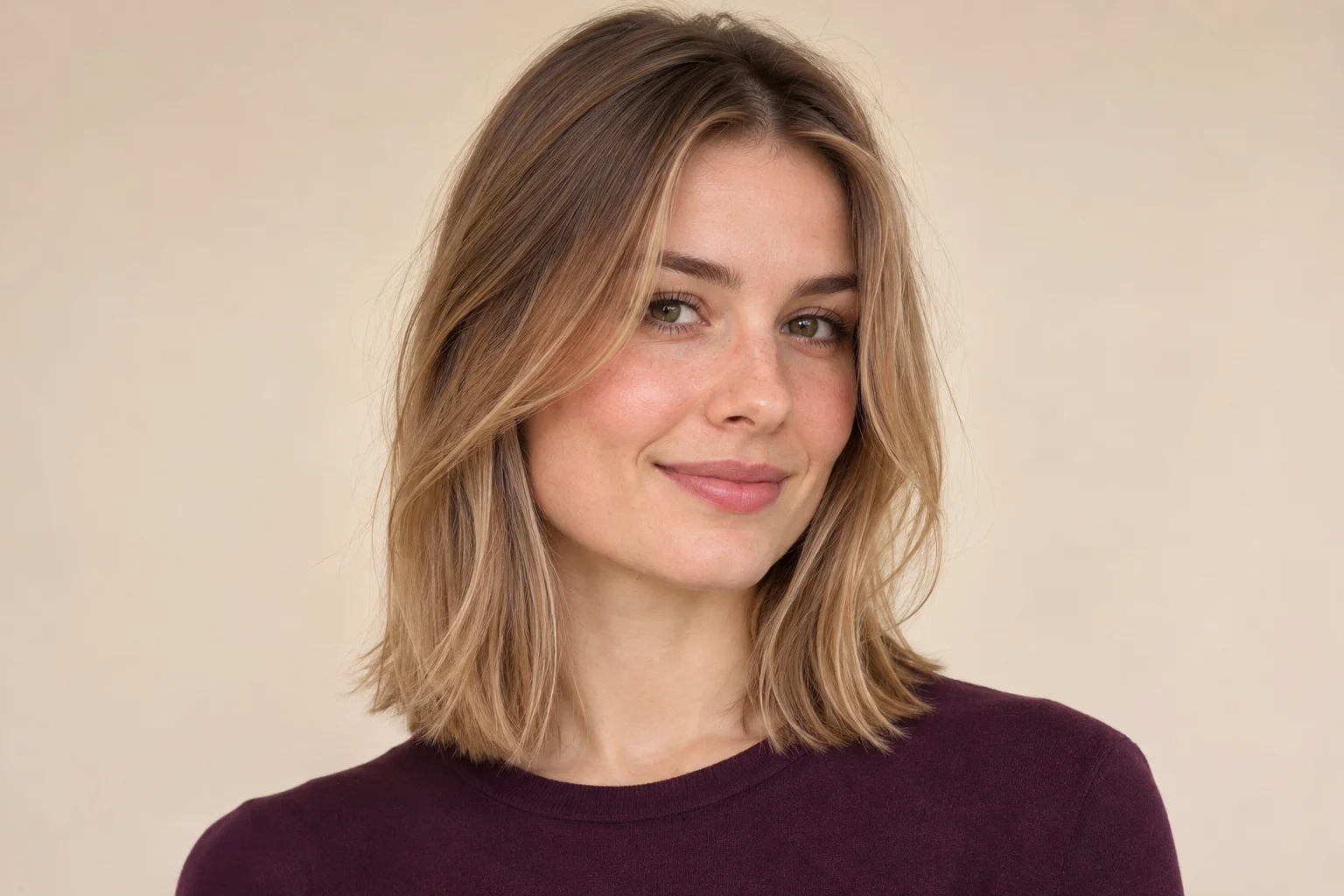
Layers for fine hair are a useful option when you want movement in a particular area and still like the appearance of your lower outline. Start by choosing what should stay: the length at the shoulders, a concentrated edge, or longer pieces around the face. Then compare a nearly one-length shape, restrained front layers and a more layered direction. The question is where the shorter pieces belong, rather than whether every fine-haired person should have layers.
You might enjoy a lively front in a photograph but prefer your own hair when the ends look calm and connected. Separate those preferences before booking. This guide helps you inspect the outline, explore hairstyle shapes on your photo with Hair Muse and explain the placement you want at the salon. Keep the comparison small enough to answer a real question: more movement around the face, more movement through the lengths, or simply a cleaner bottom line.
What should layers for fine hair change first?
Name the part of the current shape that feels unsatisfying. Perhaps the front falls as one long sheet, the sides feel quiet, or the bottom edge looks less deliberate than you would like. Point to that area in a mirror. A request for more volume everywhere gives a stylist less direction than explaining that you want the front to swing while the lower edge stays visually concentrated.
Choose one priority and one feature to protect. For example, you may want a softer frame around the cheeks while preserving the shoulder-length outline. Or you may want a little movement when you turn your head, while keeping enough front length for an easy ear tuck. Those are concrete starting points. They also make it easier to recognize when an appealing reference asks for a different change altogether.
Describe your hair as you normally wear it, including whether you leave it straight, keep its waves or regularly create a rounded finish. Fine strands do not automatically tell the whole story of a hairstyle. Let the stylist assess your actual hair and existing shorter sections before choosing how broadly to distribute new layers.
Read the lower edge before looking at the lift
Let the hair fall without holding it up, bring the lengths forward over a simple top and look at the last few inches. Then move them back and check the side view. You are deciding whether you like the visible boundary, not counting individual strands. Notice where the outline looks continuous, where it separates and which existing shorter pieces sit above it.
A dark plain top can make lighter ends easier to see; a lighter top can help with dark hair. Keep the background simple and avoid judging only from a very bright window behind you. Use the same arrangement when comparing references. A shoulder pulled forward or hair pushed behind one side can change the apparent amount of hair without any difference in the cut.
Sam Villa's professional education discusses keeping the perimeter in mind when layering fine hair, including the area near the ears. Take that as a useful consultation question, not a cutting instruction to reproduce yourself. Ask where the proposed shorter sections would end and how the lower line would remain connected from the side to the back.
Sam Villa on layering fine hair and the perimeter

Give each of three directions a different job
A nearly one-length direction is worth considering when a clear lower edge is what you like most. That does not require a severe finish or perfectly straight styling. The outline can be softly curved or worn with your usual texture. Its role in the comparison is to show how much change you would get from refining the boundary without introducing a noticeably stepped shape.
Restrained front layers answer a different question: would shorter pieces around the face create the movement you want while leaving more of the lower back outline alone? Identify whether the shortest front piece should sit near the jaw, lower on the neck or closer to the overall length. Use those landmarks to explain the idea, then ask the stylist what makes sense on your hair.
A more distributed layered direction gives you a broader change through the sides and lengths. Include it if that is the movement you actually want, not just because a reference has a beautiful blowout. Compare the side and back as well as the front. You may prefer a smaller first change once you see which parts of the current outline you would miss.

Explore two hairstyle shapes on the same photo
Use Hair Muse to try different hairstyle ideas on your photograph, then bring the comparison back to your named priority. The official listing confirms photo-based hairstyle try-on. Begin with one current photo that clearly shows the face and your usual part. Explore a direction with a calmer outline and another with more visible movement, keeping the intended color and overall length similar where possible.
Look first at the shape beside the cheeks, then at the side width and the lower edge. Describe the difference in ordinary words: a more open front, a softer curve, or shorter pieces that draw attention higher. Avoid deciding from the most dramatic image alone. If several details change together, identify which one attracts you before adding another hairstyle to the comparison.
Keep two useful ideas rather than a large collection. Write a sentence beside each in your own notes: what you like and what you would keep from your current hair. The app gives the visual conversation a starting point. Your next task is to turn that preference into questions about placement, length and the everyday finish you want the stylist to assess.
Check what the shorter front pieces need to do
Put on the glasses you normally wear and tuck the front behind the ear if that is part of your routine. Notice the length you currently rely on. When a reference has a shorter curved section near the cheek, ask whether you want to style that piece forward, sweep it sideways or still put it away easily. These choices deserve attention before deciding how short the front should become.
If you gather your hair for work, cooking or a commute, show the stylist the usual position. Explain whether you are comfortable leaving a few pieces loose or adding a small clip. This is a functional detail about the front layers, separate from the visual fullness of the bottom edge. You can like the outline of a cut while needing a different length for its shortest visible piece.
Keep the request specific to your daily movement. A front that looks attractive when held away from the face may need a different arrangement while reading or looking down. Try those activities with your current hair and point out what you want to improve. The guide to keeping loose hair off your face offers practical anchor ideas if you prefer to test a styling change before cutting.
Separate the haircut shape from the finished wave
A rounded blowout or a loose wave can make layers more visible in a reference. Ask yourself whether you want that actual finish most mornings. If you usually wear your hair straighter, include a calmer reference as well. Otherwise, the conversation may focus on a shape you admire only after more preparation than you intend to repeat.
For naturally wavy hair, look at how your existing groups sit once dry. Some front sections may already create the movement you want. Explain which waves you like and where the lower outline feels disconnected. There is no need to disturb a finished pattern just to imitate the smoothness of a different texture. The stylist can discuss the cut with your normal dry appearance in view.
Define your ordinary version and your dressed-up version separately. The ordinary version might be a soft part and released lengths; the occasional version might involve a brush or a styling tool. Ask which small step brings out the proposed layers in each. This gives maintenance a concrete meaning instead of treating every layered haircut as either effortless or demanding.

Bring a placement brief to the consultation
Prepare three short statements: the area where you want movement, the outline you want to keep and the front length you use every day. A useful example is wanting a softer frame beside the jaw while preserving a connected lower line around the shoulders. Adapt that description to your actual priorities rather than adopting the example as a fixed haircut recipe.
Show the two hairstyle ideas you kept and identify the relevant detail in each. Ask where the first shorter piece would sit when dry, how the sides would meet the back and which sections would stay closer to the overall length. A photograph from the front leaves part of this unanswered, so describe the back view you want rather than assuming it matches the visible front.
Agree on the first change before cutting begins. You can discuss refining the perimeter first, adding a modest front section or choosing broader movement. If keeping the outline is the priority, say so explicitly. Ask for a demonstration of the ordinary finish at the appointment, using the sort of time and tools you expect to use at home.
Preparing clear haircut reference photos

Make the first wash-day check useful
After a new cut, follow the care and styling advice discussed at the appointment and let the hair settle into your usual texture. Check the feature you chose to change, rather than judging every angle at once. Does the front have the movement you wanted? Do you like the lower edge? Can the shortest piece do the everyday job you described?
If something feels unfamiliar, separate placement from styling. A front section lying across the eye may need a different direction during drying; a shape that feels too rounded may need less brush work. Keep a brief note about the exact point that needs help and ask the salon for guidance. Repeatedly adding product to the whole head makes that question harder to isolate.
Use the next appointment to refine one decision. You may want to keep the same outline and adjust the front, or retain the layers and simplify their finish. A specific observation from normal wear is more useful than returning with a completely different collection of images. Your aim is a haircut whose shape, moving pieces and routine belong together.
Questions
Are layers always the best choice for fine hair?
No single placement suits everyone. Compare the lower outline you like with the area where you want more movement. A nearly one-length direction, a modest front change and broader layers are different briefs. Let a stylist assess your hair before choosing among them.
Can I keep my length and still discuss layers?
Yes. Explain which length you mean: the bottom edge, the front pieces or both. Keeping the longest point does not describe the whole haircut. Ask where shorter sections would begin and how the side and back outline would look when dry.
What should I compare in Hair Muse?
Try hairstyle ideas that help answer one question, such as a calmer outline versus a more open, moving front. Use the same source photo and keep two useful ideas. Note the detail you like in each so the salon conversation stays focused.
What if I like the layers only with a blowout?
Decide whether that finish fits your actual week. Bring a straighter or more natural reference too, and ask for the ordinary styling version. You might prefer a smaller front change or a clearer lower edge if you want less daily preparation.