
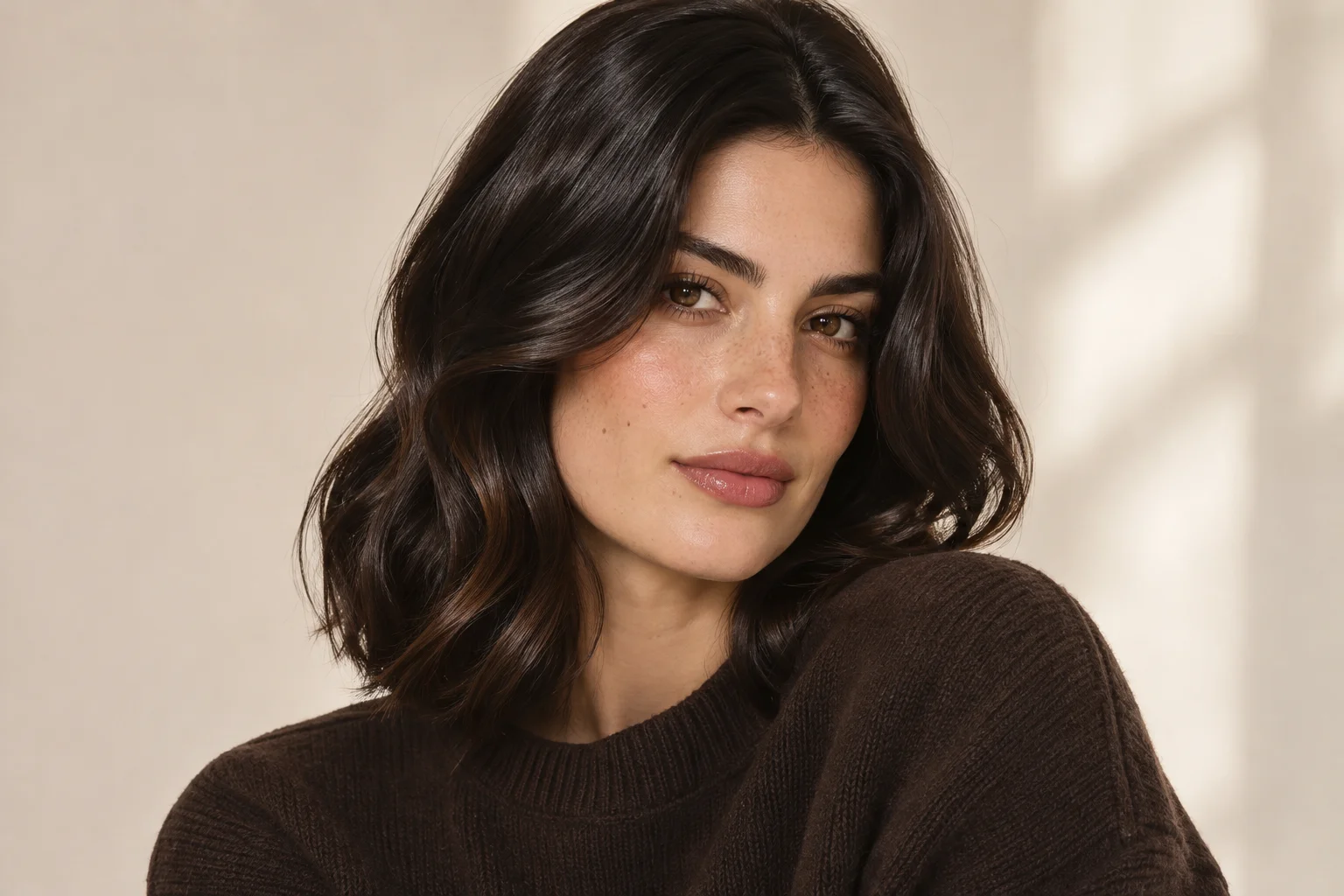
Choose espresso brown hair color if you want the overall shape to look deep with a brown reflection still visible in daylight. Choose soft black if you prefer the hair to read as one darker shape from root to tip, with the light showing mostly as sheen. The easiest test is to compare both against the same face, the same part and the same lighting before deciding what to ask for.
Use the comparison to choose a direction, then look at your actual roots and ends separately. Bring one reference you like in daylight and one example that shows your limit for darkness. Together they tell a colorist how dark you want the hair to look in an ordinary room and how much brown you still want to see when you turn toward a window.
Read espresso brown hair color in daylight
Look at the reference from arm’s length before zooming in. Follow the shape of the hair along the cheek and shoulder. If you see a dark outline and a brown glow on the turns of the hair, you are probably looking at the kind of depth people describe as espresso. The exact shade name can vary. In a salon, it is more useful to point to the area where you can still see brown and say how visible you want it to be.
Turn the reference slightly on the screen or change the way your own hair falls near a window. Notice the difference between a pale reflection on the surface and a warm brown tone that stays visible for a longer stretch. Straight hair may show a continuous ribbon of light, while curls and waves can catch it in separate patches. If a reference appeals to you mainly for its movement, look for a second image with a texture closer to your own before choosing the tone.
Wella on espresso brunette depth
Decide how dark you want the outline
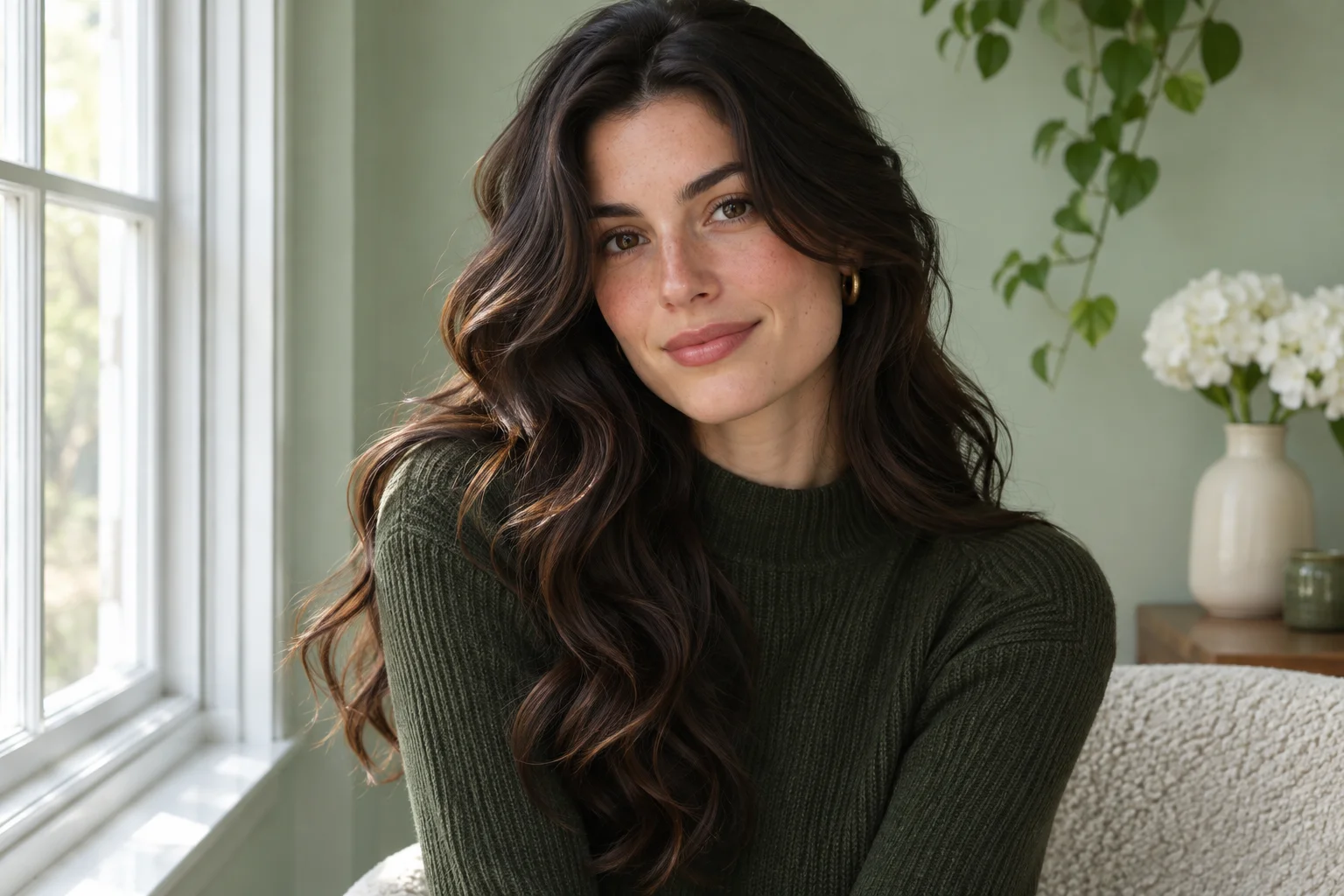
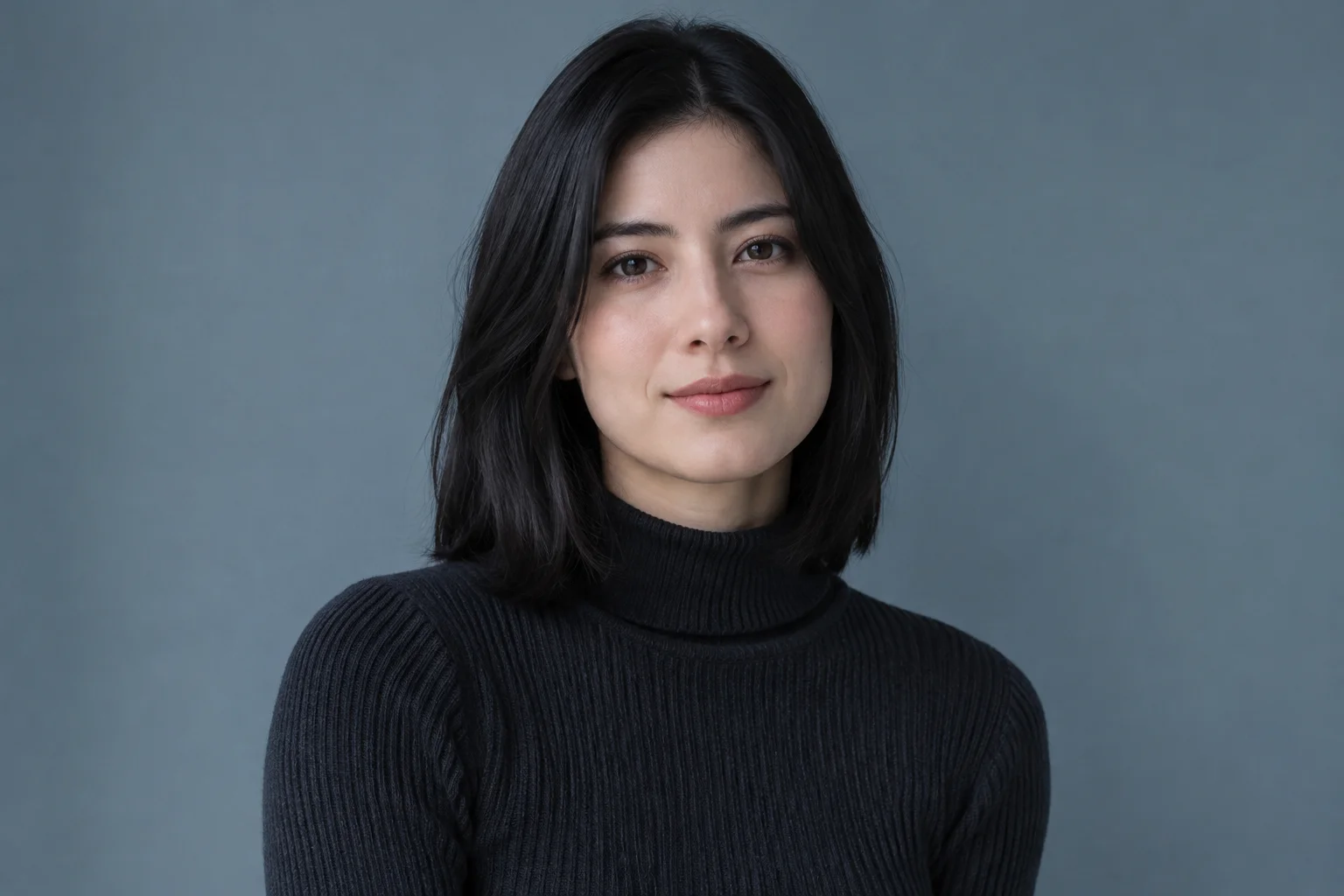
Soft black can give the outside edge of the hair a more continuous, deeper look. Study the area next to the face and along the ends. The shine may look bright when light hits it, even if most of the hair reads as nearly black. If the darker outline is the detail you love, describe it directly. Ask to see a swatch with a muted reflection rather than relying on a label such as natural black, which can mean different things in different color ranges.
Hold up a shirt you wear often and look at the hair beside it. A cream collar can make a deep outline stand out, while a dark collar can make the edges blend together. If the difference between the two options is subtle, watch how your brows, eyes and cheeks read beside each shape. Decide whether you want the hair itself to be the strongest dark area. A good choice should make sense with what you wear on an ordinary day.
Check roots, mids and ends before making a plan
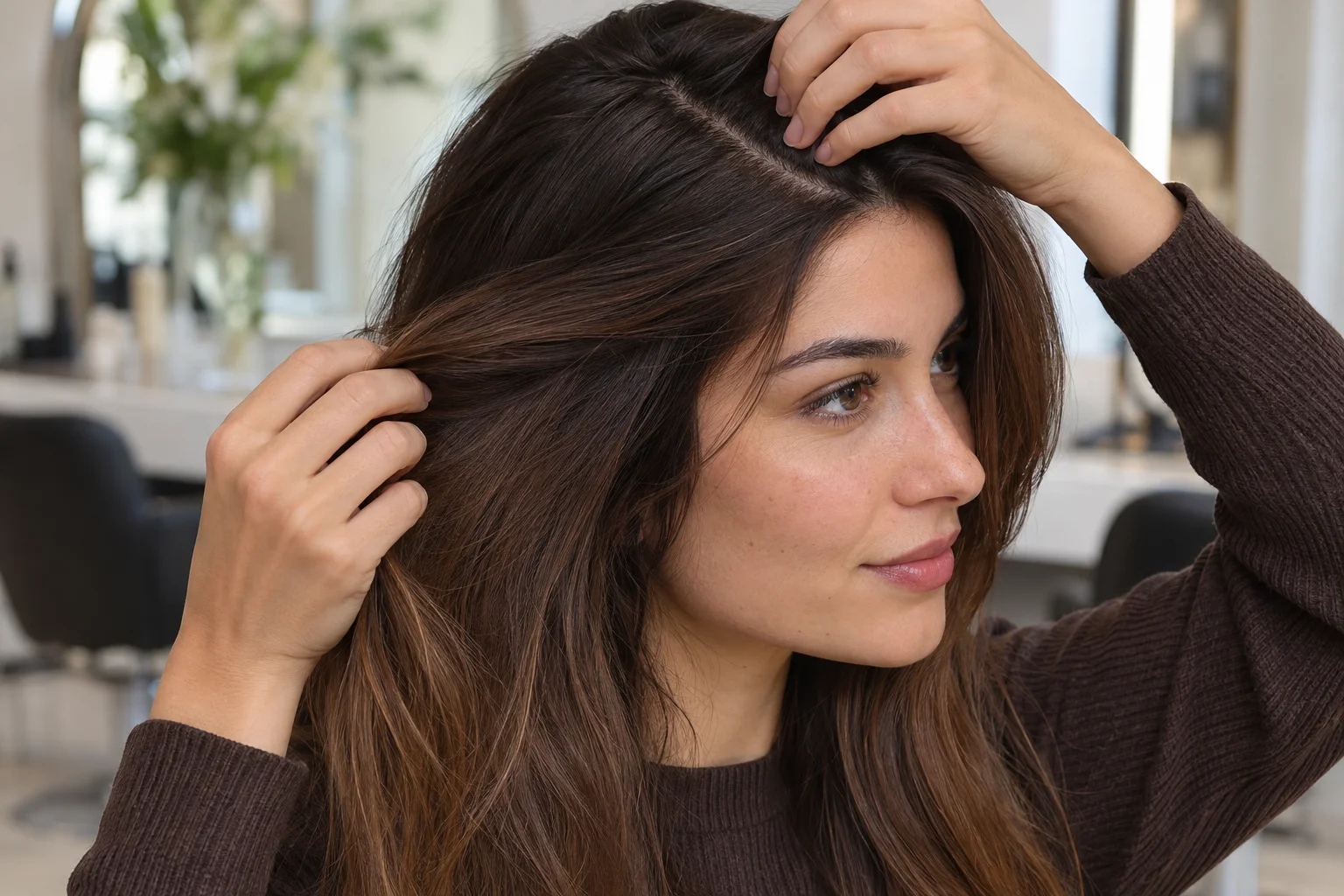
Use indirect daylight and take a photograph of your usual part. Make a second part near the temple if it helps reveal new growth. Write down what you can see at the root, around the ear and at the ends. Your roots might already look almost as dark as the shade you want, while your ends show the last brown color you used. Or the ends could be darker than the roots because they have been colored more often. Those two starting points need different discussions.
Make a short record of anything you remember applying, including dark gloss, salon color, box color and earlier lightening. Note roughly where that hair sits now. If you cannot remember the date, say which sections are likely to have it. Ask the colorist to look at the different areas before discussing how to bring them together. If you are going darker for the first time, discuss whether you want the change to read across the whole head or only where the hair currently looks uneven.
Compare two directions on the same selfie
Use Hair Muse to try darker hair colors on one clear selfie. Choose a dark brown direction and a black direction with a softer reflection if those options are available. Keep the same face, hair length and framing when you compare the pictures. Ask two questions while looking at them. Do you like the way the darker edge sits beside your cheek? Do you want to keep enough brown for the bends and ends to read clearly against the darkest sections?
Save the descriptions you prefer in your own words. “Dark in the room, visibly brown by the window” says more than a product name. “Deep from the roots to the ends with a neutral shine” is another starting point. Keep your real daylight photo nearby so you can talk about what is already in your hair. In the salon, use the selfie to explain the broad direction and hold up a physical swatch beside your own hair to talk about the shade.
Hair Muse on the App Store · Take a consistent hairstyle preview photo
Compare your finalists in two familiar settings
Start at a window without direct sun and notice where the hair shows brown. Then step back into a room where you spend a lot of time. Let your eyes adjust and look again at the outline along the part and near the shoulder. If you see the same dark silhouette in both settings, decide how much that matters to you. If you love the brown only in one specific patch of sun, ask yourself how often you will see it on a weekday.
Use the same approach with references. A photo with bright sun behind the model can make the edges look lighter. A dark wall can make it hard to tell where the hair ends. Bring one clear example where you can see the color along the cheek and another that shows what you mean by too dark. Label them in your notes so the colorist can tell which is the target and which shows the limit.
Ask the salon to show the depth before naming it
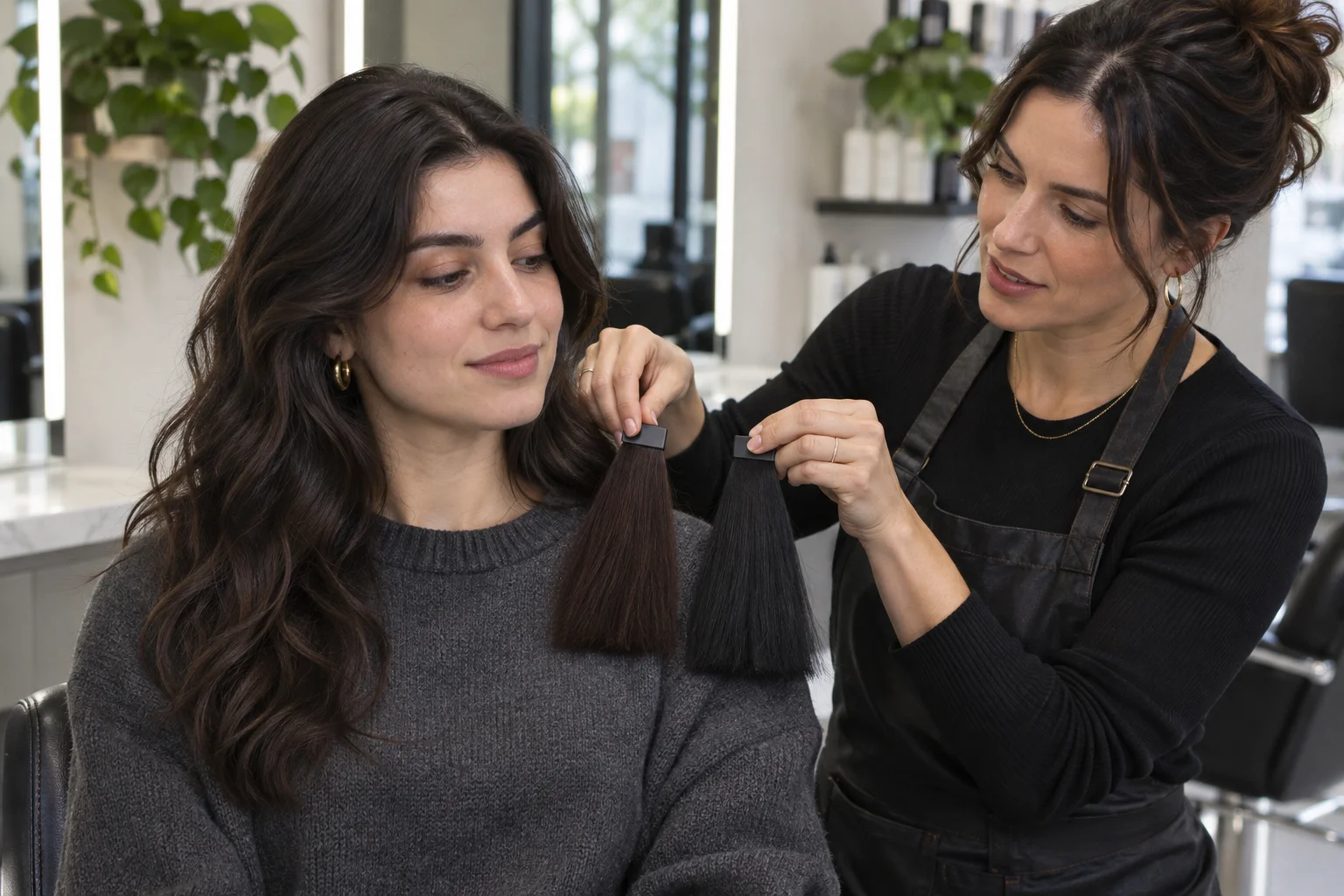
Start with a request such as “I want a deep color that still looks brown at the curves in daylight. Can we hold up two dark swatches and see which one still reads brown next to my roots?” If you prefer soft black, try “I want a darker outline through the ends, and I like a neutral reflection.” Show your real root and length photographs, then ask which swatch is closest to the effect you described in the room.
Ask how your own base and previous color affect the decision. If the ends are darker than the root, discuss whether a uniform look is possible in the visit and what changes might be visible first as it grows. If you have a strong preference about keeping any brown around the face, make that part of the request before agreeing on the color. You can also ask the colorist to show a swatch you consider too dark to put a visible limit on the choice.
If your stylist has a swatch ring, ask to take the two chosen swatches to the same spot by the window. Hold them near the middle of your hair as well as the roots. That small change in position can show whether your preference is the depth at the part or the reflection through the lengths.
Leave with a simple way to review the result
Check the color where you can see it beside your usual part. If possible, look once in neutral salon light and once by a window. Give yourself a moment before judging the darkest patch. Compare the outline at the shoulder, the reflection near your face and the difference between roots and ends. Ask how to describe the result in your own notes if you decide to adjust it at a later visit.
Take one photo from the front and one from the side after you leave. Use indirect daylight and the same position the next time you compare it. You may notice that you like the darker outline and still want more brown where the hair curves forward, or that the uniform color is the detail you want to keep. Those are specific observations you can use to plan a follow-up.
Questions
Is espresso brown hair color the same as soft black?
Espresso generally describes a very dark brown effect, with brown more visible in some light. Soft black usually reads closer to black across the silhouette. Names vary by color range, so ask to see both swatches in the same light.
Should I compare the color with my roots or my ends?
Check both. Use the roots to see your current base, and show the ends separately so the colorist can assess how previously colored or lighter sections differ.
What if my favorite photo is taken in direct sun?
Keep it for the reflection you like. Add another reference from indirect daylight that shows how dark you want the overall shape to look. Tell the colorist which part of each image you want to borrow.
How do I make the choice from a selfie?
Compare a dark brown and a softer black direction on the same photo. Decide which edge you prefer beside your face and how much brown you would like to see. Use that preference to select the swatches to discuss at the salon.