
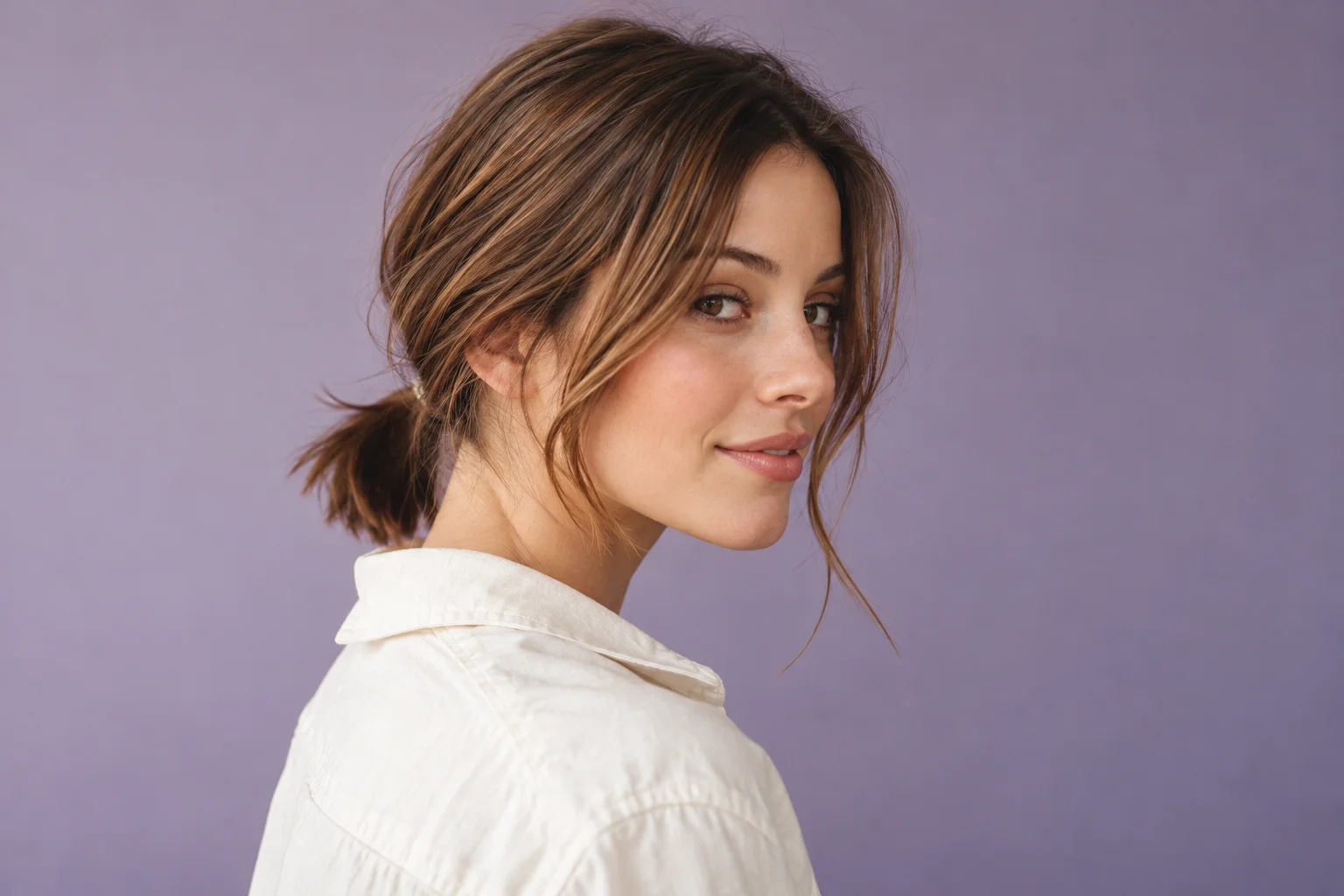
To choose a bob you can tie back, start with the ponytail you actually need, not a haircut name. Show a stylist where you gather your hair, which front pieces must reach that point and how much loose hair you are happy to manage. A shoulder-skimming or collarbone-length bob is a useful direction to discuss when tying everything back matters. The shortest nape and side sections deserve as much attention as the longer front in a reference photo.
You may want the clean outline of a shorter cut while keeping a quick gathering for cooking, commuting or exercise. Those are two separate requirements: how the hair looks down and what it needs to do up. This guide helps you describe both, compare a shorter silhouette on your photo with Hair Muse and bring a concrete length brief to the appointment. There is no need to decide every styling detail before you have identified the gathering you want to preserve.
Define what a bob you can tie back must do
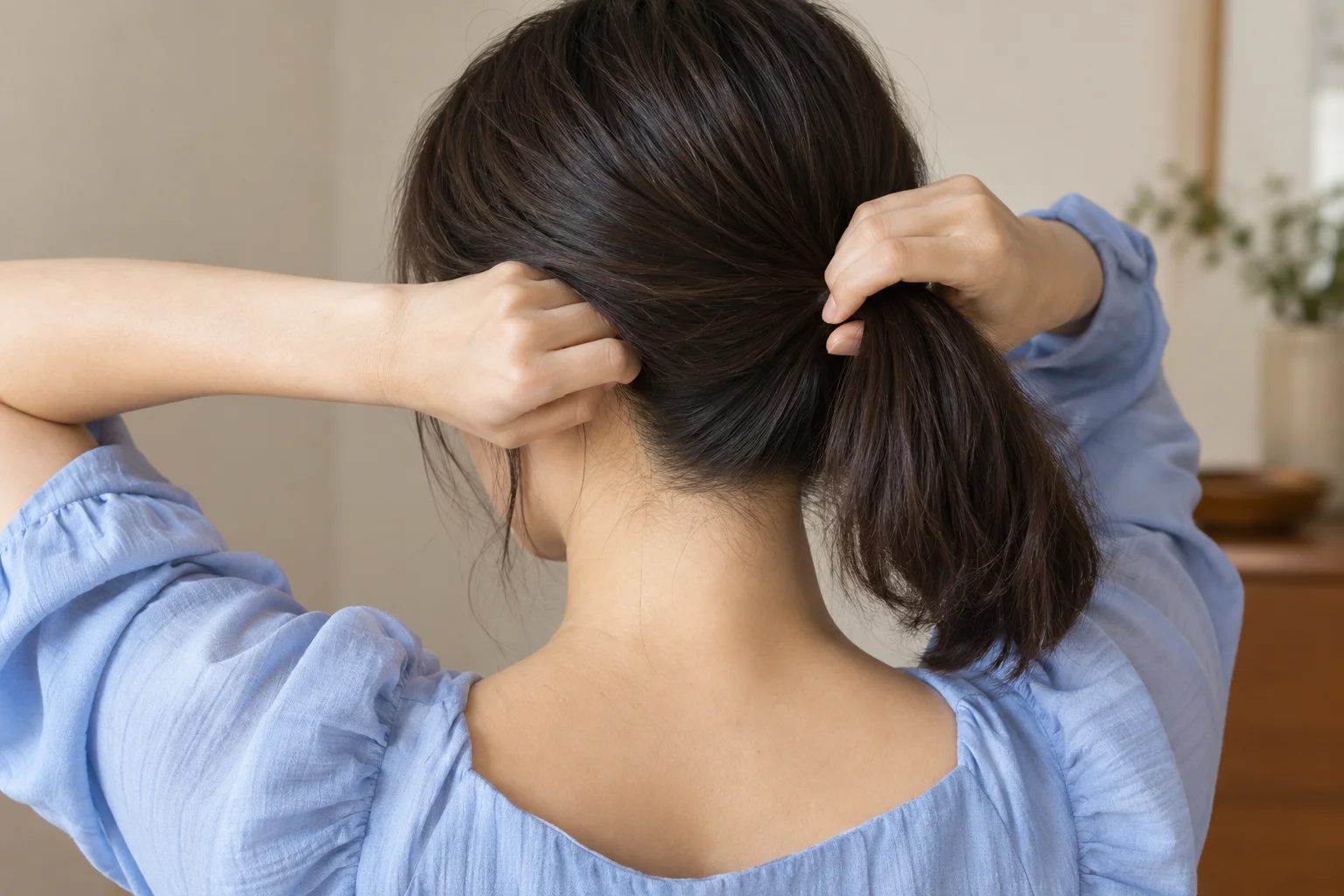
Put your hair into the gathering you use most often and notice its location. A low ponytail at the nape and a high ponytail ask the hair to travel in different directions. A cut that supports one arrangement may leave a different set of pieces outside the other. Choose the arrangement that matters most to your day rather than asking for a vague promise that the hair will still go up.
Next decide what counts as success. You might need every side section clear of your face, yet be comfortable with a soft fringe. You might want the whole nape covered by the gathering, or prefer only to open the front. Say whether adding two clips is an acceptable part of the routine. These small preferences change how much length you want to keep in particular places.
If a workplace or activity has specific hair requirements, use those actual requirements in the discussion. A casual half-up option is a different brief from securing all the hair. Bring your usual fastening so you and the stylist can discuss the real amount of hair it needs to hold, rather than relying only on a photograph of a tiny decorative ponytail.
Map the front, sides and nape before choosing the outline
With the hair gathered loosely, look at the front pieces that have the longest journey to the fastening. Release them and notice how they sit when your hair is down. If you enjoy a short face-framing section but want it in the ponytail, raise that conflict before cutting. You may prefer a longer front, a different gathering height or a separate clip on those sections.
Check the lower nape too. A reference with a long front and much shorter back can look substantial from the side while leaving less hair to gather underneath. Ask to see the back shape in your chosen reference. When only a front portrait is available, describe the back length you want instead of assuming that the unseen part follows the same line.
For an existing layered cut, identify the shorter internal sections as well as the bottom edge. Preserving the outline alone does not necessarily preserve how the whole gathering behaves. Let the stylist assess these sections with your hair in its usual texture. Your role is to explain which pieces you want included and where you prefer to fasten them.
Compare a longer bob with a more compact direction
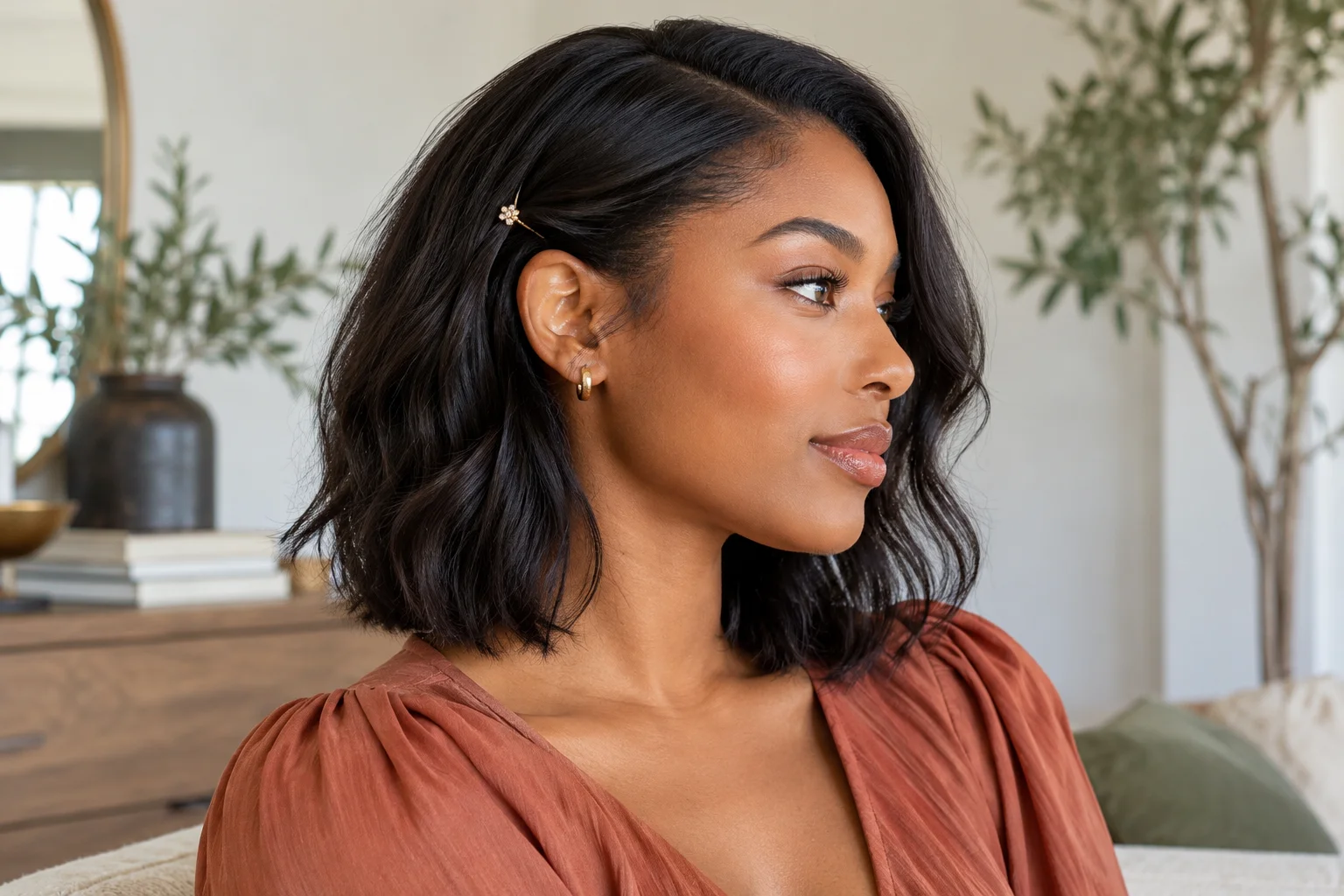
A longer bob is a useful starting conversation when you want a noticeable cut without giving up a low gathering. Compare the way a shoulder-skimming outline sits against your clothes with a slightly longer collarbone direction. Look at the full side shape, not just the difference between two ends beneath the chin. Decide whether you want the cut to show more neck or simply feel lighter through the lengths.
Keep your requirements visible while looking at references. A dramatic short nape may be the detail that attracts you, yet conflict with a requirement to gather everything low. You can choose that detail if you are happy changing the routine. Alternatively, borrow the clean perimeter or part from the picture while discussing a longer back. You do not have to request the entire photograph as one package.
Avoid settling the question through a universal measurement taken from someone else's hair. Head shape, texture, layering and gathering position all contribute to the route each section must travel. Use the references to describe the outline, then ask the stylist to show the workable length on your actual hair before agreeing to the cut.
Use Hair Muse to explore the look on your photo
Hair Muse lets you explore different hairstyles on a photo of yourself. For this decision, choose a clear portrait and use a shorter hairstyle direction to consider the outline around your face. Keep your attention on a few visible details: how open the neck feels, where the front frames your cheeks and whether you prefer a compact or more flowing shape.
Give each direction a simple description rather than judging the whole picture at once. You might like the open jawline in one and the softer front in another. Write those preferences beside your existing ponytail requirement. This makes the visual comparison useful for the particular decision you are making, instead of turning it into a search for one image that resolves every part of the appointment.
Bring the direction you prefer into the haircut conversation alongside photos of your current gathering. Ask for the chosen silhouette to be discussed together with the front, sides and nape you marked earlier. That combines a clear visual aim with a routine you can demonstrate. Leave colour changes for a separate comparison if they are not part of your reason for cutting.
Choose which loose pieces you genuinely want to keep
A few loose front pieces can be a deliberate part of a bob with a small ponytail. Try that arrangement with your current hair before deciding it will suit every activity. If the pieces repeatedly fall into your eyes while you look down, you may prefer to keep enough front length for them to join the gathering. If you enjoy their movement, explain which area you want left free.
Distinguish a planned face frame from accidental escaping sections. One is a choice about the appearance of the hairstyle; the other may be a practical irritation. Tell the stylist whether your preference changes between wearing the hair down and tying it back. The answer can guide the conversation about the shortest front rather than being left until the cut is finished.
Try the arrangement with your glasses, usual earrings and a collar you wear often. You are checking where the loose pieces land in the real setting. A clip or ear tuck might be enough for occasional adjustments, but decide whether you want that extra step every day. It is reasonable to prioritise a simpler gathering over a shorter decorative detail.
Decide whether half-up is a backup or the main plan
A half-up style can clear the front while leaving the shorter lower outline down. On a compact bob, that can be a practical choice in its own right. Gather the temple sections with your hands, then look at the back. Notice how much hair stays loose underneath and whether that meets the reason you wanted to put the hair up.
If your main goal is to move the whole cut away from the nape, half-up addresses a different need. Say that clearly at the consultation. If opening the face is enough, a shorter outline may become easier to consider. The useful decision is whether the alternative performs the task you need, rather than whether it can technically be described as an upstyle.
Choose a small familiar fastener for this rehearsal. A bulky clip can make a short gathering look different from the simple shape you had in mind. Keep the lower hair's natural texture and check the side views. You can bring a photograph of this trial as a separate option, labelled as half-up, so it does not get confused with your full ponytail requirement.
Half-up options for shorter hair

Turn the choices into a brief the stylist can use
Prepare a short brief with three priorities in order. For example: retain a comfortable low ponytail, keep the front long enough to join it and create a clearer bob outline when the hair is down. Then state one area where you are flexible, such as the part or the amount of movement at the ends. This gives the stylist room to propose a shape while keeping the essential function visible.
Show the gathering on your actual hair before any length is removed. Ask which nape and side sections determine the minimum workable length for that arrangement. If you usually wear natural waves or curls, discuss their resting shape as well as the length seen while the hair is being handled. You can ask to see where the proposed edge will sit before agreeing.
Finish with a concrete sentence: I want this down-style direction, and this is the gathering I need to keep. Ask what would change if the cut were slightly shorter and whether you would then rely on clips. Choose knowingly between those options. A clear trade-off is more useful than leaving the appointment with different assumptions about what still ties back.
Preparing useful haircut reference photos
Keep the first styling routine small
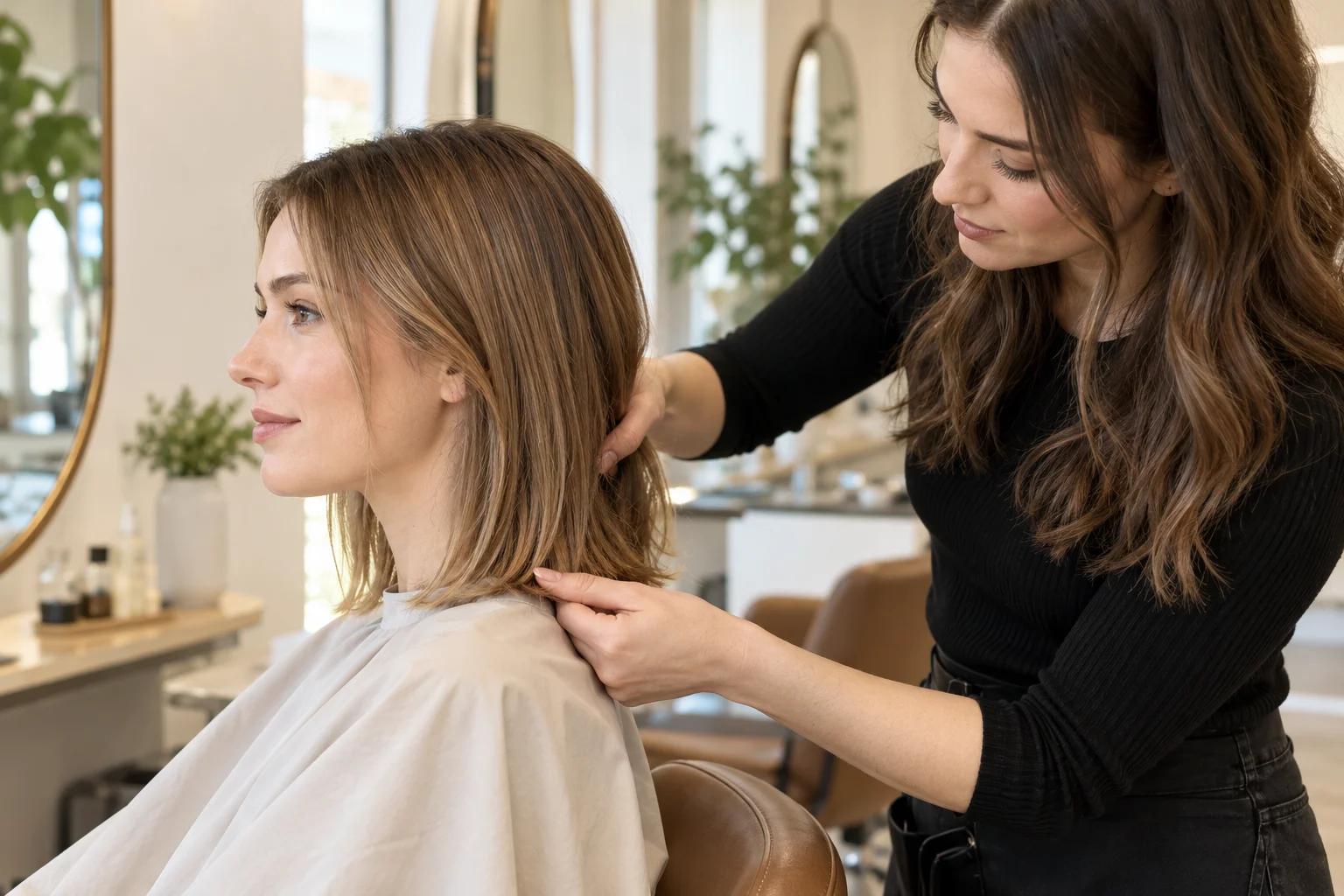
After the cut, learn the low gathering and one alternative before building a whole collection of new accessories. Ask how the stylist has directed the front and how to repeat a simple arrangement with your usual fastener. Practise releasing it as well as putting it in, so short sections do not get caught when you remove the tie or clip.
Wear the haircut through an ordinary day and note the specific adjustment you want next time. Perhaps the front needs a discreet clip for one activity, while the rest already works as planned. Record that detail rather than deciding that every part of the cut needs changing. Keep the original brief so a later appointment can refine the balance between the outline you enjoy and the gathering you use.