

If you want bangs with glasses, decide where the shortest hair should sit in relation to the top rim before choosing a fringe name. Start with an airy straight fringe that clears the frame, an open curtain fringe that passes beside it, or a side sweep that leaves one eye area open. Put on the glasses you actually wear and compare those three routes with your usual hair texture. The useful question is whether you like both the outline and the way the front moves around your frames.
A fringe that looks right without glasses can feel different once the bridge, rims and temples join the picture. Work through the contact points first, then use Hair Muse to try a bangs idea on your own photo and narrow the visual direction. Keep your everyday pair nearby for the practical checks below. You will finish with a specific length discussion, a manageable styling test and a short brief for your stylist rather than another collection of unrelated fringe pictures.
Bangs with glasses: map the contact points
Look straight ahead with your frames sitting in their normal position. Notice the upper rim, the bridge and the outer corners separately. A frame may sit higher near the nose and dip toward the temple, so “above the glasses” does not describe one straight line. With clean, dry hair, release the front as you normally wear it. Check whether its tips stop above the rim, rest on it or drop in front of a lens. Those are three different relationships to discuss.
Move your head down as if reading a message, then look up again. Hair that clears the frame in a posed photograph may slide forward during this movement. This is a useful observation, not a reason to reject bangs altogether. You may prefer less central coverage, a shorter resting length or a longer section directed outward. L’Oréal Paris discusses different fringe lengths in relation to glasses. Use that starting point to examine your own pair, without treating a face-shape category as a rule.
An airy straight fringe leaves a readable gap
A short, lightly separated fringe is worth comparing if you enjoy a line across the forehead and want the glasses fully visible. Ask to see where the ends would rest when dry and released. The aim is a gap you enjoy looking at, rather than a universal measurement in millimetres. A high upper rim may leave less visible forehead than a lower one; the same fringe length can therefore give a different impression with another pair.
Pay attention to how much hair forms the fringe as well as how short it is. A narrow, airy section and a deep, full section can share a lower edge while creating very different coverage. Tell your stylist whether you want glimpses of forehead between the pieces. Keep the photograph you like, but point to this detail instead of asking for “exactly those bangs.”
Before agreeing to the cut, discuss your tolerance for upkeep. If you dislike resetting the front after sleep, ask how the proposed section behaves with your growth direction. If you love a crisp short edge, ask when its relationship with your rim is likely to need another adjustment. Agree on the observable sign that means it is time to return.

A curtain fringe needs room beside the outer corners
An open curtain shape is a different decision: the central opening reveals the bridge while longer pieces travel toward the cheeks. Inspect where each piece bends relative to the outer corner of the frame. Hair resting on that corner can change direction when you turn or remove your glasses. A length that passes comfortably beside it may suit your habits better than one that stops directly on it.
Use your fingers to suggest an opening in your existing front hair without pulling hard or pretending you have already created the cut. Compare a narrow opening with a wider one. Then let go and notice the natural return. This helps you describe the direction you like even when the final shaping still needs a professional.
For a fringe that you sometimes tuck away, check the route all the way to the ear. The temple arm and the hair share that area. Try the glasses on first, arrange the longer section second, and reverse the order once. A preference for one sequence belongs in your routine notes. It can influence the useful length more than the label “curtain bangs.”

A side sweep changes the view on each side
A side-swept fringe can leave more space over one lens while keeping softness across the other side of the forehead. Begin with the direction your front already accepts. Brush or finger-place it gently, then release it. If the section springs back, show that behaviour to your stylist rather than planning a daily battle with it. Ask what length would let the section move to the side with the finish you normally use.
Check both outer corners. The side with more hair may feel crowded around the temple even when the front view is appealing. On the open side, decide whether you enjoy seeing the full glasses arm or want a little hair beside it. You do not need perfect symmetry to make the combination look deliberate.
For curls, judge the dry resting shape of the front curl groups. A curl tip can sit above a rim while another turns toward the lens. Describe the curl you keep moving, not just an overall length. Take your normal finish to the appointment and ask the stylist to assess that version before setting the shortest point. The useful reference is the shape you actually wear through the week.
Check the frames in motion, not only in a selfie
Once you have a preferred direction, do a short sequence with your current hair. Look down, turn both ways, put the glasses on and take them off using your normal gentle movement. Notice whether the front gets caught beneath a temple, flips over an upper corner or needs rearranging after every change. Make one small styling adjustment and repeat the sequence. Changing several things at once makes the useful detail difficult to identify.
If you alternate between everyday glasses and sunglasses, repeat the check with both. You are looking for a workable compromise, not identical appearances. A thicker sunglasses arm may gather side hair differently. Keep each pair in its proper position; shifting a frame down the nose to create space for a fringe does not tell you how the haircut will work when you wear the glasses normally.
Separate a hair placement issue from a frame fit issue. If your usual glasses slip or pinch, ask your optician about their fit. In the haircut discussion, describe the hair contact you observe. This keeps each decision tied to the person and object that can actually change it.
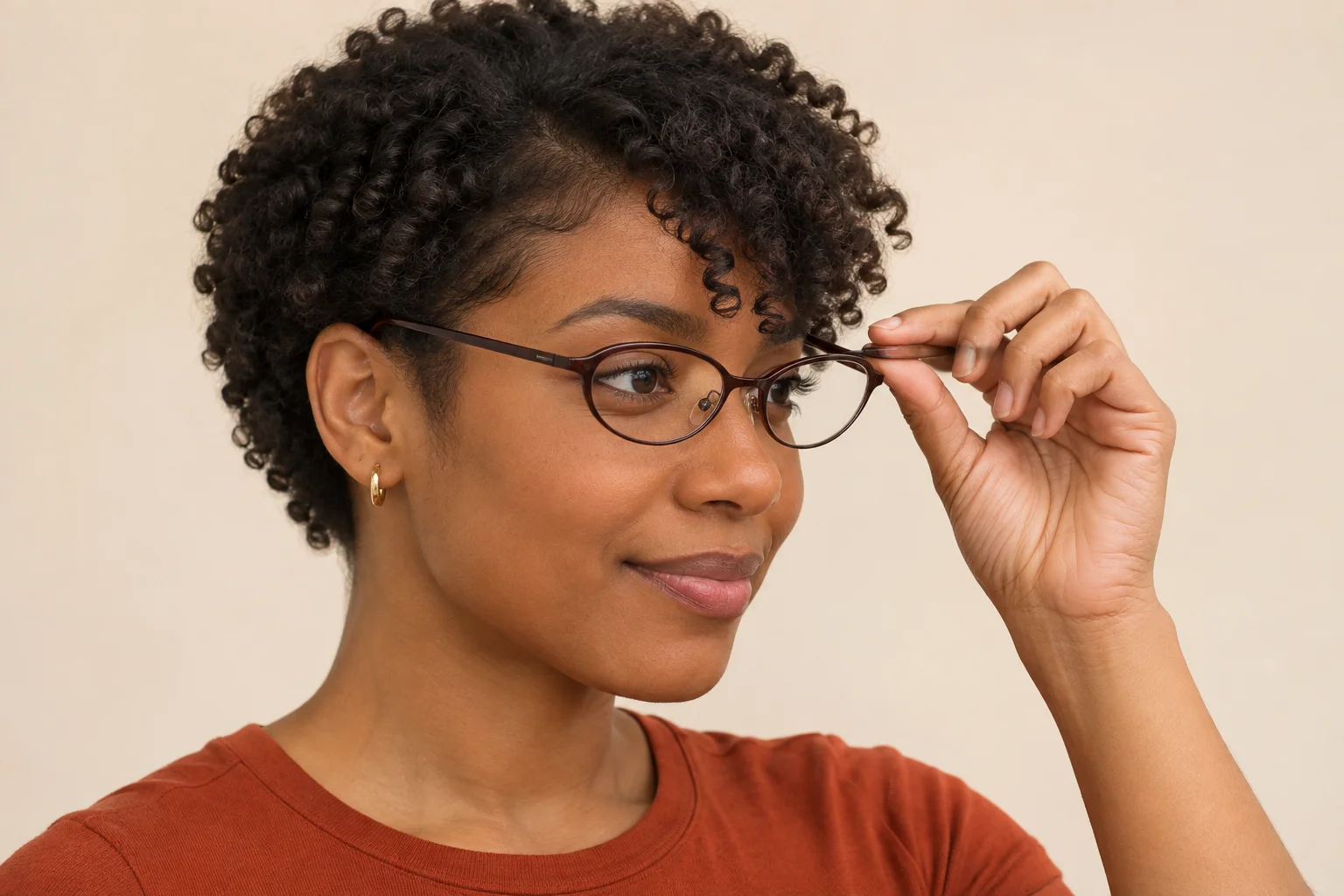
Use a photo comparison for one visual question
Hair Muse lets you try hairstyles, including bangs, on your own photo. For this decision, give the comparison one job: explore whether you prefer a covered, open or side-swept front. Begin with a clear, familiar photo and keep your attention on the front shape. If glasses are an important part of your everyday appearance, choose a photo that represents that familiar look. The app's official listing describes selfie-based hairstyle and bangs try-on; use those existing functions to explore the direction you want to discuss.
Compare a small shortlist rather than collecting every appealing change. First ask which amount of forehead coverage you enjoy. Then ask where you would like the longer outer pieces to finish. Keep your hair colour and overall length familiar in your decision notes so that a dramatic shade does not distract you from the fringe question.
Write a reason beside each favourite: “I like the visible bridge,” “I want lighter central coverage,” or “I prefer the sweep to this side.” Those observations give your stylist something concrete to interpret. Our photo guide helps you choose a consistent starting image, while the fringe styling guide explores ways to direct an existing front section.
Hair Muse on the App Store · Choose a starting photo · Style an existing fringe
Take your everyday glasses into the consultation
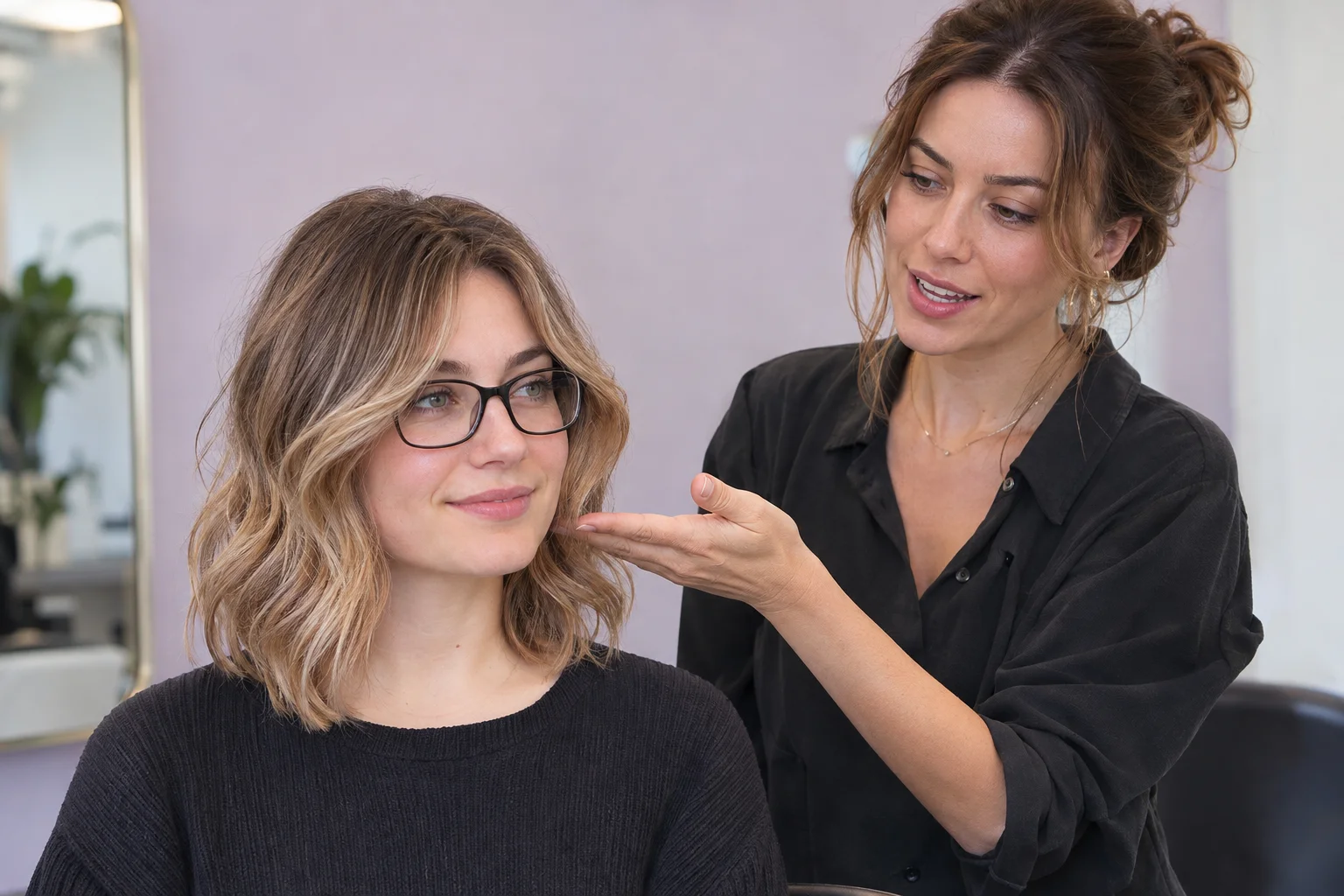
Bring the pair you wear most, plus a second pair if you switch often. Wear your usual part and explain how you normally dry the front. Your stylist can then see the interaction between the frames, your natural growth and the finish you are willing to maintain. Show one leading reference and one alternative, naming the exact detail you like in each. A short comparison is easier to use than several pictures with conflicting lengths and densities.
Try a brief such as: “I want an open fringe with the centre separated and the outer pieces passing beside this corner. I wear these glasses all day and often remove them at my desk. Please check the shortest point with the hair dry and the frames in place. I want a version I can direct with my usual morning routine.” Adapt the wording to your actual preference rather than repeating it as a script.
Before the appointment ends, practise resetting the front once yourself. Ask which section to move first and where the ends should settle. Check the side view with the glasses on, then take them off and replace them. This is the moment to clarify any placement that still feels awkward.
Keep a simple plan for the first week
Use the same glasses and a familiar finish while you get used to the new shape. Notice the moment that causes the most resetting: after sleep, after putting on sunglasses, or during reading. Change one detail in your styling sequence and see whether it helps. For example, place the frames before arranging the outer pieces if those pieces otherwise become trapped beneath the arms. Keep the change small enough to remember tomorrow.
Record a useful note for your next trim: the central tips began touching the upper rim, one side lost its outward direction, or the front became harder to tuck. These observations are more precise than “the bangs grew too long.” Take a photograph with the frames sitting normally when you notice the change, and show it at your next appointment.
Your final choice should include the shape you enjoy, the contact points you have checked and a reset you can repeat. Keep a longer or more open option in the discussion if you are undecided. Choosing a deliberate starting point gives you something practical to refine while still leaving room for the style you wanted in the first place.
Questions
Do bangs and glasses have to stay completely apart?
No. Some people enjoy a little overlap. Decide whether you like its appearance and whether the hair stays comfortable during reading, turning and removing the frames. Tell your stylist which contact bothers you rather than assuming every fringe needs the same gap.
Which bangs should I compare first with large frames?
Start with an airy short fringe and an open curtain shape. They create different amounts of visible forehead and space around the bridge. Compare them with the actual frames on your face; frame size alone cannot choose the haircut for you.
Should I remove my glasses for the haircut discussion?
Begin with them on so your stylist can see the normal relationship. You can remove them when asked during the service, then put them back on for the dry placement check. Bring a second frequently worn pair if it changes the contact points.
What should I save from a Hair Muse comparison?
Keep a small selection and a sentence explaining your preferred coverage, opening or side direction. Bring those notes alongside your everyday glasses and current routine so the consultation has a clear starting point.