

A satin bonnet for curly hair needs a band that stays in place when you turn your head and enough room for the curls to settle without being packed into a ball. Check those two things separately. If the band feels comfortable but the hair lifts it from the inside, try a deeper crown. If there is room for the hair but the front edge slides down when you lie on your side, adjust where the band sits or try a different opening.
You can make both decisions at home in a few minutes. Put the bonnet on with dry hair, look at the band at each temple, and lie on your usual pillow in the position in which you fall asleep. Then look at which part of your hair moved overnight. That gives you a starting point for the next evening, whether you wear a short crop, loose shoulder-length curls or long, dense coils.
Fit a satin bonnet for curly hair at the band
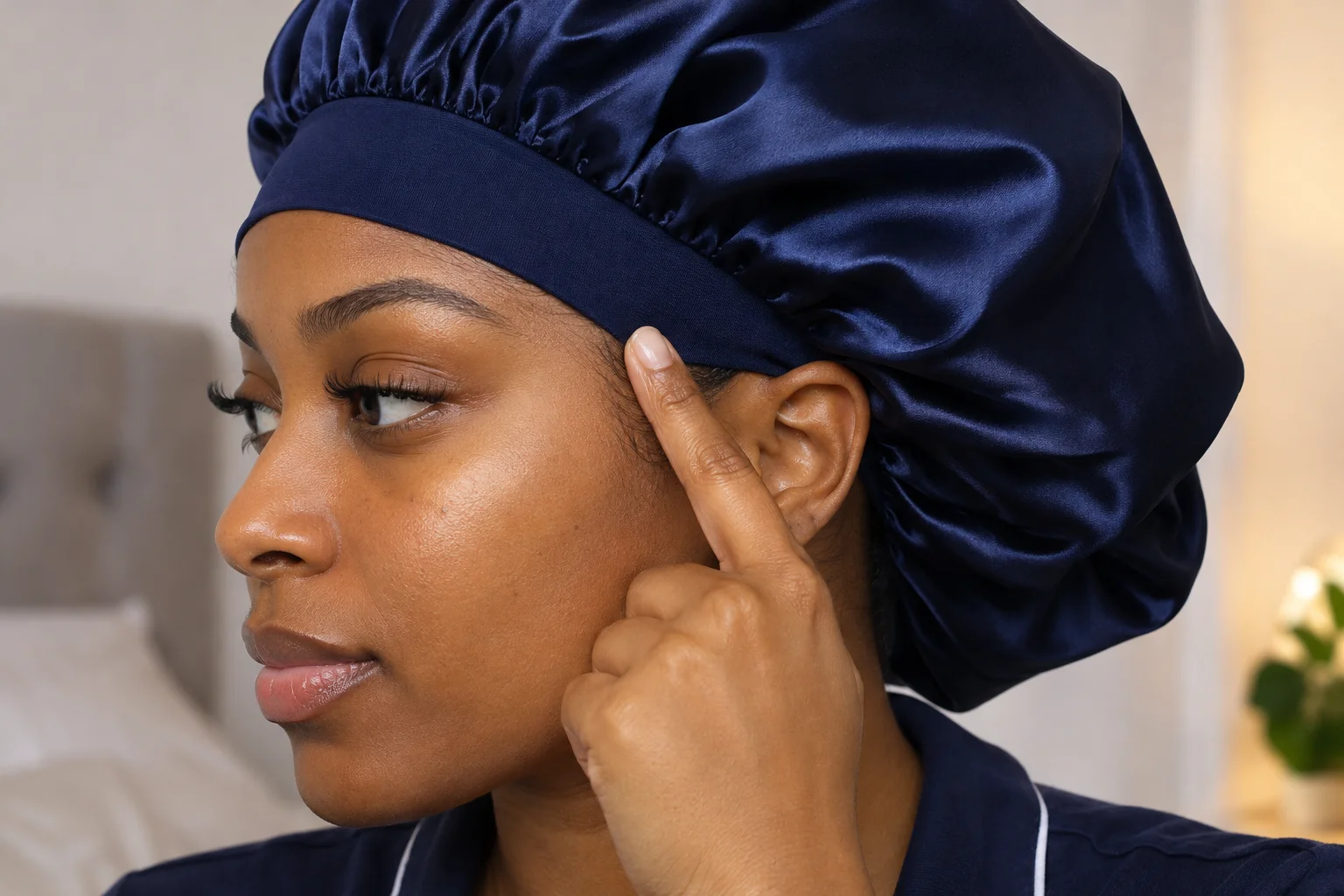
Start by putting the empty bonnet on and feeling the band with a finger. Trace the front edge from one temple to the other and feel around the nape. The pressure should feel even. If the edge curls over in one place, flatten it gently and see whether it stays flat when you turn your head. Sit still for a moment and notice whether there is a spot you already want to adjust. A band that bothers you upright is worth changing before you try to sleep in it.
Place the band where it can sit flat around the hairline without catching the shorter curls in front. Depending on your haircut, that may mean putting it slightly forward on the forehead or slightly farther back. Keep the placement you can repeat by feel. If you use an adjustable bonnet, loosen it first and then adjust just enough for the band to stay put. Move any buckle or knot away from the place that rests against the pillow.
Now gather your hair inside and repeat the check. If the band behaved well when empty but shifts with the hair inside, you have learned where to look next. You may have too much hair directly behind the front band, or the fabric may be pulling upward from the back. Try moving the lengths into the pocket and see if that restores the same comfortable fit you felt at the start.
Give the lengths room in the crown
Think about the space your hair takes up when you lift it loosely with one hand. Short curls may fit in a shallow bonnet without much spare fabric. Shoulder-length curls often need room for the ends to turn inward. Longer or denser hair may need a deeper pocket so the whole bundle can settle. Hold the fabric up when you first put it on and lower it gradually. That lets you feel whether you have to push the hair against the head to get the band down.
Extra fabric can also move around. If a deep bonnet pools at the nape and drags to one side when you lie down, try placing the excess fabric farther up the pillow. If you have to do that every time you turn, a shallower pocket may be more comfortable. Compare the space in the crown with the position of the opening. Two bonnets with similar openings can hold the hair very differently.
If you are choosing from measurements, distinguish the measurement around the opening from the depth of the fabric. Look for how each measurement was taken. Measure around your head where you want the band to sit, using a flexible tape that rests against your skin. You can then compare that number with the maker’s sizing guidance. With a bonnet you already own, check the fit first with your hair down and then with your usual overnight arrangement before deciding you need a new one.
Put your curls in without changing their shape
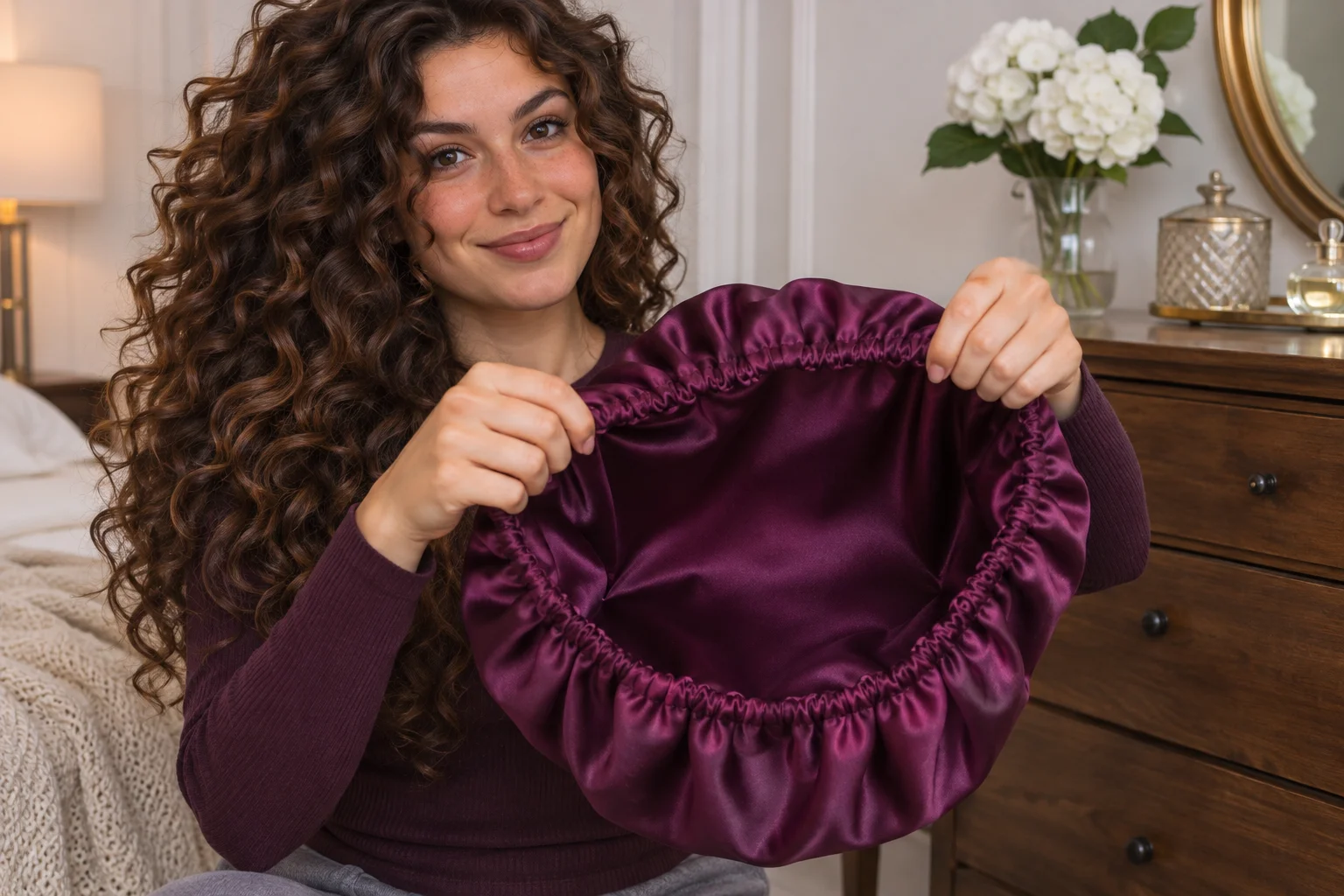
With short hair, try leaving it loose. Open the bonnet with both hands, place the edge at the front where you want it to rest, and bring the fabric back over the crown. Before letting go, check for short strands caught underneath the edge. Lift that small part of the band with a finger and let the strands slide inside. Once you know where the short sections are, you can do this by touch instead of turning the whole bonnet around.
For longer curls, tip your head slightly and support the lengths with a hand. Let the ends fold into the deepest part of the fabric. Keep the part nearest the band free enough to settle. If you like to gather your hair high, use a loose scrunchie and check the position of the knot or gathered section on the pillow. Some people find a high gathering place comfortable on their side and awkward on their back. The position you actually sleep in can make the choice for you.
If you wear a part, notice what happens to the front when you scoop all the hair straight back. You might find that your roots stay pointed away from the part after release. Try placing the curls on each side in the bonnet with roughly the same direction they normally take. Save the firmest bend for the ends, where a change is easier to see and decide on in the morning. With long hair, a loose side fold can also keep the bulk away from the spot where you rest your head.
Curlsmith on overnight styling options · Style your natural texture

Take the pillow test before going to sleep
Lie on your usual pillow for a minute. Turn to one side, return to the middle and turn the other way. Check whether the front edge moves toward your eyebrows, the back edge climbs, or one side of the fabric gets trapped under your head. If only the cloth moves, try changing where you let the extra fabric fall. If the band moves with it, sit up and put the bonnet on again with less hair directly behind the edge.
Also notice what you feel near the ears. Some bands feel better above them, and others sit comfortably just over the upper edge. Try your preferred position before adjusting the size. If you wear a sleep mask or earplugs, add them now. Check where the bands cross and whether either one gets pulled when you move. Move one band a little and repeat the turn. The best placement is the one you can set without checking a mirror each night.
Read the first morning before making adjustments
Lift the front edge and slide the bonnet back while supporting the ends with one hand if they need it. Give the curls a minute to fall before you pull them into position. Look at the temple, crown and nape separately. A crease just above the forehead points you toward the band placement. A group that remains folded at the nape suggests you could put more of the length higher in the pocket.
Write one observation that you can act on that evening. “Left temple feels fine, but the band moves when I turn right” is specific enough to test. Try repositioning the band or moving the bulk of the hair before changing both. If the front is comfortable and the curls sit how you want after a few minutes, keep the routine simple. You can also use a smooth pillowcase on nights when you prefer to leave the hair uncovered and compare how it feels with your usual setup.

Keep the routine easy to repeat
Choose one place to store the bonnet where you can grab it as you get ready for bed. Check the care label when you wash it. Notice how the band feels again once the bonnet is dry and how it sits after you have worn it a few times. If the adjustment has shifted, use a familiar landmark at the temple or nape to set it back. A bonnet that takes several tries to position can be difficult to use when you are tired.
Once you have a good fit, keep a short note for different styles. Your curls may need more pocket depth when worn loose than when gathered into a low, loose braid. If you travel with one bonnet, try it with both arrangements before you pack. The useful detail to remember is where you put the volume inside the fabric and where the band sits when you turn over.
Questions
Why does my bonnet stay on when I sit up but slip in bed?
The pillow can catch the fabric and pull the band with it. Try positioning the extra fabric farther up the pillow and turning your head again. If the band still travels, check the opening and move any bulky hair away from the edge.
Should I tie my curls first?
Short curls often fit comfortably loose. For longer hair, try supporting the ends by hand as you put the bonnet on, then compare a loose gathering higher up. Use the arrangement that gives the hair room and feels comfortable against your pillow.
How do I know if the crown is too shallow?
If the empty band sits comfortably but climbs as soon as your hair is inside, check whether the fabric pulls tight across the lengths. Try moving the ends farther into the pocket. If that still pulls the band up, more depth may help.
Are satin and silk the same thing?
Satin describes the way a fabric is woven, and silk is a fiber. Check the label for the material on the inside and the outside. The inside is what touches your hair, and the care label explains how to wash the finished bonnet.